
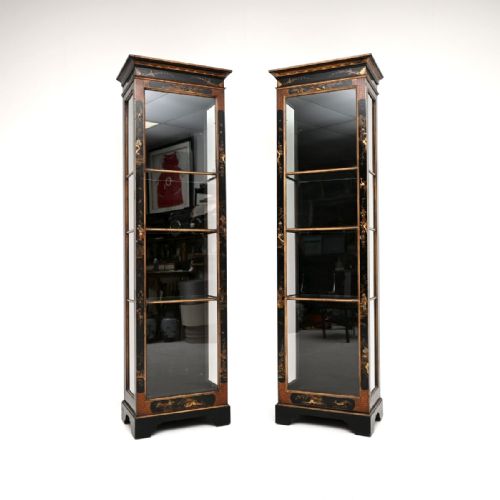


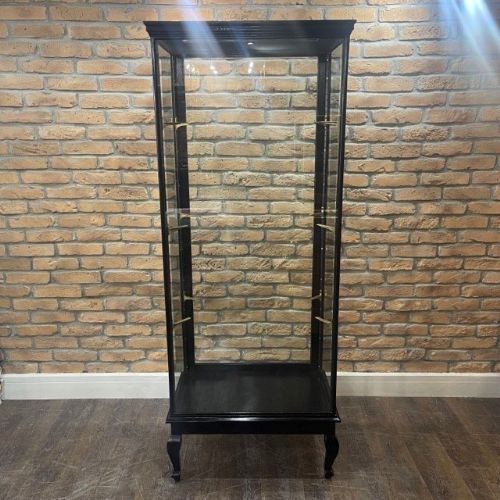

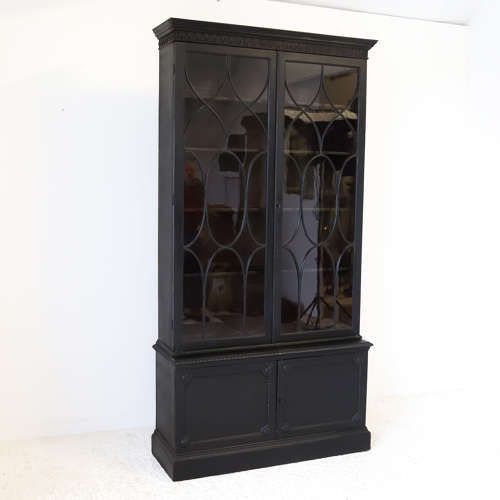
Black Glazed Vitrine
A black glazed vitrine brings dark surfaces and clear glass together to display precious objects with dramatic contrast.
Black Glazed Vitrine
A black glazed vitrine serves as a refined display cabinet designed to showcase collections behind glass panels while offering a dark painted, ebonised or lacquered exterior. These cabinets appear across various historical periods, ranging from eighteenth-century Dutch painted examples to Victorian ebonised pieces and later Art Deco iterations.
The selections available here emphasise freestanding display cabinets, bookcases and countertop units finished in dark tones. Buyers encounter styles spanning Edwardian chinoiserie, French Napoleon III boulle work, Aesthetic Movement inlay and robust nineteenth-century forms.
Origin and period heavily influence the character of each piece, uniting traditional European cabinet-making with distinct decorative schemes. The most frequent variations rely on ebonised wood, painted finishes and contrasting metallic mounts.
Materials and construction
Makers utilised solid timbers and applied veneers, often ebonising the wood to emulate costly ebony or applying deep black paint and lacquer. Brass, ormolu and steel hardware provide structural reinforcement and decorative contrast against the dark body.
Intricate decorative techniques define many examples, including Boulle marquetry incorporating tortoiseshell and brass, gold inlay and painted chinoiserie motifs. Glass panels are fitted securely into doors and sides to maximise visibility for the interior shelves.
The listings span the eighteenth, nineteenth and twentieth centuries, incorporating materials such as ebonised wood, ormolu, tortoiseshell, brass and glass.
Evaluating craftsmanship
The distinction between standard items and superior examples lies in the precision of the cabinetwork and the execution of surface decoration. Finer pieces display crisp mounts, meticulous marquetry and smooth operation of doors and drawers.
Material selection dictates longevity and visual depth, where genuine tortoiseshell, fire-gilt ormolu and hand-mixed lacquers elevate the piece far beyond simple painted furniture. Original glass panes and intact interior fabric linings also contribute significantly to the integrity of a cabinet.
The Black Glazed Vitrine Glossary
- Ebonised
- Wood treated with a dark stain or finish to imitate ebony. This technique gained widespread popularity during the Victorian and Aesthetic Movement periods.
- Vitrine
- A glass-fronted cabinet used for displaying fine objects or curiosities. These pieces often feature glazed sides to allow light to enter from multiple angles.
- Boulle
- A form of marquetry developed in France utilising brass and tortoiseshell inlaid into dark wood. Named after the royal cabinet-maker André-Charles Boulle, it appears on elaborate nineteenth-century pieces.
- Ormolu
- Gilded bronze mounts applied to furniture for decorative accent. The technique creates a bright golden contrast against dark ebonised surfaces.
- Chinoiserie
- European decorative style reflecting Chinese artistic traditions. These pieces typically feature lacquered surfaces adorned with painted figures and landscapes.
Black Glazed Vitrine: Frequently Asked Questions
What is a black glazed vitrine used for?
These cabinets serve primarily to exhibit collections of porcelain, glassware, silver or small curiosities while protecting them from dust and handling. The glazed panels and interior shelves allow light to circulate around the displayed items.
The dark exterior finishes provide a dramatic neutral backdrop that makes colourful or metallic objects stand out distinctly within a room.
How do I date a black glazed vitrine?
Dating relies on examining construction methods, timber types, hardware and decorative styles. Pieces from the eighteenth century often show Dutch painted elements, whereas Victorian examples frequently feature ebonised wood with brass or ormolu mounts.
Later twentieth-century versions transition into simpler tower cabinets or incorporate steel and leather associated with the Art Deco period.
Where should I place a vitrine in my home?
A vitrine requires a stable location away from direct sunlight and fluctuating moisture sources to protect delicate timber, glue joints and fabric linings. Freestanding and countertop models need adequate floor or surface space to ensure safety and balance.
Positioning them near natural light sources enhances the visibility of objects housed behind the glass panels.
Are these cabinets difficult to maintain?
Routine care involves dusting the exterior surfaces with a soft cloth and cleaning the glass panes with standard non-abrasive glass cleaner. Avoid harsh chemical polishes that can damage historic painted, lacquered or ebonised finishes.
Checking the stability of hinges, locks and internal shelving periodically helps preserve the structural integrity of older display furniture.