



Gold Hearth Curb
A gold hearth curb protects the rug while giving a finished warmth to the fireplace, mostly appearing here in Victorian and Edwardian brass.
Gold Hearth Curb
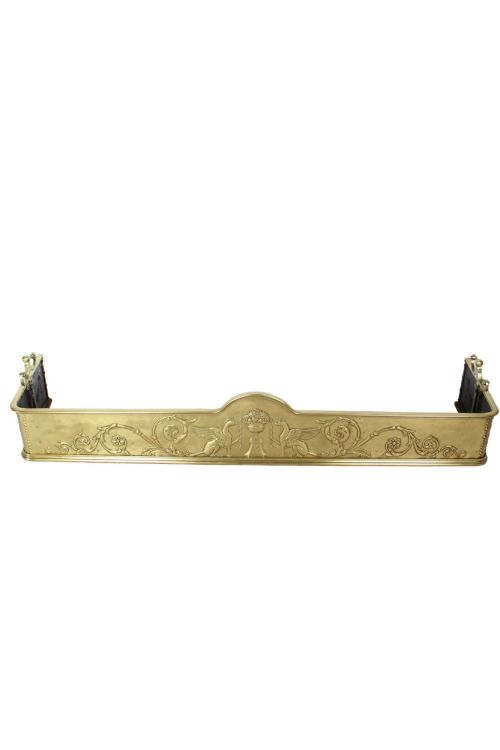
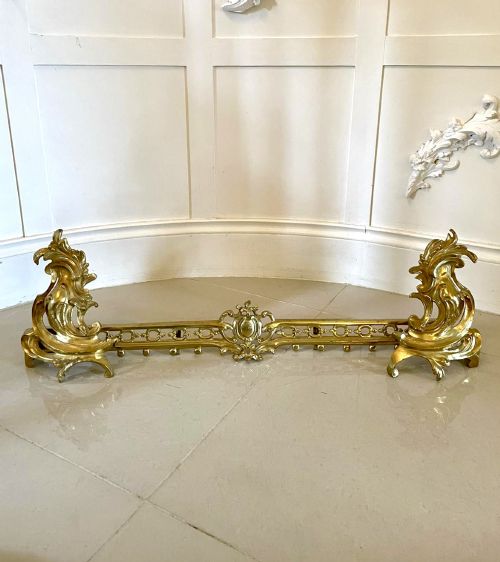
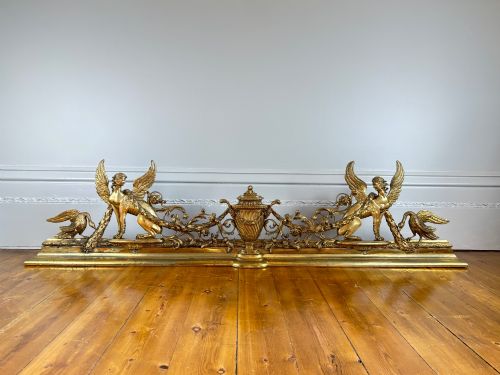
A gold hearth curb frames the fireplace opening, holding back stray embers while anchoring the hearth visually. When searching for a gold hearth curb, buyers encounter heavy brass and gilt bronze fire fenders dating from the Regency period through to the early twentieth century.
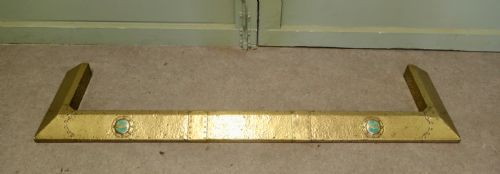
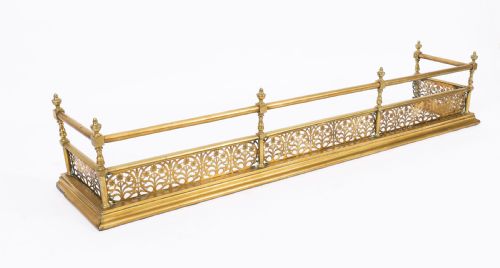
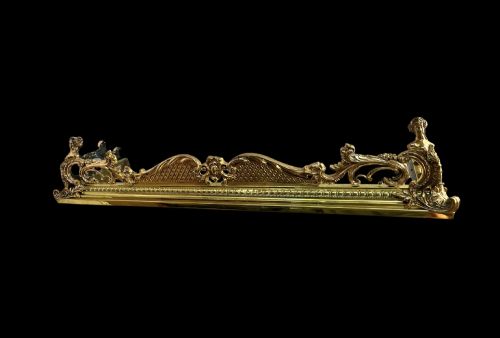
Most examples found here take the form of adjustable or fixed brass curbs, often featuring pierced metalwork, spindles, or decorative corner mounts. These fireplace accessories range from simple nineteenth-century utilitarian guards to ornate French Rococo and Arts and Crafts designs.
The materials span cast brass, ormolu, and gilded bronze, occasionally accented with coloured enamel cabochons. These pieces reflect the shift from practical hearth containment to decorative domestic centrepieces across the Victorian and Edwardian eras.
How they were made
Makers shaped these hearth curbs primarily from cast and sheet brass, utilising iron for internal structural support where extra weight was required. Pierced designs relied on careful hand-sawing and stamping before workers polished or gilded the metal surfaces.
Gilt bronze and ormolu examples involved mercury gilding or modern electroplating over bronze bases, creating a durable golden sheen. Many nineteenth-century curbs incorporate extending mechanisms, allowing the metal frame to slide apart to fit varying fireplace widths.
Listings span the Regency, Victorian, and Edwardian periods, utilising brass, iron, bronze, and enamel.
What varies in quality
The distinction between standard production items and finer examples lies in the thickness of the metal gauge and the crispness of the casting. Heavy brass curbs retain their structural rigidity over decades of use, whereas thinner plates bend easily under pressure.
Detailing separates ordinary pieces from superior work, seen in hand-chased enrichment on gilt bronze or precise piercing on Victorian flower motifs. Makers who invested time in finishing joints and mountings produced curbs that age gracefully without loosening their extending frames.
E F Caldwell New York·George Bullock
The Gold Hearth Curb Glossary
- Fender
- A low metal guard placed around the hearth to keep coals from rolling onto the floor. Most listings on this page use fender and curb interchangeably.
- Ormolu
- Finely chased gilded bronze used for decorative mounts on high-end nineteenth-century hearth furnishings. The technique creates a rich golden finish that resists tarnishing.
- Pierced brass
- Sheet metal perforated with repetitive decorative patterns such as scrolling foliage or flowers. This method lightens the visual weight of heavy brass curbs.
- Extending fender
- A design featuring overlapping sections that slide to adjust the overall width. This mechanism accommodated different fireplace openings in period homes.
- Cabochon
- A polished gemstone or enamel inset cut with a smooth convex top rather than facets. Arts and Crafts examples frequently employ green enamel cabochons as focal points.
Gold Hearth Curb: Frequently Asked Questions
What is a gold hearth curb?
A gold hearth curb is a metal barrier placed on the floor directly in front of an open fireplace. It functions to contain hot embers while providing a polished brass or gilt frame for the hearth.
Most examples encountered in these listings are period brass or gilt bronze fenders from the nineteenth century. They combine practical room safety with decorative metalwork suited to period interiors.
How do I measure for a curb?
Measure the width of your fireplace opening and the depth of the hearth space you wish to enclose. Many period brass curbs feature adjustable extending frames that adapt to different hearth sizes.
Check the listed dimensions to ensure the sides clear your fireplace surround and leave enough room for fire tools. A proper fit sits securely against the chimney breast without blocking foot traffic.
How do I clean antique brass?
Clean antique brass gently with a soft cloth and warm soapy water to remove accumulated dust and soot. Avoid harsh chemical polishes that strip away the aged patina built up over generations.
Heavily gilt or ormolu pieces require particular care, as aggressive scrubbing damages the delicate gold surface. Light dusting and occasional waxing preserve the warm metal tone.
How do I date a brass fender?
Dating relies on stylistic clues, construction methods, and material choices evident in the metalwork. Regency and early Victorian pieces often feature sharp neoclassical piercing, while later Victorian designs lean toward heavy cast ornamentation.
Arts and Crafts examples show hand-hammered surfaces and enamel cabochons typical of the turn of the twentieth century. Extending mechanisms also evolved, with simpler sliding bars appearing on mid-nineteenth-century models.