


Adjustable Hearth Curb
An adjustable hearth curb keeps stray embers from the room while framing an open grate with heavy metalwork.
Adjustable Hearth Curb
An adjustable hearth curb is a metal enclosure placed around the base of a fireplace to hold a fire within its proper bounds. The pieces seen here span the Victorian, Edwardian, and early twentieth century periods, taking forms such as fireplace accessories, fireplace fenders, and hearth fenders.
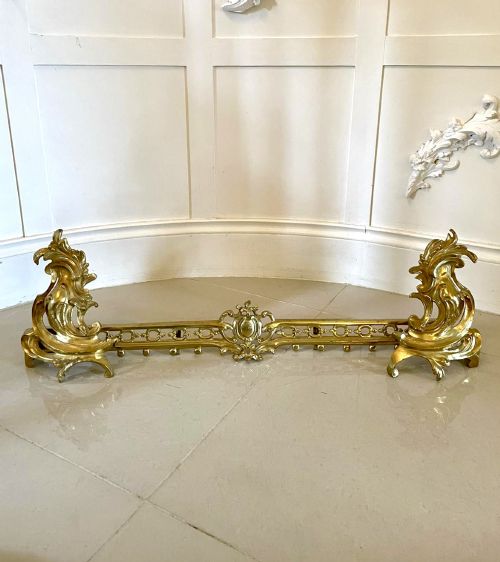
Most examples found on this page are designed to extend or retract in width, adapting to different fireplace openings. They arrive in styles ranging from plain nineteenth century brass to French Rococo and Louis XV style designs.
Makers from both English and French workshops produced these items, utilising heavy cast and fabricated metal. A buyer investigating this phrase seeks a functional barrier that also anchors the decorative scheme of the hearth.
How they were made
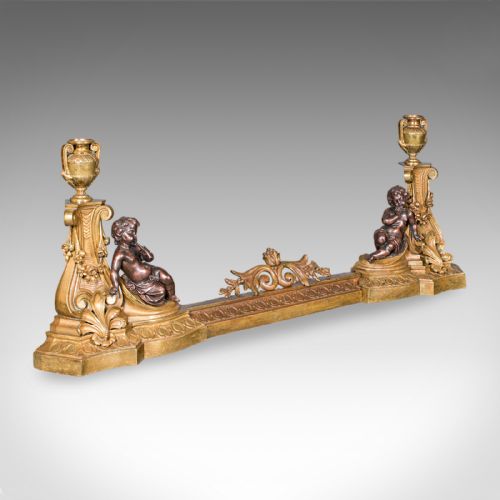
The construction of these items relies heavily on cast brass, gilded brass, gilt bronze, and ormolu. Workshops utilised bronze and patinated bronze for substantial frames, applying gilding to create a bright metallic finish.
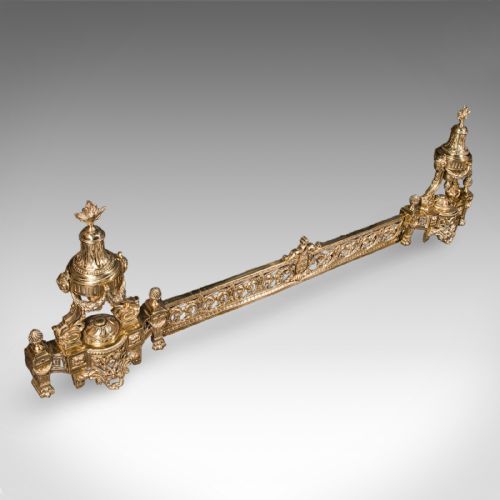
Extending mechanisms rely on sliding sections that allow the metal kerb to adjust across the width of the fireplace. Ornate styles feature scrolling details and French Chateau or Louis XV motifs cast in relief and joined to heavy metal bases.
Listings span the Victorian and Edwardian periods, featuring brass, gilt bronze, and bronze materials formed into hearth fenders and fire kerbs.
What varies in quality
Quality in an adjustable hearth curb rests on the weight of the metal and the crispness of the cast decoration. Heavy Victorian and French pieces display sharper detail in their scrollwork and heavier gauge brass than lighter alternatives.
The smoothness of the extending mechanism and the integrity of the original gilt bronze or gilded brass surface separate superior examples from standard production. Rich patination on bronze and clean joints indicate higher workshop standards.
The Adjustable Hearth Curb Glossary
- Hearth fender
- A low metal guard placed around the hearth to retain ashes and logs. It forms the primary boundary between the fire and the room.
- Ormolu
- Finely ground high-carat gold mercury-gilded on a bronze base, used extensively on French examples. This technique produces a warm, lasting lustre.
- Extending fender
- A metal kerb designed with sliding components to alter its overall width. This allows the piece to fit varying fireplace dimensions.
- French Rococo
- A decorative style characterised by asymmetrical scrolls, shell motifs, and natural curves. It appears on ornate nineteenth century hearth furniture.
- Patinated bronze
- A bronze surface treated chemically to age the metal and produce a dark, stable colour. It provides a contrast to bright gilt brass.
Adjustable Hearth Curb: Frequently Asked Questions
How do adjustable hearth curbs work?
These metal guards use a sliding mechanism that lets the frame expand or contract to fit different fireplace widths. The telescoping sections lock into place once the desired span is reached.
This design allowed one standard fender model to suit various hearth sizes in nineteenth century homes.
What materials are used in these fenders?
Most examples utilise brass, cast brass, gilt bronze, and ormolu. Some pieces feature patinated bronze for a darker finish.
Heavier items combine solid cast metal components with sliding inner tracks of matching brass.
Are these pieces English or French?
The listings include both English and French pieces from the Victorian and Edwardian eras. English examples often show robust brass construction.
French pieces frequently incorporate Louis XV style scrollwork and gilt bronze ormolu mounts.
How do I clean a brass hearth curb?
Dust the metal regularly with a soft dry cloth to prevent soot accumulation. Avoid harsh abrasive cleaners that can strip original gilding or patination.
Preserving the surface finish maintains the character of the antique metal.