


Adjustable Fireplace Guard
An adjustable fireplace guard brings hearth-side warmth into balance, offering movable brass and bronze metalwork that adapts to changing firesides.
Adjustable Fireplace Guard
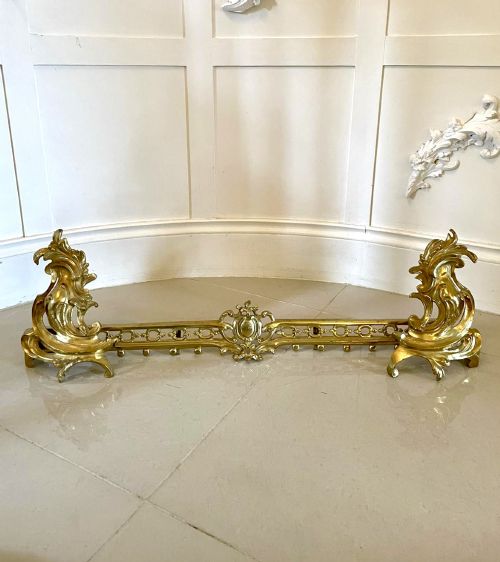
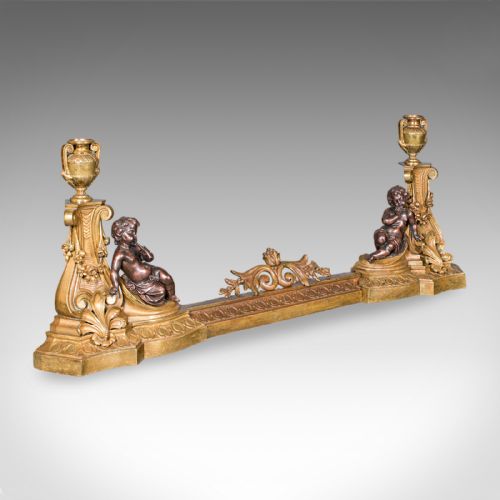
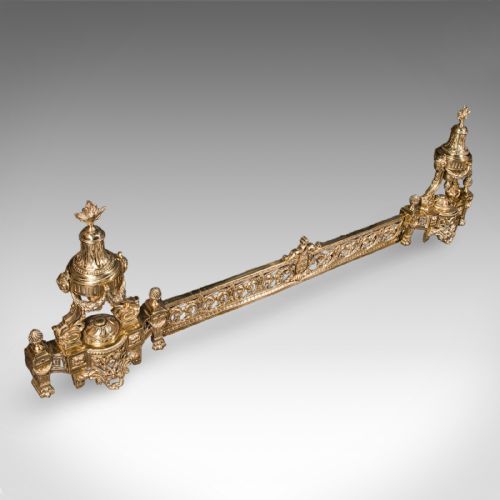
When searching for an adjustable fireplace guard, collectors encounter extending brass fenders, expanding bronze kerbs, and movable firescreens designed to manage hearth heat and protect the room. These pieces appear across Victorian, Edwardian, and Georgian periods, utilising flexible frames that alter in width.
The selections on this page largely comprise extending brass fenders alongside adjustable firescreens featuring embroidered or poker-work panels. Originating from English workshops and French foundries, these items combine practical hearth safety with period aesthetic styles like Louis XV and Rococo Revival.
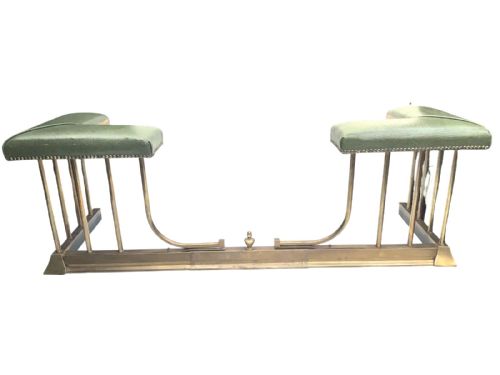
Forms vary from heavy club fenders to delicate pole screens with adjustable glass, wood, or needlework panels. Buyers select these accessories to match specific hearth dimensions while securing authentic nineteenth-century craftsmanship for the living space.
Materials and construction methods
Makers constructed these fireplace guards predominantly from solid brass, bronze, and gilt ormolu, often pairing metal frameworks with mahogany, rosewood, or walnut timbers. Heavy cast brass components provide structural integrity, while sliding mechanisms allow the frames to extend smoothly.
Surface decoration involves detailed etching, scrolling, and fire-gilding on metal elements, alongside needlework, poker work, and etched glass within panel inserts. Workshops employed specialised joinery and metal-casting techniques to ensure the extending joints remained operational over decades of hearth use.
Current listings feature pieces spanning the Georgian, Victorian, and Edwardian periods, utilising brass, bronze, mahogany, and rosewood.
Markers of superior craftsmanship
Quality in an adjustable fireplace guard rests upon the weight of the cast metal and the precision of the extending mechanism. Superior examples display crisp chasing on ormolu and bronze, substantial brass thickness, and robust sliding joints that operate without binding.
Finishing details separate standard utilitarian pieces from exceptional ones, particularly the intricacy of scrolled brasswork, the quality of rosewood or mahogany frames, and the preservation of original embroidered or etched glass panels.
The Adjustable Fireplace Guard Glossary
- Fender
- A low metal guard placed before a hearth to contain sparks and rolling embers. These can feature extending mechanisms to fit various fireplace openings.
- Ormolu
- Gilded bronze used widely in decorative mounts and furniture trim during the nineteenth century. It adds a rich, golden lustre to fireplace accessories.
- Pole screen
- A freestanding screen with a vertically adjustable panel mounted on a central pole to shield the face from radiant fireplace heat.
- Club fender
- A heavy, substantial hearth fender often incorporating upholstered seats. They provide a comfortable vantage point close to the fire.
- Poker work
- A method of decorating wood by burning designs into the surface with heated metal tools. It appears frequently on nineteenth-century panels.
Adjustable Fireplace Guard: Frequently Asked Questions
How do adjustable fenders work?
Extending fireplace fenders utilise overlapping metal channels that slide inward and outward to alter the total width. This mechanical design allows a single guard to fit varying hearth dimensions securely.
Craftsmen engineered these sliding joints for durability against frequent movement, maintaining stability when fully expanded across the stone hearth.
What is a pole screen used for?
Historically, a pole screen protected a seated person's face from the intense glare and heat of an open coal or wood fire. The adjustable panel moves up and down a central wooden rod to block the heat precisely.
These screens also served to shield delicate face makeup and candle wax from melting during evening gatherings.
How do I identify a Victorian guard?
Victorian fireplace guards frequently display heavy cast brass, elaborate scrolling, and French Rococo Revival influences. Dating markers include robust construction methods and specific material combinations recorded from the nineteenth century.
Makers of this era favoured ornate ormolu, etched glass inserts, and extendable mechanisms built for formal drawing rooms.
Where were these pieces made?
The listings show origins primarily from English workshops and French foundries. English makers produced substantial brass and bronze fenders, while French makers specialised in gilt bronze and ornate rococo styling.
Regional preferences influenced whether a piece utilised mahogany timber, cast iron, or delicate needlework panels.
Can these fit modern fireplaces?
Because the metal frameworks adjust in width, many of these historical fenders accommodate various hearth sizes. Measuring the available stone floor space ensures proper placement before the fire.
Buyers check the minimum and maximum extension lengths noted in the physical dimensions of each individual guard.