

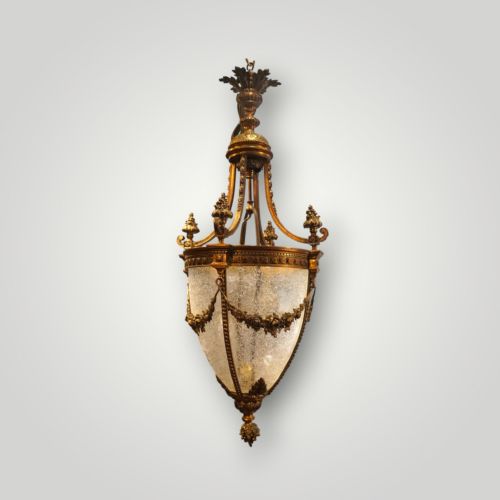
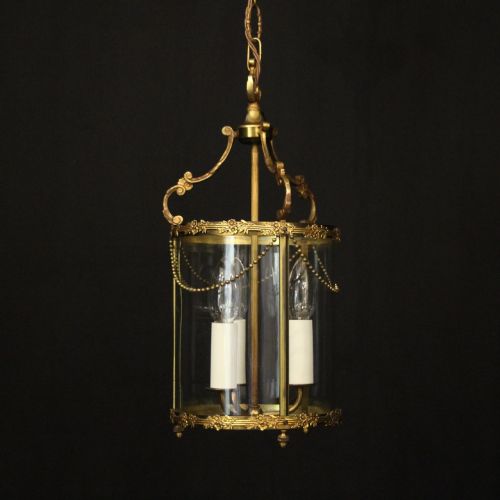
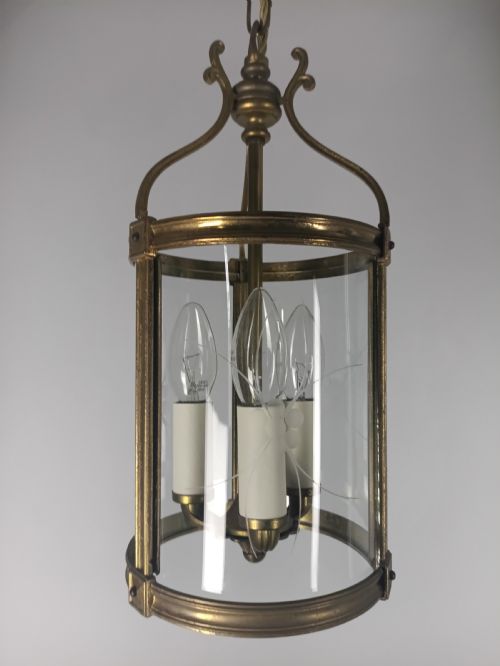
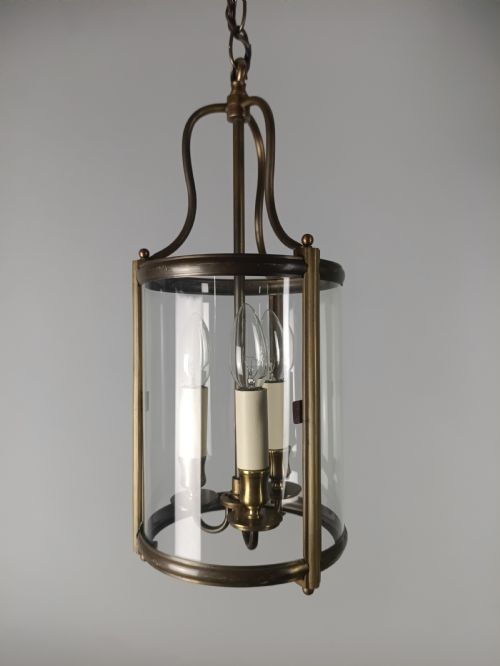

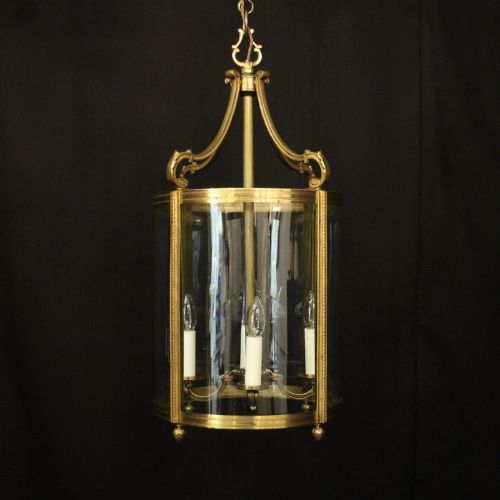
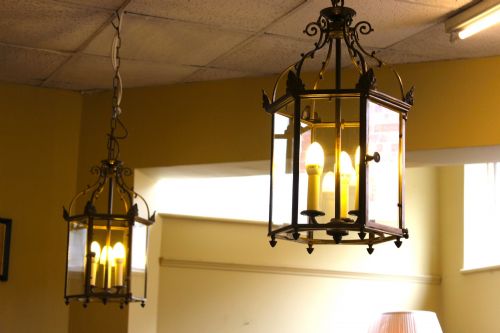
Gold Hall Lantern
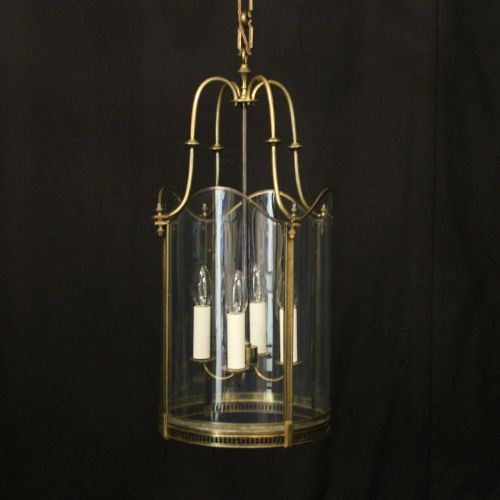
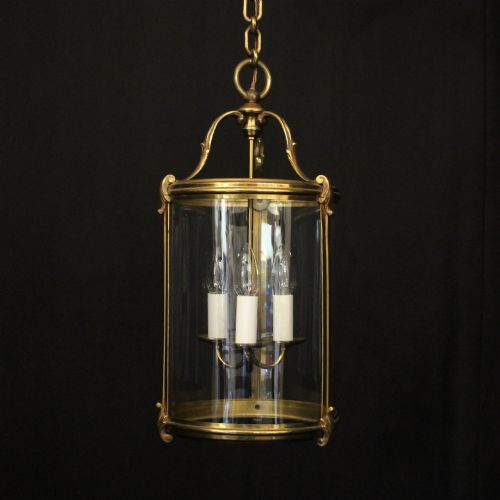
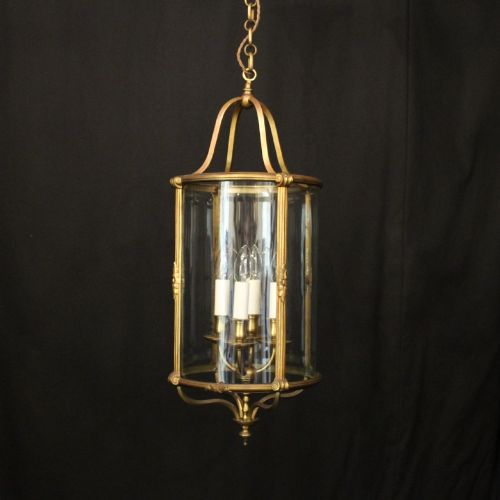
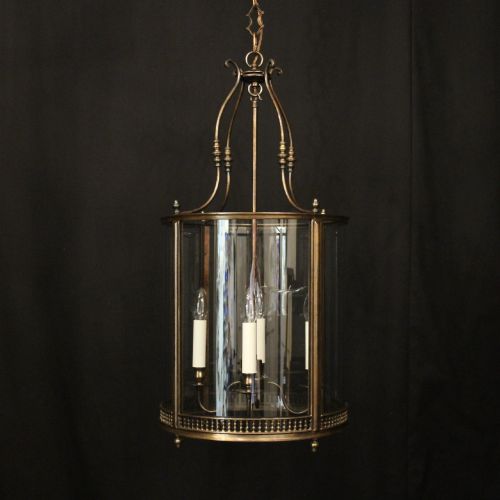
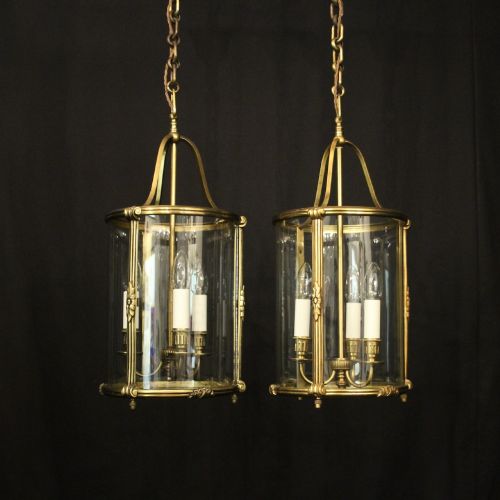
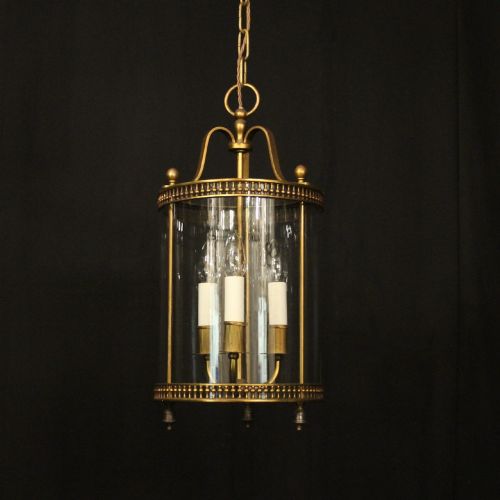
These gold hall lanterns bring high-ceilinged entranceways alive with polished brass, gilt bronze, and luminous bevelled glass.
Gold Hall Lantern
A gold hall lantern serves as a prominent ceiling light designed specifically to illuminate entrance halls, corridors, and landings. When you search for gold hall lantern, you encounter hanging ceiling lighting that originates primarily from the Victorian, Edwardian, and early twentieth-century periods.
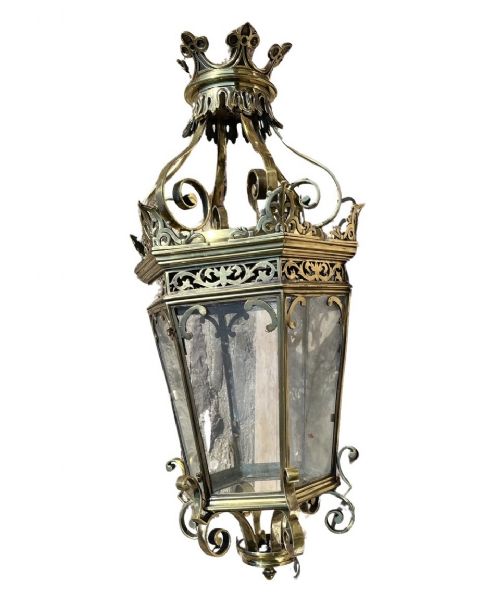
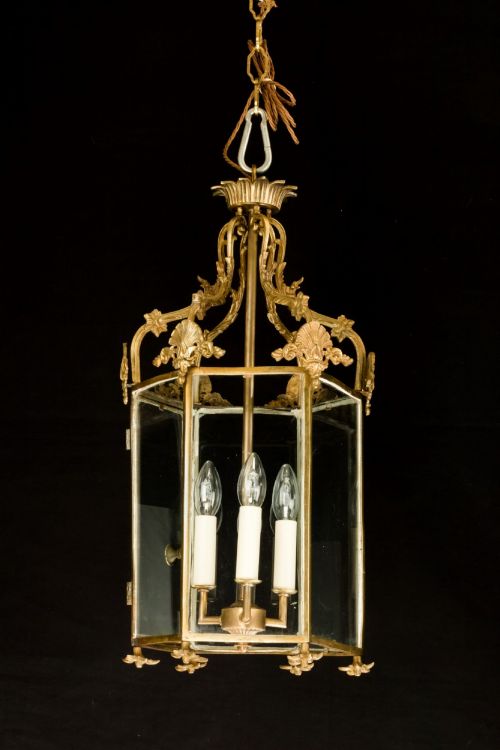
The pieces on this page lean heavily towards French manufacture, particularly French chateau, Louis XVI style, and rococo revival designs, alongside English brass examples. Common structural formats include hexagonal shapes, convex glass panels, and multi-light configurations holding triple or quadruple bulbs.
Makers and designers drew inspiration from grand historical settings, producing items such as ormolu lanterns modelled after fixtures in the Palace of Versailles. Buyers frequently find substantial, monumental forms alongside simpler domestic hall lanterns.
Materials and Technique
The structural framework relies on metal casting and framing, predominantly utilising brass, bronze, or giltwood. Many of these metals received surface treatments such as gilding, gold leaf, or polishing to achieve their characteristic warm metallic lustre.
Transparent panels of glass enclose the light source, frequently featuring etched designs or bevelled edges to refract the illumination. Glazing was secured within hinged doors or fitted frames, while structural elements were joined using traditional metalwork techniques appropriate to the nineteenth and early twentieth centuries.
Some lanterns carry the distinct echo of Versailles, designed to make visitors feel like minor French royalty just by stepping inside the front door.
Craftsmanship and Proportion
Quality reveals itself in the weight and finish of the cast metal frame, where crisply chased details on gilt bronze or ormolu outshine simpler sheet brass construction. The presence of hand-bevelled or intricately etched glass panes further separates standard utility pieces from finer decorative works.
Proportion and scale dictate the visual impact of each fixture, as larger monumental lanterns demand precise balance to maintain structural integrity across hexagonal or convex forms. The integrity of the original gilding and the weight of the hardware also indicate superior workshop production.
Perry & Co
The Gold Hall Lantern Glossary
- Gilt bronze
- Copper alloy coated with a thin layer of gold, providing a durable metallic finish that resists tarnishing. It appears frequently in French hanging lights.
- Convex glass
- Curved glass panels that bulge outward from the lantern frame, diffusing light through a rounded profile. This shape requires specialised glassblowing or moulding techniques.
- Ormolu
- Finely chanced and gilded bronze furniture and lighting mounts, popular in French neoclassical design. The term derives from the French for ground gold.
- Hexagonal form
- A six-sided geometric shape common in the bodies of hanging hall lanterns. This configuration allows multiple glass panels to surround the internal light cluster.
- Bevelled glass
- Glass panes featuring angled edges ground down to a slope around the perimeter. This treatment catches and refracts light passing through the lantern.
Gold Hall Lantern: Frequently Asked Questions
Where should a gold hall lantern be hung?
These fixtures suit high entrance halls, stairwells, and wide corridors where their vertical drop and reflective metal surfaces can be fully appreciated.
Ensure the ceiling height allows adequate clearance beneath the hanging chain or pendant mount for safe passage below.
How are these lanterns electrified?
Many period examples have been adapted for modern electrical supplies, housing internal lamp holders configured for single or multiple bulbs.
Rewiring is often carried out to meet current safety standards while preserving the original metal frame and glass panels.
What styles are common in these lanterns?
French neoclassical, Louis XVI, and Edwardian designs dominate the selection, often featuring ornate cast bronze frames and decorative scrolling.
Simpler English brass hexagonal shapes provide a more restrained aesthetic suitable for period domestic interiors.
How do I identify the period of a lantern?
Dating relies on stylistic clues such as the symmetry of rococo revival mounts, the clean lines of Edwardian brass work, or nineteenth-century casting methods.
Inspect the fixings, glass cuts, and metal patination for consistency with known manufacturing eras.