

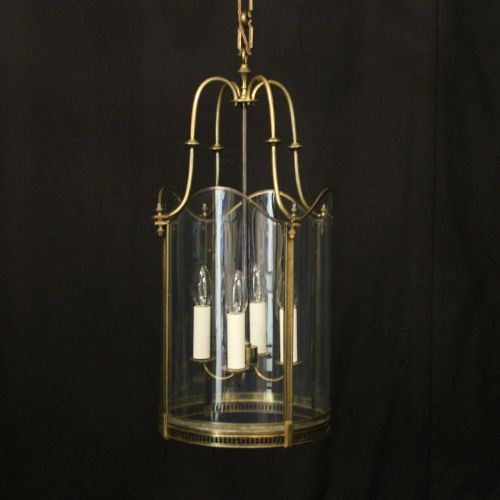
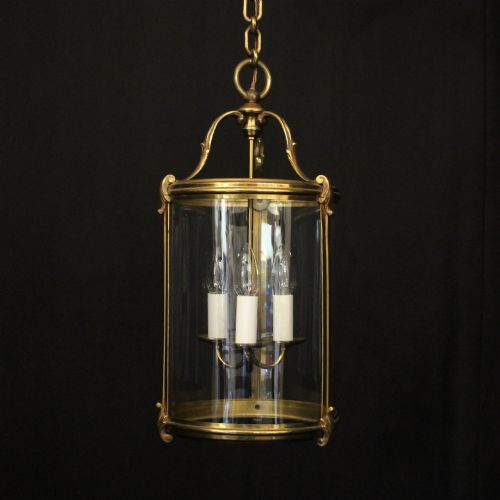
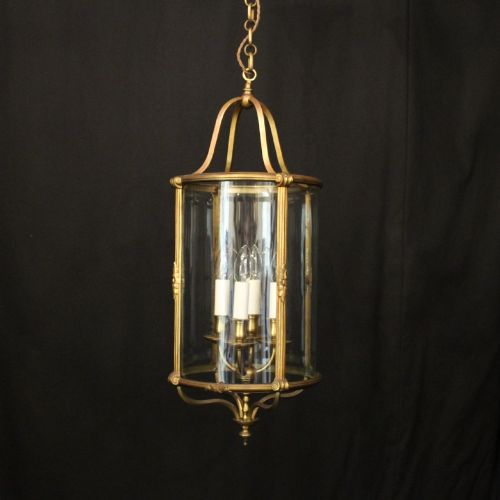
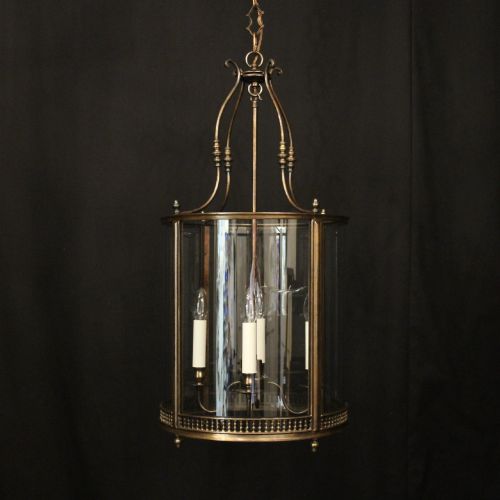
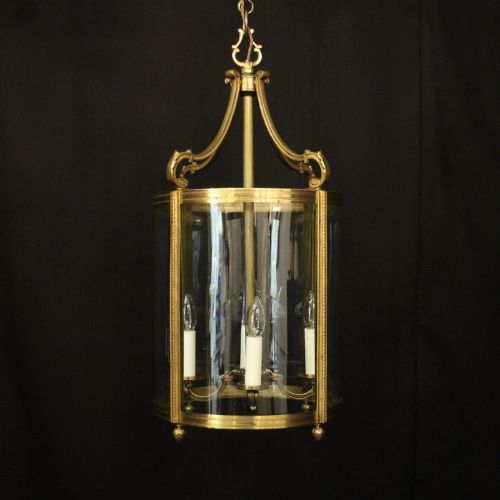
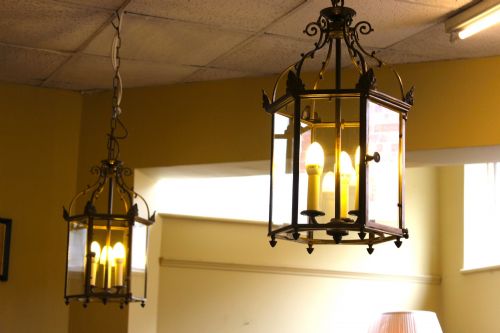

Gold Glass Hall Lantern
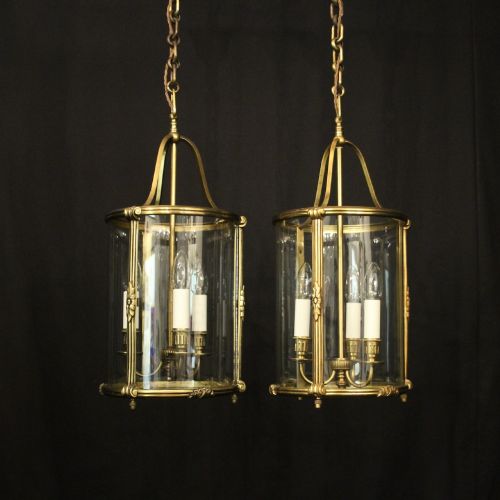
A gold glass hall lantern sets the tone for an entrance, casting warm light through gilt frames and clear panes.

Gold Glass Hall Lantern
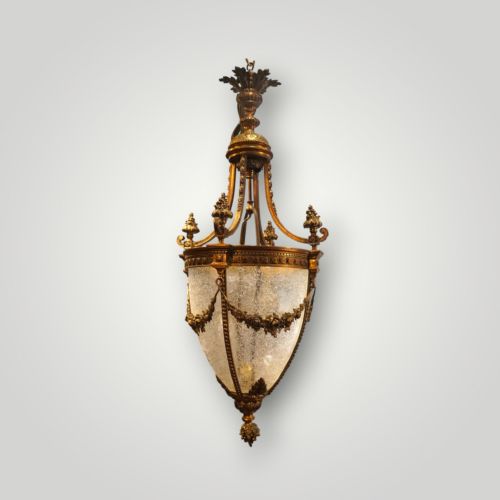
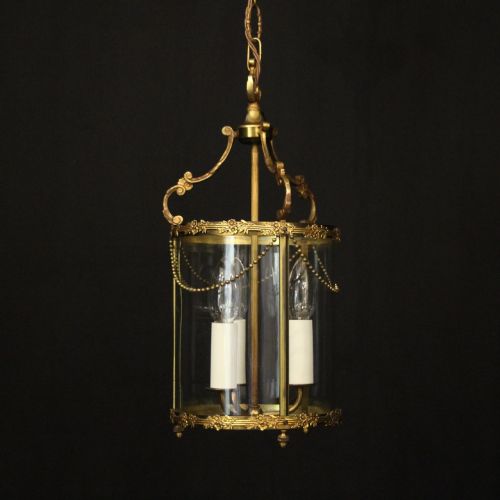
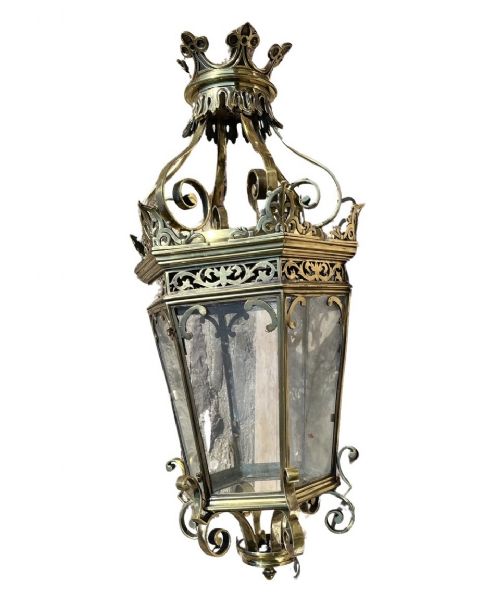
A gold glass hall lantern is an overhead hanging light designed specifically for corridors, vestibules, and entranceways where illumination needs to be both welcoming and refined. When searching for a gold glass hall lantern, buyers encounter a strong representation of French and English pieces spanning the nineteenth and early twentieth centuries.
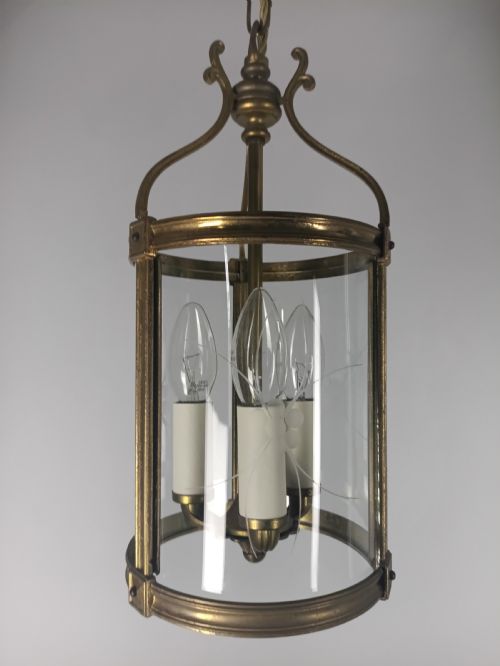
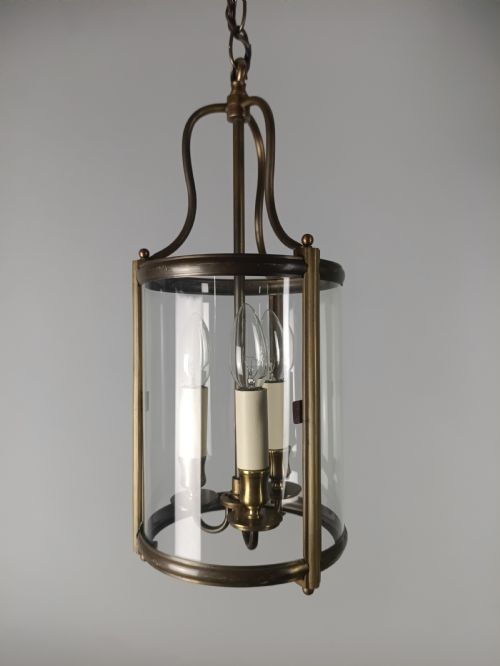
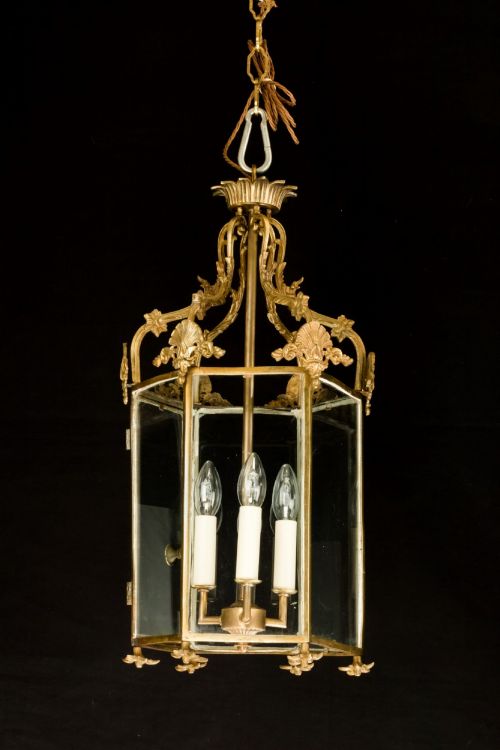
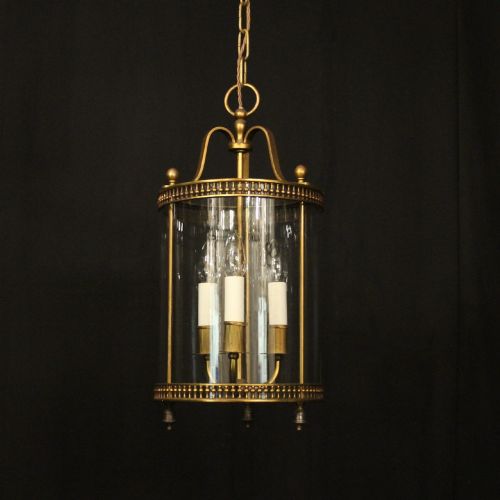
The selections here showcase distinct forms, ranging from simple hexagonal brass frames to elaborate multi-light fixtures influenced by French Neoclassical and Louis XVI styles. Convex glass panels and bevelled edges frequently appear, designed to refract light across the surrounding walls and create a distinct visual presence in a narrow space.
Many of these ceiling lights originate from the 1920s and 1930s, alongside nineteenth-century examples in gilt bronze and brass. Whether housing a single bulb or multiple internal lights, each piece serves the dual purpose of architectural ornament and functional hallway illumination.
What separates the finest examples
Quality rests heavily upon the crispness of the bronze casting and the depth of the original gilding, which distinguishes finely rendered Louis XVI style ornaments from simpler commercial production. Heavier gauge metalwork and substantial, thick glass panes indicate a higher grade of manufacture from the outset.
The sophistication of the glass work also marks the upper tier, particularly where convex or heavily bevelled panes fit seamlessly into complex hexagonal or circular frames. Well-executed hinging mechanisms and secure door fittings demonstrate superior workshop standards.
Several lanterns feature tiny hinged side doors, originally designed so servants could relight candles without dismantling the entire fixture.
Perry and Co
The Gold Glass Hall Lantern Glossary
- Convex glass
- Curved glass panels that project outward, designed to widen the spread of light cast by the internal bulbs.
- Gilt bronze
- Bronze metal treated with a thin layer of gold or gold-coloured finish, often called ormolu in French pieces.
- Bevelled glass
- Panes featuring an angled, polished edge that catches and refracts light across the entrance hall.
- Hexagonal lantern
- A hanging light fixture built with six distinct sides, frequently paired with brass framing in Edwardian examples.
- Pendant light
- A luminaire suspended from the ceiling by a single chain, rod, or cord rather than mounted flush.
Gold Glass Hall Lantern: Frequently Asked Questions
How high should a hall lantern hang?
A hall lantern typically hangs so that the bottom of the fixture clears the floor by at least seven feet, ensuring adequate headroom for people passing underneath.
In spaces with higher ceilings, the lantern can be suspended slightly lower to draw the eye downward and properly illuminate the entrance volume.
Were these lanterns originally electrified?
Most pieces from the nineteenth and early twentieth centuries originally accommodated candles or gas burners before being converted to electricity later in life.
Today, surviving fixtures feature modern internal wiring housed safely within the historic metal and glass frames.
How do I clean a glass hall lantern?
Dust the exterior metal and glass panels regularly with a soft, dry cloth to prevent grime accumulation on the intricate gilt surfaces.
For deeper cleaning, remove the glass panes if possible and wipe them with a mild glass cleaner, avoiding harsh abrasives near the metal frame.
What is the difference between brass and gilt bronze?
Brass is an alloy of copper and zinc with a naturally bright golden metallic tone that develops a darker patina over time.
Gilt bronze involves a heavier copper-tin alloy treated with a gold finish, yielding a richer surface often found on high-end French decorative pieces.