
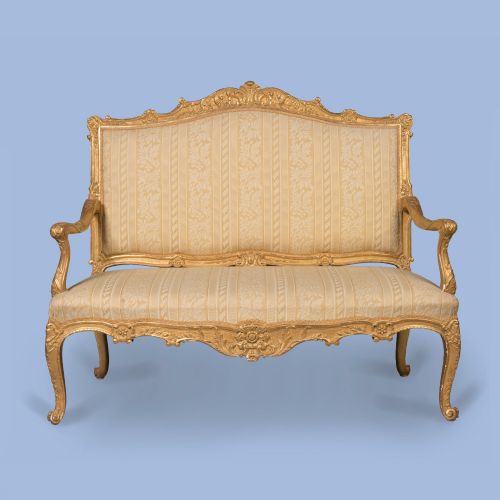


Gold Giltwood Settee
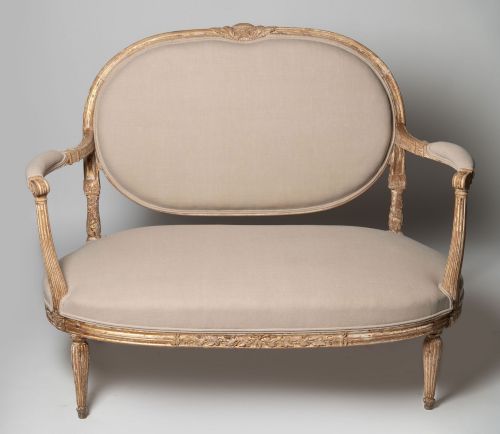
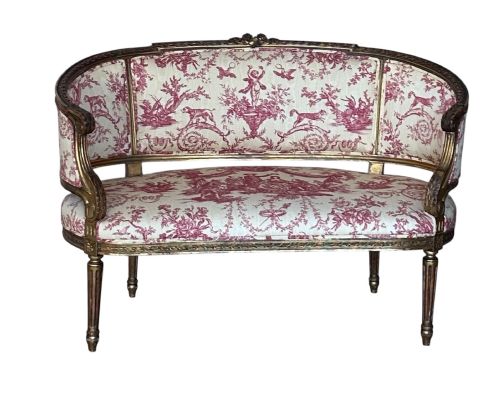
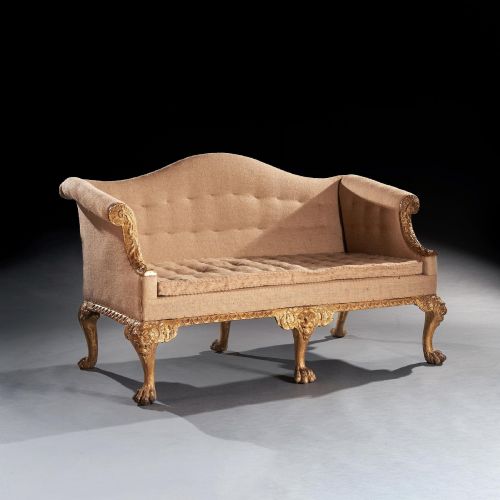
A gold giltwood settee brings monumental French and English seating into a room with brilliant carved surfaces.
Gold Giltwood Settee
A gold giltwood settee is a formal two or three-seat sofa built from timber and coated in gold leaf or gilt paint. When you search this phrase, you find grand seating spanning the eighteenth, nineteenth, and early twentieth centuries.
The most common examples on this page are French pieces in the Louis XV and Louis XVI styles, featuring carved frames and upholstered seats. English variations also appear, ranging from Regency frames to earlier Georgian designs.
These seating forms function as principal salon furniture or window seats, designed to command attention in large reception rooms. Makers constructed them in various configurations, including canapés, love seats, and modular salon suites.
Construction and gilding
Craftsmen shaped these frames primarily from beech and other dense timbers, carving the wood with foliage, scrolls, and structural motifs before surface treatment. Giltwood application involved laying delicate gold leaf over a prepared bole or applying gold paint directly to the timber.
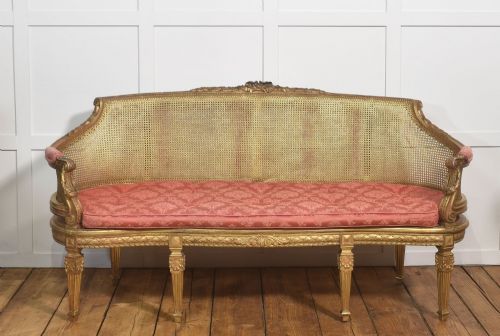
Upholstery methods varied by period, employing traditional stuffing and springs covered in textiles such as silk, linen, and patterned fabric. Certain variants substituted solid upholstery with woven cane panels on the backrests and seats.
Some window seats offered a gilded perch for watching street life without disturbing the silk cushions.
Assessing the work
The depth and crispness of the wood carving distinguish superior frames from simpler production, as master carvers achieved greater dimensionality in acanthus leaves and floral crests. Hand-applied gold leaf yields a deeper, more nuanced reflectance than flat modern metallic paint.
Proportion and structural integrity dictate the standing of a piece, with balanced frames retaining their original joinery without sagging. The fidelity of revival styles to eighteenth-century proportions also marks the distinction between ambitious cabinet-making and routine commercial output.
Giles Grendey
The Gold Giltwood Settee Glossary
- Giltwood
- Timber coated with gold leaf or metallic powder applied over a prepared gesso ground. This finish provides the characteristic bright metallic sheen seen across the frames.
- Canapé
- A traditional French term for a decorative settee or sofa, usually featuring an exposed wooden frame and upholstered seat. These forms were central to formal French interior decoration.
- Louis XV Style
- A decorative design movement characterised by asymmetrical curves, cartouche motifs, and naturalistic floral carving. Pieces in this manner date from the eighteenth century onwards.
- Louis XVI Style
- A neoclassical aesthetic defined by straight fluted legs, symmetry, and classical architectural details. This style emerged in France before recurring in nineteenth-century revivals.
- Salon Suite
- A matched group of seating furniture designed for a formal reception room, often combining a settee with matching armchairs. These suites unified the decorative scheme of grand interiors.
Gold Giltwood Settee: Frequently Asked Questions
Where did people place these settees?
Owners positioned these formal seats in grand reception rooms, drawing rooms, and boudoirs where guests gathered. They often stood against primary walls or beneath large windows as focal points.
Their decorative backs made them suitable for placement where both front and rear views contributed to the interior arrangement.
How do I identify French versus English pieces?
French frames tend to display organic curves, cabriole legs, and motifs drawn from the Louis periods, often utilising beech timber. English alternatives frequently incorporate darker woods, architectural symmetry, or Regency lines.
Regional carving signatures and upholstery conventions further separate continental workshops from domestic British cabinet-makers.
Are cane panels original to these seats?
Cane work formed an integral part of many lighter seating designs, providing flexible support for the backrest and seat base. Artisans wove natural rattan through pre-drilled holes in the wooden frame.
Owners typically added loose squab cushions upholstered in silk or fabric to soften the woven surface.
How should I care for giltwood surfaces?
Giltwood requires protection from direct sunlight and excessive moisture to prevent the gesso and gold leaf from flaking. Dusting should occur gently using a soft, dry brush without chemical polishes.
Preserving the original metallic finish relies entirely on maintaining stable indoor humidity and avoiding abrasive cleaning agents.