
Gold Giltwood Sconces
Gold giltwood sconces are ornamental wall fittings that bring rich reflection and historic illumination to a room.
Gold Giltwood Sconces
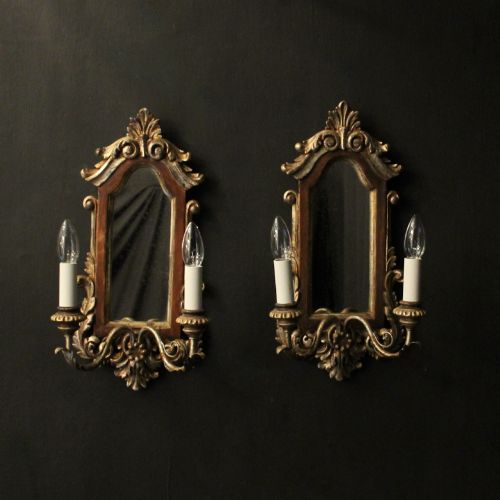
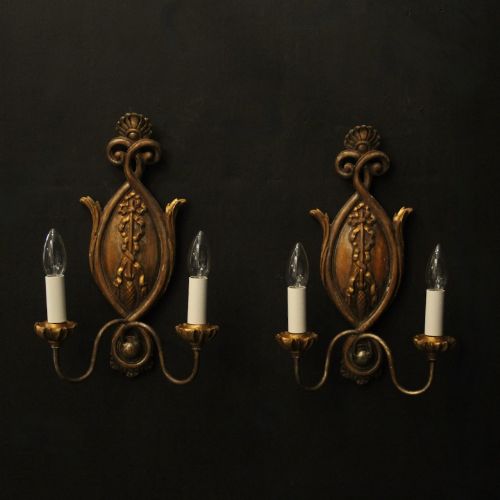
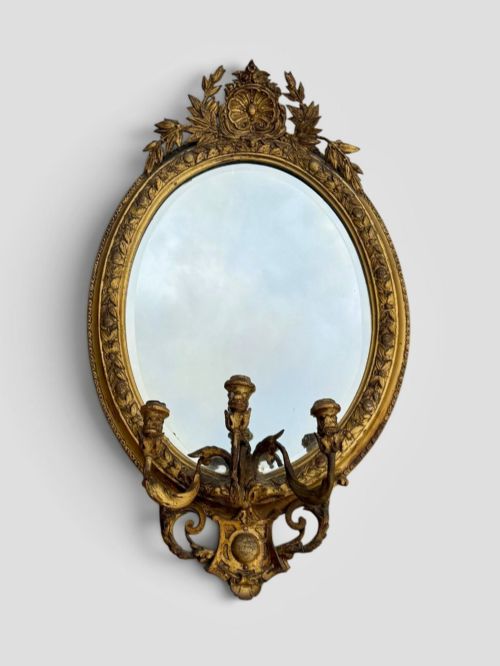
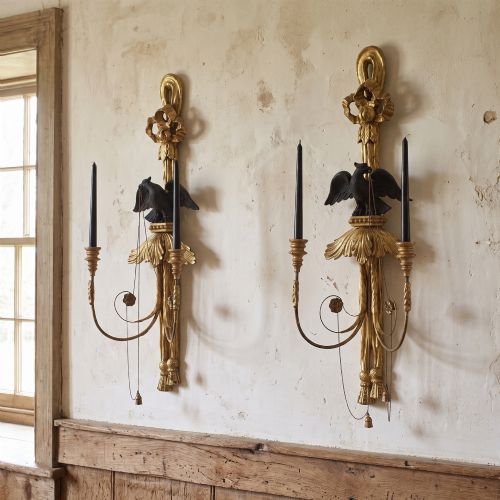
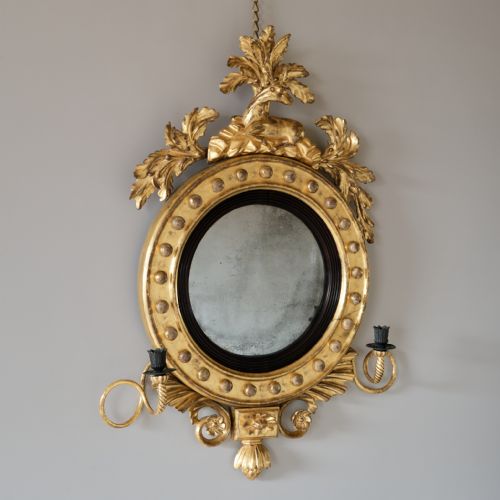
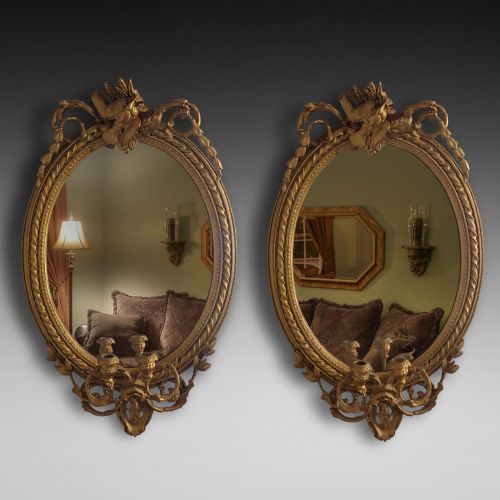
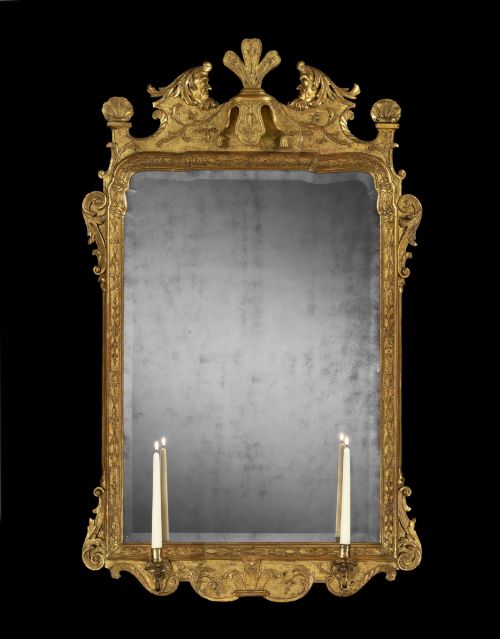
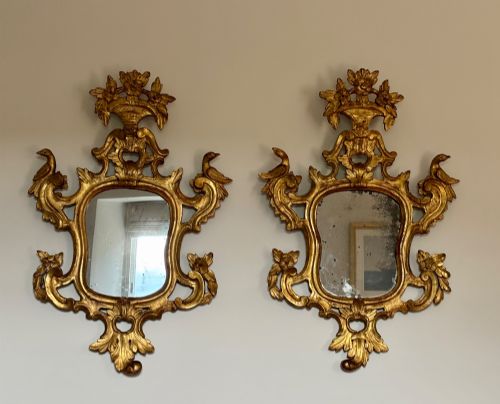
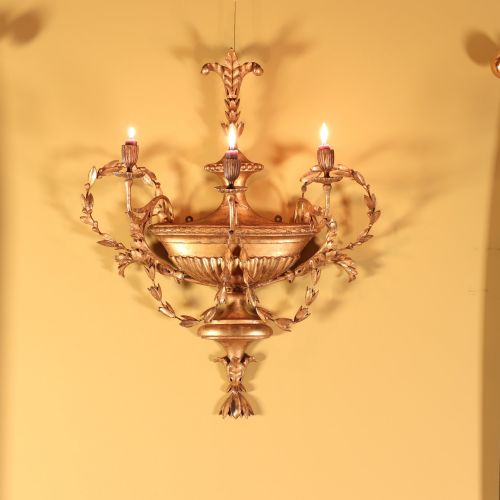
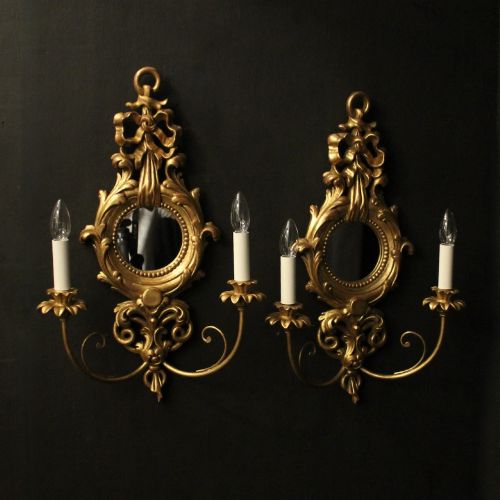
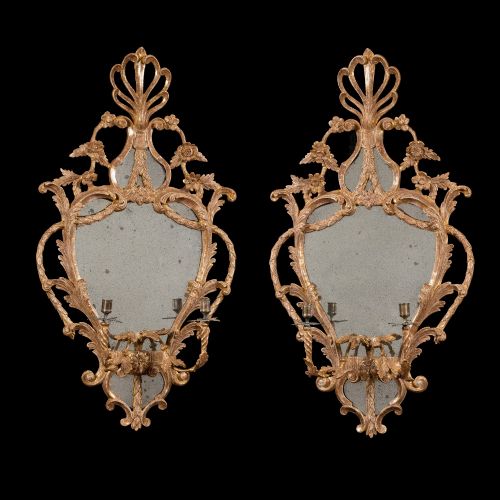
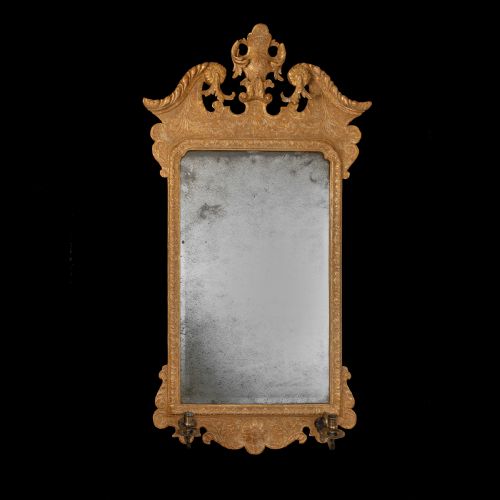
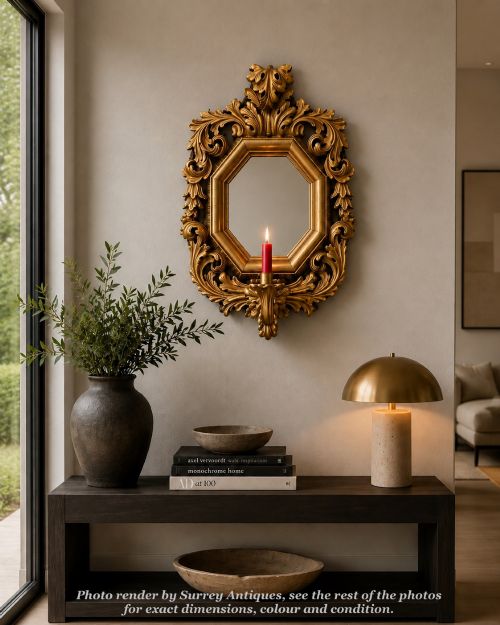
Gold giltwood sconces encompass wall lights, girandoles, brackets and mirrors created across several centuries. The selections span 18th century Italian and Georgian pieces through to Victorian revivals and 1930s Florentine designs.
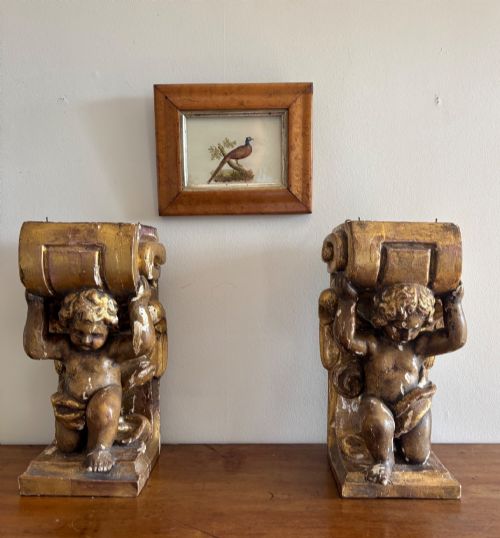
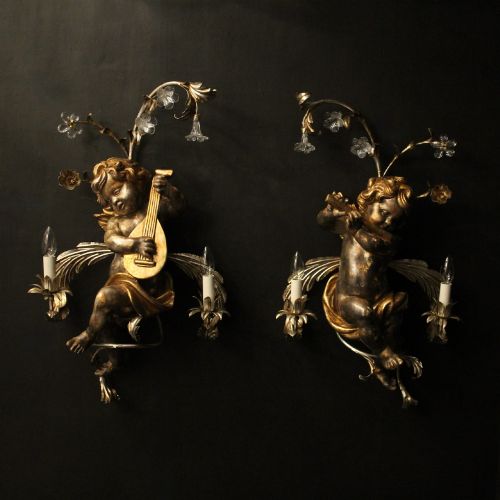
Buyers encounter twin arm wall lights, three branch sconces, carved brackets and convex mirrors designed to hold candles or electric fittings. Italian and French workshops provide many of the regional variants found in this selection.
How They Were Made
Maker's workshops built these objects using carved wood, gesso and metal, applying gold leaf or gilt paint to the finished structure. Glass components appear in mirrors, convex plates and girandoles, while brass often supports the arm attachments.
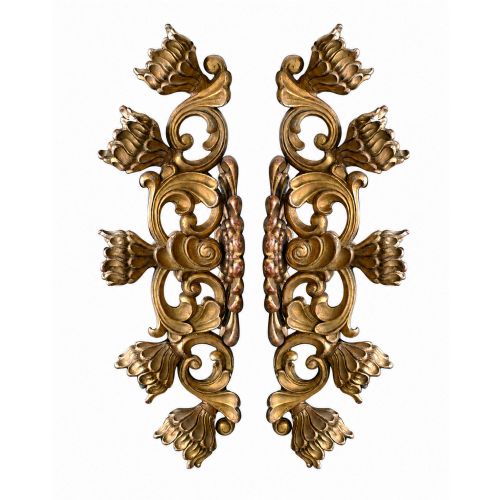
Italian and French artisans utilised hand-carving techniques to shape intricate rococo, baroque and neoclassical motifs, including putti, cherubs, eagles and floral scrolls. Gesso provided a smooth preparation layer for the subsequent application of gilding.
Listings feature items from the 18th century, Regency period, Victorian era and 1930s, utilising giltwood, gesso, brass and glass.
What Varies in Quality
Quality rests upon the crispness of the hand-carving in the wooden structure and the depth of the applied gold leaf. Pieces with sharp relief work and finely rendered details display superior artisan skill compared to softer cast or painted alternatives.
The integration of original mirror glass, intact gesso layers and well-preserved structural joins distinguishes finer examples. Provenance and the harmony of paired items also influence the standing of an object.
Benjamin Goodison
The Gold Giltwood Sconces Glossary
- Giltwood
- Wood that has been coated with gold leaf or a gold-coloured finish. This material forms the primary visual base for these historic wall fittings.
- Girandole
- A branched wall light incorporating a mirror backplate. The reflective glass multiplies the candlelight within a room.
- Gesso
- A plaster mixture applied to carved wood to create a smooth surface for gilding. It allows for intricate moulded decoration.
- Rococo
- An ornate 18th century style characterised by asymmetrical scrolls, C-curves and naturalistic motifs. It heavily influences many Italian and French pieces on this page.
- Convex mirror
- A round mirror with a curved glass plate that provides a wide-angle reflection of the interior space. These frequently feature gilded frames with eagle crests.
Gold Giltwood Sconces: Frequently Asked Questions
How do I clean gold giltwood sconces?
Dust these items gently with a dry, soft ostrich feather duster to remove surface particles. Avoid liquid cleaners, moisture and chemical sprays, which can damage the delicate gold leaf and gesso.
Take care around carved sections and protruding arms where the gilding is most vulnerable. Professional conservation is advised for deep cleaning or historic restoration.
Were these sconces electrified later?
Many surviving wall lights and girandoles originally held candles and were adapted for electricity during the 20th century. Wiring methods vary, and buyers should have fittings inspected by a qualified electrician.
Original candle sockets and drip pans often remain visible alongside modern internal wiring components. This dual history reflects their long use in period interiors.
How can I tell an 18th century sconce from a later revival?
Examine the timber substrate, the construction joins and the ageing of the gesso beneath the gold leaf. Eighteenth-century pieces display hand-cut joinery, oxidized pins and natural shrinkage in the wood.
Revival pieces from the Victorian era or the 1930s often show machine tooling or different preparation layers. Comparing the style specifics against known period examples helps clarify the date.