
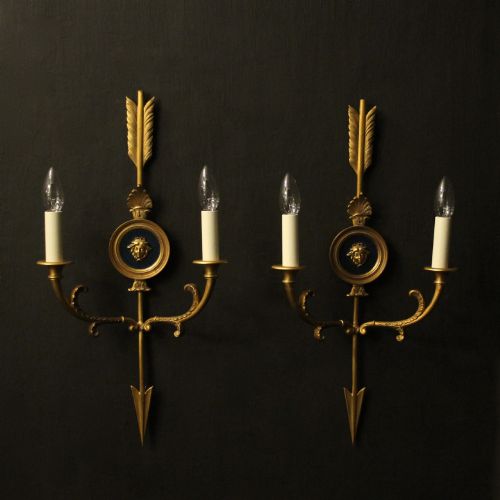
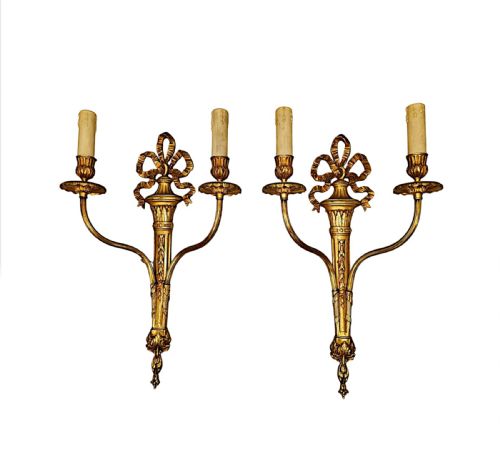
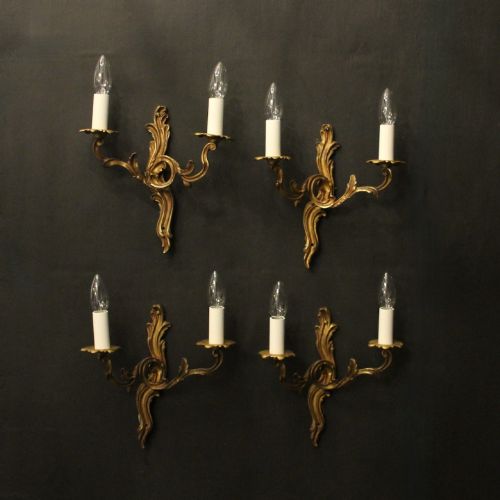

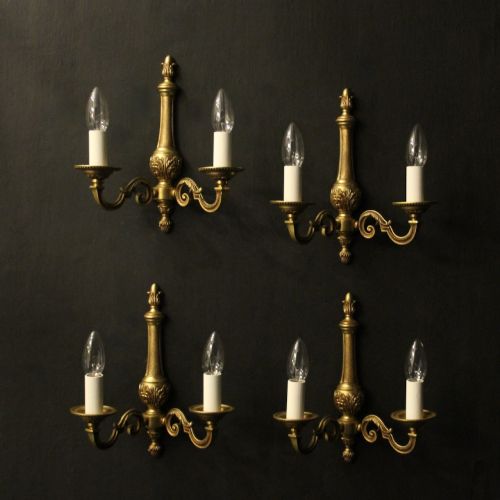
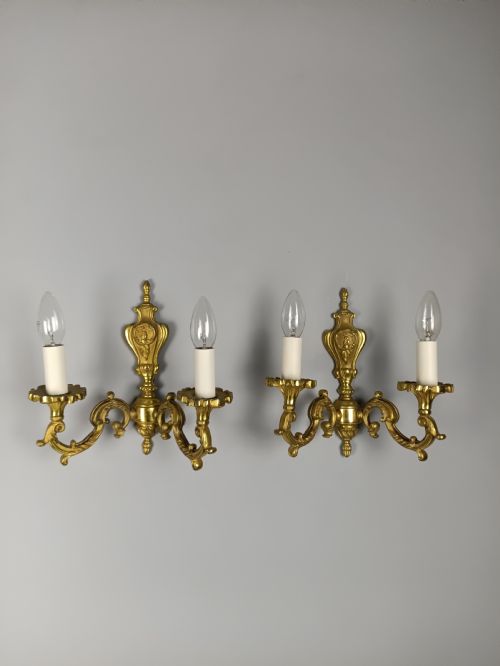
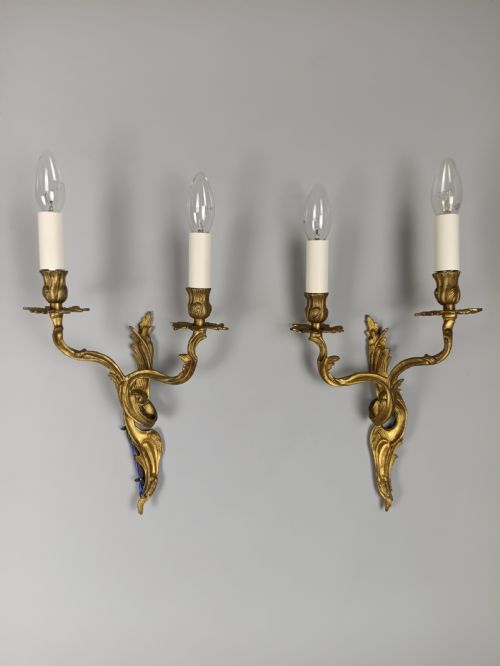
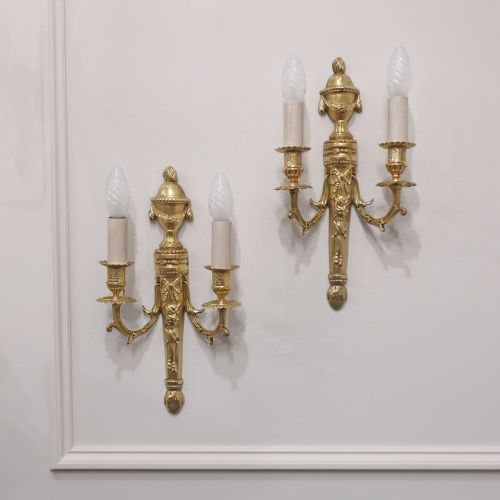
Vintage Gold Sconce Pair
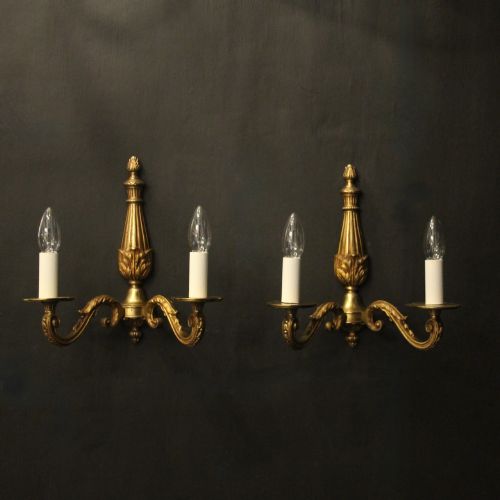
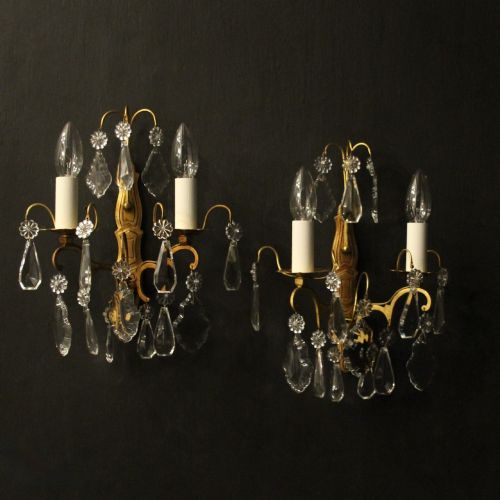
A vintage gold sconce pair brings warm, reflective illumination to a room, offering the decorative polish of French and Italian metalwork.
Vintage Gold Sconce Pair
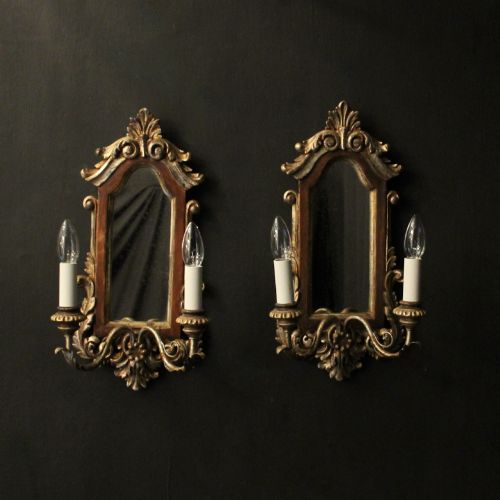
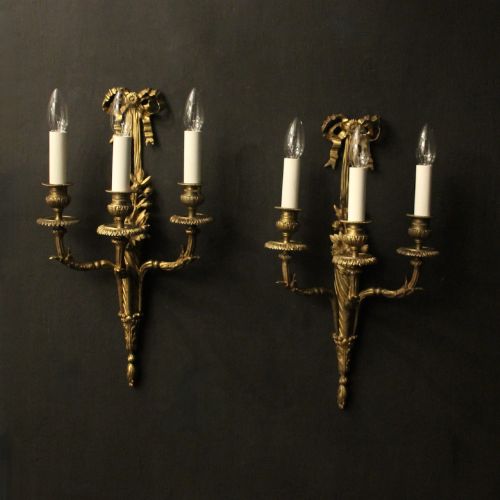
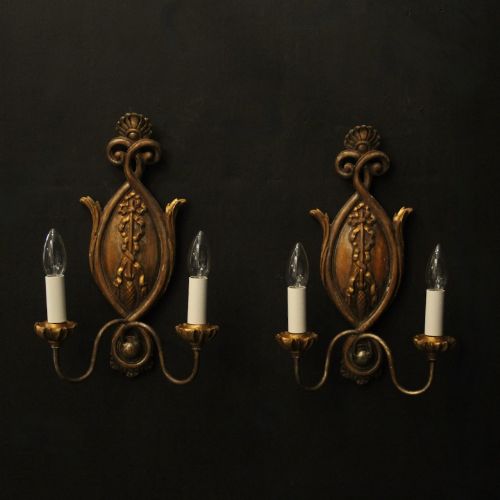
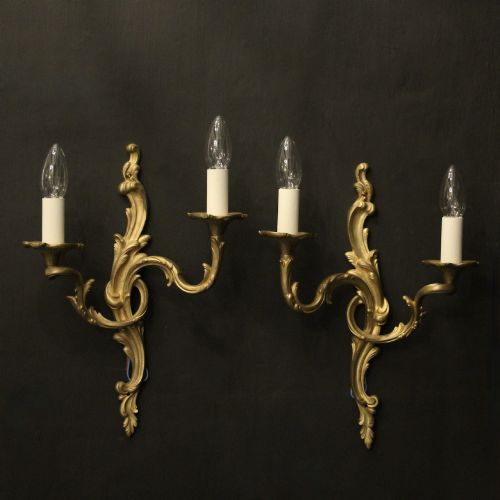
Most examples hail from continental workshops, displaying cast bronze, brass, and giltwood structures shaped into ribbons, caryatids, and foliate scrolls. The selection leans heavily toward matched pairs produced during the nineteen-twenties and nineteen-thirties.
Materials and construction methods
The construction relies heavily on cast bronze, brass, and carved wood finished with gold leaf, ormolu, or gilt layers. Metal components are cast in sections, chased by hand to sharpen surface details, and then gilded or plated to achieve a brilliant metallic sheen.
Giltwood elements utilise carved timber bases coated in bole before the application of delicate gold leaf sheets. Ormolu mounts involve mercury gilding on cast bronze, a technique that yields a durable and deep golden lustre on nineteenth-century pieces.
Glass and crystal components, where present, are hand-cut or moulded to complement the reflective metal frames and diffuse the illumination. Wall plates and backplates are engineered to support the weight of multiple arms safely against plaster walls.
Several pairs feature carved ribbon motifs frozen in mid-flutter, proving that even eighteenth-century decorators loved a bow.
Assessing craftsmanship and finish
Quality separates through the crispness of the chasing on bronze and brass castings, where superior examples retain sharp, deep relief in acanthus leaves and ribbon folds rather than soft, blurred edges. The depth and warmth of the gilding itself dictate the visual impact, distinguishing heavy fire gilding and genuine gold leaf from thin modern plating.
Construction rigidity defines better pieces, with substantial backplates and secure mechanical joints ensuring the arms remain perfectly parallel and perpendicular to the wall. Master workshops expended greater labour on hand-finishing hidden junctions and integrating mounting brackets seamlessly into the decorative scheme.
W.A.S. Benson·Maison Baguès·Casier
The Vintage Gold Sconce Pair Glossary
- Ormolu
- Gilded bronze produced by applying a mercury and gold amalgam to cast bronze before heating. This historical technique creates a rich, durable golden surface seen on finer French lighting.
- Girandole
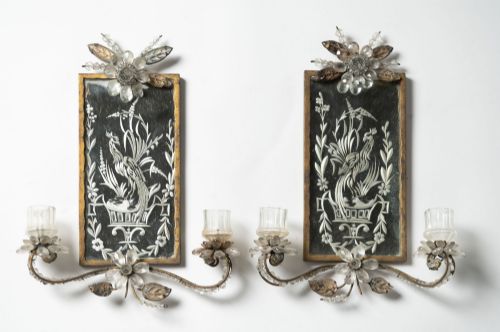
- A branched wall light or sconce incorporating a mirror backplate. The reflective glass multiplies the candlelight within the room.
- Chasing
- The hand-tooling of metal surfaces with punches and hammers after casting. This process refines details and adds texture to bronze and brass mounts.
- Giltwood
- Timber carved and subsequently covered with gold leaf or metal powder. Florentine workshops utilised this method extensively for decorative wall fixtures.
- Applique
- A French term for a wall-mounted light fixture or sconce. It frequently appears in descriptions of continental decorative metalwork.
Vintage Gold Sconce Pair: Frequently Asked Questions
How do I wire antique wall sconces?
Many vintage sconces accommodate standard internal wiring channels or require professional conversion from candle sockets to modern lamp holders. An electrician can adapt the backplate mounting to fit standard wall junction boxes safely without altering the visible exterior.
Retaining original insulating materials or replacing degraded fabric wiring ensures the fixture meets current safety standards while preserving the structural integrity of the metal arms.
Where should I hang a sconce pair?
Matching sconces perform best when positioned symmetrically to frame architectural focal points such as mantelpieces, doorways, or large wall mirrors. Height placement typically positions the centre of the backplate at eye level to prevent direct glare from exposed bulbs.
Spacing depends on the width of the furniture or mirror below, ensuring the fixtures anchor the visual weight of the wall composition effectively.
How do I clean gilded bronze safely?
Dusting gently with a soft, dry artist brush prevents the accumulation of particulate matter in the recessed chased details of bronze and brass surfaces. Avoid abrasive cloths, chemical solvents, or commercial metal polishes that can strip thin gold leaf or historic ormolu.
Light cleaning with a damp microfiber cloth is sufficient for removing surface grime without disturbing the aged patina accumulated over decades.
What is the difference between ormolu and gilt brass?
Ormolu specifically denotes mercury-gilded bronze utilised on high-end French decorative pieces, offering a deep, warm metallic depth. Gilt brass typically employs a brighter, thinner electroplated gold finish over a base alloy, common in later twentieth-century production.
Examining the weight and the sharpness of the casting under magnification helps differentiate between heavy bronze foundations and lighter brass pressings.