
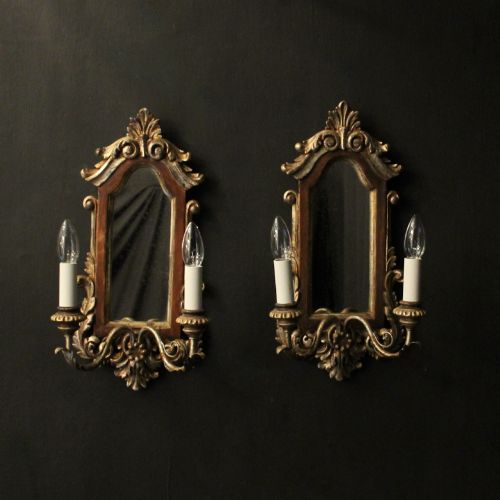
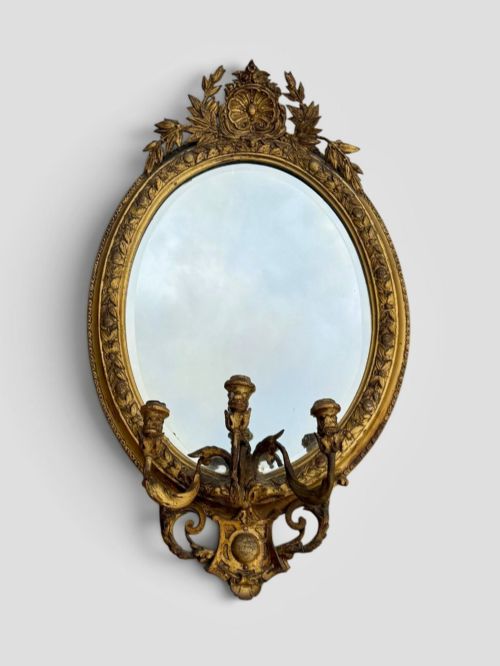
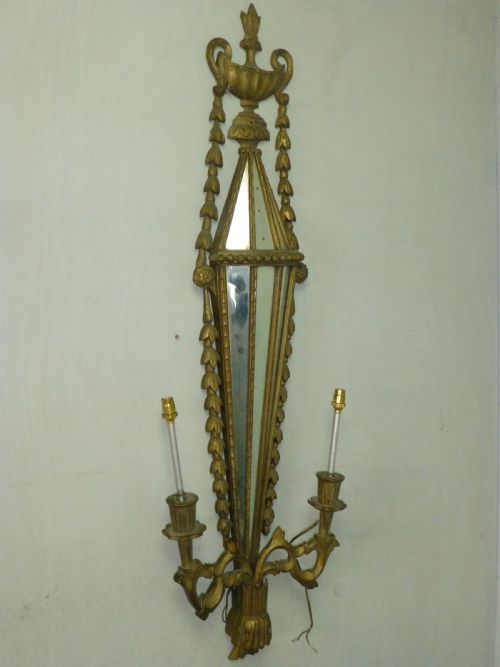
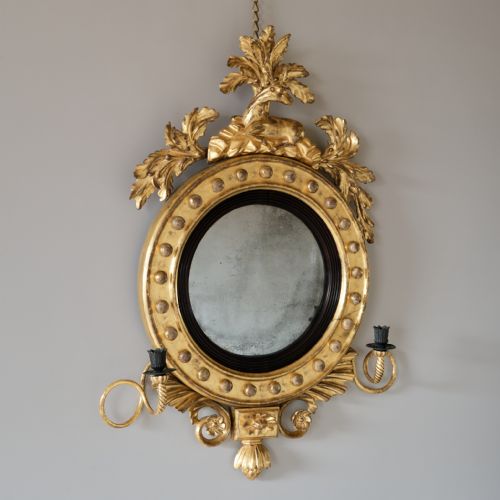
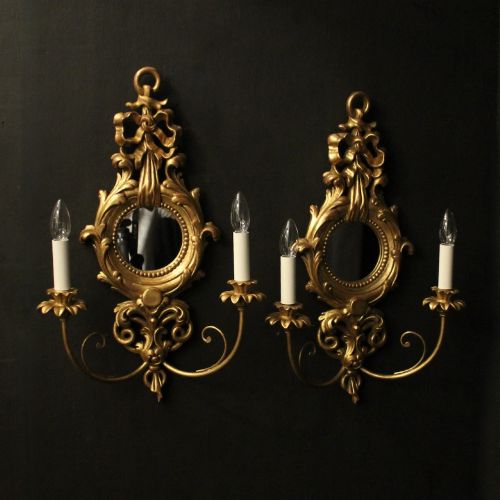
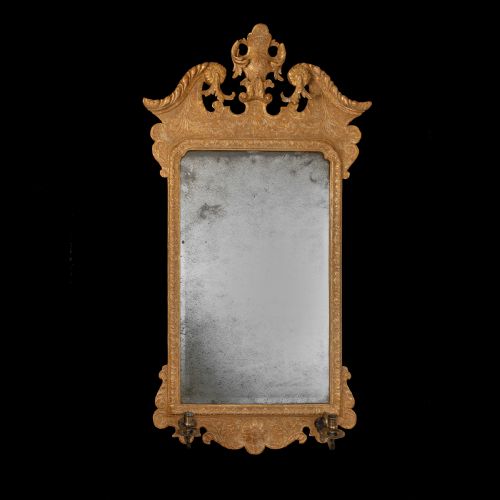
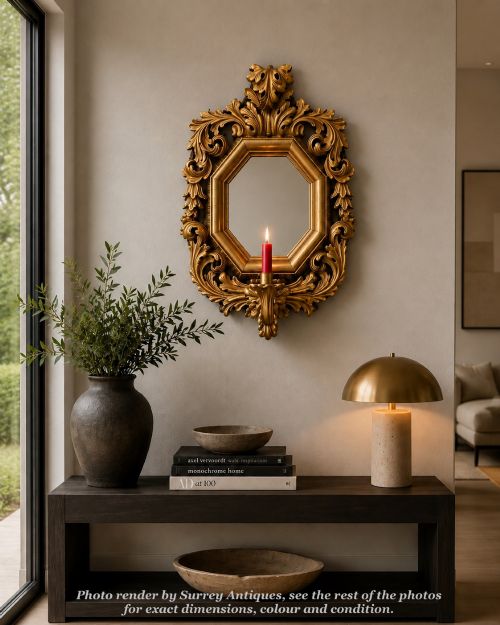
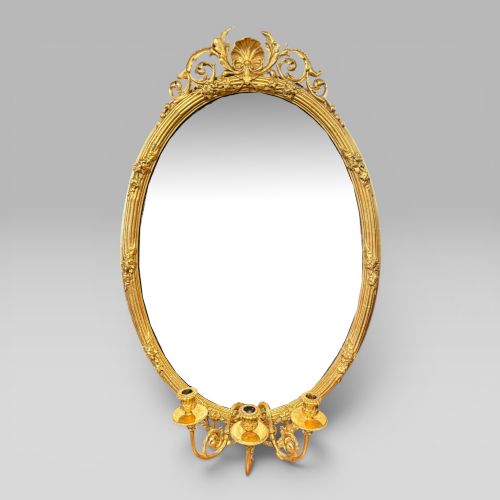
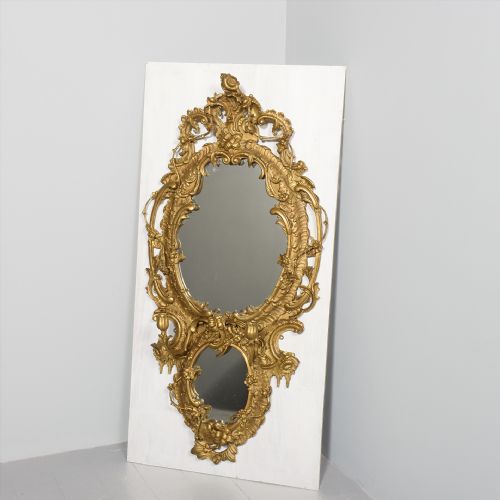
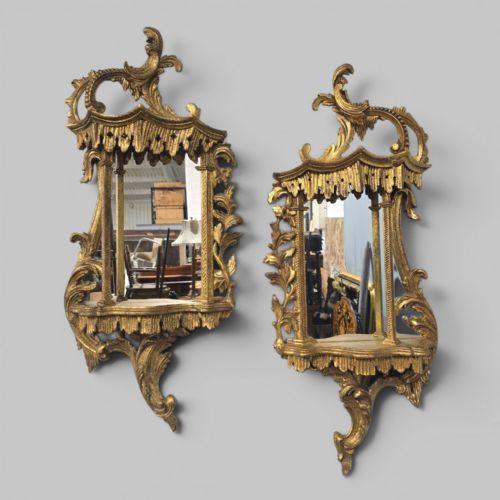

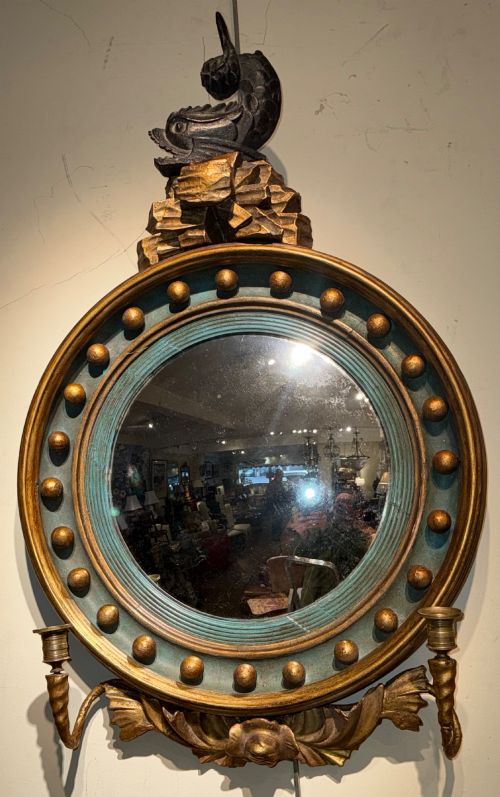
Carved Gilt Mirror Sconces
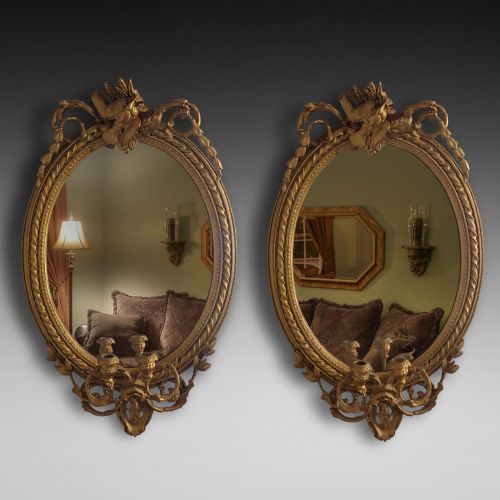
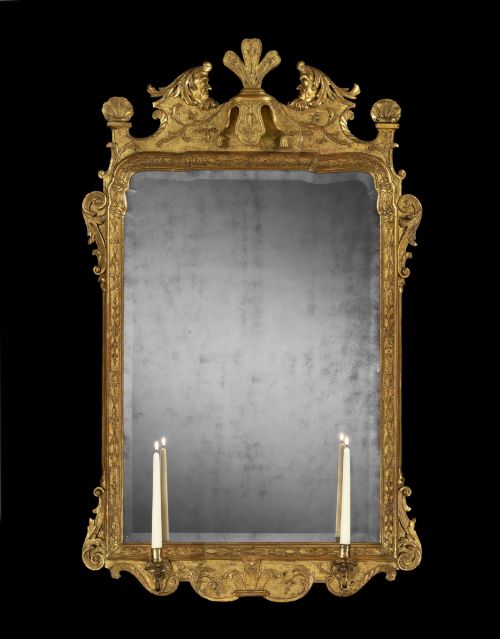
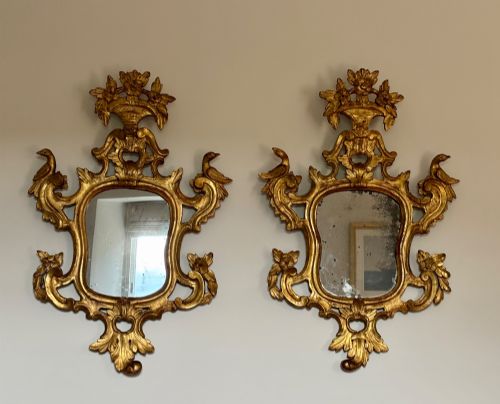
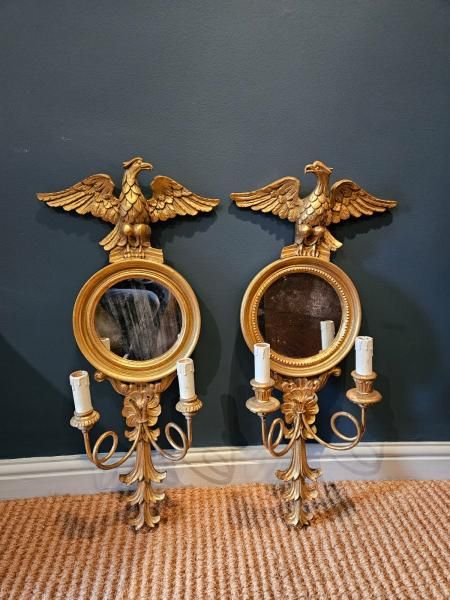
These carved gilt mirror sconces bring together reflective glass and candle arms, casting a warm light across a room.
Carved Gilt Mirror Sconces
When you search for carved gilt mirror sconces, you encounter pieces designed to hold candles while reflecting the glow through mirrored glass. These items function both as wall lighting and as decorative wall ornaments.
The selections span several periods, with particular emphasis on 18th century, Regency, and 19th century examples. Forms range from girandoles with twin candle arms to convex mirrors and large overmantel pieces.
Origin points vary widely across the inventory, featuring English designs alongside French and Italian pieces. Many items appear as matched pairs, particularly the girandoles and wall sconces.
How they were made
Wood serves as the primary base material, shaped through hand carving before receiving applications of gesso and gold leaf or gilt paint. Metal and brass elements often form the candle arms or structural supports.
Reflective surfaces consist of mirror glass, sometimes appearing with foxed plates that indicate considerable age. Artisans built these wall lights using traditional joinery and carving techniques suited to each specific period style, such as Rococo or Regency.
Materials recorded across the inventory include carved wood, gesso, brass, and traditional mirror glass.
What varies in quality
The crispness of the wood carving dictates much of the visual hierarchy among these wall pieces. Finer items display deep, deliberate relief work in the gesso and giltwood, whereas simpler examples show softer or more uniform detailing.
The condition of the original gilding and the mirror plates also establishes the standing of an individual piece. Retaining untouched historical surfaces and original glass plates elevates the character of a mirror sconce considerably.
Benjamin Goodison
The Carved Gilt Mirror Sconces Glossary
- Giltwood
- Wood that has been coated with gold leaf or a gold-coloured finish. This material defines the bright, reflective surfaces characteristic of these frames.
- Girandole
- A branched wall candlestick or light fixture incorporating a mirror. These pieces often feature twin arms for holding candles.
- Gesso
- A plaster-like material applied to wood as a base for gilding. It allows craftsmen to model intricate decorative details before applying gold leaf.
- Convex mirror
- A circular mirror with a bulging spherical glass surface that reflects a wide field of view. Regency examples frequently utilise this optical form.
- Foxed plate
- Mirror glass showing age-related spots, discoloration, or deterioration of the backing. Collectors often appreciate this sign of historical depth.
- Cartouche
- An ornamental frame resembling a rolled-up piece of paper or scrollwork. 18th century Italian examples frequently employ this motif.
Carved Gilt Mirror Sconces: Frequently Asked Questions
What is a girandole mirror?
A girandole mirror combines a reflective glass plate with attached candle sconces, designed specifically to hang on a wall. The candle arms project forward to illuminate the room while the mirror amplifies the light.
These fixtures appear in various historical periods, frequently taking symmetrical forms with ornate carved frames.
How do I hang a heavy giltwood sconce?
Hanging these pieces requires locating solid wall anchors or studs capable of supporting the combined weight of the carved wood, glass, and metal arms. Professional installation is often advisable for larger overmantel or convex mirrors.
Ensure the hanging wire or integrated brackets match the substantial build of the frame.
Are the mirror plates original?
Many older pieces retain their original glass plates, which frequently exhibit foxing, dark spots, or minor surface weathering due to age. Replacements do occur on certain items when original glass has suffered too much damage over the centuries.
Checking the back of the frame helps determine the age and history of the glass.