



Gold Gilt Plant Stand
A gold gilt plant stand raises your greenery with classical presence, drawing the eye upwards through gleaming surfaces and ornate carved details.
Gold Gilt Plant Stand
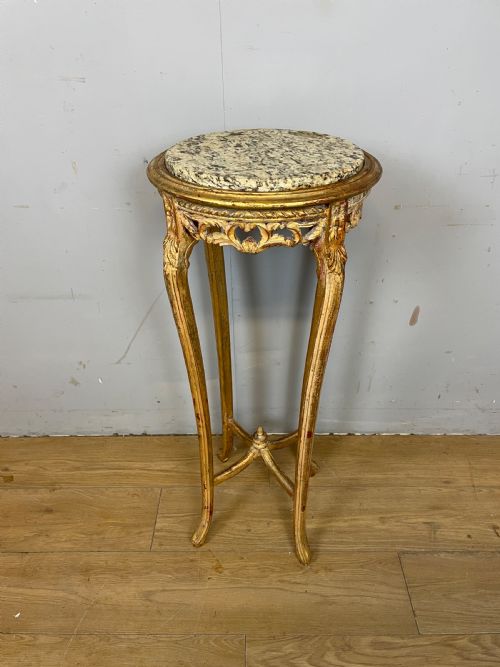
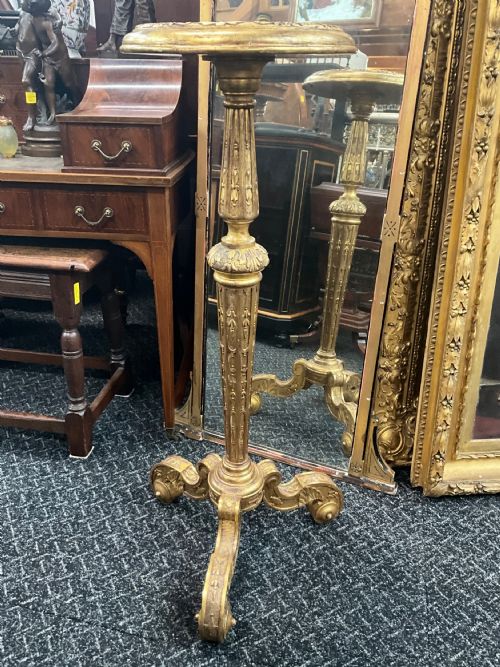
A gold gilt plant stand functions as an elevated display platform for indoor foliage, urns, and decorative ceramics. These pieces emerge in various forms across the eighteenth, nineteenth, and early twentieth centuries, serving grand drawing rooms and intimate parlours alike.
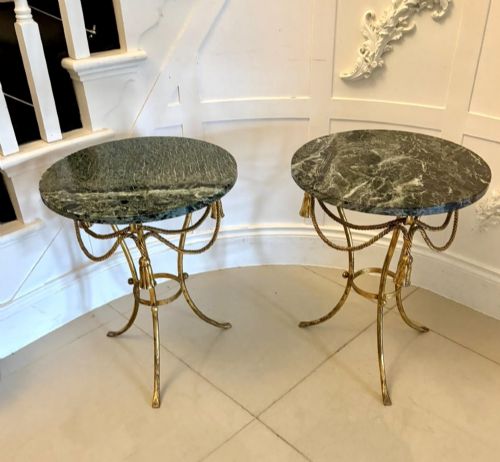
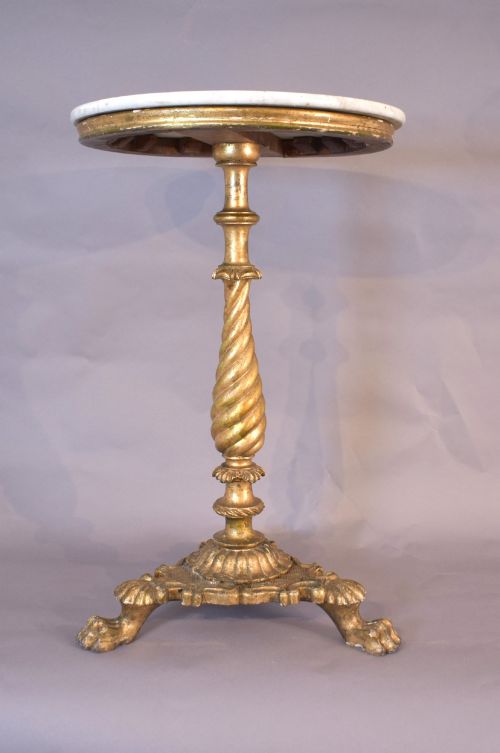
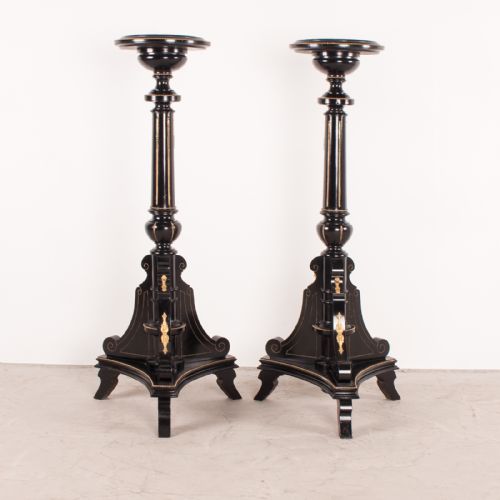
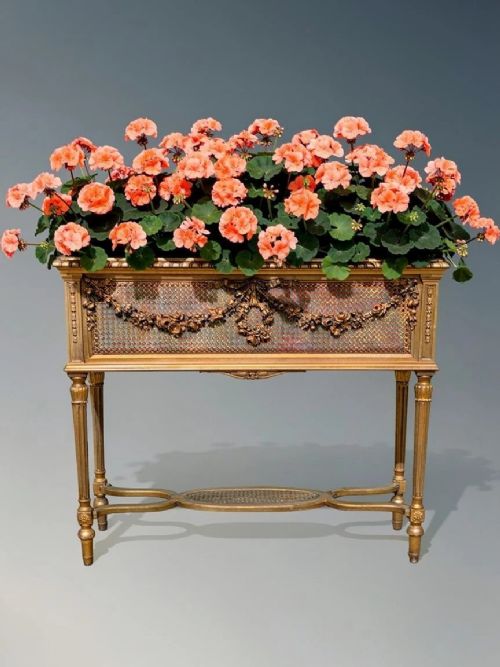
The selections available here range from tall torchere columns and tripod tables to low jardiniere stands and occasional side tables. Neoclassical, Regency, and Louis XVI styles dominate the forms, frequently bringing French and Italian influences into domestic spaces.
Tall pedestals and slender torcheres provide vertical emphasis in room corners, while circular marble-topped tables and planters offer robust surfaces for heavy pots. Each piece unites utility with decorative ambition, framing living plants as sculptures.
How they were made
Giltwood, gesso, and gold leaf form the luminous surfaces characteristic of these stands, applied over sturdy timber frames. Artisans built up intricate relief decoration using gesso before applying delicate layers of gold leaf to catch the light.
Contrasting materials appear alongside the gold, including white and green marble tops, onyx inserts, ebonised wood, and ormolu mounts. Painted elements and cane details further enrich the construction, particularly in pieces reflecting Aesthetic Movement and Venetian tastes.
Some nineteenth-century plant stands doubled as clandestine smoking tables, hiding ash trays beneath the foliage.
What varies in quality
The refinement of the carved ornament and the crispness of the gesso detailing separate standard production from exceptional craftsmanship. Deeper undercut carving on acanthus leaves and floral mouldings indicates a more skilled hand at the bench.
The choice of structural materials and inset surfaces dictates the overall weight and substance of the piece. Solid timber frames supporting genuine marble or onyx tops represent a superior build compared to lighter, purely decorative constructions.
The Gold Gilt Plant Stand Glossary
- Giltwood
- Timber that has been coated with gold leaf or gold paint for a decorative metallic finish. This technique creates a rich, reflective surface that defines classical European furniture.
- Torchere
- A tall, slender stand designed to hold a light source or a decorative plant. These elevated pieces were traditionally placed in corners or between windows.
- Gesso
- A plaster mixture applied to wood surfaces and carved before gilding. It provides the smooth, malleable ground necessary for intricate low-relief ornamentation.
- Ormolu
- Gilded bronze mounts applied to furniture edges and columns. The technique adds metallic contrast and refined decorative detail to wood and marble structures.
- Jardiniere
- An ornamental stand or receptacle specifically designed to hold plants and flowers. These items often feature waterproof liners or raised galleries to contain soil and water.
Gold Gilt Plant Stand: Frequently Asked Questions
What is a torchere stand used for?
A torchere stand originally supported lighting devices such as candlesticks or oil lamps in grand rooms. Today, collectors primarily use them as elevated display pedestals for plants, urns, and sculptures.
Their slender vertical profile allows them to fit neatly into corners or narrow spaces without dominating the floor plan.
How do I style a marble top plant stand?
A marble top plant stand provides a cool, water-resistant surface that safely accommodates potted plants and trailing greenery. The stone top prevents moisture damage while adding textural contrast to the surrounding gilded wood.
Pair the stand with ceramics or bronze vessels to complement the classical aesthetic of the base.
Which periods do these stands come from?
The pieces span from the eighteenth century through the Victorian era and into the early twentieth century. Designs often reference earlier classical revivals such as Neoclassical, Regency, and French Rococo styles.
Maker aesthetics frequently draw inspiration from French chateaux and Venetian interiors.
How do I care for giltwood surfaces?
Giltwood requires gentle dusting with a soft, dry cloth to protect the delicate gold leaf layer. Avoid liquid cleaners, moisture, and abrasive materials that can strip away the metallic finish.
Keep the stands away from direct sunlight and strong heat sources to prevent the underlying gesso from cracking.