







Gold Gilt Occasional Tables
Gold gilt occasional tables bring reflective warmth and compact surface space to a room, spanning French, Regency and Chinoiserie traditions.
Gold Gilt Occasional Tables
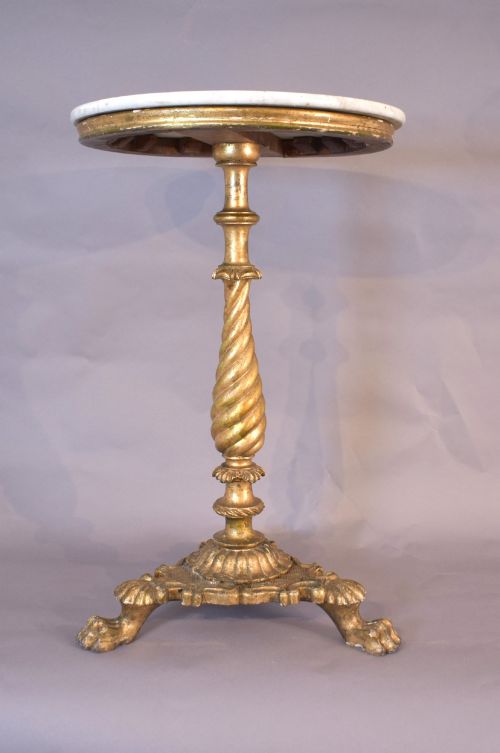
Gold gilt occasional tables encompass diverse auxiliary surfaces designed for mobility and display, ranging from compact side tables and wine tables to multi-tiered étagères and nests of tables. These pieces emerge across the nineteenth century and into the early twentieth century, drawing on Regency, Victorian and Edwardian aesthetics.
Makers and workshops utilised varied decorative vocabularies, pairing gilded surfaces with contrasting materials like marble tops, lacquer, and painted motifs. The surviving inventory demonstrates how these small-scale tables served both utilitarian and decorative roles in period interiors.
Materials and construction methods
Construction relies heavily on carved timber frames finished with gold leaf, giltwood, or gesso, often paired with structural hardwoods like mahogany or ebonised wood. Workshops applied gold leaf over prepared gesso layers to achieve reflective surfaces on carved tripod bases, column supports, and ornate aprons.
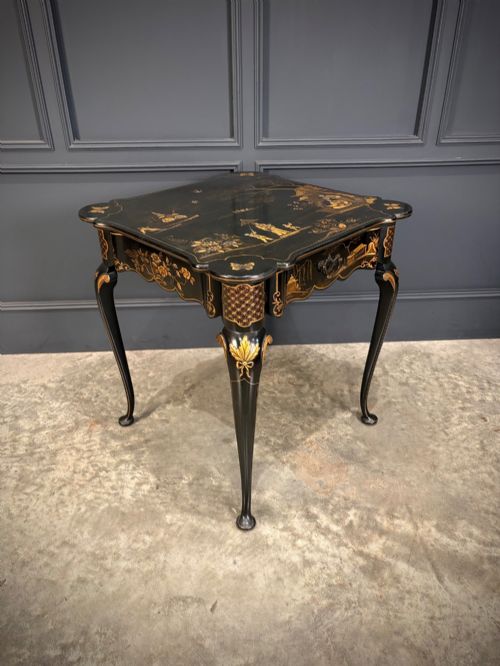
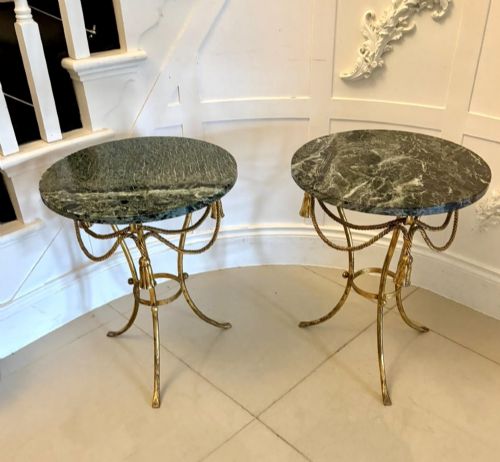
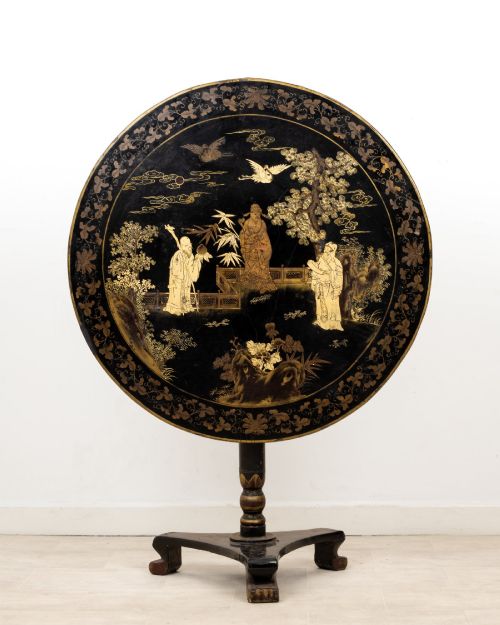
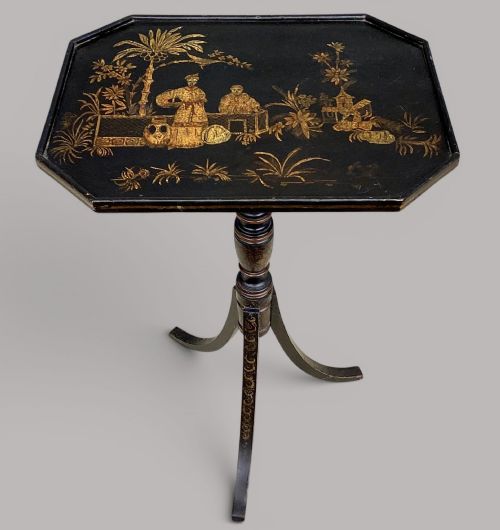
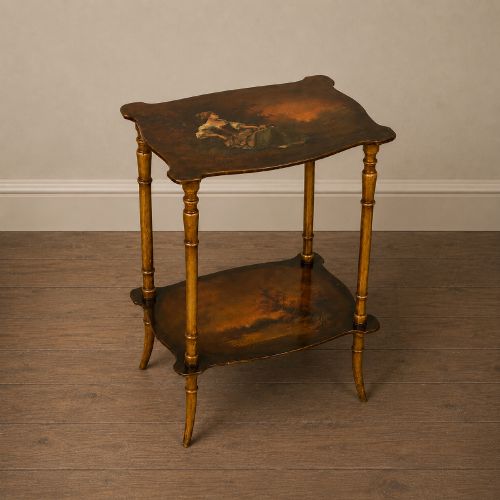
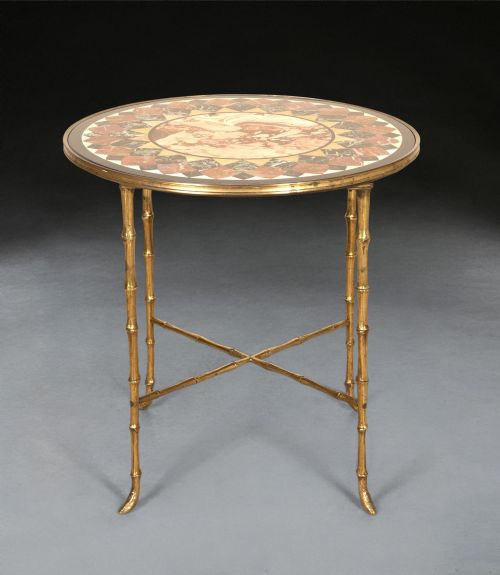
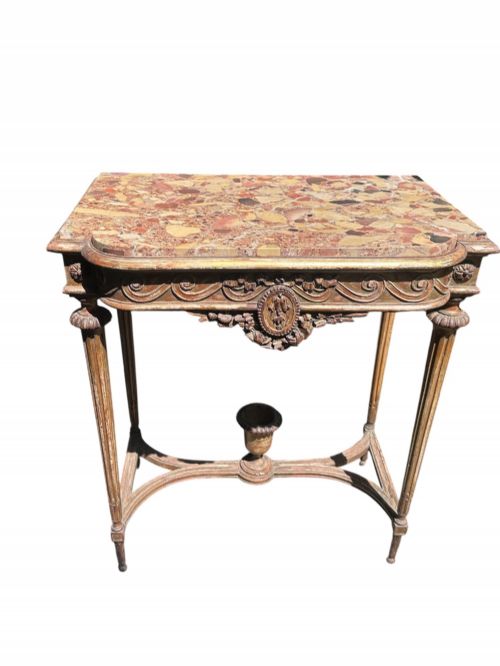
Surface ornamentation incorporates diverse decorative techniques, from hand-painted lacquer and Chinoiserie motifs to vernis martin finishes and ormolu mounts. Insets of white, verde, or specimen marble provide durable, contrasting tops for heavy central columns and gilt-wood frames.
Gold Gilt Occasional Tables Retail Price Guide 2026
Typical asking prices for gold gilt occasional tables among the pieces listed under this phrase on Sellingantiques today, from the lower quarter to the upper quarter. They describe what is for sale here now, not the wider market.
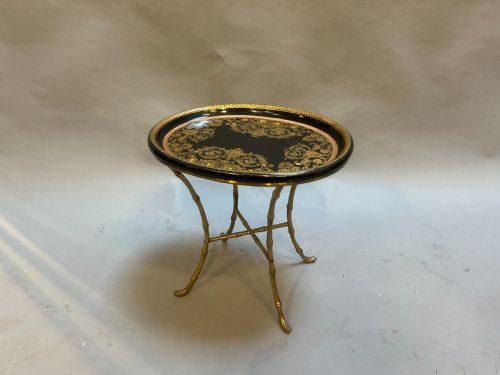
Listings feature marble, onyx, and lacquered papier-mâché tray tops paired with giltwood and painted frames.
Distinctions in craftsmanship and materials
The refinement of the carving and the application of the gilding set individual pieces apart, distinguishing hand-carved gesso and gold leaf over timber from simpler painted finishes. Crisp relief on floral mouldings, ormolu mounts, and tripod legs indicates greater workshop investment.
The selection of inset materials directly impacts the character of the piece, with solid specimen marble, onyx, or hand-lacquered papier-mâché trays representing higher levels of material quality than plain timber tops.
Whytock and Reid
The Gold Gilt Occasional Tables Glossary
- Giltwood
- Timber, typically lime or pine, carved and coated with gold leaf or metal leaf over a gesso ground. This technique creates a luminous, reflective surface characteristic of formal period furniture.
- Étagère
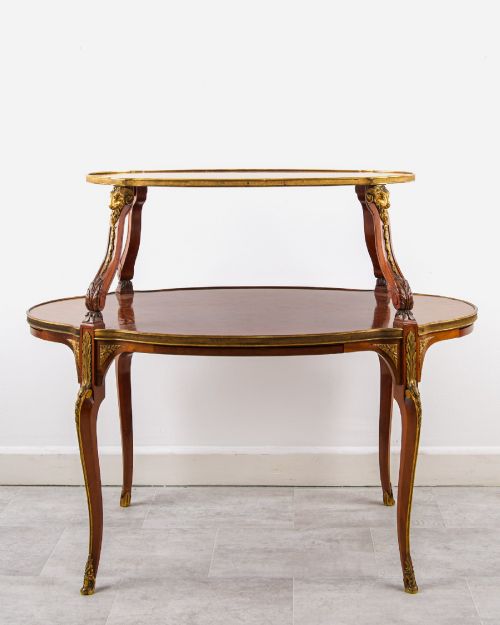
- A small open shelving unit or multi-tiered side table designed for displaying ornaments or books. These tables typically feature two or more levels supported by slender columns or legs.
- Ormolu
- Gilded bronze mounts applied to furniture edges, legs, and aprons for decorative accent. The technique was widely employed by French cabinetmakers during the nineteenth century.
- Vernis Martin
- A simulated Japanese lacquer finish developed in eighteenth-century France and revived in later periods. It uses translucent varnishes to build up depth over painted decorations.
- Specimen Marble
- A tabletop composed of various coloured marbles fitted together in geometric patterns or specimen panels. These tops provide a heavy, durable, and multicoloured contrasting surface to gilt frames.
Gold Gilt Occasional Tables: Frequently Asked Questions
Where were gold gilt occasional tables placed in period rooms?
These tables served as mobile furniture pieces positioned beside seating areas, beneath mirrors, or in corners to hold lamps, drinks, and decorative objects. Their compact footprints allowed them to be moved easily around drawing rooms and boudoirs as needed.
In larger spaces, central variants functioned as freestanding display hubs, while tiered versions held small plants, porcelain, or writing equipment.
How do I distinguish Regency from Victorian examples?
Regency pieces often draw inspiration from classical antiquity, featuring clean architectural lines, parcel gilding on ebonised surfaces, and Chinoiserie lacquer work. The proportions tend to remain restrained and geometric.
Victorian and later nineteenth-century pieces frequently embrace heavier revival styles like Rococo Revival, incorporating elaborate floral mouldings, heavy giltwood carving, and inset marble tops.
How do I care for a giltwood surface?
Giltwood requires gentle maintenance to protect the delicate gold leaf and underlying gesso from moisture and abrasion. Dusting should be performed softly with a dry, lint-free cloth without applying chemical polishes.
Keeping these tables away from direct sunlight and heat sources prevents the timber substrate from expanding and cracking the historic finish.