
Gold Gilt Fauteuil
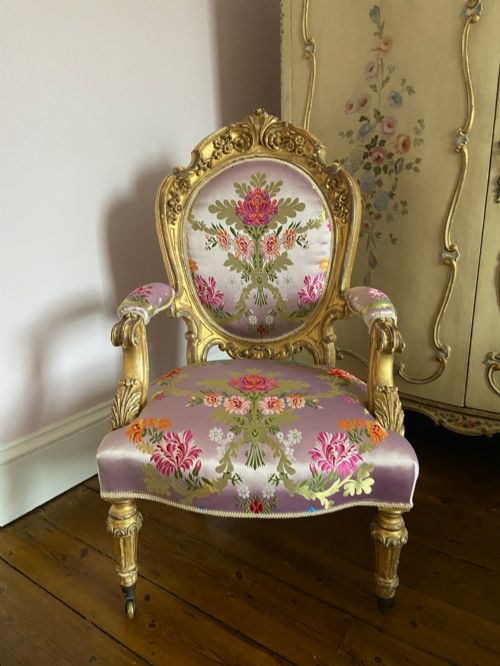
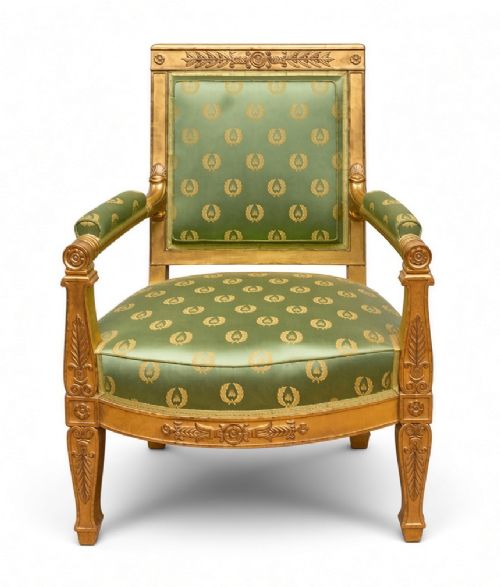
A gold gilt fauteuil brings the sculpted elegance of French chateau reception rooms directly into a modern interior.
Gold Gilt Fauteuil
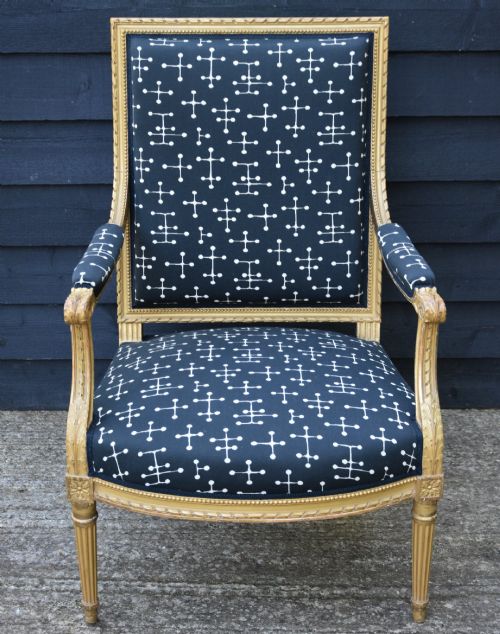
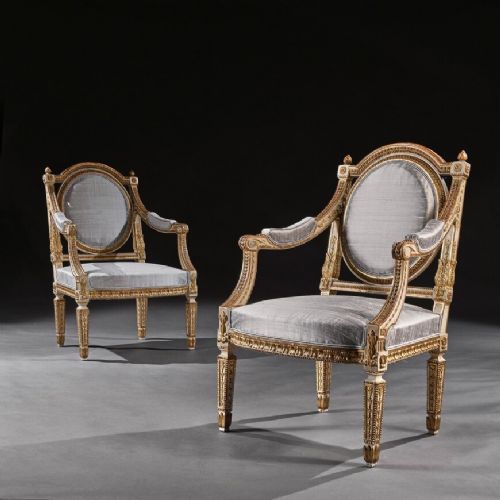
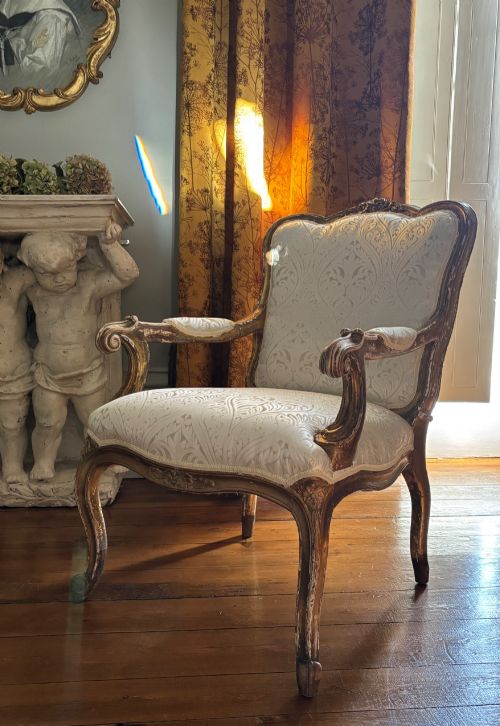
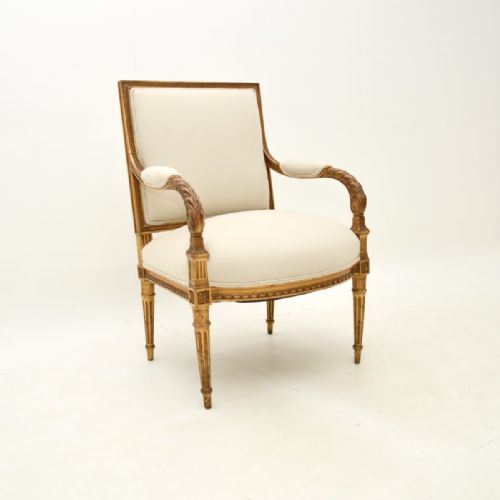
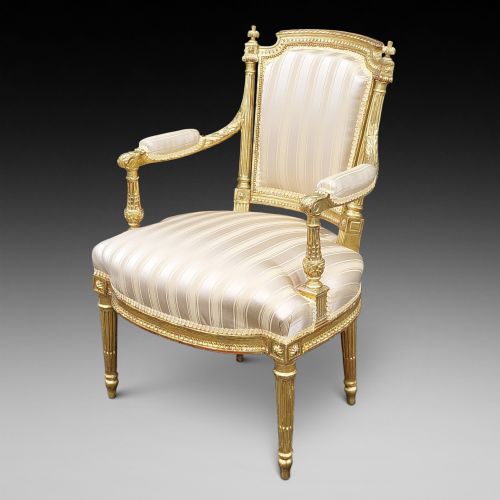
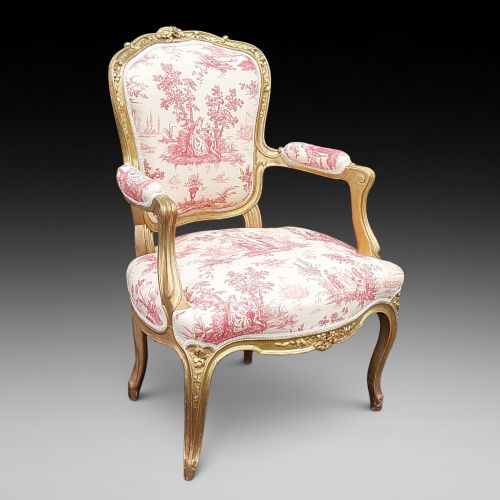
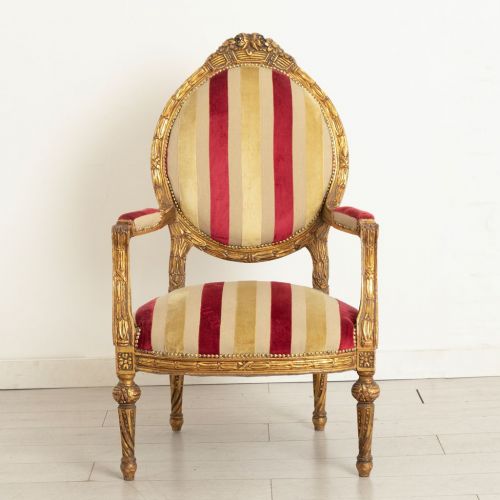
A gold gilt fauteuil is an open-armed upholstered seat originating in France, designed for formal salons and drawing rooms. The pieces gathered here span from the eighteenth century through to the Edwardian period, capturing centuries of evolving European tastes.
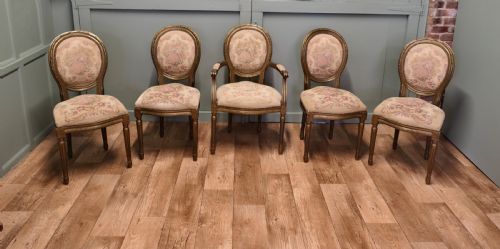
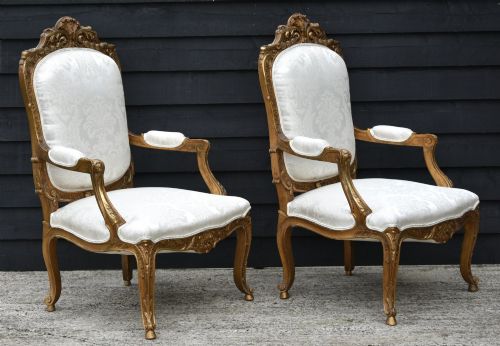
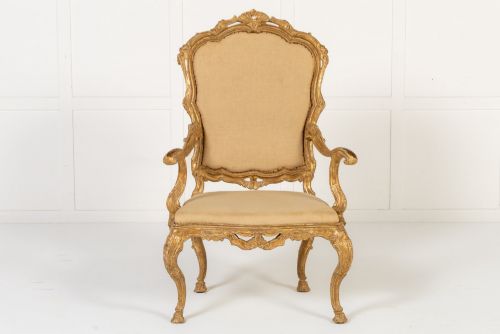
Most examples encountered on this page belong to nineteenth-century revivals of Louis XVI, Régence, and Rococo styles. Makers drew heavily upon classical French motifs, producing armchairs, salon suites, and throne chairs finished in brilliant leaf and paint.
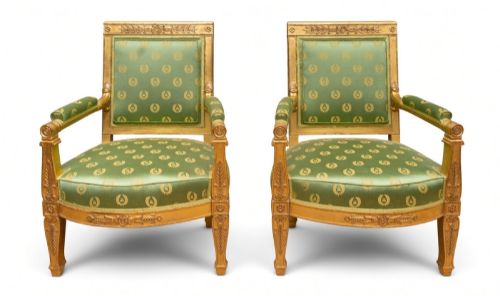
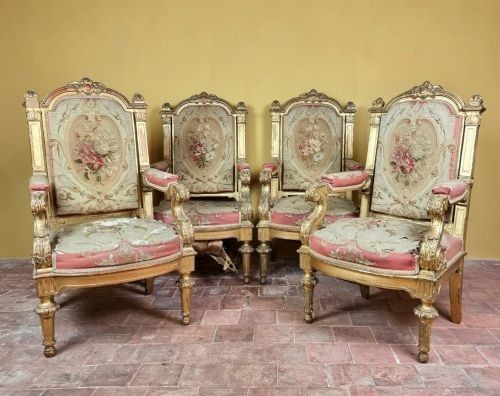
While many specimens hail from French workshops, English interpretations and Italian painted variations also appear within the selection. These pieces frequently survive as matched pairs or larger sets, intended originally for symmetrical placement around a grand hearth or gallery wall.
Materials and construction
The underlying frames of these seats are constructed predominantly from hardwoods such as beech, mahogany, and walnut, providing a sturdy skeleton for intricate hand-carving. Artisans shaped these timbers with floral garlands, acanthus leaves, and fluted legs before applying the surface decoration.
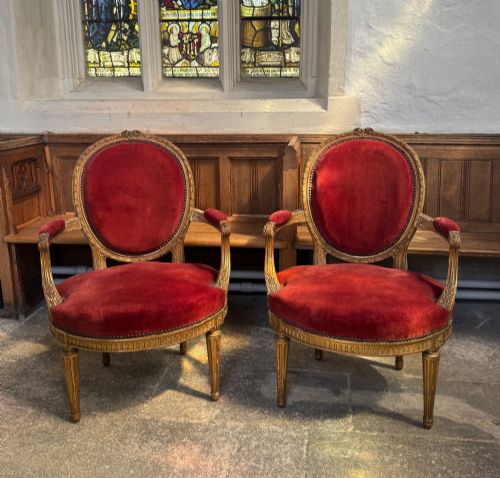
Gilding was achieved by laying delicate sheets of gold leaf over a prepared gesso and bole ground upon the wood. Upholstery materials varied according to the era, ranging from traditional tapestries and heavy silks to modern velvets applied during subsequent restorations.
Listings feature beech, mahogany, and walnut frames finished in giltwood, paired with silk, velvet, and tapestry upholstery across multiple nineteenth-century styles.
Markers of distinction
The distinction between ordinary and exceptional seating lies principally in the crispness and depth of the wood carving. Skilled carvers rendered foliate details and scrolling arms with sharp relief, whereas lesser examples rely on shallow moulding and coarse assembly.
The integrity of the gilt surface also separates superior items, with finer specimens showing subtle burnishing against matte grounds. Original joinery that remains tight without excessive modern reinforcement indicates a high standard of initial manufacture.
Jacob-Desmalter·Blaise Maucuy·Holland and Sons
The Gold Gilt Fauteuil Glossary
- Fauteuil
- An open-armed upholstered armchair with exposed wooden framing, typical of French domestic seating from the seventeenth century onwards. The arms were traditionally padded to accommodate voluminous eighteenth-century garments.
- Giltwood
- Timber coated with thin sheets of gold leaf applied over a prepared plaster base. This finish created a luminous surface that reflected candlelight in grand reception rooms.
- Rococo
- An ornate design style characterised by asymmetrical C-scrolls, shell motifs, and naturalistic floral forms. It dominated mid-eighteenth-century French production and saw widespread revival in the nineteenth century.
- Restauration
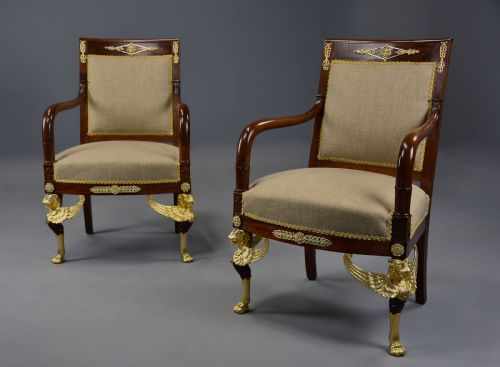
- A French decorative style bridging the Empire period and the reign of Louis Philippe. Furniture from this phase often exhibits restrained classical lines combined with rich gilt surfaces.
- Tapestry
- A heavy hand-woven textile featuring pictorial scenes or botanical patterns used historically for upholstery. These sturdy fabrics were favoured on high-status salon chairs.
Gold Gilt Fauteuil: Frequently Asked Questions
How do I identify a true period fauteuil?
Examine the construction methods visible beneath the seat rails and behind the upholstery for hand-cut joinery and aged timber patination. Eighteenth-century models display different framing techniques compared to nineteenth-century revival pieces.
Look closely at the carving style and the composition of the gesso beneath the gilding. Period pieces reflect the specific decorative vocabulary of their purported era rather than a generalised interpretation.
Were these armchairs meant for daily use?
These seats were originally commissioned for formal reception rooms, salons, and receiving parlours where entertaining took precedence over lounging. Their structural frames are robust, but the open arms and delicate carving require a considerate placement in a contemporary home.
Living with them involves treating them as focal points in low-traffic areas or pairing them with sturdy occasional tables. Regular dusting with a soft brush keeps the gold leaf intact without wearing away the finish.
What is the difference between Louis XVI and Rococo styles?
Louis XVI furniture is defined by neoclassical straight lines, geometric symmetry, fluted columns, and oval or shield-shaped backs. The aesthetic celebrates order and restraint inspired by archaeological discoveries.
In contrast, Rococo designs embrace asymmetry, sweeping serpentine curves, and exuberant shell and scrollwork. This earlier French style creates a sense of dynamic movement across the wooden frame.
Can I reupholster a giltwood armchair safely?
Upholstery can be updated to suit modern interiors provided the work is entrusted to a craftsperson experienced in antique frames. Traditional webbing and stuffing methods help preserve the historical integrity of the piece.
Care must be taken during the process to protect fragile giltwood surfaces from clamping pressure and tool marks. Selecting appropriate fabrics like silk or velvet maintains the traditional character of the salon chair.