





French Gilt Throne Chair
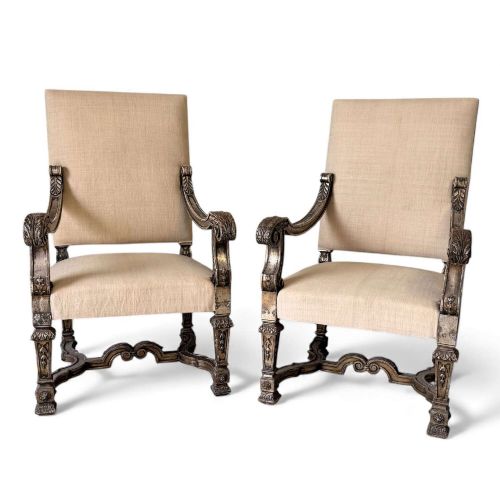
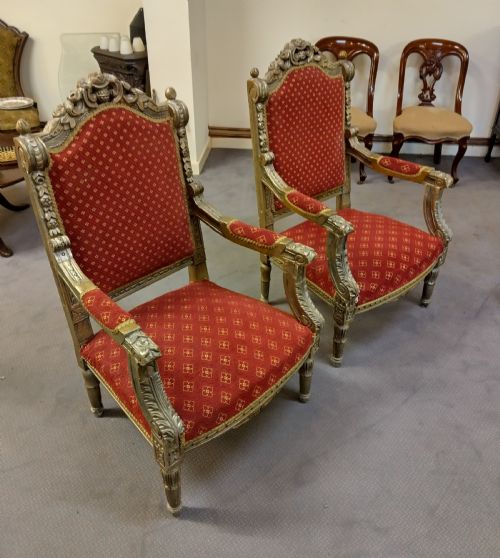
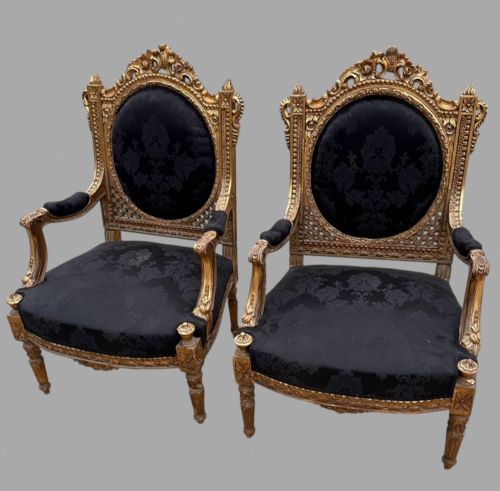
A french gilt throne chair is a substantial seating form designed to command a room through scale and surface finish.
French Gilt Throne Chair
A french gilt throne chair combines an imposing upright silhouette with decorative armrests and heavily ornamented wooden frames. When exploring a french gilt throne chair, buyers frequently encounter pairs dating from the nineteenth century, including specific years such as eighteen-eighty, nineteen-ten, nineteen-twenty, nineteen-hundred, and eighteen-fifty.
The decorative vocabulary draws heavily from historical revival movements, encompassing baroque revival, french baroque revival, french chateau, french rococo revival, louis xvi revival, regency, and french empire styles. These pieces function as statement seating, originating primarily as grand armchairs intended for prominent domestic reception spaces.
Materials and construction
Construction relies on timber frames, specifically solid walnut and general wood substrates, shaped through detailed hand carving to achieve elaborate surface relief. The characteristic metallic finish is applied using gold leaf and giltwood techniques, complemented by brass tacks securing the upholstery.
Upholstery materials define the seating surface, utilising traditional fabric, damask, tapestry, and leather options. The combination of carved wooden armframes and applied surface gilding requires skilled joinery to support the large proportions of these grand armchairs.
French Gilt Throne Chair Retail Price Guide 2026
Typical asking prices for french gilt throne chair among the pieces listed under this phrase on Sellingantiques today, from the lower quarter to the upper quarter. They describe what is for sale here now, not the wider market.
Some seats come with brass tacks so enthusiastic they practically march around the upholstery on their own.
Judging quality in construction and finish
The standard of carving distinguishes superior examples, where deep, crisp detail in the woodwork reveals the hand of a skilled artisan rather than mechanical replication. The application of gold leaf shows greater depth and light reflection compared to flat paint finishes.
Proportion and structural integrity dictate the overall presence of the piece, with heavier timber frames offering better long-term stability. The choice of upholstery materials, from damask and tapestry to leather, reflects the original commission tier and the preservation of the seating envelope.
The French Gilt Throne Chair Glossary
- Giltwood
- Timber that has been coated with gold leaf or a gold-coloured finish. This surface treatment provides the bright metallic lustre characteristic of grand nineteenth-century seating.
- Baroque Revival
- A nineteenth-century design style that imitates seventeenth-century baroque grandeur. It is characterised by dramatic curves, heavy ornamentation, and dynamic sculptural forms.
- Tapestry
- A heavy hand-woven or jacquard textile depicting pictorial scenes or repeating patterns. These durable fabrics were frequently chosen for high-status French armchairs.
French Gilt Throne Chair: Frequently Asked Questions
What is a french gilt throne chair?
A french gilt throne chair is a large nineteenth-century armchair featuring an ornate wooden frame coated in gold leaf or gilt finish.
These pieces draw on revival styles such as baroque and rococo, serving as imposing decorative seats.
How were these chairs used historically?
They were designed as statement furniture for grand reception rooms, drawing rooms, and formal parlours.
Rather than everyday lounging, their elevated scale and elaborate carving signalled status and wealth within domestic interiors.
What materials are found on these chairs?
The frames utilise timber such as solid walnut, finished with gold leaf, giltwood, or brass tacks.
Upholstery includes traditional textiles like damask, tapestry, fabric, and leather across the seat and back.
How do I identify the style?
Styles encompass baroque revival, french rococo revival, louis xvi revival, regency, and french empire.
Look at the carved motifs, leg shapes, and frame contours to determine which nineteenth-century design vocabulary the piece follows.
How do I live with a throne chair?
Place the chair in a spacious room where its height and gilded surface can act as a natural focal point.
Protect the gilt finish from direct sunlight and handle the antique textile or leather upholstery with standard care.