

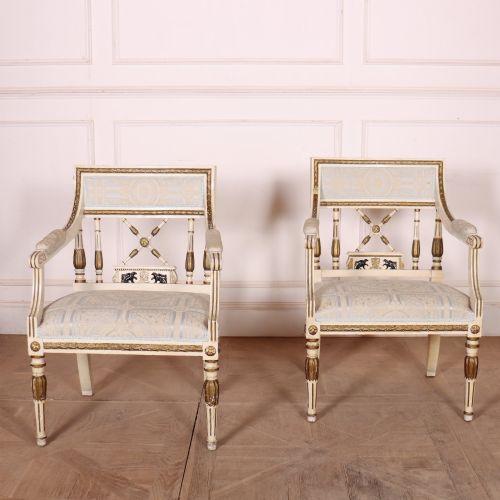
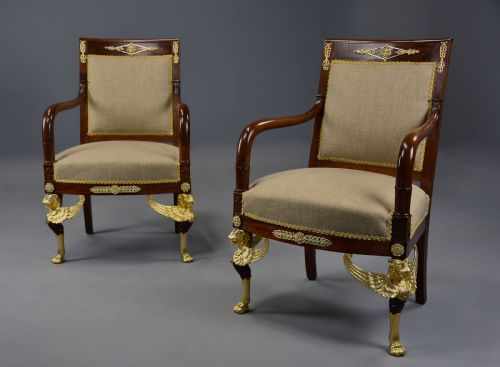
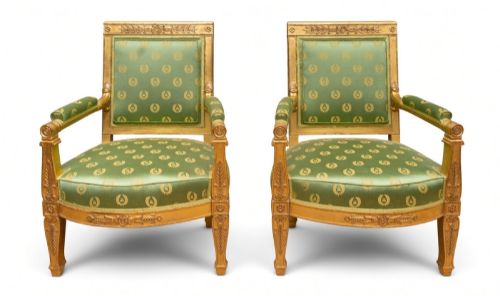
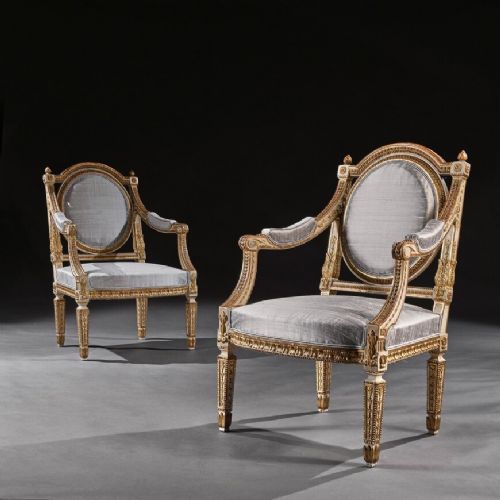

Neoclassical Gilt Chairs
Neoclassical gilt chairs bring classical balance and brilliant surface to a room, offering enduring seating shaped by eighteenth and nineteenth century design.
Neoclassical Gilt Chairs
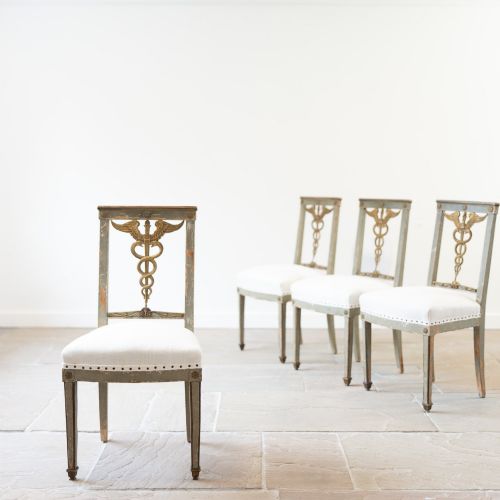
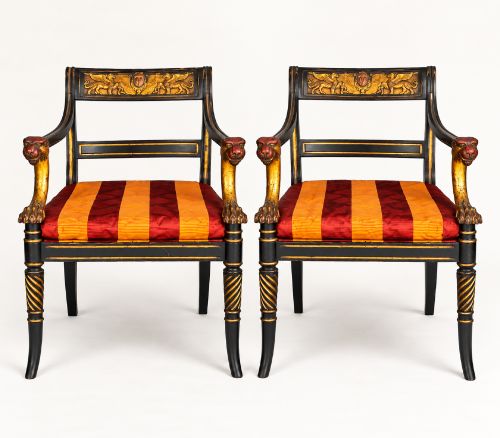
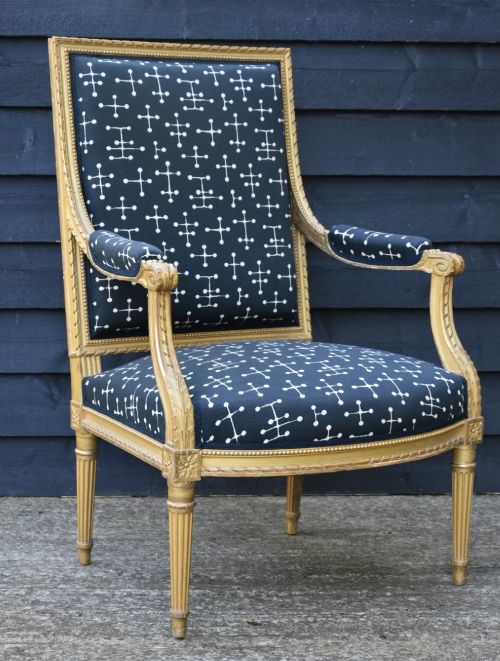
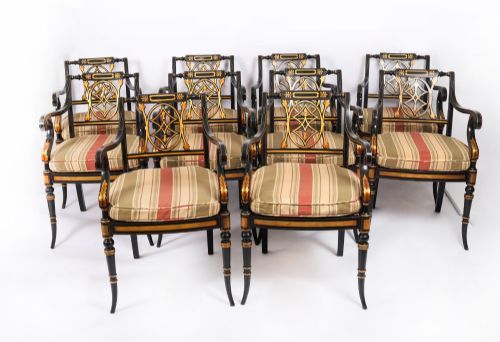
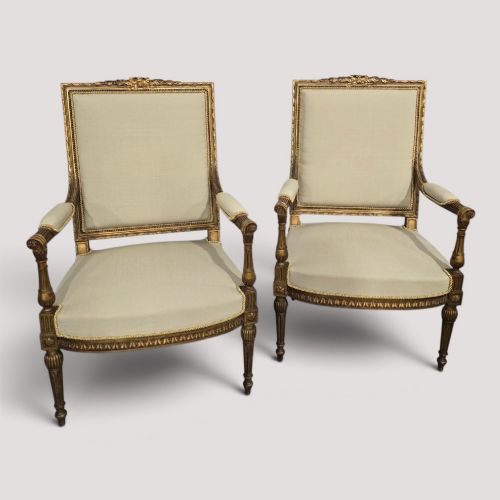
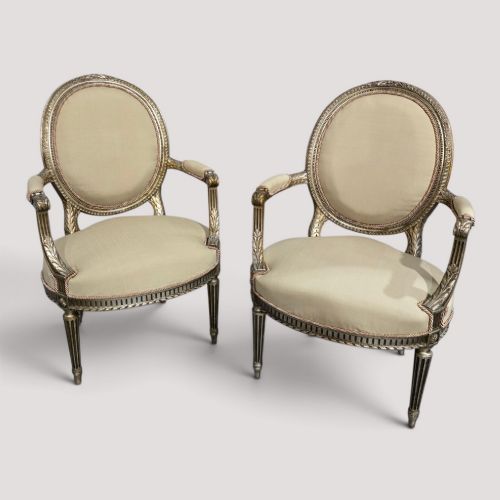
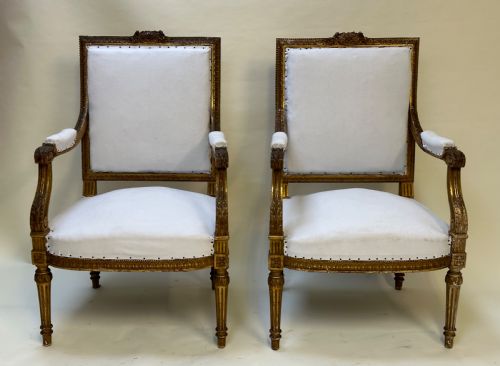
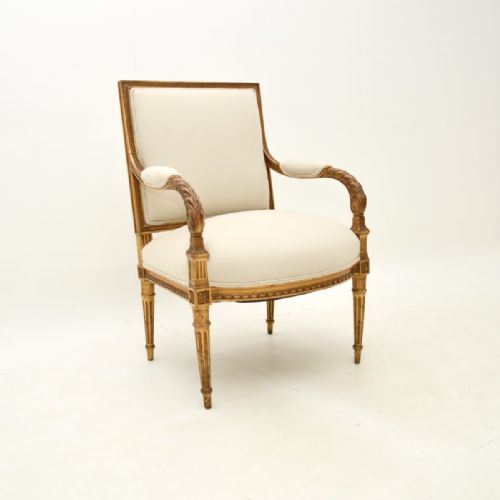
Neoclassical gilt chairs encompass seating forms designed within classical revival traditions, drawing on French, Swedish, Italian and English aesthetic movements. Buyers encounter armchairs, open fauteuils, desk chairs, salon chairs, dining chairs and window seats originating from the eighteenth, nineteenth and early twentieth centuries.
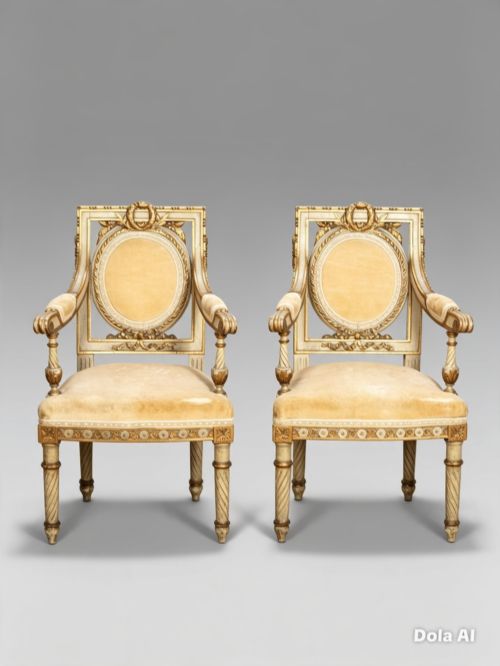
The selection on this page relies heavily on French Louis XVI, Empire and Restauration styles, alongside Swedish Empire and Italian neoclassical variations. These pieces feature carved wooden frames finished in gold leaf or paint, often upholstered in silk damask, velvet or standard fabric.
Makers and workshops across Europe produced these items for formal interiors, utilising mahogany, walnut, giltwood and parcel gilt finishes. Dating ranges from the late eighteenth century through revivals executed around nineteen hundred and the early decades of the twentieth century.
Materials and construction
Framing relies upon solid timbers such as mahogany, walnut and structural woods, which receive carved ornamentation including classical motifs, fluting and floral details. Artisans then apply gold leaf, parcel gilt or paint directly to the prepared wooden surfaces to achieve the characteristic metallic sheen.
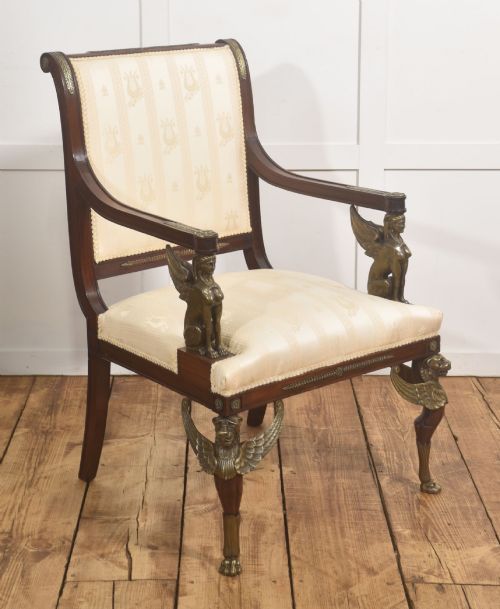
Upholstery methods involve traditional stuffing techniques finished with textiles like silk damask, velvet and decorative fabrics. Selected pieces incorporate brass, ormolu mounts and bronze detailing to accentuate the neoclassical lines of the frame.
Neoclassical Gilt Chairs Retail Price Guide 2026
Typical asking prices for neoclassical gilt chairs among the pieces listed under this phrase on Sellingantiques today, from the lower quarter to the upper quarter. They describe what is for sale here now, not the wider market.
Listings feature 19th Century, 1920, 1900, 1880, 1890, 1800, 1870 and 1860 periods.
Distinctions in craftsmanship
Depth and precision of wood carving separate standard production from superior examples, with hand-chiselled detailing demonstrating greater artisan skill than cast or pressed ornament. The crispness of the gilt surface and the quality of the underlying bole influence visual brilliance.
Integrity of joinery and structural stability dictate long-term durability, alongside the authenticity of period upholstery materials and mountings. Pieces attributed to documented makers command distinct recognition compared to anonymous workshop output.
Jacob Desmalter·Gillows
The Neoclassical Gilt Chairs Glossary
- Fauteuil
- An open-arm armchair with upholstered back and arm pads, originating in French interior design. These seats combine exposed wooden frames with padded comfort.
- Giltwood
- Timber coated with gold leaf or gold paint over a prepared gesso and bole ground. This treatment creates a luminous metallic finish characteristic of formal period seating.
- Ormolu
- Gilded bronze mounts applied to furniture for decorative contrast. Artisans cast and chased these metal elements to embellish neoclassical frames.
- Parcel Gilt
- A decorative treatment where only specific carved portions of a painted or stained wooden surface are gilded. This technique highlights architectural details.
- Curule Stool
- A folding or X-framed seat derived from ancient Roman magistrate chairs. Such forms reappear in neoclassical and empire revival furniture.
Neoclassical Gilt Chairs: Frequently Asked Questions
What defines a neoclassical gilt chair?
Neoclassical gilt chairs reflect the late eighteenth and nineteenth century revival of classical Greek and Roman design principles. They feature restrained geometric lines, symmetrical proportions and gilded wooden surfaces.
Craftsmen incorporated motifs such as fluted legs, laurel wreaths and urns into the frames. These seats served as formal furnishings in European salons, drawing rooms and state apartments.
How do I identify French Empire style?
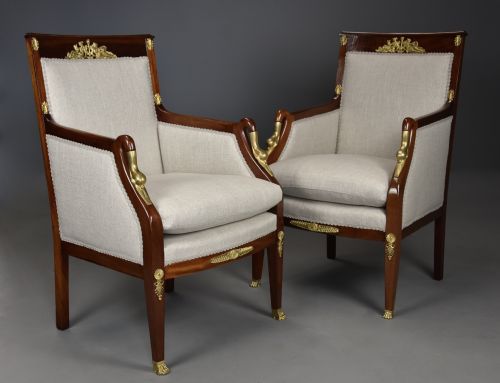
French Empire pieces display heavy classical influence inspired by Napoleonic taste, utilising solid mahogany or gilt finishes. Forms are robust and architectural, often incorporating ormolu mounts.
Upholstery fabrics tend to be rich and formal, matching the imposing silhouette of the armchair or desk chair.
Where were Swedish neoclassical chairs made?
Swedish neoclassical and Empire pieces emerged during the late eighteenth and early nineteenth centuries, drawing inspiration from French aesthetics filtered through Scandinavian craftsmanship. Workshops in Sweden favoured lighter painted finishes, parcel gilt highlights and polished mahogany.
These chairs balance formal classical symmetry with the understated elegance typical of Nordic interiors.
How should I live with gilt furniture?
Gilt furniture requires placement away from direct sunlight and moisture to protect fragile gold leaf and painted wooden surfaces. Gentle dusting with a soft dry cloth preserves the metallic finish without abrasion.
Pairing these historic armchairs and salon seats with simple contemporary surroundings highlights their sculptural qualities and rich patination.