
Gold French Table Clock
A gold french table clock brings unmistakable nineteenth-century grandeur to a room, combining architectural brasswork with precise mechanical movement.
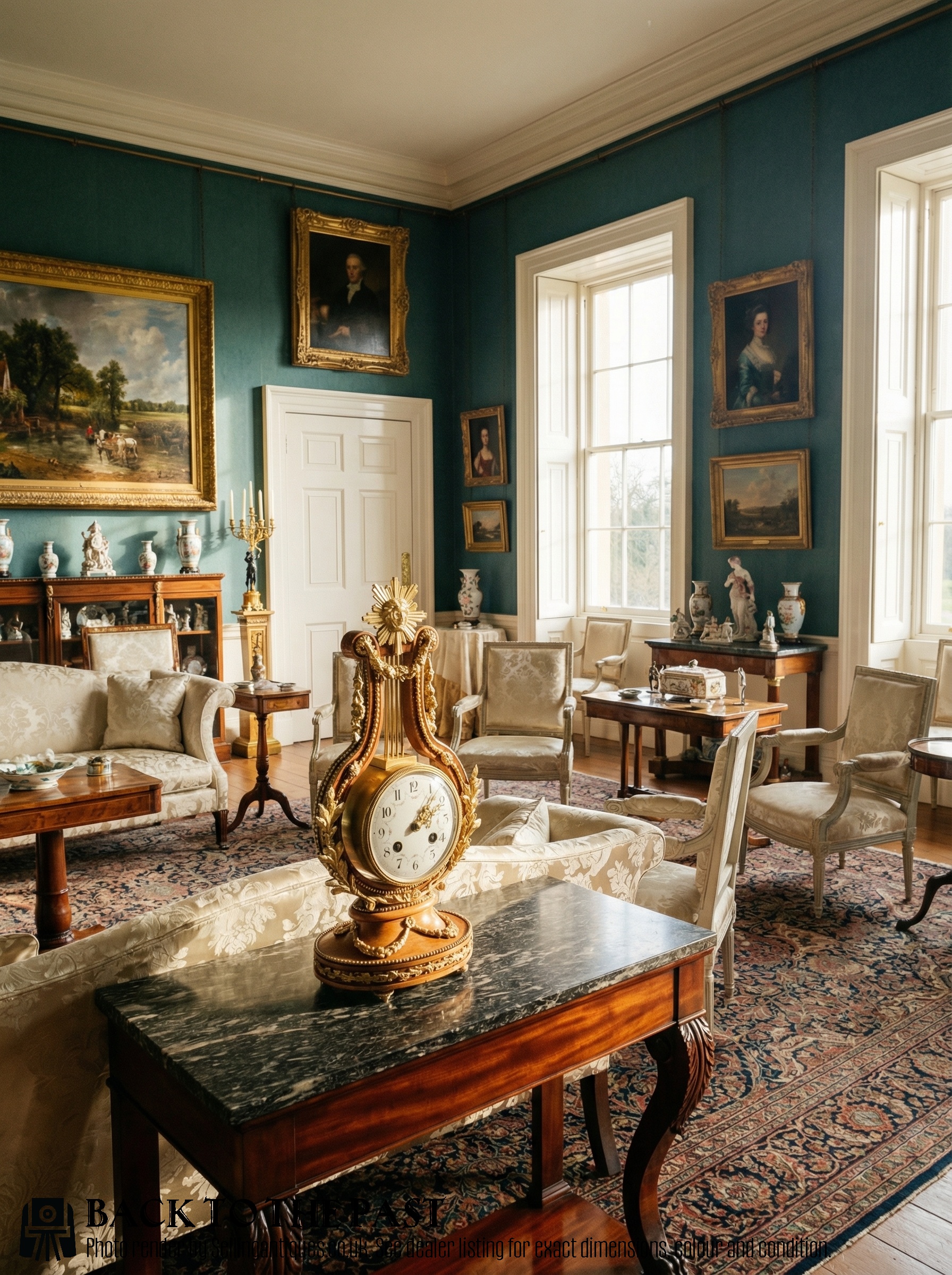
Gold French Table Clock
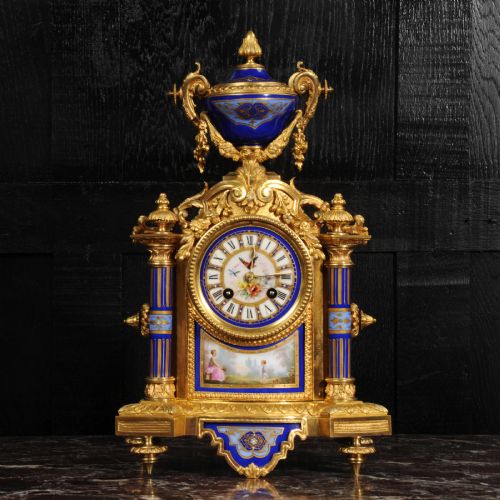
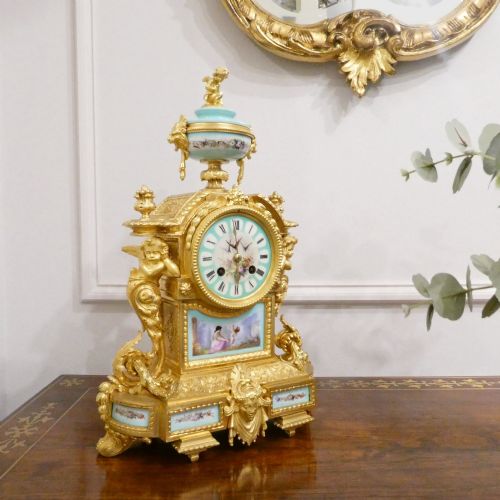
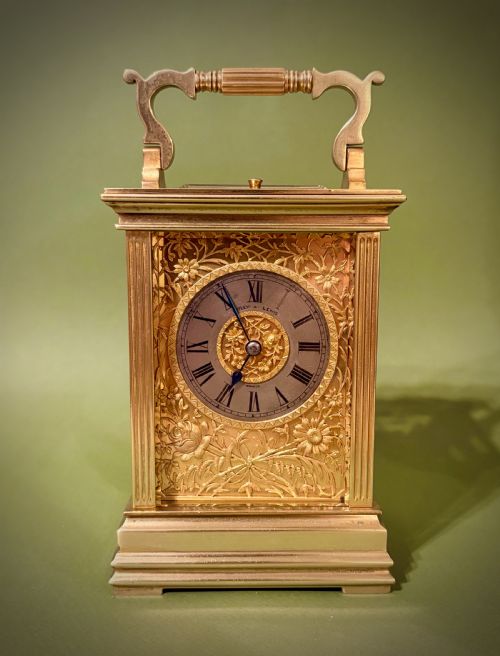
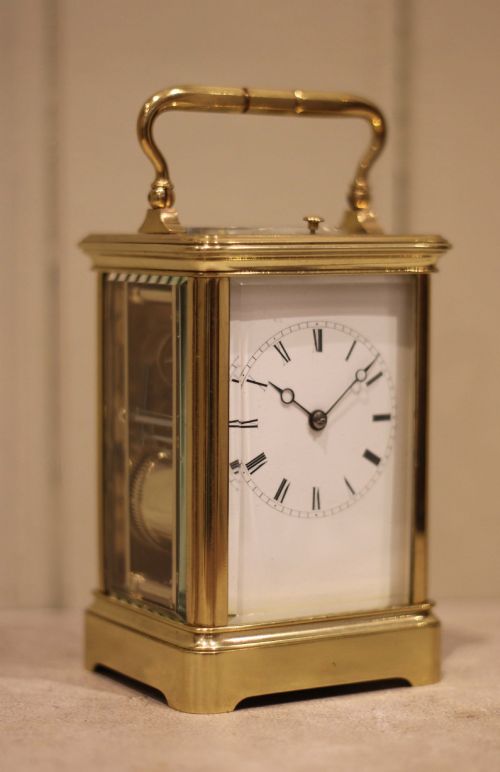
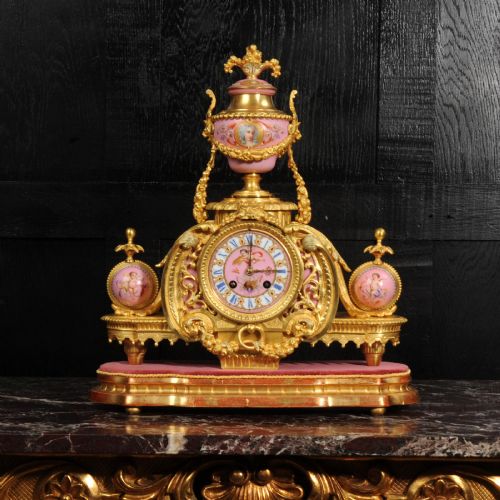
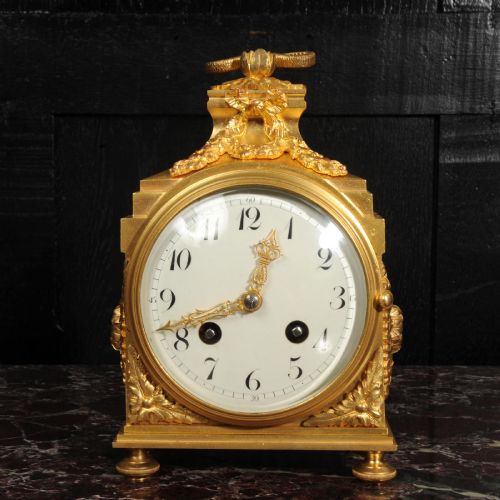
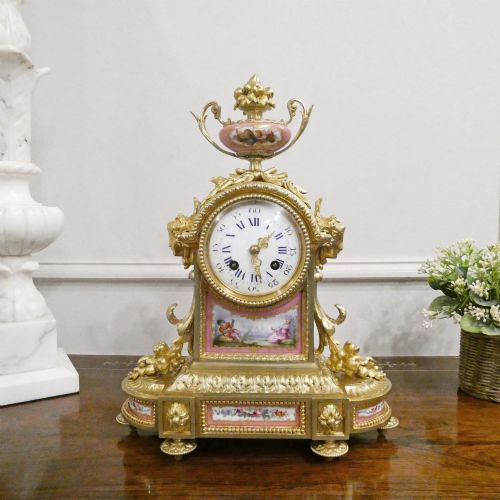
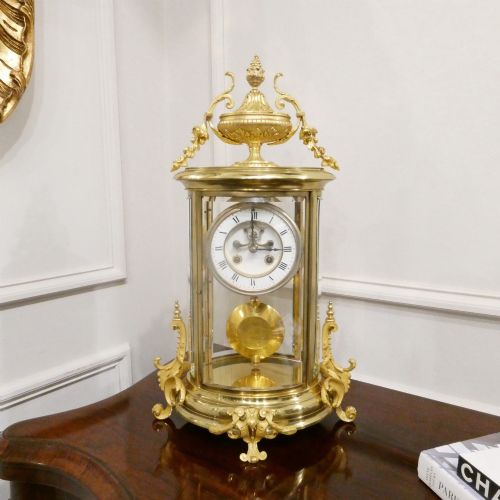
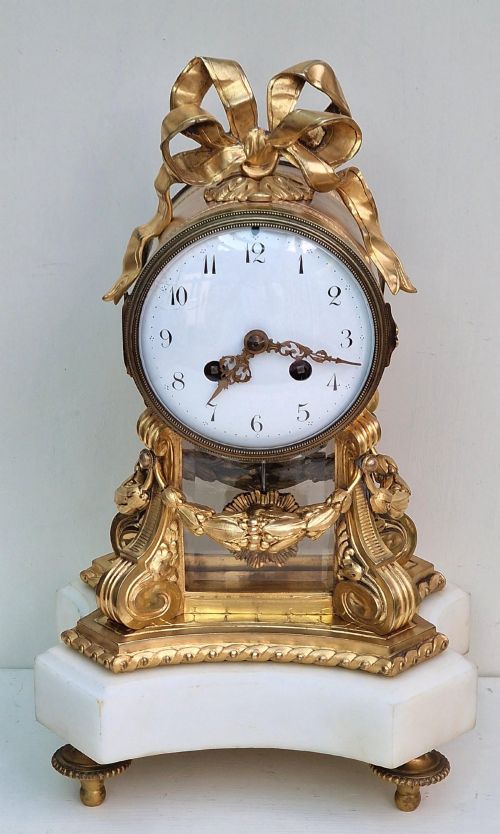
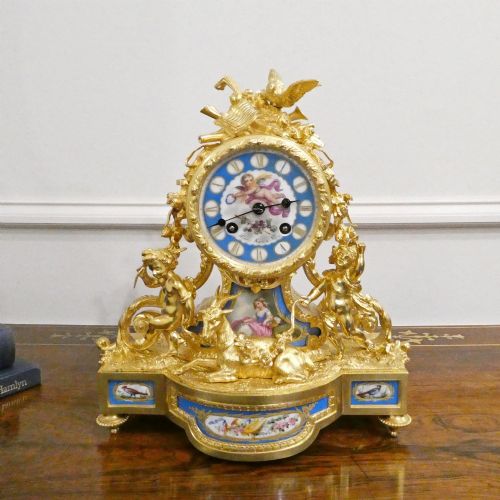
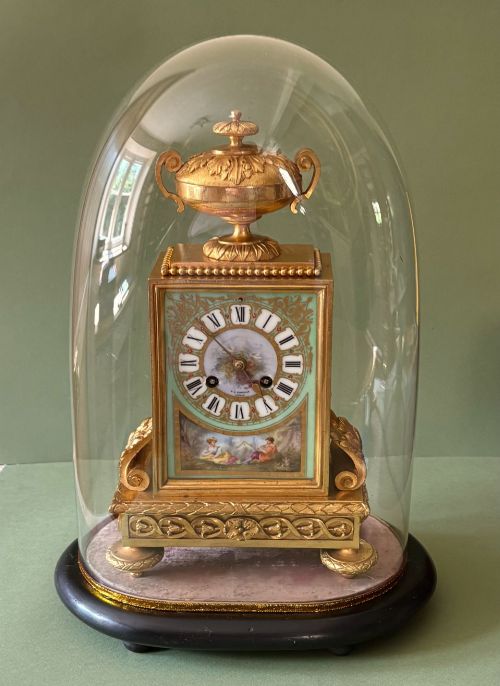
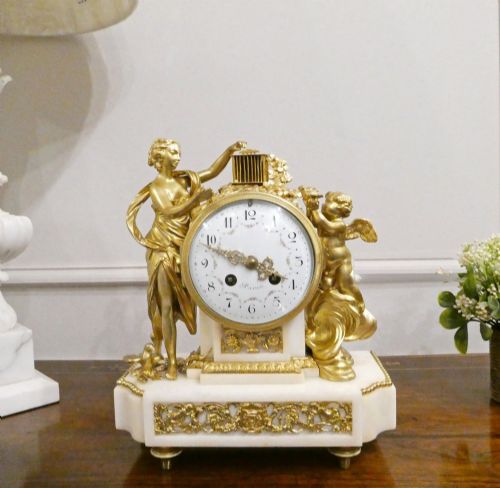
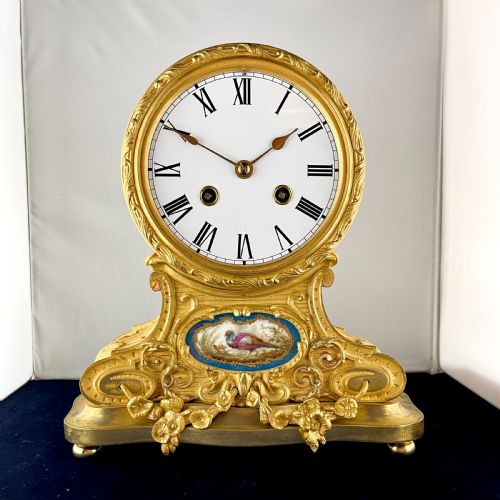
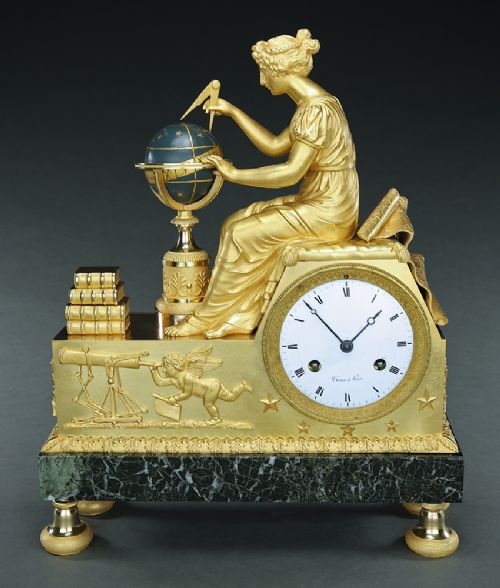
When searching for a gold french table clock, buyers encounter an array of nineteenth-century timepieces spanning carriage clocks, desk clocks, and substantial mantel clocks. The selection on this page leans heavily toward ornate mantel clocks and portable carriage clocks originating from French workshops during the Victorian era and preceding decades.
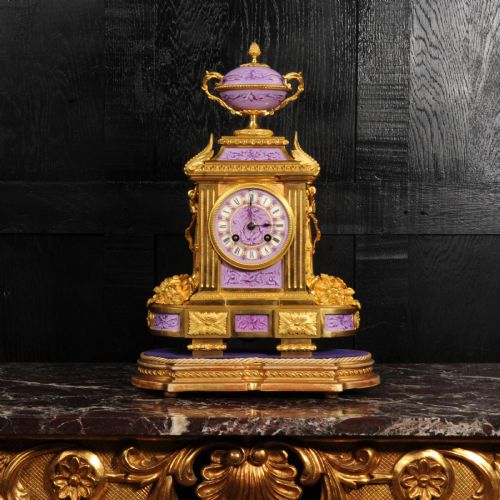
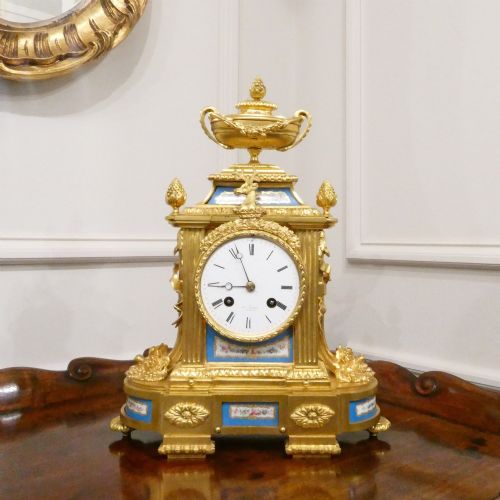
Forms vary significantly, encompassing architectural four-glass cases, figural designs depicting allegorical themes such as love and triumph, and classical Louis XVI style models. Buyers frequently meet pieces styled in French Empire, Second Empire, and Rococo Revival aesthetics, often enriched with painted porcelain panels or visible pendulum movements.
How They Were Made
Maker workshops utilised cast gilt bronze, ormolu, brass, and gilt brass to form the structural housings and decorative mounts of these clocks. Enamel dials and hand-painted Sèvres porcelain plaques frequently integrated into the metallic framework, while glass panels protected the delicate internal mechanisms.
Mechanical construction involved sophisticated striking and repeating gear trains, often housed within robust brass plates. Artisans applied fire-gilding or electroplating to achieve the characteristic golden surface sheen that defines the appearance of these pieces.
Listings feature pieces spanning the nineteenth century, incorporating materials such as marble, porcelain, enamel, gilt bronze, and ormolu.
What Varies in Quality
The degree of hand-chiselling on ormolu mounts and the intricacy of engraving on brass carriage clock cases separate standard production items from superior works. Finer examples display crisp relief casting and well-preserved mercury gilding rather than flat, uniform plating.
The reputation of the horologist significantly influences distinction, with signed movements from renowned makers commanding greater appreciation. Furthermore, the integration of hand-painted porcelain panels and the retention of original matching components dictate the overall standard of a piece.
Achille Brocot·Henry Marc·Japy Freres·Samuel Marti·Henry Dasson·Etienne Lenoir·Le Roy Paris
The Gold French Table Clock Glossary
- Ormolu
- A technique of applying finely ground, high-carat gold-mercury amalgam to a bronze object. This process produced a rich, enduring golden finish characteristic of many nineteenth-century French pieces.
- Carriage clock
- A small, portable spring-driven timepiece designed for travel during the nineteenth century. These clocks typically feature a glass-panelled brass case and a folding handle on top.
- Champlevé
- An enamelling technique where troughs or cells are carved into the surface of the metal and filled with vitreous enamel powder before firing. This method created colourful decorative borders on clock cases.
- Repeating clock
- A mechanical clock equipped with a complication that repeats the last hour or quarter-hour strike upon demand by pressing a button or pendant.
- Pendule d'officier
- A specific type of miniature French table or travel clock featuring a distinctive architectural or drum-shaped form. These pieces bridge the gap between carriage clocks and larger mantel timepieces.
Gold French Table Clock: Frequently Asked Questions
How do I wind a french carriage clock?
Most carriage clocks use a dedicated winding key inserted into arbors located on the backplate of the movement. Turn the key gently until resistance indicates the mainspring is fully tensioned.
Take care not to overwind the mechanism, as this can strain the internal spring steel and compromise timekeeping accuracy.
What is the difference between a mantel clock and a carriage clock?
Mantel clocks are larger, heavier stationary timepieces designed to sit permanently on a shelf or mantelpiece. They often incorporate marble, porcelain, or extensive bronze mounts.
Carriage clocks are compact, portable timepieces enclosed in brass and glass with a carrying handle, originally built for travellers.
How do I date a nineteenth century french clock?
Dating relies on examining the style of the case, the materials used, and any maker stamps or serial numbers stamped onto the brass movement backplate. Stylistic cues such as Louis XVI revival motifs or Empire figural themes often point to specific decades within the Victorian era.
Maker marks linked to known exhibition dates or workshop registers provide further chronological precision.