
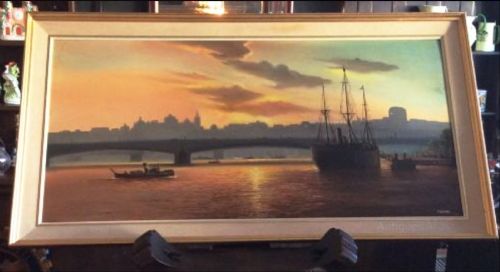
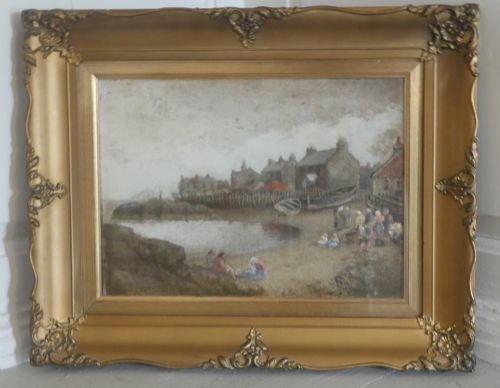

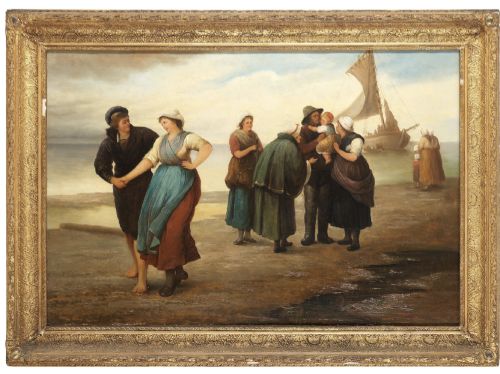
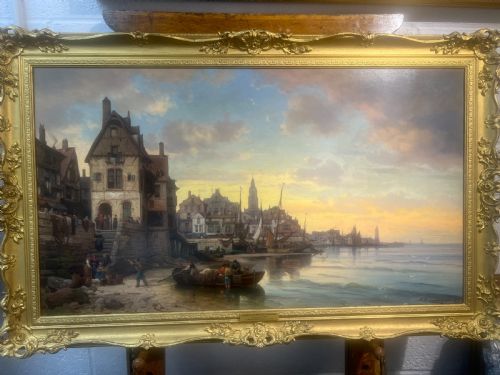
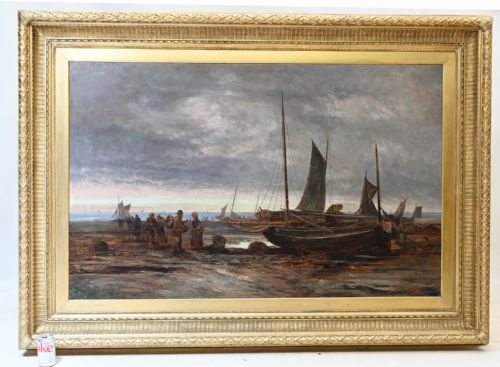
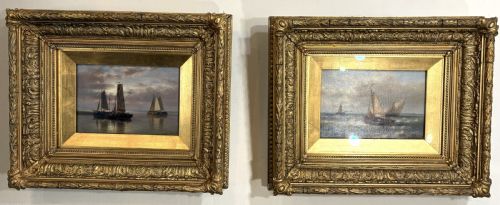

Gold Framed Marine Scene
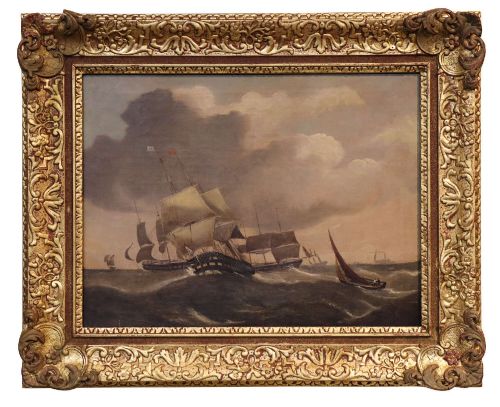
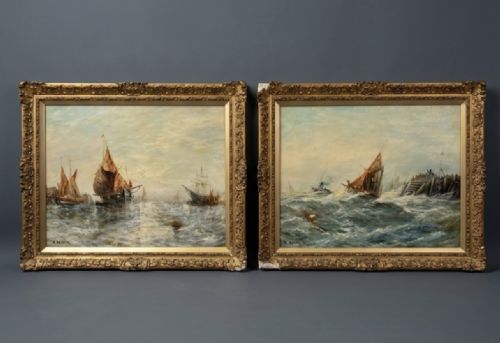
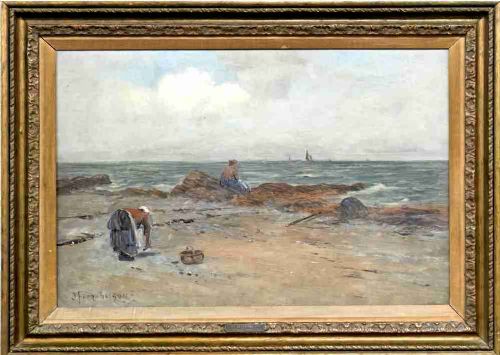
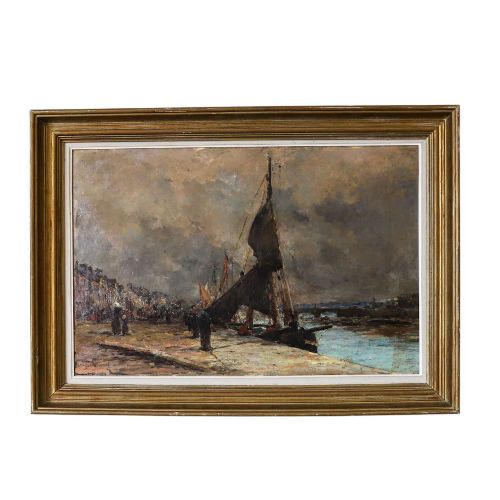
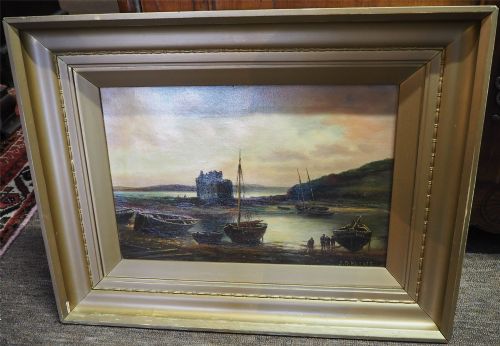
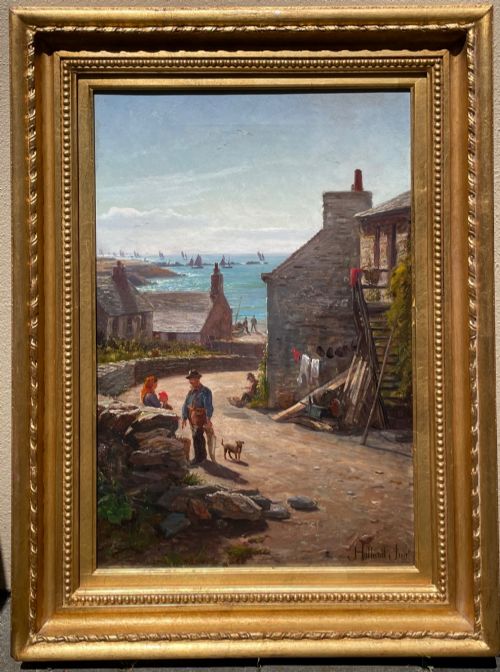
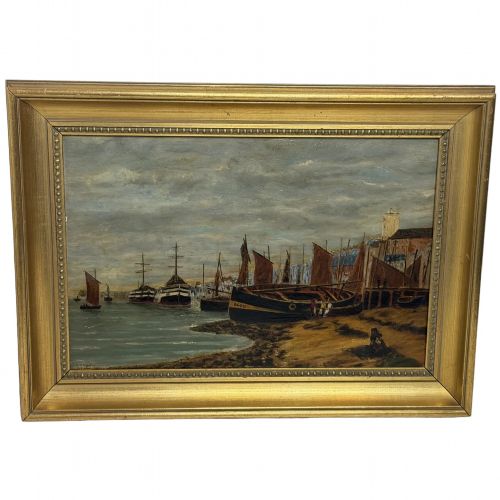
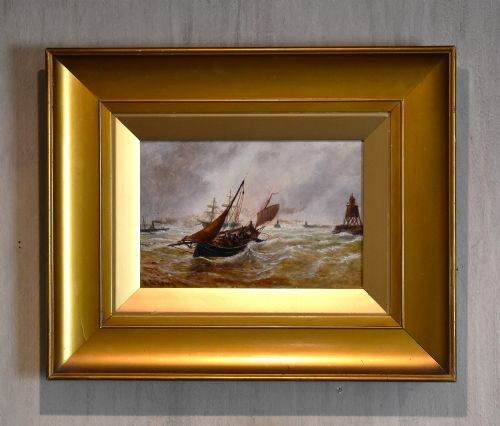
These gold framed marine scene works bring nineteenth-century coastal life, choppy seas and bustling harbours directly onto the wall inside a heavy gilded moulding.
Gold Framed Marine Scene
A gold framed marine scene captures coastal views, shipping in heavy seas, and harbour life through traditional painted works. When you explore this selection, you encounter subjects ranging from quiet Cornish inlets and Scottish coasts to busy European ports.
The most common examples on this page date from the nineteenth century, including Victorian and Edwardian periods, executed in oil on canvas or board. These pieces frequently depict sailing vessels, lighthouses, and fishing boats framed within period giltwood or gesso mouldings.
Materials and construction
Artists relied primarily on oil paint applied to stretched canvas or wooden panels, building up maritime scenes of water, sky, and vessel rigging. Pigments capture the shifting light of coastal atmospheres, from stormy grey seas to serene sunsets over harbour walls.
The accompanying frames are constructed from wood finished with gesso and gold leaf or giltwood, often moulded with decorative borders. These ornate enclosures protect the canvas edge while complementing the luminous highlights within the painted seascape.
Several canvases record dramatic shipwrecks and choppy seas, proving that past owners preferred their living rooms suitably windswept.
Assessing quality in marine art
Quality rests in the handling of light on water, the accuracy of nautical rigging, and the depth achieved in atmospheric skies. Stronger works convey motion and weight in heavy seas, whereas simpler pieces present static compositions.
The framing contributes significantly to the overall integrity, with hand-carved giltwood and gesso mouldings showing finer detail than later replacements. Original matching pairs and signed canvases by recorded nineteenth-century painters naturally hold greater distinction.
Edward Mills·William Banks Fortescue·Charles Euphraisie Kuasseg·Joseph Farquharson·John Holland·Bernard Benedict Hemy·Abraham Hulk I·William Edward Webb·Gustave De Bréanski·James Kyd·Adrian Van Porten·George Gregory·William Pitt·James Webb·Claude Thomas Stanfield Moore
The Gold Framed Marine Scene Glossary
- Giltwood
- Wood carved and coated with gold leaf or gold paint to create a lustrous decorative finish. It forms the primary material for traditional ornate picture frames.
- Gesso
- A plaster-like mixture applied to wooden frame bases to provide a smooth surface for gilding. It allows craftsmen to mould intricate corner ornaments and relief patterns.
- Seascape
- A painting, photograph, or other work of art that depicts the sea. In these listings, maritime scenes typically feature shipping, coastal villages, and lighthouses.
- Oil on Canvas
- A traditional painting medium where coloured pigments suspended in oil are applied to woven fabric stretched over a wooden frame. This technique allows for rich texture and blended tones.
- Maritime Art
- Works depicting or inspired by the sea, ships, and coastal life. The genre encompasses naval battles, commercial shipping, and everyday fishing harbours.
Gold Framed Marine Scene: Frequently Asked Questions
What periods do these paintings come from?
The selection spans primarily the nineteenth century, taking in Regency, Victorian, and Edwardian eras. You will also find occasional twentieth-century works continuing traditional maritime painting styles.
Most pieces reflect the nineteenth-century British and European schools, capturing coastal expansion and shipping trade during the industrial age.
Are these paintings signed by artists?
Many works bear signatures or initialled ciphers from the period, while others remain attributed to specific schools or circles of painters. Unsigned pieces frequently emerge from regional British and European workshops.
Signatures help historians link specific canvases to recorded marine artists active in ports like St Ives, Peel, and North Shields.
How should I hang a gilt framed painting?
Giltwood and gesso frames carry considerable weight and require secure fixings anchored directly into wall studs or heavy masonry plugs. Ensure your hanging wire and wall hooks match the poundage of the combined canvas and frame.
Position the artwork away from direct sunlight and heat sources to protect both the oil pigments and the delicate gold leaf on the moulding.
How do I tell an oil painting from a watercolour?
Oil paintings display a textured surface with visible brushstrokes and a semi-gloss or matte sheen from the dried linseed oil medium. Watercolours are executed on paper under glass, showing transparent washes without surface relief.
Marine oils on this page are typically painted on canvas or wooden boards, allowing them to be displayed in heavy frames without glass protection.