
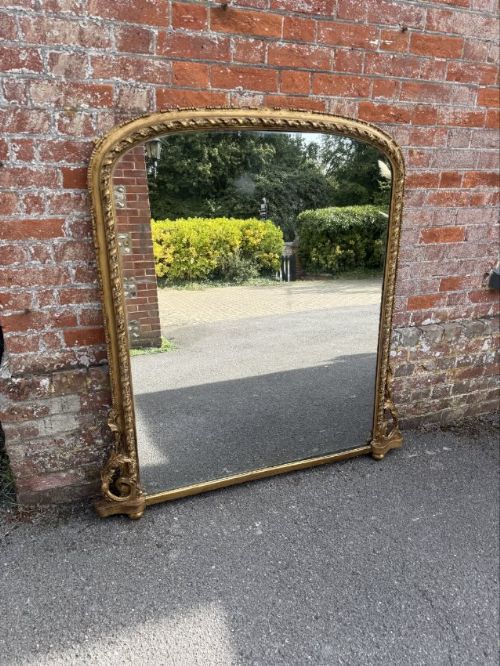
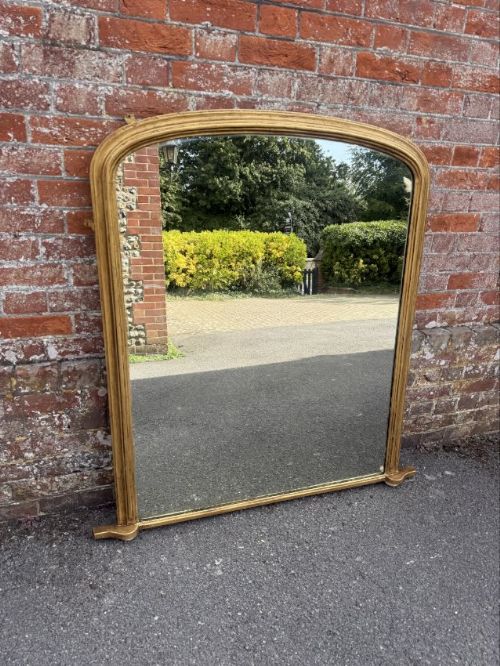
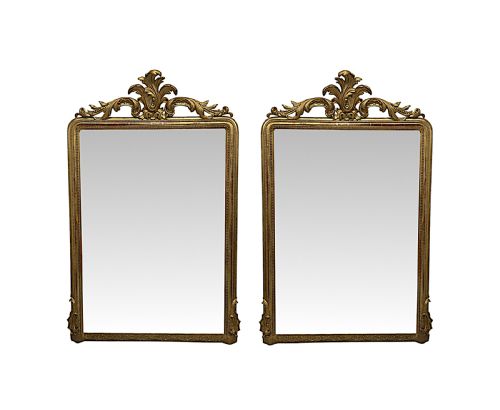
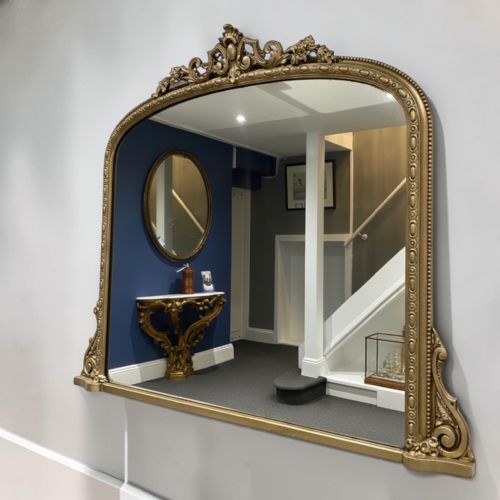
Gold Framed Mantle Mirror
A gold framed mantle mirror brings scale and reflected light to a room, drawing the eye directly to the fireplace.
Gold Framed Mantle Mirror
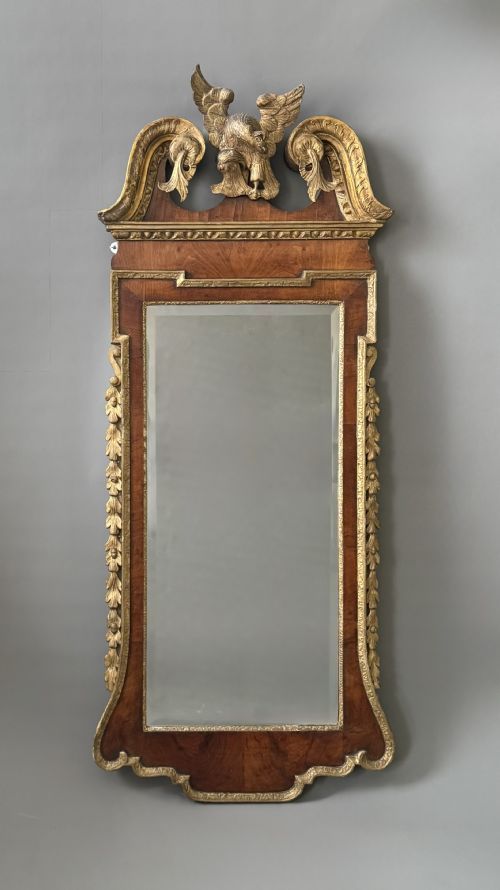
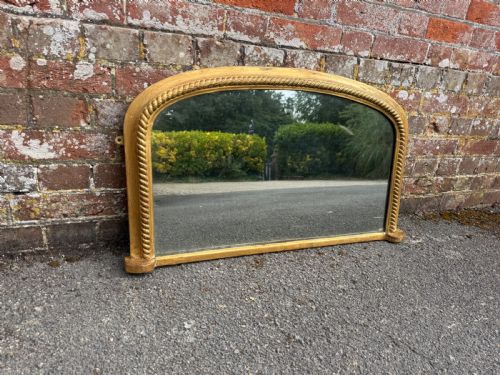
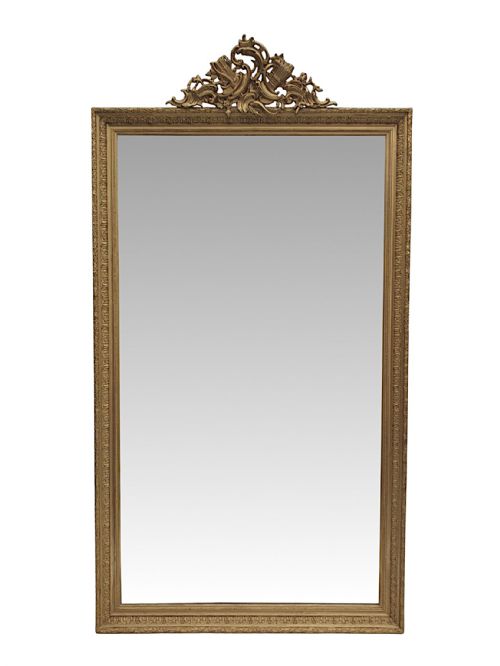
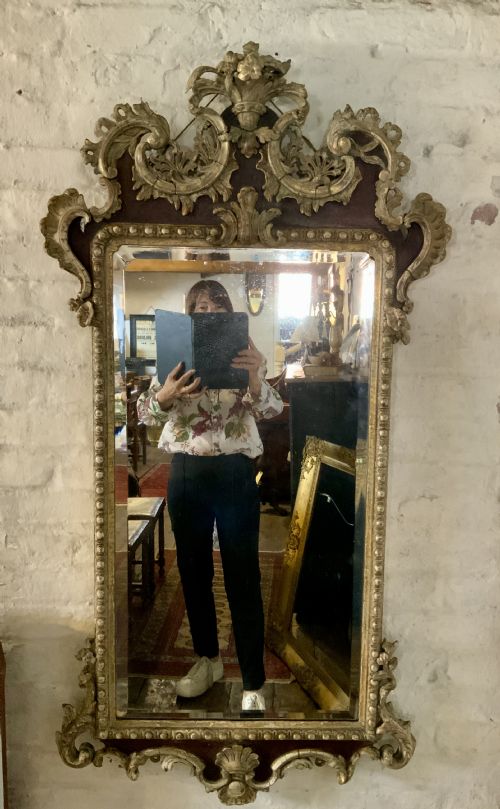
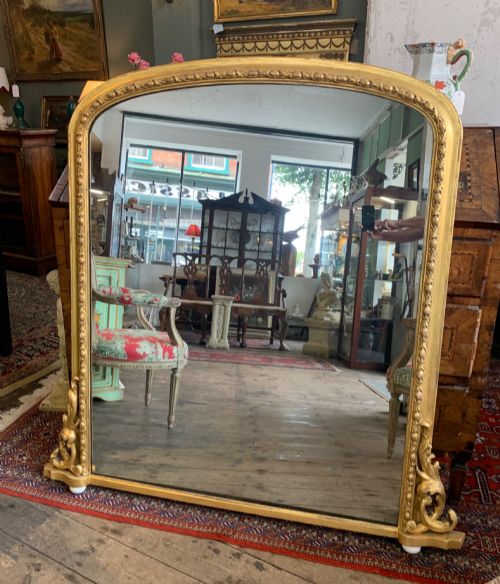
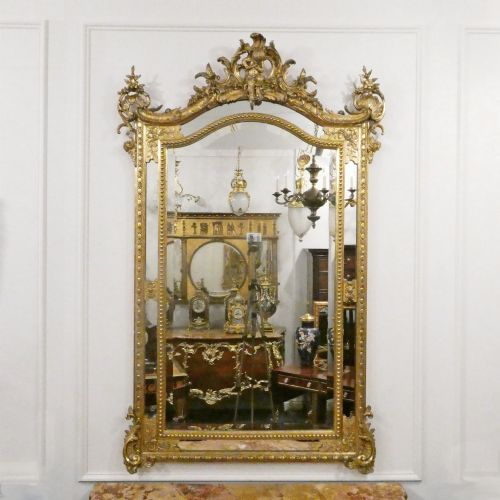
A gold framed mantle mirror sits above a fireplace, anchoring the chimney breast and balancing the proportions of the room. The pieces found here span the 18th century through to the Edwardian period, with Victorian and French influences dominating the selection.
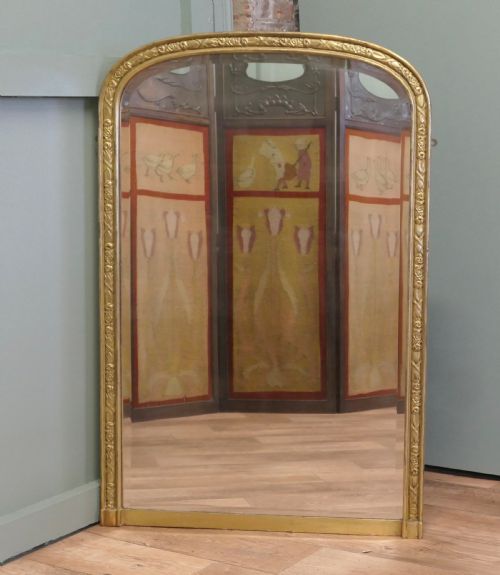
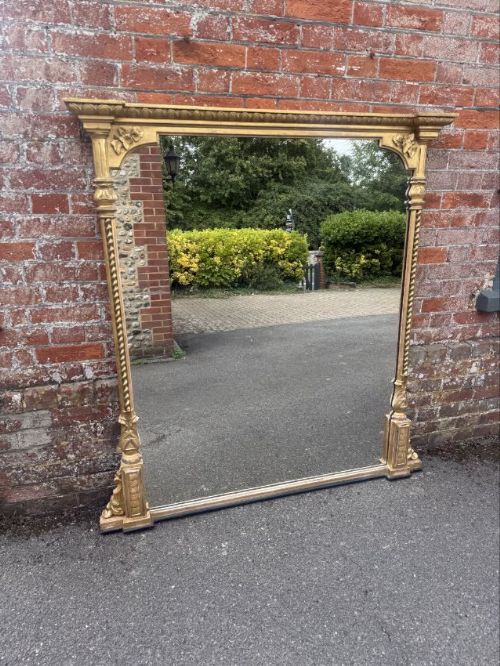
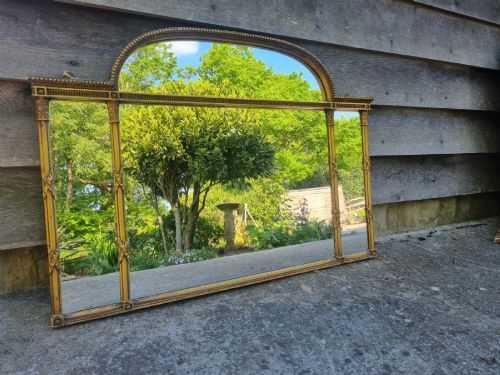
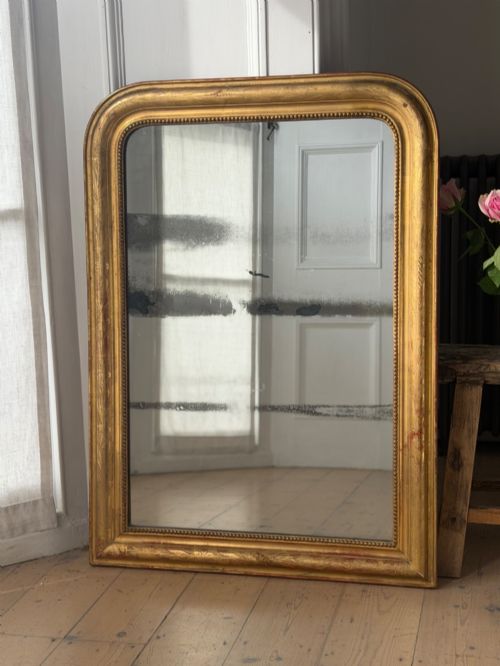
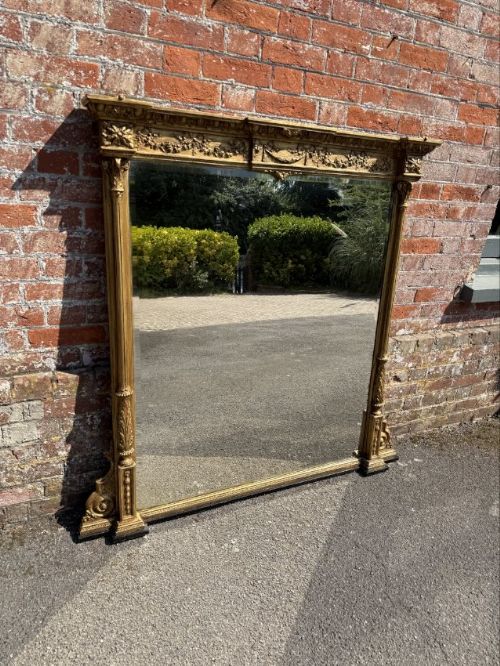
Most examples take the form of overmantel mirrors or large wall mirrors designed to rest on a mantelpiece. Styles range from restrained Louis Philippe arches to exuberant Rococo Revival carvings and Regency compartmental frames.
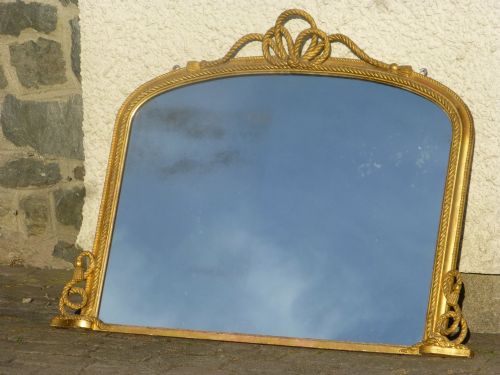
Makers and craftsmen utilised architectural elements such as columns, rope twists, and ribbed moulding. These mirrors served both a practical purpose for light distribution and a decorative role in period reception rooms.
Materials and construction methods
Carved wood and gesso form the structural base for many of these pieces, providing a smooth foundation for subsequent gilding. Craftsmen applied gold leaf or composition metal to create the reflective golden surfaces seen across the centuries.
Mirror glass varied in production, with older examples occasionally displaying foxed mercury backing or hand-beveled edges. Frames incorporated pine or hardwood timbers to support the substantial weight of the glass plates.
Some frames incorporate hidden rope twists so convincing you might be tempted to tie a knot in them.
Distinguishing quality in period frames
Depth and crispness of the carved detail separate standard production from finer workshop output, particularly in gesso ornamentation. Well-executed rope twists, ribbed mouldings, and applied masks retain sharp relief rather than appearing soft or rounded.
The integrity of the original gilding and the condition of the mirror plate itself determine the standing of a piece. Original glass with age spots sits alongside later replacements, influencing the character of the reflection.
The Gold Framed Mantle Mirror Glossary
- Gesso
- A plaster-like mixture applied to wood frames to create a smooth surface for gilding. It allows for intricate relief moulding.
- Giltwood
- Timber that has been coated with gold leaf or liquid gold. It provides a durable and rich metallic finish.
- Overmantel mirror
- A large mirror specifically proportioned to hang or rest above a fireplace mantel. These pieces often feature low horizontal formats or tall arched tops.
- Foxing
- Small dark spots or discoloration within the mirror glass caused by age and the degradation of the backing. Collectors often prize this characteristic for its authenticity.
- Rococo revival
- A 19th-century design style emulating the 18th-century French movement. It utilises asymmetrical scrollwork, natural motifs, and elaborate ornamentation.
Gold Framed Mantle Mirror: Frequently Asked Questions
Where should an overmantel mirror be placed?
These mirrors traditionally sit directly above a fireplace mantelpiece to reflect light and fill the vertical wall space. They can also stand on the floor as leaner mirrors against a main wall.
Placement depends on the ceiling height and the proportions of the surrounding furniture, ensuring the frame commands the room without overwhelming it.
How do I identify a Victorian mirror?
Victorian examples often feature heavy gesso ornamentation, arched tops, and deep wooden frames finished in gilt. Stylistic cues frequently draw on earlier Rococo or classical revival themes.
Construction methods from this era typically involve heavier timber frames and distinct backing boards compared to lighter 18th-century pieces.
What is Louis Philippe style?
Louis Philippe mirrors are characterised by a simple arched top, rounded upper corners, and restrained frame moulding. This French style emerged in the 19th century as a more understated alternative to earlier excesses.
They fit easily into modern and traditional interiors due to their clean geometric lines and lack of heavy carving.
Are these mirrors heavy to hang?
Period frames incorporate dense wood, thick gesso, and heavy glass plates, resulting in substantial weight. Secure wall fixings into masonry or structural studs are essential for safe installation.
Many period overmantels were originally designed to rest their weight on the mantelpiece while being anchored securely to the wall at the top.