


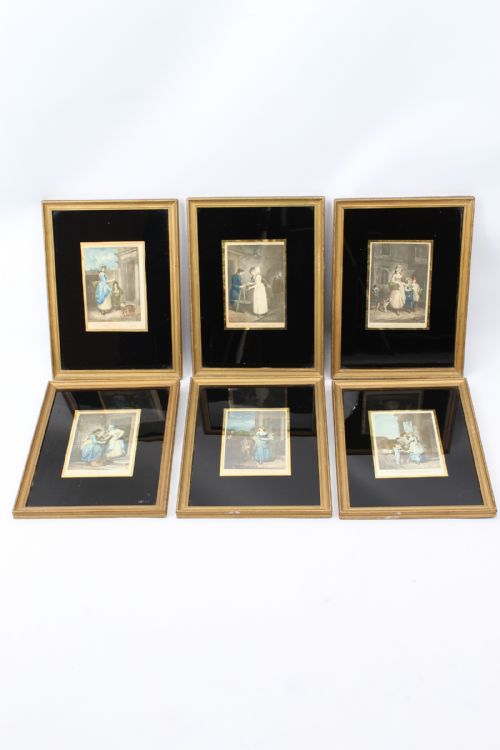


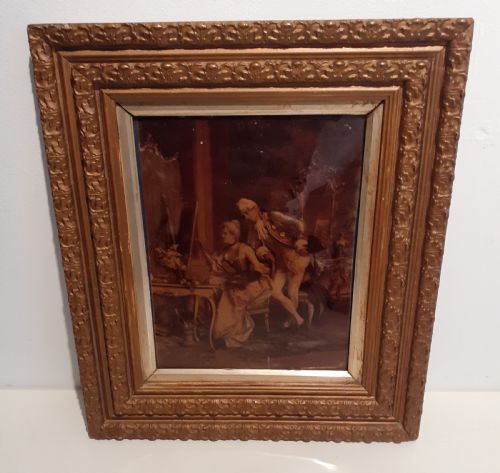

Gold Framed Glass Print
A gold framed glass print brings together historic imagery and shimmering metallic borders, offering a brilliant decorative focal point for any interior wall.
Gold Framed Glass Print
A gold framed glass print encompasses historic wall art protected beneath glass, often reverse glass painted, featuring giltwood, gesso, or gold leaf surrounds. These decorative objects span from the Georgian and Regency eras through the Victorian period and into the early twentieth century.
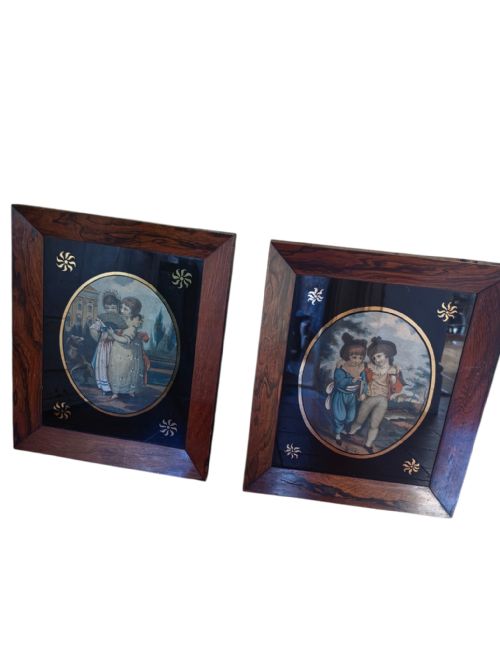
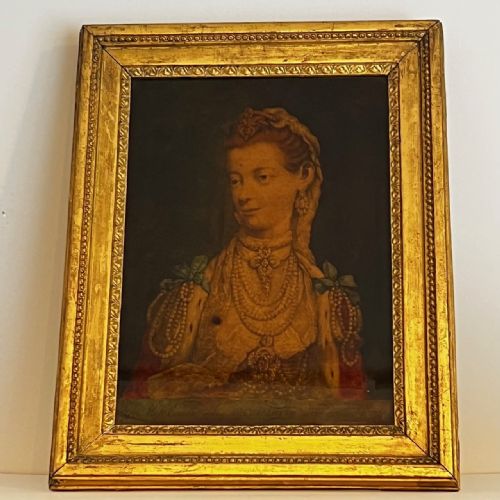
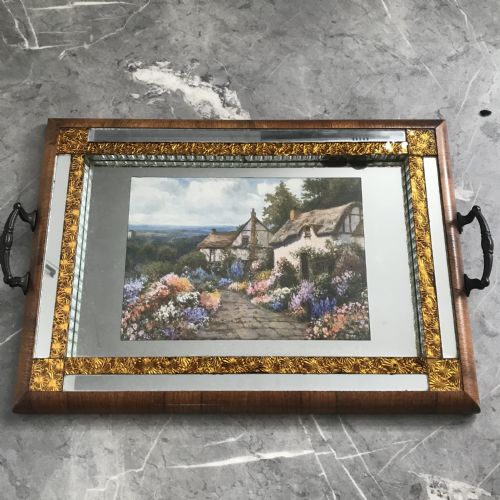
Buyers frequently encounter nineteenth century chrystoleums, reverse glass portraits of monarchs such as George III and Queen Charlotte, and decorative studies of ladies set within ornate gilt frames. The assortment also extends to mirrored glass trays with wooden veneers and framed nineteenth century engravings.
Origins range from English portraiture to French decorative compositions, reflecting Neoclassical, Victorian Rococo Revival, and Egyptian Revival aesthetics. Most examples integrate paper prints or hand-painted surfaces sealed securely behind curved or flat panes of glass.
Materials and construction techniques
Makers utilised glass as a protective or foundational medium, employing reverse glass printing where images were applied directly to the reverse side before sealing. Chrystoleums involved applying a paper print to convex glass, rubbing away the paper backing, and hand-tinting the remaining transparent layer with oil paints.
Frames were constructed from wood, then coated with gesso and water-gilded using genuine gold leaf or finished with giltwood mouldings. Rosewood and walnut veneers occasionally appeared on related items such as trays and alternative frame surrounds.
Adhesives, backing boards, and protective paper seals kept moisture away from the delicate paper prints and painted glass layers. Convex or dome-fronted glass panes required specialised rebate framing to secure the curved surface without putting pressure on the fragile print beneath.
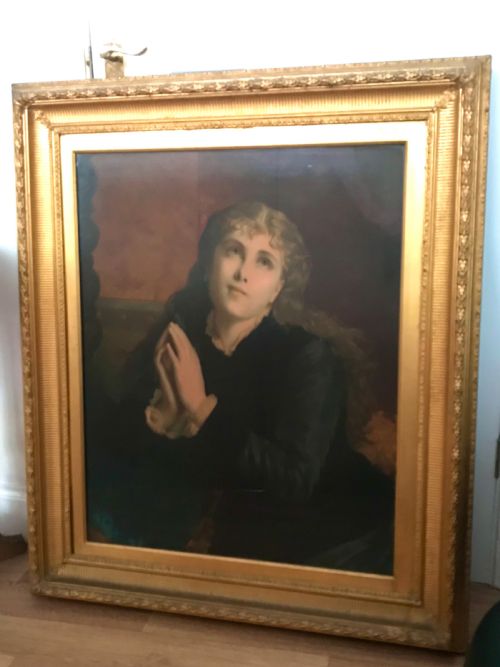
Several Victorian chrystoleums proudly depict unidentified Victorian beauties gazing steadfastly into the middle distance, surrounded by exuberant moulded gold leaf.
Distinctions in craftsmanship and condition
Quality rests heavily on the depth and brilliance of the gilding, where hand-applied gold leaf on intricate gesso mouldings outshines simpler painted wooden finishes. The crispness of the underlying print, mezzotint, or delicate hand-tinting on chrystoleums dictates artistic merit.
The integrity of the glass itself separates superior items, particularly when featuring original convex or dome-fronted panes without heavy scratching or interior clouding. Frames retaining their original gilding without excessive restoration command greater appreciation among collectors.
Robert Sayer·Schweninger
The Gold Framed Glass Print Glossary
- Chrystoleum
- A specialised Victorian method of applying a coloured paper print to the inside of concave glass and hand-painting details behind it. This technique created a luminous, three-dimensional effect popular for portraits and romantic scenes.
- Reverse glass print
- An image applied directly onto the back of a glass sheet so that the viewer looks through the glass to see the finished picture. This method protected the pigments from dust and fading.
- Giltwood
- Timber carved and coated with gold leaf or metallic powder to create a reflective golden surface. It formed the decorative border for many high-status Georgian and Victorian frames.
- Gesso
- A plaster-like mixture applied to wooden frames as a smooth base for gilding or intricate moulding work. Skilled artisans carved crisp decorative details into this material before applying gold leaf.
- Mezzotint
- An early printmaking process using a roughened copper plate to achieve subtle gradations of light and shade. These tonal prints frequently found their way into eighteenth and nineteenth-century frames.
Gold Framed Glass Print: Frequently Asked Questions
What is a chrystoleum?
A chrystoleum is a tinted photograph or print mounted to the inside of curved glass and hand-coloured with oils. The paper backing was rubbed away until only the thin image remained on the glass.
This painstaking Victorian process gave flat portraits a remarkably lifelike, three-dimensional depth that standard framed prints lacked.
Are reverse glass prints old?
Many reverse glass prints date from the Georgian and Victorian eras, produced extensively throughout the eighteenth and nineteenth centuries. They served as popular wall decorations depicting royalty and religious scenes.
Examining the backing boards, old fixings, and the chemical composition of the glass helps confirm the period of manufacture.
Why use convex glass on frames?
Convex glass was blown or slumped into a dome shape to create physical space between the glass and the delicate paper print beneath. This prevented the print from sticking to the glass over time.
It also introduced charming optical distortions and reflections that caught the light in period interiors.