



Gold Framed Countryside Picture
A gold framed countryside picture brings pastoral calm and traditional depth into a room through oil and watercolour landscapes.
Gold Framed Countryside Picture
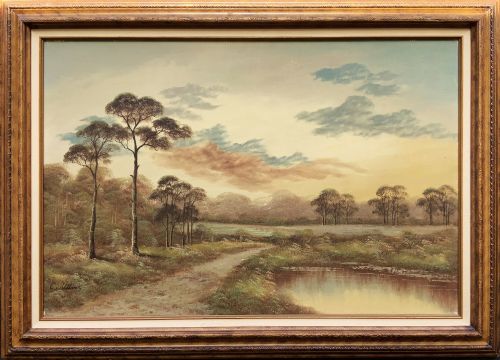
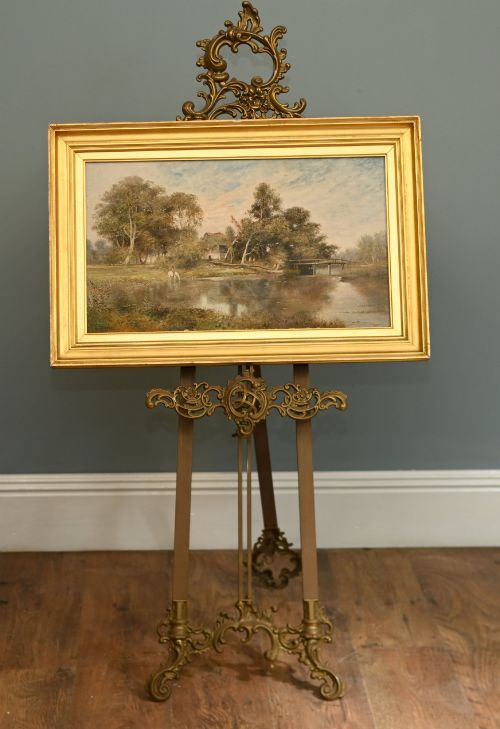
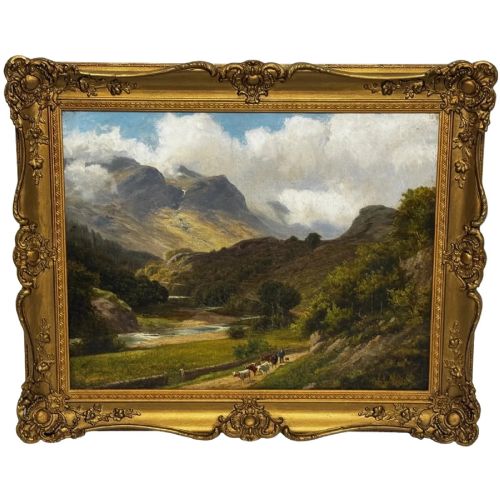
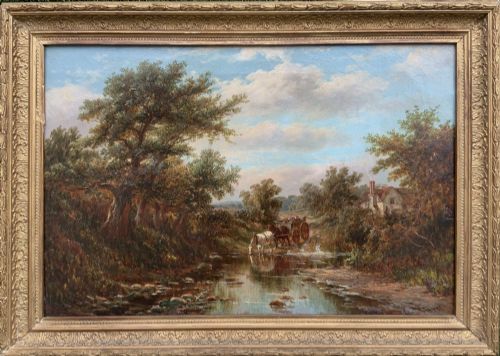
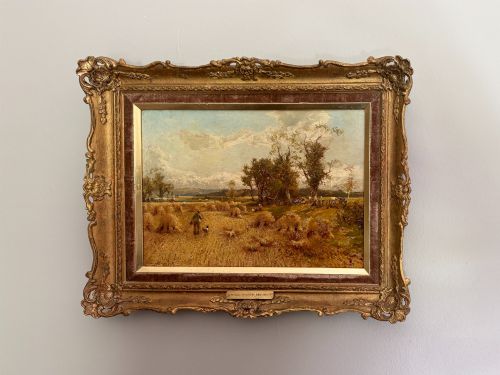
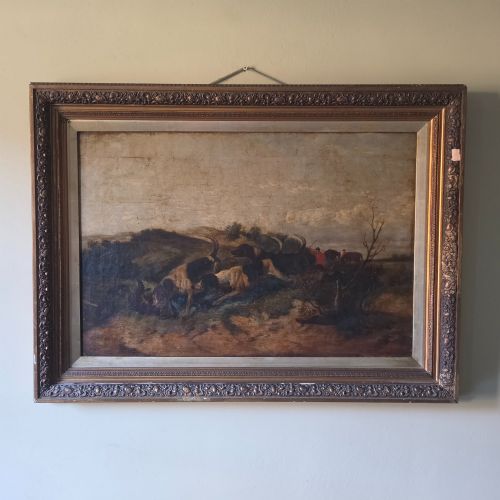
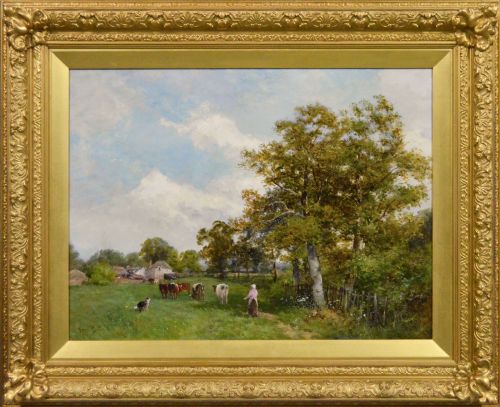
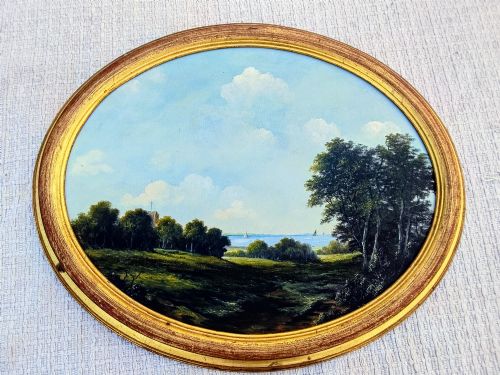
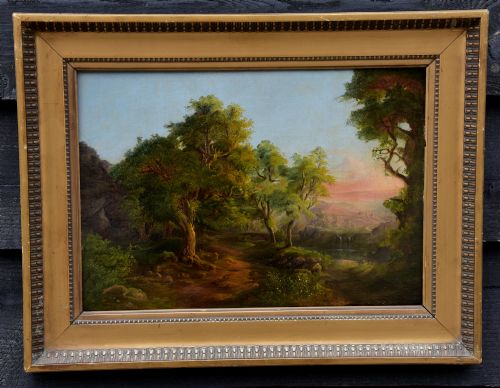
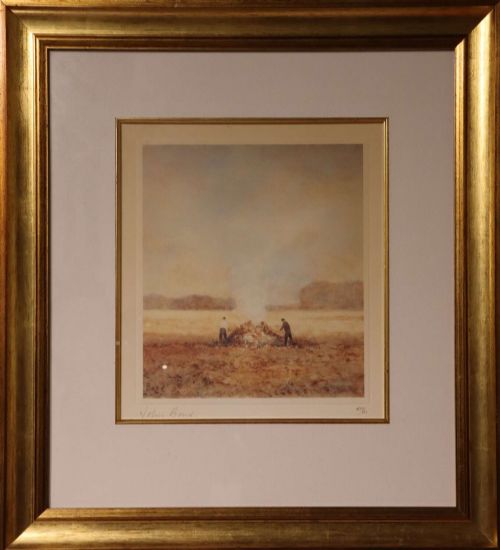
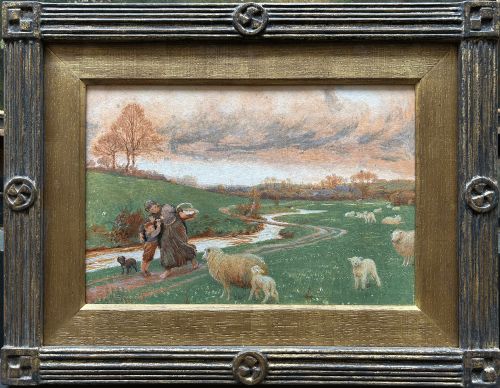
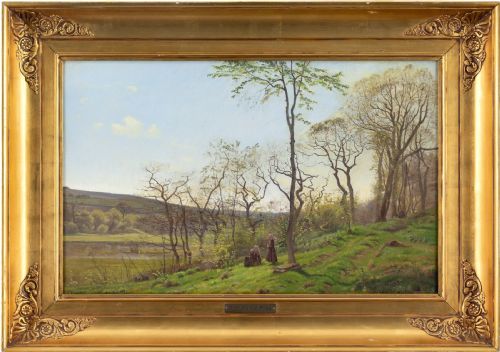
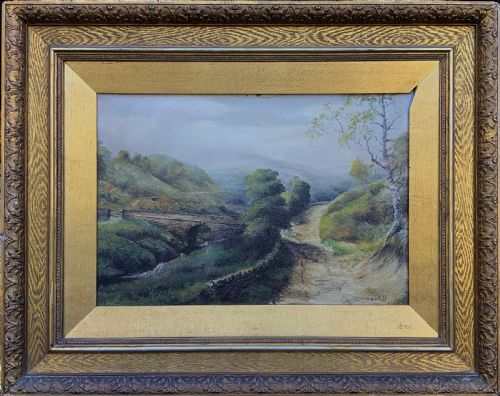
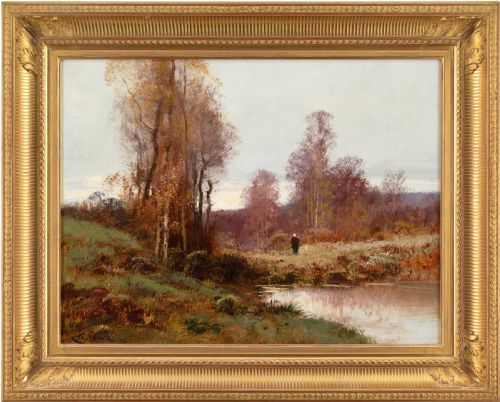
A gold framed countryside picture encompasses pastoral scenes, woodland views, river landscapes and agricultural settings rendered across the nineteenth and twentieth centuries. These artworks capture rural life, farmyard scenes and sweeping vistas from British and European schools.
The most common formats on this page are oil paintings on canvas or board, alongside watercolours, housed within traditional giltwood or gesso frames. Examples range from Victorian highland cattle to Edwardian pastoral watercolours and mid-century rural views.
Subject matter frequently centres on figures with livestock, harvest fields, thatched cottages and Welsh or English river views by named and regional artists.
Materials and construction
Works are predominantly executed in oil paint on canvas or board, or applied as watercolour on paper, capturing rural light and topographical detail. Pigments are handled with varying brushwork, from the tight realism of the nineteenth century to looser impressionistic strokes.
The frames accompanying these paintings are typically constructed from wood finished with gesso and gilt, providing a reflective metallic border that complements the pigments within the composition. Original frames often display moulded ornament and period gilding techniques.
Gold Framed Countryside Picture Retail Price Guide 2026
Typical asking prices for gold framed countryside picture among the pieces listed under this phrase on Sellingantiques today, from the lower quarter to the upper quarter. They describe what is for sale here now, not the wider market.
Several canvases manage to capture the stubborn expression of Highland cattle refusing to move off a misty Scottish path.
Distinctions in quality
Quality in a gold framed countryside picture rests upon the confidence of the brushwork, the handling of natural light, and the anatomical accuracy of figures and animals. Superior examples reveal a skilled rendering of atmosphere and spatial depth rather than mere topographical recording.
The integrity of the frame also influences the piece, with period giltwood mouldings that complement the painting's palette holding greater historical cohesion than later replacements.
David Bates·Charles Walter Simpson·Robert John Hammond·Walter J Watson·Henry H Parker·William Langley·George Turner·John Cuthbert Salmon
The Gold Framed Countryside Picture Glossary
- Giltwood
- Wood that has been coated with gold leaf or a gold-coloured finish. This material is standard for traditional picture frames designed to enhance the warmth of oil paintings.
- Gesso
- A plaster-like mixture applied to wood frames to create a smooth surface for gilding and moulding relief decoration. It allows for ornate decorative details along the frame edges.
- Pastoral
- A genre of art depicting rural life, shepherds, farm animals and idyllic country landscapes. These scenes emphasise a tranquil relationship between people and nature.
- Watercolour
- A paint consisting of water-soluble pigments used on paper to create luminous, translucent washes. It requires a swift and decisive hand, as mistakes cannot easily be painted over.
Gold Framed Countryside Picture: Frequently Asked Questions
What periods do these paintings come from?
The available pieces span from the early nineteenth century through the Victorian and Edwardian eras into the mid-twentieth century.
This broad timeline encompasses varied regional schools, from detailed Victorian pastoral works to later impressionistic British landscapes.
Are the frames original to the artwork?
Many pieces retain their period giltwood or gesso frames, which show appropriate signs of age and historical construction methods.
Matching a period frame to an oil painting enhances the overall presentation and historical context of the countryside scene.
What subjects are most common in these pictures?
Common subjects include river valleys, harvest fields, woodland tracks, and rural farmyards populated by figures, horses and cattle.
These motifs reflect a nineteenth and twentieth-century preoccupation with traditional rural life and recognizable British topography.
How do I care for an antique oil painting?
Antique oil paintings require stable indoor humidity and protection from direct sunlight to prevent the canvas and paint from drying out.
Dust should be removed gently from the surface and the gilt frame using a soft, dry brush without applying liquid cleaners.