





Traditional River Scenery Painting
Traditional river scenery painting captures flowing water and open banks in oil or watercolour.
Traditional River Scenery Painting
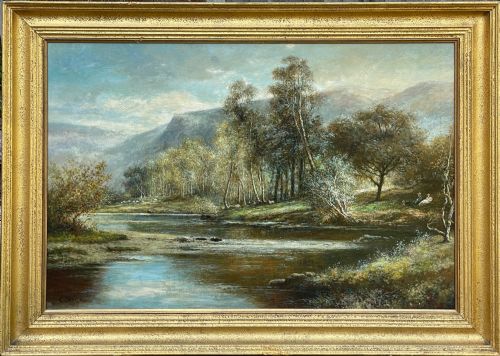
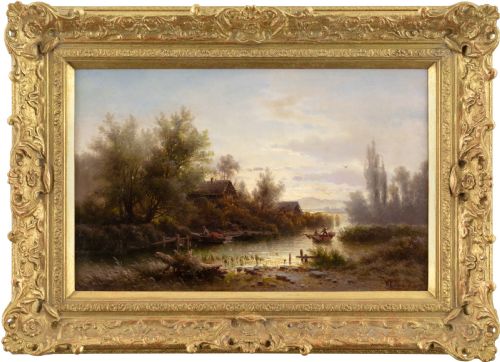
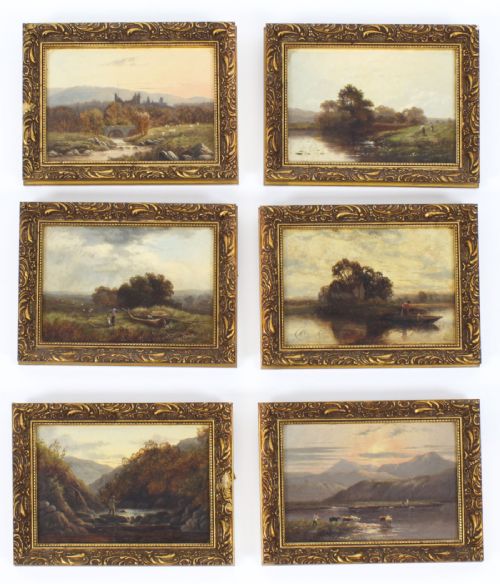
A traditional river scenery painting brings landscapes, lakes and riverbanks into the room through nineteenth and early twentieth-century works. These pieces focus on water, countryside and rustic views captured by artists working in oil and watercolour.
The versions most commonly met on this page range from Victorian canvases to Edwardian watercolours. They capture specific British locations such as North Wales, Lancashire and the river Wharfe.
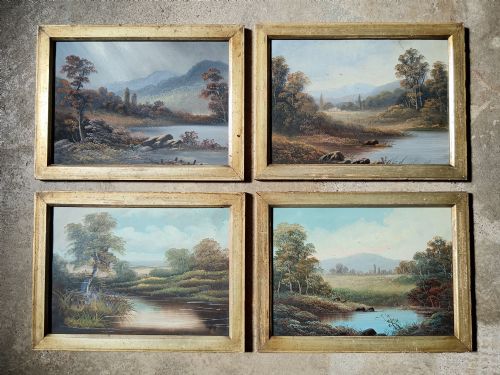
Works appear singly or in sets, mounted within giltwood frames or presented on canvas and paper. They reflect British landscape painting, naturalism and nineteenth-century realism across the periods.
How they were made
Artists painted these scenes using oil paint or watercolour upon prepared canvas or paper supports. Oil applications build heavy texture, whilst watercolour techniques achieve lighter washes for skies and water.
Many works incorporate timber framing finished with gesso and gold leaf to create giltwood surrounds. These frames protect the edges and complement the palette of the landscape within.
Traditional River Scenery Painting Retail Price Guide 2026
Typical asking prices for traditional river scenery painting among the pieces listed under this phrase on Sellingantiques today, from the lower quarter to the upper quarter. They describe what is for sale here now, not the wider market.
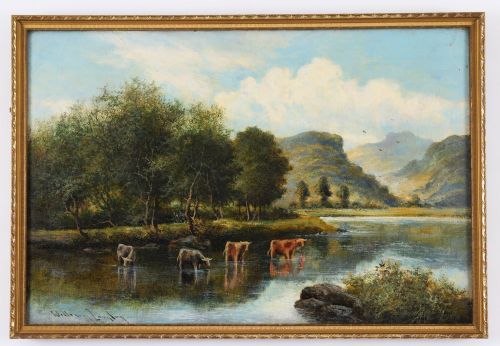
Cattle occasionally interrupt the riverbank tranquility to graze.
What varies in quality
The standard of a traditional river scenery painting rests upon the confidence of the brushwork and the management of light across the water. Stronger works demonstrate a clear command of atmospheric perspective and natural proportion.
Framing and preservation also shape the character of the piece, with original giltwood surrounds and well-preserved canvas or paper surfaces maintaining the integrity of the composition.
Albert Rieger·E Brown·William Mellor·William Hoggatt·Noel Harry Leaver·Thomas Swift Hutton·John B. MacDonald·James Poole·Thomas E Francis·R.E Richardson
The Traditional River Scenery Painting Glossary
- Oil Paint
- A slow-drying medium consisting of pigment suspended in oil, commonly used on canvas for rich colour depth. It allows artists to build textured layers.
- Watercolour
- A paint method where coloured pigments are suspended in a water-soluble vehicle, typically applied to paper. It produces transparent washes of tone.
- Giltwood
- Wood carved and coated with gold leaf or a gold-coloured finish, frequently seen on nineteenth-century frames. It provides a reflective border for the artwork.
- Gesso
- A plaster-like mixture applied to wood frames before gilding to create a smooth base for gold leaf. It allows for crisp decorative moulding.
- Realism
- An artistic movement focusing on everyday subjects without idealisation, prominent in nineteenth-century landscape painting. It prioritises truthful representation of the natural world.
Traditional River Scenery Painting: Frequently Asked Questions
How old are these paintings?
The works span from the Victorian era through the Edwardian period and into the early twentieth century. Dates range across the nineteenth and twentieth centuries.
Specific pieces carry dates from the eighteen-seventies up to nineteen-fifty, reflecting various historical landscape traditions.
What mediums were used?
Artists employed oil paint on canvas or opaque gouache and watercolour on paper. Canvas supports often accompany oil compositions.
Frames are constructed from wood and finished with gesso and gold leaf to form giltwood surrounds.
Where do the scenes depict?
Many works record specific British and European locations, including North Wales, Lancashire and the river Wharfe. Mountain streams and Swiss views also appear.
English countryside settings and riverside castles form part of the regional subjects represented across the selection.
How should I hang them?
Paintings arrive framed in giltwood or wood surrounds ready for wall mounting. Ensure wall fixings support the weight of the timber and canvas.
Keep works away from direct sunlight and damp environments to protect the paint surface and paper.