


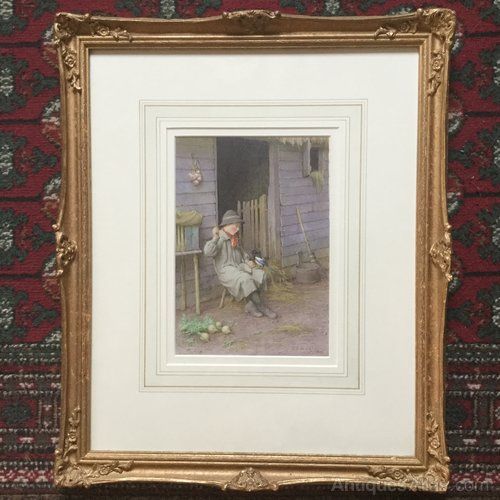


Rural English Country Picture
A rural english country picture captures quiet fields, farmyards, and thatched cottages through the observant eyes of traditional British artists.
Rural English Country Picture
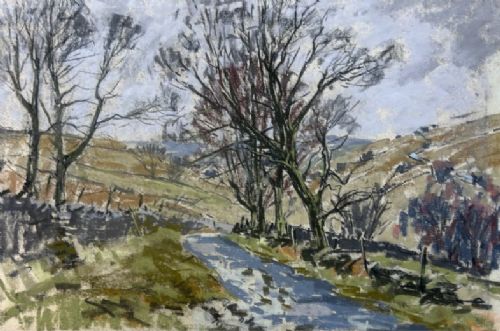
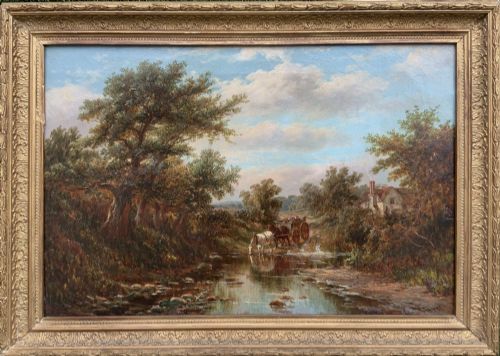
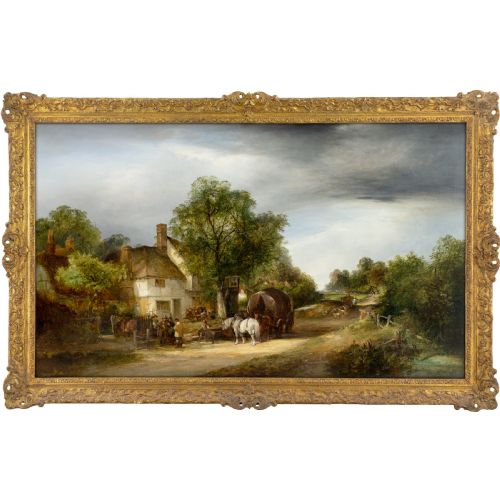
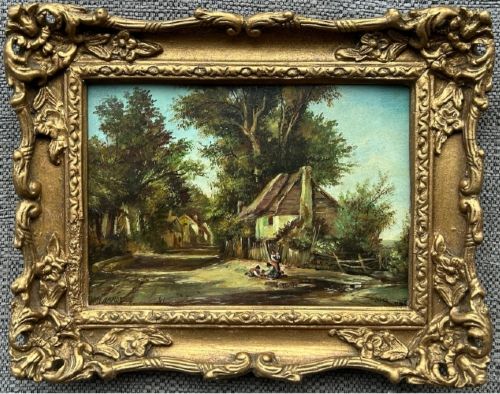
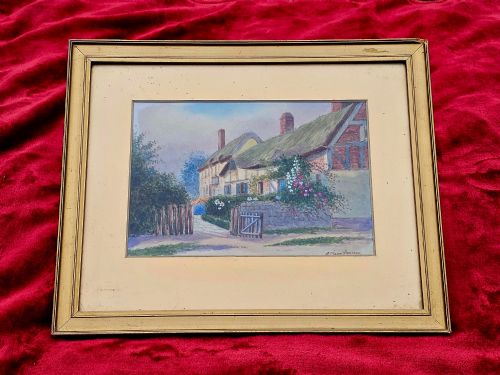
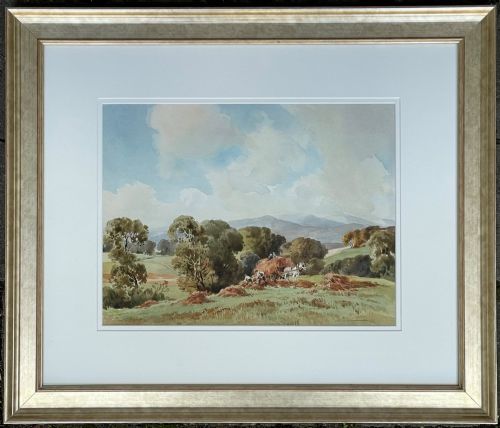
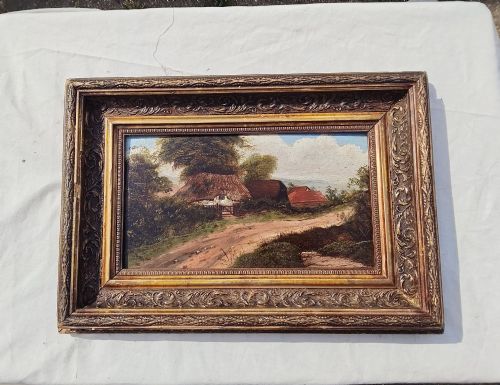
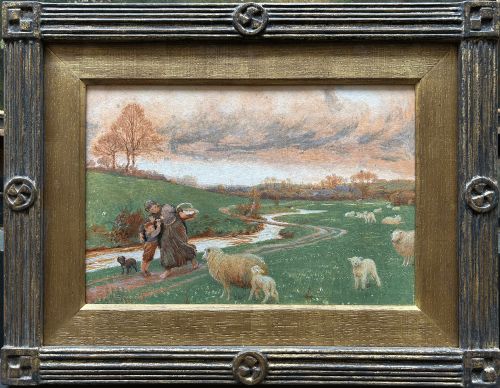
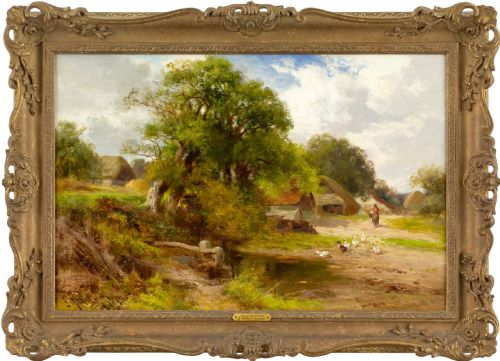
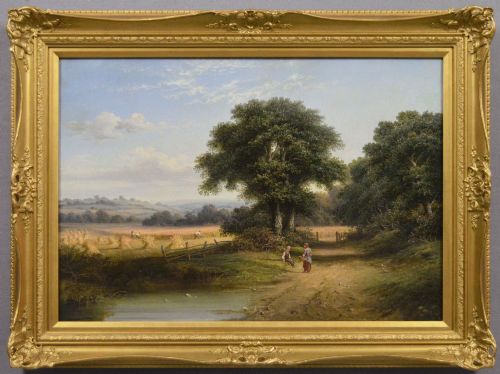
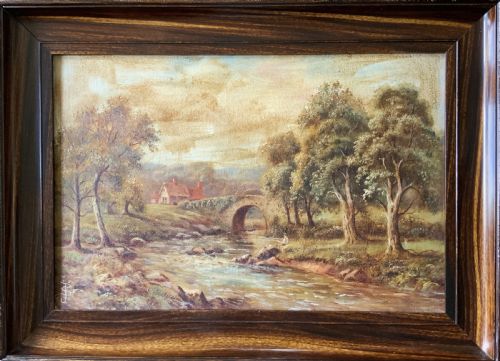
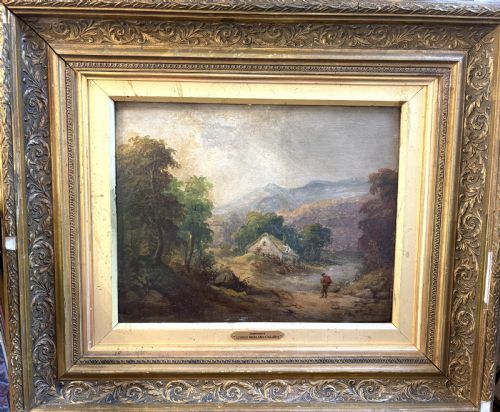
A rural english country picture typically depicts traditional pastoral scenes, harvest landscapes, and quiet village life across the British countryside. These works capture historical farming practices, rural cottages, and tranquil streams through observant landscape recording.
The pieces meeting buyers here emerge largely from the nineteenth century through the early decades of the twentieth century. Common formats include framed oil paintings, panel works, and delicate watercolours produced by members of the English School and regional painting traditions.
Makers recorded in the evidence range from named Victorian painters to Edwardian artists working in oil and watercolour. Their compositions focus firmly on agricultural labour, livestock, and domestic rural architecture.
Materials and Techniques
Painters recorded in the evidence utilised oil on canvas, board, panel, and card, building rich textures across agricultural and domestic subjects. Others applied watercolour pigments onto paper, capturing soft light over harvest fields and village lanes.
Substantial framing often incorporates gold leaf and gilt wood, preserving the painted surface and defining the visual boundary of the landscape. Lithographic prints also appear, reproducing original painted compositions for wider domestic display.
Rural English Country Picture Retail Price Guide 2026
Typical asking prices for rural english country picture among the pieces listed under this phrase on Sellingantiques today, from the lower quarter to the upper quarter. They describe what is for sale here now, not the wider market.
Several canvases record heavy horses and curious farmyard geese pausing patiently while the artist sets up an easel.
Judging Quality
Quality rests upon the artist's handling of natural light, atmospheric perspective, and compositional balance within the landscape. Works by established regional school painters demonstrate superior command over shadow, tone, and the accurate rendering of figures and livestock.
The physical preservation of the painted surface, paper support, or wood panel dictates the longevity and visual clarity of the piece. Well-preserved surfaces retain their original pigment vibrancy beneath appropriate gold leaf or gilt wood framing.
Percy Lancaster·William Howard Hardy·A. Marie Parsons·Walter Heath Williams·John Horace Hooper·Frederick Walker·Herman S Melville·George Morland·Charles Edward Wilson·Sydney Yates Johnson·William JB Jenkins·Henry John Yeend King·M. C. Hider·James Hardy Junior·John Atkinson·Henry Bailey·J.C. Grey·James Thomas Linnell·John Henry Dell·Arthur Charles Dodd·George Kilburne·Vernon Stokes·Abraham Hulk Junior·Joseph Kirkpatrick·Ernest Cox
The Rural English Country Picture Glossary
- English School
- A loose classification describing artists trained or working within British landscape and genre traditions. This grouping encompasses generations of painters recording local scenery without formal academic uniformity.
- Watercolour
- A painting method where fine pigment is suspended in a water-based solution and applied to paper. This medium allows for transparent washes that capture transient effects of light and weather.
- Gilt Wood
- Timber frames coated with a thin layer of gold leaf or metallic gilt powder. These surrounds provide traditional decorative borders for oil paintings and watercolours.
- Genre Painting
- Artwork depicting scenes from everyday life, ordinary people, and domestic activities. In rural contexts, these compositions frequently show farm workers, children, or villagers at daily tasks.
- Pastoral Landscape
- A visual representation portraying rural life and agricultural scenery as idyllic and peaceful. These subjects emphasise harmonious relationships between people, animals, and the countryside.
Rural English Country Picture: Frequently Asked Questions
What subjects appear in these paintings?
The compositions focus primarily on agricultural labour, harvest fields, farmyards, and quiet village scenes across the British countryside. Figures near streams, cottages, and heavy horses at work frequently anchor the landscape.
Artists recorded specific local topography, naming regions like Essex, Yorkshire, and Somerset. The imagery reflects an observational approach to rural life during the Victorian and Edwardian eras.
How should I hang a landscape?
These framed works suit traditional living spaces, libraries, or studies where natural light complements the oil or watercolour medium. Matching the gilt wood frame to existing room furnishings helps integrate the piece into the interior.
Direct sunlight should be avoided to protect watercolours on paper and delicate pigments from fading. Stable indoor humidity also preserves the wooden panels and canvas supports over time.
Are these works signed by the artist?
Many listings feature signatures, monograms, or studio attributions connecting the piece to a named Victorian or Edwardian painter. Signatures often appear discreetly in the lower corners of the canvas or paper support.
Unsigned works are frequently attributed to recognised regional traditions, such as the English School or Norwich School. These attributions rely on stylistic evidence, handling of pigment, and period framing.
How do I distinguish watercolours from oils?
Watercolour paintings use transparent washes on paper supports, generally displayed behind protective glass within a matted frame. The paper texture remains visible beneath delicate applications of pigment.
Oil paintings utilise thicker mediums applied to canvas, board, wood panel, or card, exhibiting visible brushstrokes and textured surfaces. These works do not require glass protection and frequently feature heavier gilt wood frames.