
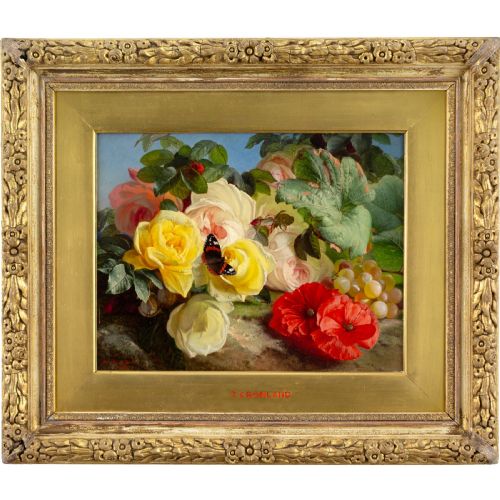
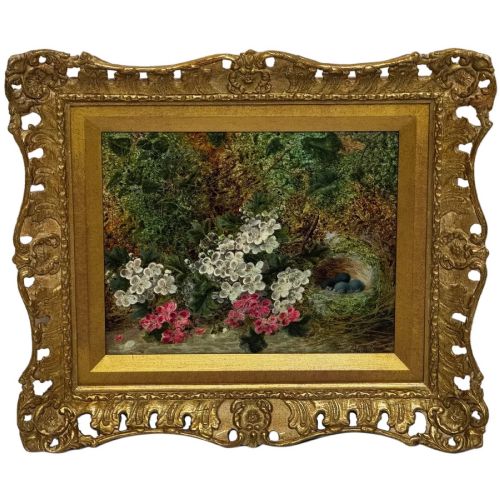
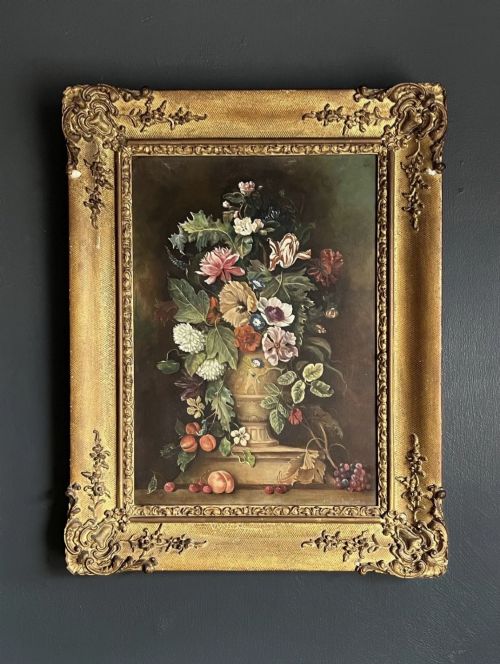
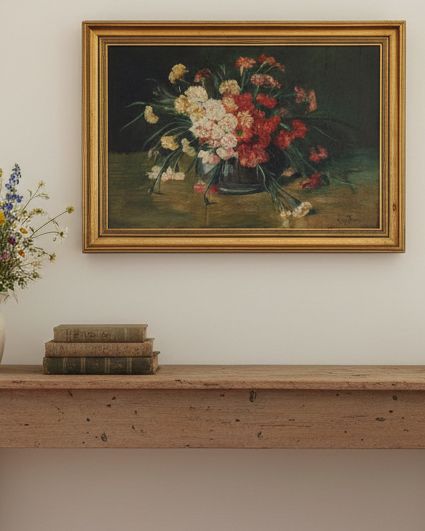
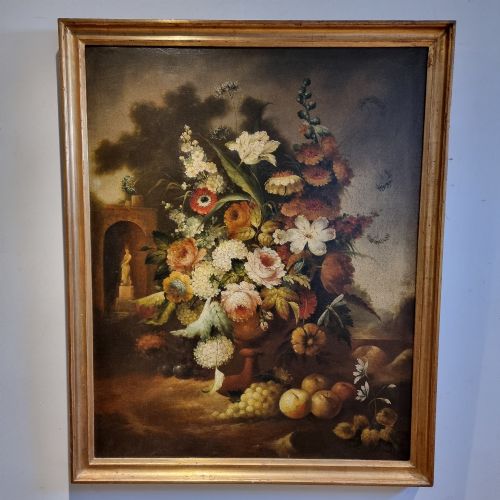
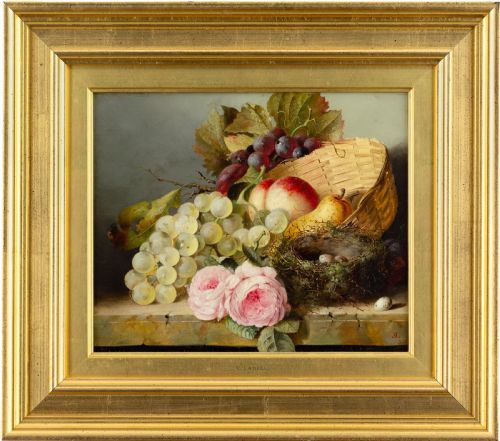
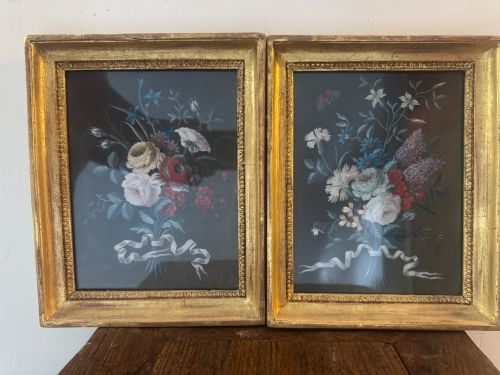
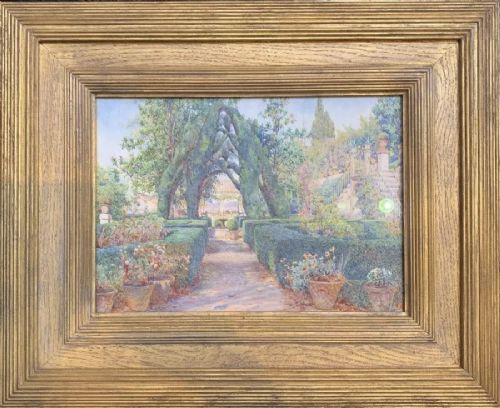
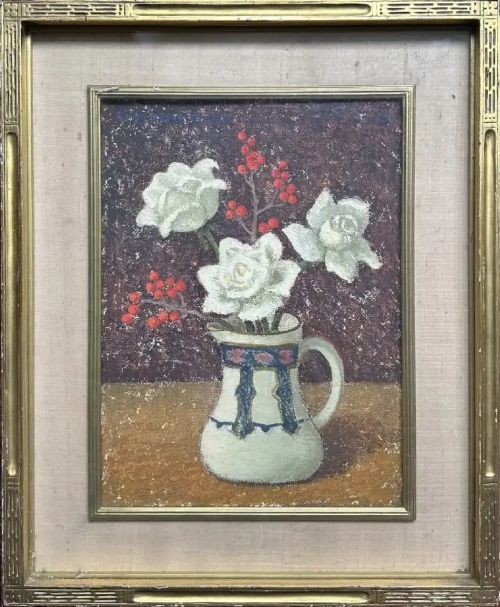
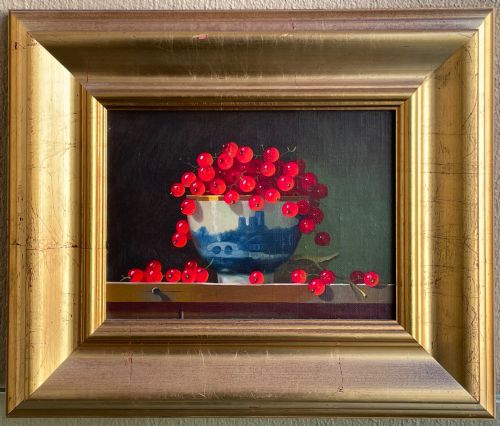
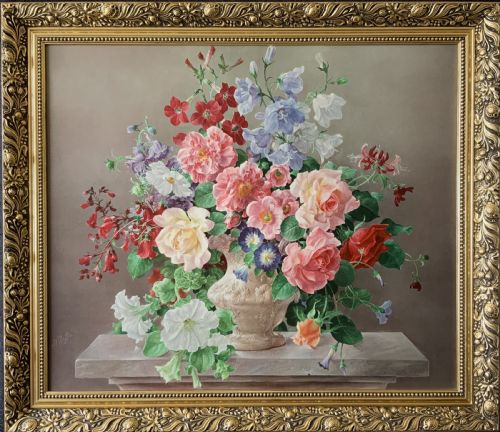
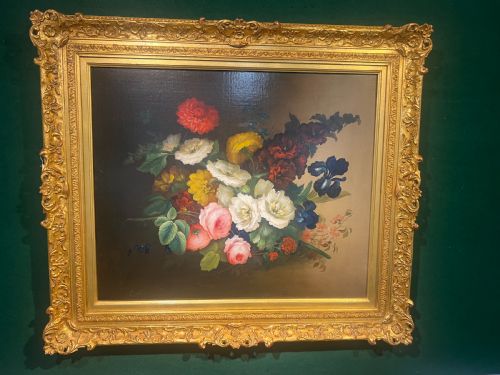
Gold Framed Botanical Painting
A gold framed botanical painting brings the quiet study of garden flora indoors through oil and watercolour, framed in lustrous leaf.
Gold Framed Botanical Painting
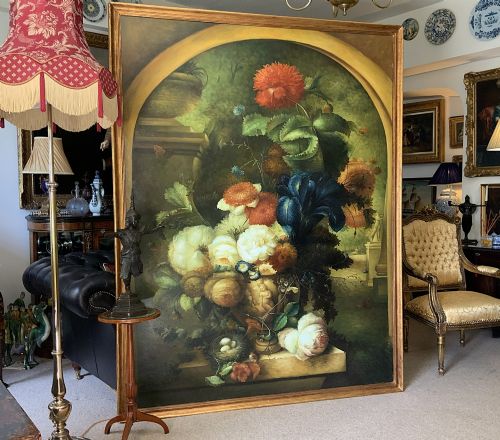
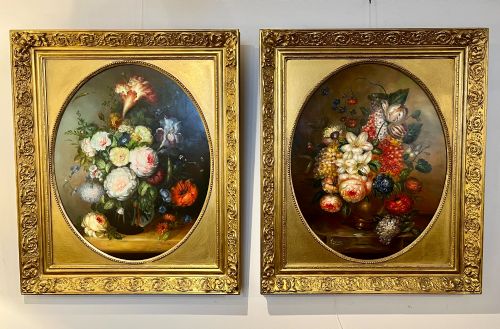
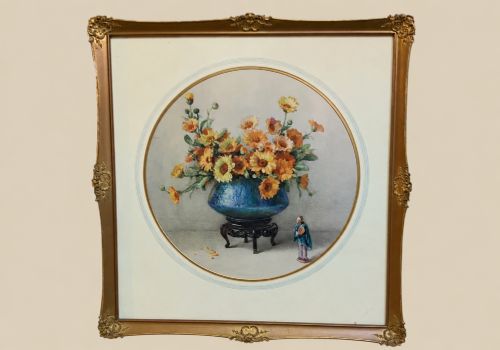
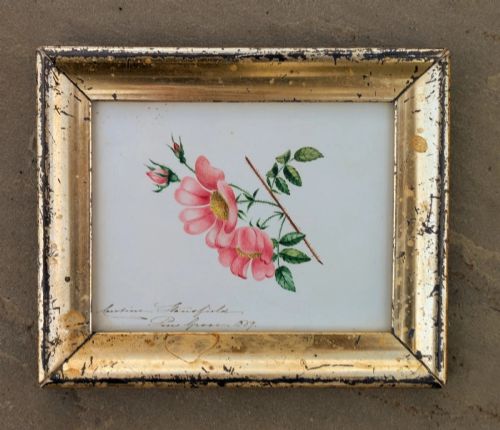
A gold framed botanical painting captures meticulous studies of flora, ranging from single stems to lush Dutch-style still lifes and garden scenes. These works span the nineteenth century through the mid-century, capturing Victorian detail and later impressionist interpretations alike.
Most pieces encountered here take the form of oil on canvas, oil on board, or delicate watercolours and gouache on paper. They are housed in period gilt frames, gesso mouldings, or gilded wood surrounds that complement the natural subject matter.
Subjects stretch from wild roses and summer meadow flowers to grand floral arrangements paired with fruit or porcelain. Collectors find both intimate vignettes and monumental canvases suited to traditional and eclectic interiors.
Materials and construction methods
Painters utilised oil, watercolour, gouache, and pastel on supports of canvas, wood panel, board, and paper. Pigments were applied to render botanical accuracy or loose impressionist light effects, often finished with protective varnishes.
Frames are constructed from wood, finished with gold leaf or gilt gesso, and occasionally embellished with ornate moulded decoration. The joinery and gilding methods reflect the prevailing cabinet-making and framing practices of their respective periods.
Listings feature works spanning the nineteenth century, the Victorian era, and mid-century movements, utilising canvas, wood, paper, and gilded wood.
Evaluating quality and execution
Quality rests in the precision of the botanical draftsmanship, the handling of light, and the harmony between the artwork and its gilt enclosure. Superior pieces demonstrate anatomical plant accuracy and confident brushwork rather than mechanical copying.
The integrity of the frame matters equally, where hand-gilded surfaces and period gesso mouldings elevate the overall object. Original pairings of artwork and frame hold greater aesthetic cohesion than later combinations.
Theude Grönland·Oliver Clare·Edward Ladell·Ernest Arthur Rowe·Emma Fordyce MacRae·Edwin Steele·Manuela Bonati·William Duffield·Vincent Clare·William Andrews Nesfield·Owen Bowen·Henry Schouten·Arthur Wardle
The Gold Framed Botanical Painting Glossary
- Gesso
- A plaster-like mixture applied to wood frames to create a smooth surface for gilding. It is carved or moulded with ornamental patterns before the application of gold leaf.
- Gouache
- An opaque watercolour paint consisting of pigment mixed with a water-binding agent and a white filler. It produces a dense, matte surface favoured for detailed botanical studies.
- Oleograph
- A mechanical colour lithograph printed on canvas to imitate an oil painting. These reproduction prints became popular in the late nineteenth century.
- Impressionism
- An art style characterised by relatively small, thin yet visible brush strokes and an open composition. It emphasises accurate depiction of light and fleeting botanical moments.
- Still life
- A work of art depicting mostly inanimate subject matter, typically commonplace objects which may be either natural or man-made. Floral displays and fruit arrangements form the core of this genre.
Gold Framed Botanical Painting: Frequently Asked Questions
How do I care for antique botanical paintings?
Keep the artwork away from direct sunlight and excessive humidity to protect fragile watercolours and oil pigments.
Dust gilded frames gently with a soft, dry brush without applying chemical cleaners to the metallic surface.
Are these paintings original or prints?
The majority of pieces listed are hand-painted originals executed in oil, watercolour, or gouache on canvas, panel, or paper.
Occasional pieces comprise vintage prints, so checking the medium specified in each individual listing ensures correct identification.
How can I date a gilt picture frame?
Dating relies on inspecting the wood construction, corner joints, and the composition of the gesso beneath the gold leaf. Hand-carved wooden mouldings and traditional water gilding typically point to earlier nineteenth-century manufacture.
Composition ornament and machine-rolled timber often indicate later Victorian or twentieth-century production.
Where should I hang a floral still life?
These works suit drawing rooms, dining spaces, or studies where their natural motifs complement interior plantings and traditional decor. Their warm gold frames provide a natural focal point against neutral wall colours.