
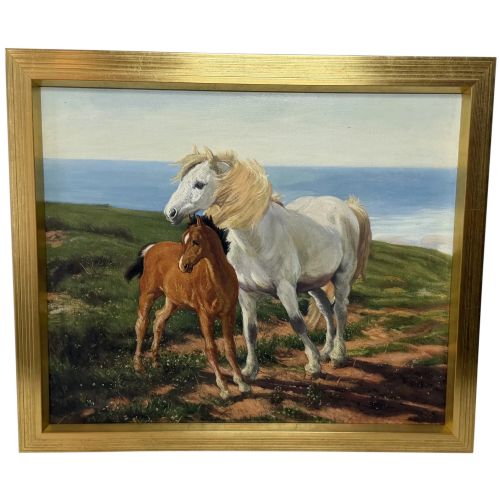


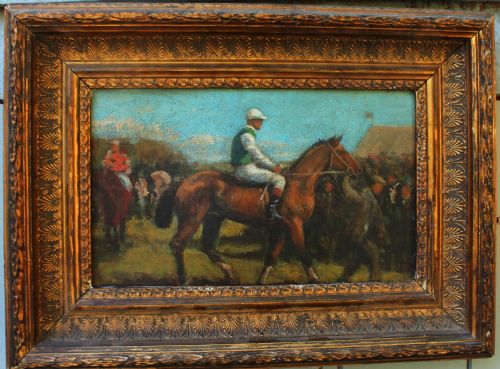


Gold Frame Equestrian Picture
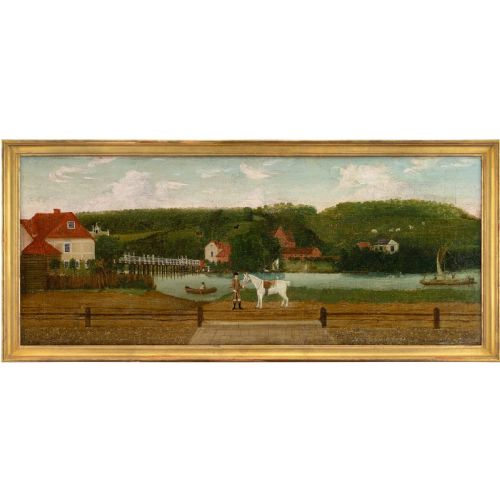
A gold frame equestrian picture brings the rich history of the turf, the hunt, and the paddock straight into your interior.
Gold Frame Equestrian Picture
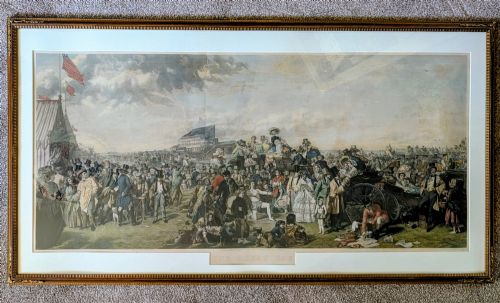
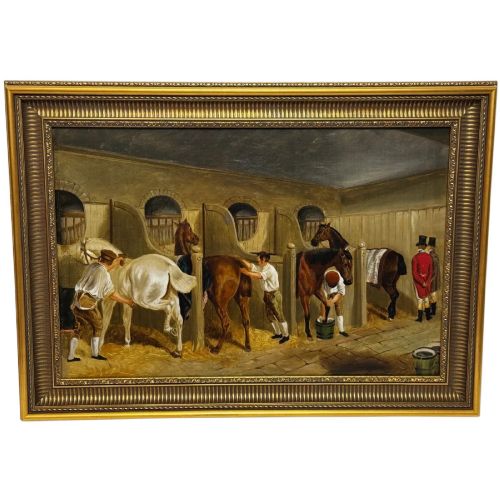
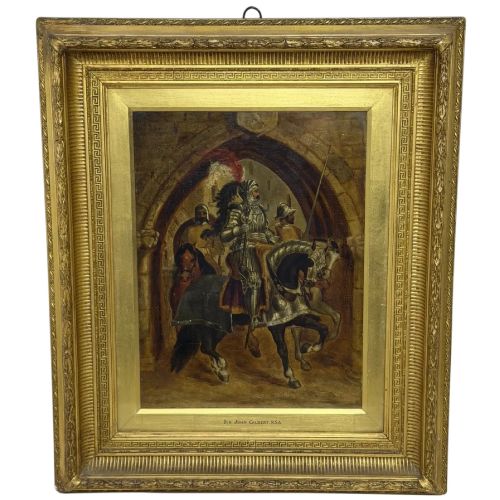
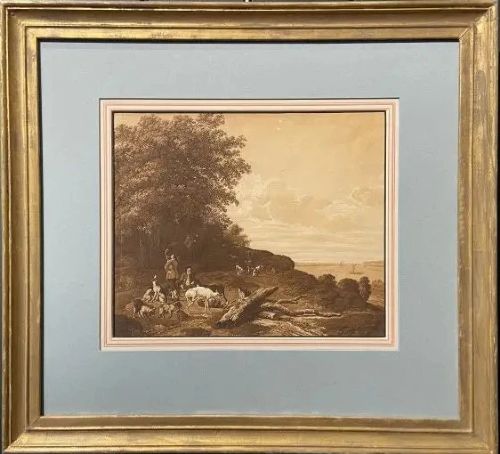
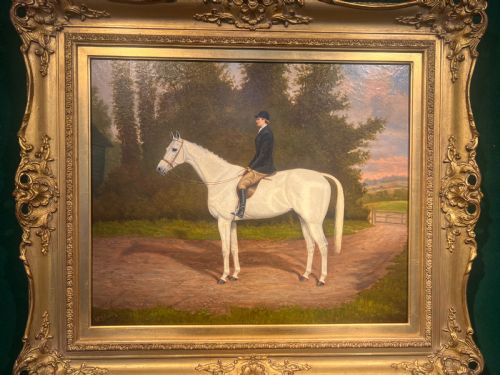
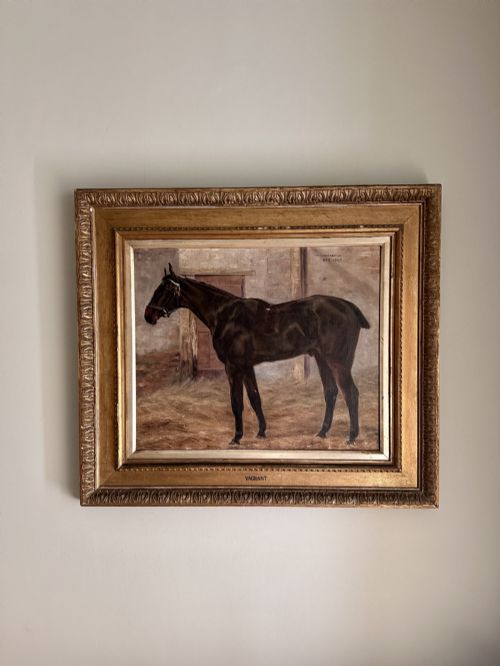
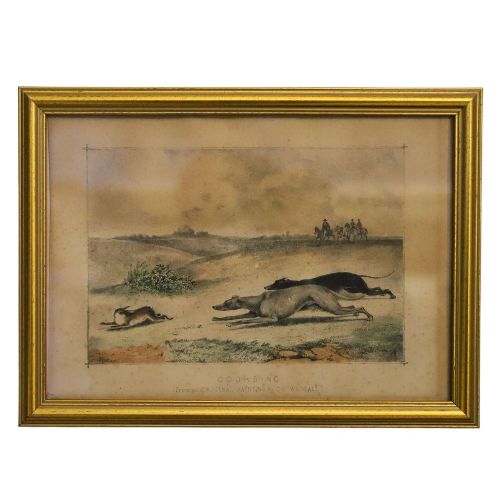
When you search for a gold frame equestrian picture, you encounter works that capture horses, riders, hounds, and rural sporting life within gilded borders. These pieces primarily take the form of oil paintings on canvas, watercolours, lithographs, and prints spanning from the early nineteenth century through to the Edwardian era.
The most common examples you meet on this page are nineteenth-century oil paintings and Victorian sporting art depicting individual horse portraits, hunts, and racecourse scenes. These works range from intimate watercolours to large canvases framed in giltwood and wood.
Originating largely from British schools and artists working in the nineteenth and early twentieth centuries, these pictures reflect a period when equestrian culture dominated country life and sporting pursuits. The framing typically utilises gold leaf or gilt wood to complement the warmth and detail of the painted subjects.
How they were made
The physical construction of these works relies on traditional artists' materials, predominantly oil paint applied to stretched canvas or watercolour pigments on paper. Canvas supports are frequently housed within heavy wooden frames finished with layers of gold leaf or gilt preparation.
Print techniques also feature among these pieces, including nineteenth-century lithographs and reverse silhouette paintings on glass. These methods required precise draftsmanship and specialised chemical or press techniques to transfer detailed equine imagery.
Framing forms an integral part of the piece, utilising carved wood substrates built up with gesso and gilded by hand. The resulting gold frames provide structural rigidity while enhancing the tonal qualities of the artwork within.
Listings feature oil on canvas, watercolours, and lithographs framed in giltwood from the Victorian and Edwardian eras.
What varies in quality
The distinction between tiers of work rests upon the anatomical accuracy of the horses, the handling of light in the landscape, and the skill of the brushwork. Master painters capture the muscular tension and distinct personality of specific racehorses or hunters, whereas lesser hands produce stiff and generic animal forms.
The integrity and craftsmanship of the gold frame itself also dictate the overall standard of the piece. Hand-carved giltwood mouldings with deep relief and original gilding represent a higher grade of craftsmanship than plain wooden frames simply painted gold at a later date.
Provenance and attribution further influence the standing of these pictures, with works securely attributed to established sporting artists commanding greater recognition than anonymous school pieces. The harmony between the artwork and its period frame preserves the historical context of the object.
William Powell Frith·John Ferneley Senior·Alfred Munnings·John Frederick Herring Jnr·Abraham Cooper
The Gold Frame Equestrian Picture Glossary
- Giltwood
- Wood that has been coated with a thin layer of gold leaf or gold powder. This finish is characteristic of traditional framing used to highlight fine art.
- Lithograph
- A print made from a planographic process in which the image is printed from a smooth stone or metal plate. It allowed for the mass reproduction of popular sporting scenes in the nineteenth century.
- Sporting Art
- A genre of art that depicts rural sports, horse racing, hunting, and animals. It flourished in Britain during the eighteenth and nineteenth centuries.
- Provenance
- The chronology of the ownership, custody, or location of a historical object. Establishing provenance helps verify the authenticity and history of an equestrian painting.
- Watercolour
- A painting method in which the paints are made of pigments suspended in a water-based solution. These works are typically executed on paper and protected behind glass.
Gold Frame Equestrian Picture: Frequently Asked Questions
How do I identify a Victorian horse painting?
Victorian horse paintings are generally characterised by detailed anatomical studies of hunters or racehorses, often placed within rolling British landscapes or stable interiors. The clothing of any riders, the style of the signature, and the composition reflect the academic painting standards of the nineteenth century.
The accompanying frames often feature Victorian giltwood mouldings that match the age of the canvas. Examining the stretcher bars, canvas texture, and any verso inscriptions provides further clues to dating the work.
What subjects are common in equestrian art?
Common subjects include named racehorses with their jockeys, fox hunting meets, coaching scenes, and rural farmyard compositions featuring horses alongside dogs and livestock. These themes reflect the central role of horses in transport, sport, and estate life during the nineteenth century.
Artists frequently recorded specific famous thoroughbreds or documented notable local hunts. The presence of hounds, rural estates, and specific racing venues adds narrative depth to the imagery.
How should I hang a gilded frame?
A gilded frame requires sturdy wall fixings due to the weight of the dense wooden substrate and plaster gesso ornamentation. It should be hung away from direct sunlight and excessive humidity to protect both the gold leaf and the underlying canvas or paper.
Positioning the picture at eye level in a well-lit room allows the gold leaf to reflect ambient light and highlight the finer details of the brushwork. Using professional picture hooks rated for the weight of the frame ensures secure placement.