
Antique Horse Canvas Art
Antique horse canvas art comprises oil paintings on canvas depicting equines, hunt scenes, and racing portraits from the seventeenth century to the mid twentieth century.
Antique Horse Canvas Art
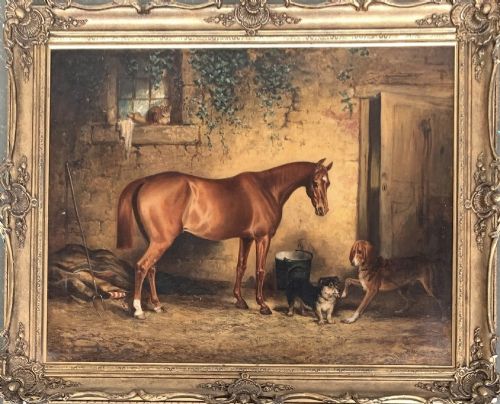
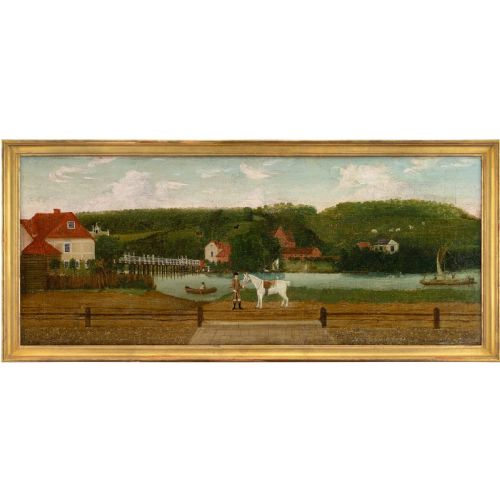
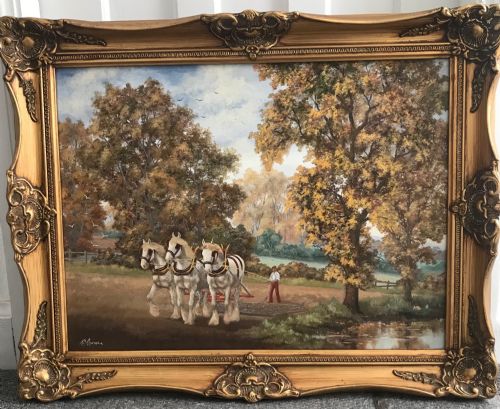
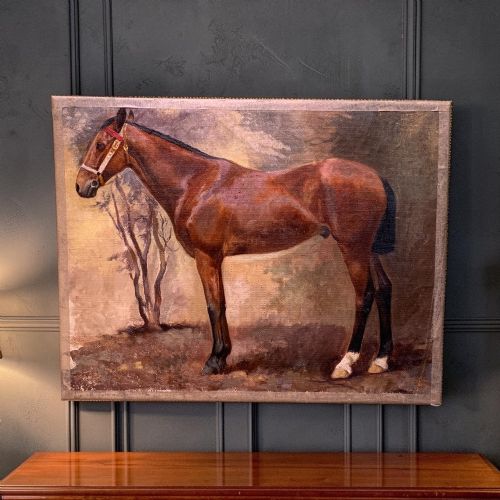
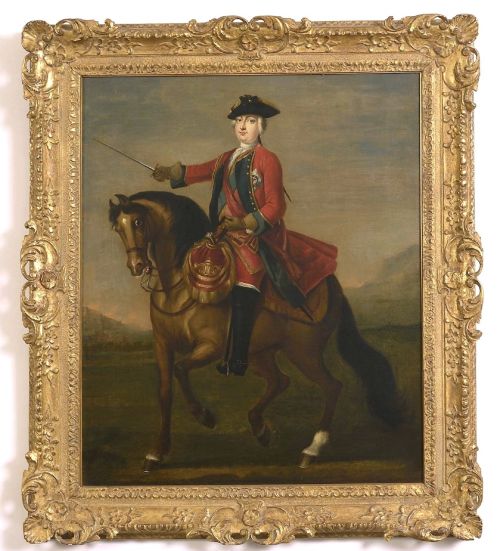
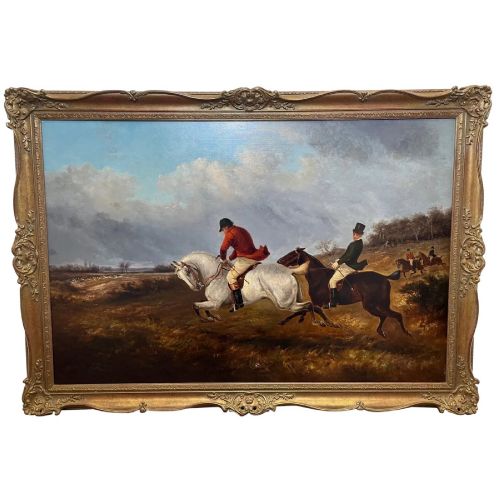
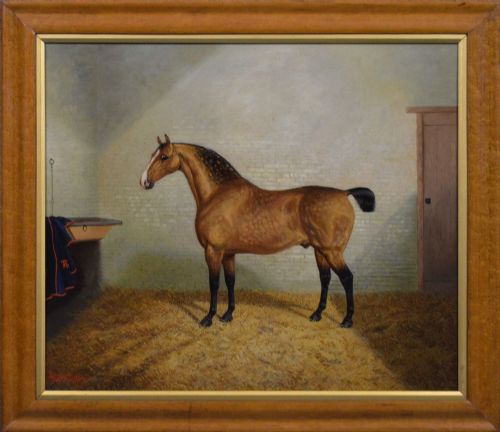
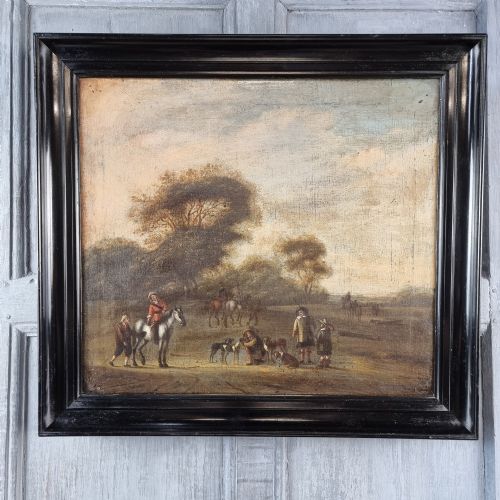
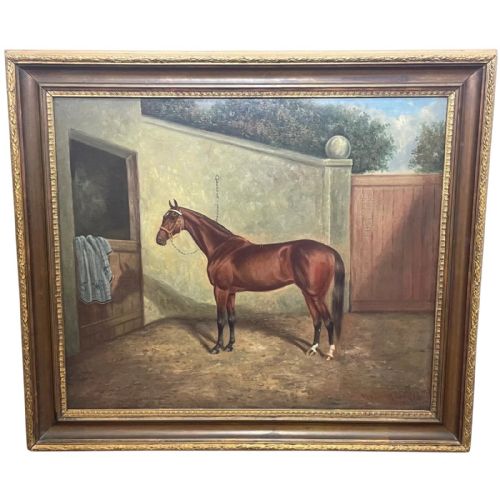
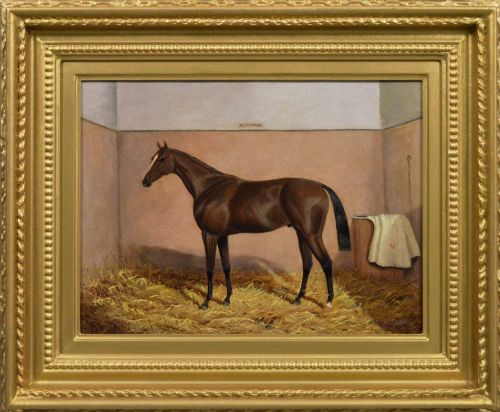
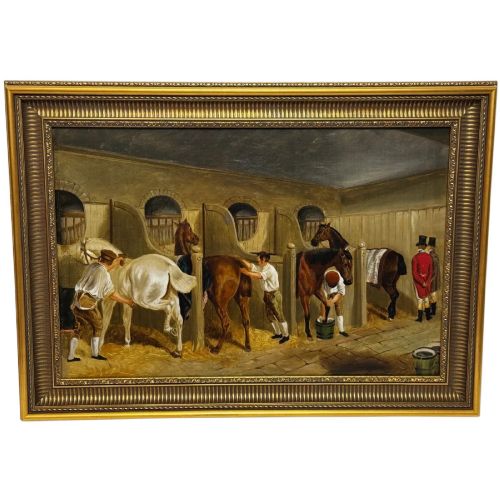
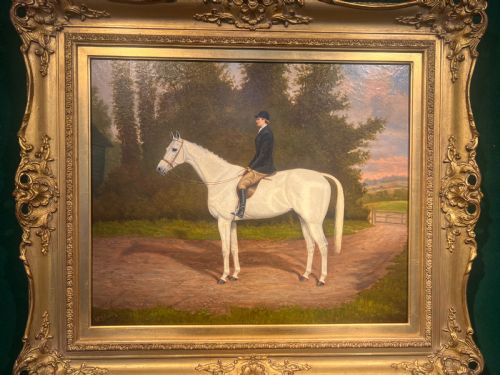
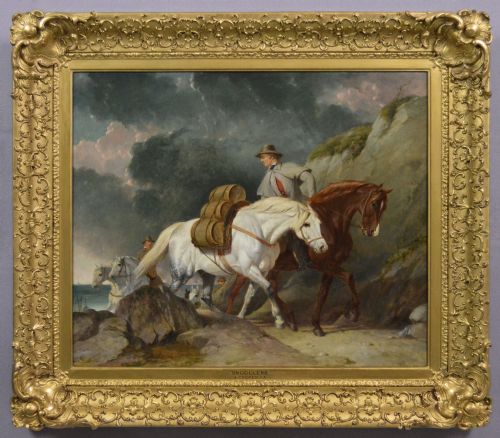
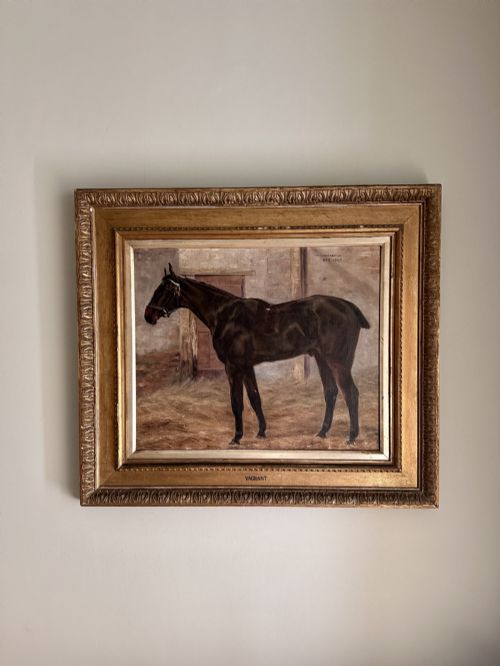
When you search for antique horse canvas art, you encounter oil paintings on canvas depicting individual equine portraits, racehorse winners, hunting scenes, and working horses in rural landscapes. These works span from the seventeenth century through the Victorian and Edwardian eras up to the mid twentieth century, reflecting a long tradition of British and European equestrian painting. The most frequent pieces on this page are nineteenth-century and early twentieth-century oil paintings of named racehorses, hunters, and stable portraits by listed artists.
The subjects range from specific named thoroughbreds like Spion Kop and Flying Fox to generic bay hunters, grey mares, and cart horses working in Irish or English countryside settings. Many are framed in period giltwood or gilt frames, capturing both sporting history and agricultural life. Whether executed by known practitioners like Albert Clark or anonymous school painters, these artworks record the central role of the horse in past centuries.
How they were made
The pieces listed here are oil paintings executed on woven canvas supports, utilising oil paint applied with brushes or palette knives to build depth and texture. Artists of the seventeenth to twentieth centuries prepared their canvases with gesso grounds before painting layered compositions of figures, animals, and landscapes. Many of these works retain their original or period-appropriate wood and giltwood frames, which often feature decorative moulding.
The combination of oil paint and canvas allowed artists to achieve subtle tonal gradations in animal musculature, coats, and outdoor lighting effects. Pigments were mixed by hand in earlier periods and later sourced from tubes, applied to stretched canvas surfaces secured to wooden stretcher frames. This traditional method ensures the physical survival of the pigment layer over centuries, provided the canvas remains properly tensioned.
Listings feature oil on canvas works spanning from the 17th century through the Victorian era to the 1960s.
What varies in quality
Quality in antique horse canvas art depends primarily on the anatomical accuracy of the animal, the competence of the brushwork, and the provenance of the piece. Top-tier works by named painters demonstrate precise command of equine proportions, lighting, and expression, whereas lesser examples rely on formulaic compositions and stiff postures. The integration of the horse into its surrounding landscape - whether a stable interior or a wide hunting estate - also distinguishes superior artistic execution from standard decorative output.
The framing contributes significantly to the overall integrity of the piece, with original swept giltwood frames indicating higher historical preservation than later replacements. Documentation such as artist signatures, dates, or recorded provenance linked to estates adds weight to an artwork. Ultimately, the vitality of the brushwork and the individuality given to the subject separate master studies from routine commercial productions.
Thomas Smythe·Albert Clark·Abraham Cooper·Fred Fitzpatrick·Ernest Payne·John Alfred Wheeler·John Ferneley Senior·Charles Walter Simpson·Raimond Louis Lecourt·George Stubbs
The Antique Horse Canvas Art Glossary
- Equine portrait
- A painting dedicated specifically to recording the likeness, conformation, and identity of a particular horse. These works were frequently commissioned by owners to document prize racehorses or favoured hunters.
- Giltwood
- Wood that has been coated with a thin layer of gold leaf or gilt paint, commonly used for nineteenth-century picture frames. It provides a bright, reflective border that complements oil paintings.
- Provenance
- The documented history of ownership of an artwork, tracing it from its creation to the present day. Verified provenance adds historical context and confirms the authenticity of the piece.
- Stretcher frame
- The internal wooden framework over which the canvas is pulled and secured taut. Antique frames often feature wedge keys in the corners to adjust canvas tension.
Antique Horse Canvas Art: Frequently Asked Questions
How do I identify the period of an oil painting?
Examine the style of the canvas preparation, the stretcher construction behind the frame, and the clothing or architecture depicted in the background landscape. Pigment analysis and framing styles also offer clues to the era of creation.
Compare the brushwork and signature conventions against known examples from specific centuries. Portraits from the Victorian era often display different framing and glazing methods compared to earlier Georgian or seventeenth-century works.
What subjects are most common in equine art?
Named racehorses, hunting studs, and bay hunters dominate these listings, reflecting the historical importance of equestrian sport and rural transport. Artists frequently recorded specific derby winners alongside working horses in agricultural settings.
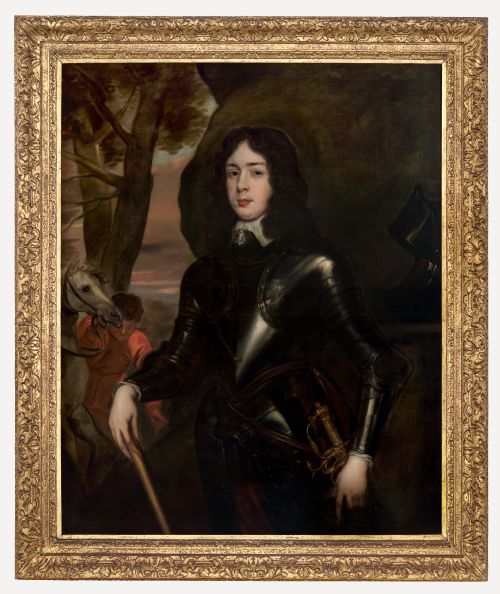
Other common subjects include coaching scenes, military portraits featuring officers on horseback, and quiet stable interiors. These motifs illustrate how central horses were to daily life, travel, and sport across past centuries.
How should I care for antique canvas art?
Keep paintings away from direct sunlight, high humidity, and rapid temperature fluctuations to prevent the canvas from slackening and the oil paint from cracking. Maintain stable indoor environmental conditions to preserve the integrity of both the paint layer and the wood support.
Dust the surface very gently with a soft, dry brush, avoiding any moisture or chemical cleaning agents. Consult a professional conservator if the canvas requires cleaning or structural intervention.