


Red Coat Sporting Art
Red coat sporting art captures the thrilling atmosphere of traditional equestrian pursuits through accomplished paintings, watercolours and prints.
Red Coat Sporting Art
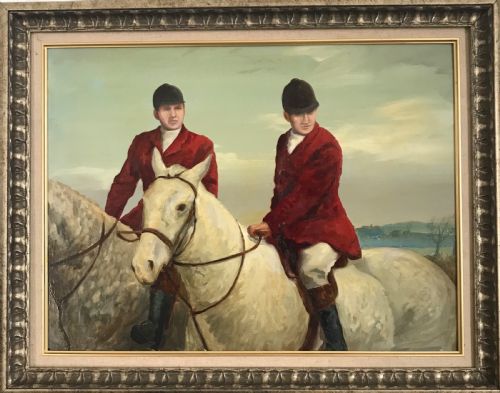
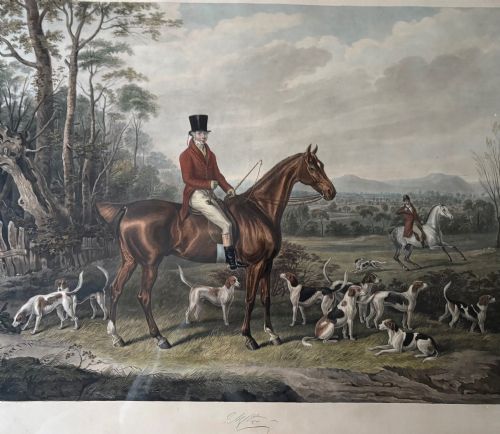
Red coat sporting art depicts historic hunts, riders, horses and hounds across various traditional British scenes. These works capture the pageantry of the field, often focusing on famous packs and notable huntsmen.
You will most frequently encounter nineteenth century and early twentieth century examples rendered in oil on canvas or delicate watercolour on paper. The selection ranges from intimate framed watercolours to large oil paintings.
Subjects span from detailed depictions of the Quorn and Berkeley hunts to characterful portraits of gentlemen hunters and royal figures. Each piece preserves a distinct moment in the history of equestrian sport.
Materials and techniques
Artists relied primarily on oil paint applied to canvas or wood panels, alongside watercolour pigments on paper. These traditional media allowed for both the rich saturation needed for scarlet coats and the subtle tones required for countryside landscapes.
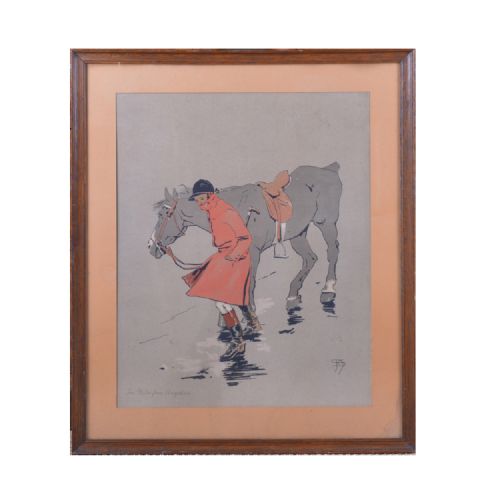
Works are frequently housed in period frames, including ornate giltwood designs that complement the formality of the painted subject. Graphic techniques such as aquatint and chromolithograph also appear, offering reproducible versions of popular hunting imagery.
Periods represented span the Georgian era, Victorian times, Edwardian years and the mid-twentieth century up to nineteen sixty.
Assessing quality and execution
The standard of execution depends heavily on the artist's ability to render the anatomy of horses and hounds with anatomical accuracy and dynamic movement. Superior works capture the tension and energy of the chase rather than presenting a rigid composition.
Provenance and attribution elevate certain pieces, particularly those signed by established practitioners of British sporting art. The depth of the landscape background and the nuanced handling of light and weather further distinguish finer examples.
John Arthur Lomax·Basil Nightingale·Charles Clifford Turner·John Sanderson Wells·Thomas Ivester Lloyd·Heywood Hardy·George Goodwin Kilburne·Geoffrey Mortimer·Frank Algernon Stewart·Wilfred Bailey
The Red Coat Sporting Art Glossary
- Aquatint
- An intaglio printmaking technique that produces tonal areas resembling watercolour washes. It was frequently used to reproduce hunting scenes for broader distribution.
- Chromolithograph
- A multicoloured lithographic print used to replicate oil paintings and watercolours. This technique brought vibrant hunting imagery into many Edwardian homes.
- Giltwood
- Carved wood treated with gold leaf or a gold-coloured metallic finish to create a decorative frame. Such frames are typical companions for nineteenth-century oils.
- Reverse glass painting
- An artwork created by painting or drawing on the back of a piece of glass and viewing it from the front. Georgian examples often depict portraits of gentlemen hunters.
- Watercolour
- A paint consisting of pigment suspended in a water-based solution, typically applied to paper. It allows for transparent layers and luminous countryside landscapes.
Red Coat Sporting Art: Frequently Asked Questions
What periods do these pieces date from?
The works span from the Georgian era through the Victorian period and into the mid-twentieth century. Most examples date from the nineteenth and early twentieth centuries.
This broad timeline reflects the enduring popularity of equestrian subjects among British artists and collectors over several generations.
How were these artworks originally displayed?
Paintings and framed watercolours typically hung in country houses, estate libraries and smoking rooms. They served to celebrate family hunting achievements and rural traditions.
Today, they adapt readily to traditional and contemporary interiors alike, bringing a sense of historic English heritage to domestic walls.
How do I distinguish watercolours from oil paintings?
Watercolours are executed on paper, usually protected beneath glass, showing translucent washes of colour and the texture of the paper beneath. Oil paintings feature textured brushwork on canvas or wood and are rarely glazed.
Oils offer a heavier impasto and deeper colour saturation, whereas watercolours present a lighter, more delicate atmospheric effect.
What is the significance of the red coat?
The red coat, often traditionally referred to as pink, is worn by hunt members and staff in British fox hunting. Its prominent inclusion in sporting art provides a striking visual focal point against natural landscapes.
Artists utilised this bright crimson hue to draw the viewer's eye directly into the dynamic movement of the hunt.