
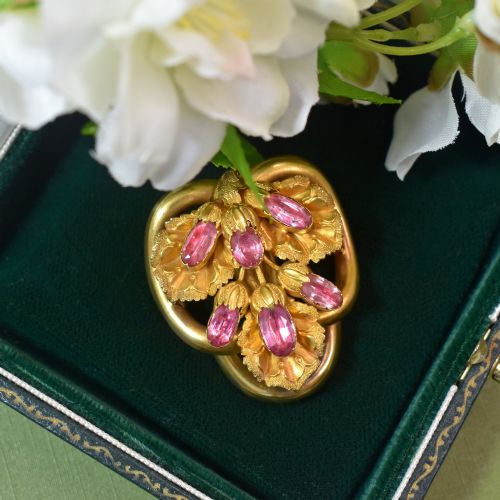
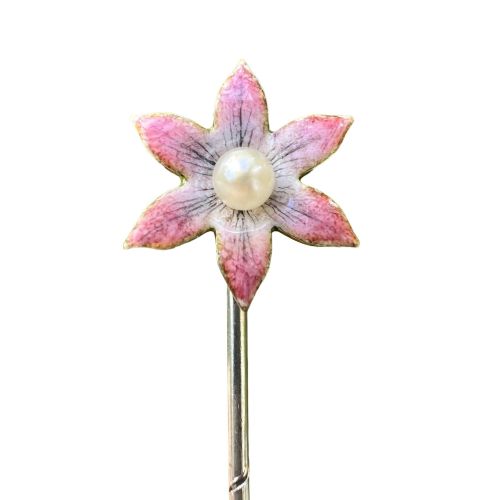


Gold Flower Pin
A gold flower pin brings together botanical form and precious metal, offering a subtle floral detail for everyday wear.
Gold Flower Pin
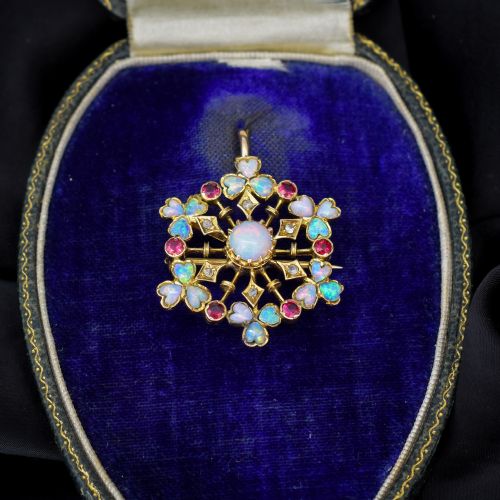
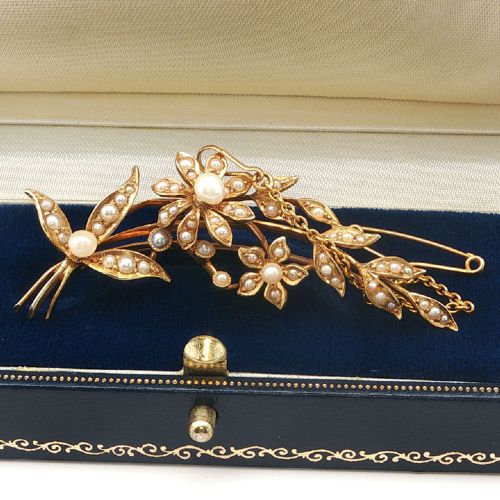
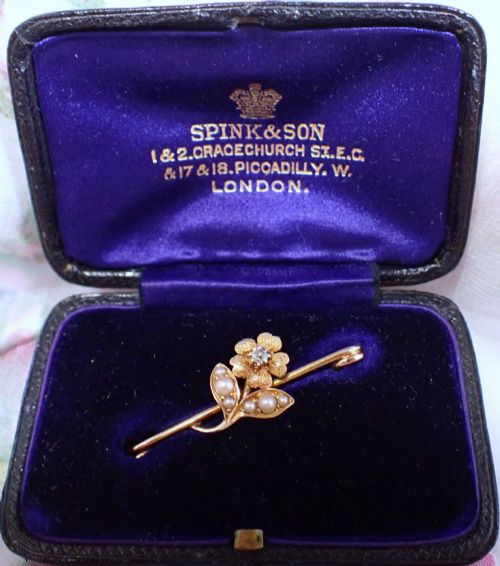
Buyers will most frequently encounter Victorian and Edwardian examples fashioned as floral sprays or cluster brooches. These items combine yellow gold bases with settings in silver or higher carat golds to hold various gemstones.
The selection ranges from early nineteenth-century floral jewels set with foil-backed topaz and paste to later multi-gemstone and diamond clusters. Each variant reflects the prevailing ornament style of its respective period.
How they were made
Maker construction relies heavily on combinations of fifteen carat gold, eighteen carat yellow gold, and twenty-two carat gold, alongside silver settings designed to brighten white stones. Jewellers shaped these metals into delicate stems, leaves, and petals to form naturalistic floral arrangements.
Gemstones such as diamonds, pearls, seed pearls, almandine garnets, carbuncle garnets, sapphires, turquoise, and opals are integrated into the metalwork. Historic pieces also utilise pink foil-backing beneath stones and intricate enamel work to enhance colour and depth.
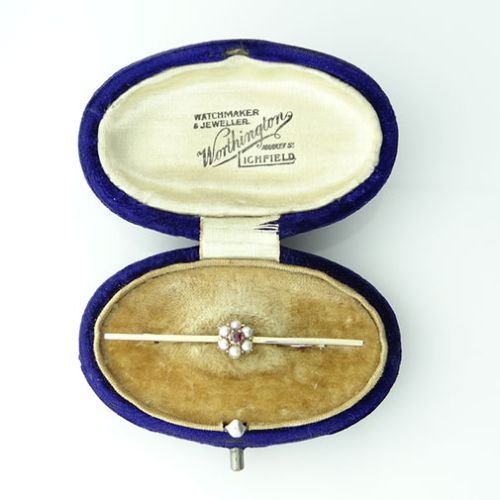
Object forms span standard brooches, floral spray brooches, bar brooches, pendant combinations, stick pins, and stud earrings.
What varies in quality
Quality rests in the precision of the botanical rendering and the selection of materials. Master jewellers achieved a lifelike grace in the curve of a stem and the overlapping arrangement of petals.
The grade of the precious metals and the matching of stones, particularly in multi-gemstone and diamond clusters, determine the standing of an individual piece. Finer examples display meticulous stone-setting techniques that secure complex arrangements without dominating the floral design.
The Gold Flower Pin Glossary
- Stick Pin
- A long pin topped with a decorative motif designed to secure a cravat, lapel, or scarf. It relies on a small cap at the end to hold it in place.
- Giardinetti
- A historic jewellery style translating to little garden, depicting a small basket, vase, or arrangement of flowers using coloured gemstones. These pieces date back to earlier European traditions.
- Foil-Backed Topaz
- A gemstone placed over a thin layer of coloured metallic foil within a closed setting to enrich its optical depth and hue. This technique is common in early nineteenth-century work.
- Carbuncle
- A cabochon-cut garnet with a smooth, rounded surface rather than faceted edges. It creates a deep, glowing red appearance in Victorian jewellery.
Gold Flower Pin: Frequently Asked Questions
How do I wear a floral brooch?
A floral brooch fastens easily to coat lapels, heavy knitwear, scarves, or hats using its pin and catch mechanism. Positioning the piece near the shoulder or collar allows the natural weight of the gold and gemstones to sit securely against thicker fabrics.
Heavier bar brooches and multi-stone clusters require sturdier cloth to support their structure without pulling. Lighter stick pins slide directly into silk ties, lapel buttonholes, or woven shawls.
What periods do these pins come from?
The inventory spans the nineteenth century through the mid-twentieth century, encompassing early Victorian, Victorian, Edwardian, Art Nouveau, and Art Deco styles. Each era brings distinct manufacturing methods and stone choices to the floral theme.
Victorian and Edwardian pieces frequently feature natural pearls and old-cut diamonds in yellow gold and silver settings. Later mid-century designs introduce bolder gold textures and alternative gemstone combinations.
Are these pieces made of solid gold?
The listings comprise items fashioned from various gold purities, including nine carat, fifteen carat, eighteen carat yellow gold, and twenty-two carat gold. Each standard reflects the regulations and preferences of its period of origin.
Many antique pieces pair these gold standards with silver settings on the face to enhance the brilliance of diamonds. Makers utilised these dual-metal techniques extensively throughout the nineteenth century.
How are different floral styles identified?
Botanical style changes across eras, with Victorian pieces often presenting naturalistic sprays containing garnets, turquoise, or foil-backed stones. Art Nouveau examples introduce flowing, organic enamel work and curving asymmetric stems.
Edwardian and later iterations lean towards symmetrical diamond clusters and structured bar brooches. Examining the metal colour, stone cuts, and setting style helps determine the specific era.