


Gold Earthenware Vessel
A gold earthenware vessel brings rich lustre and intricate hand-painted detail to any room, anchoring a space with its historic presence.
Gold Earthenware Vessel
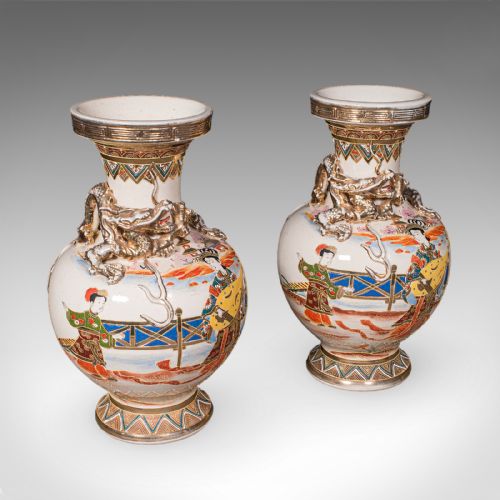
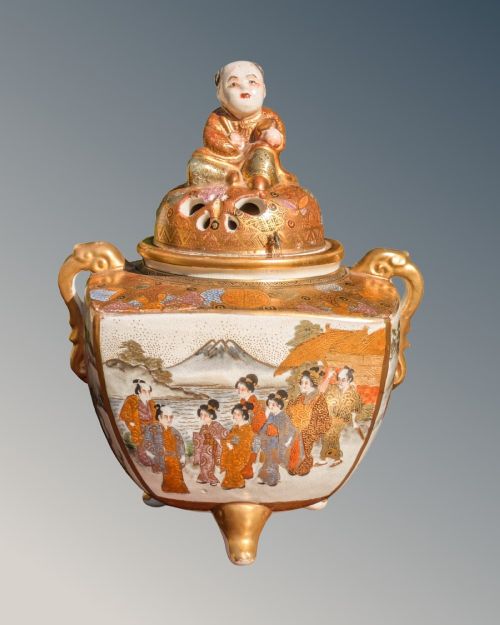
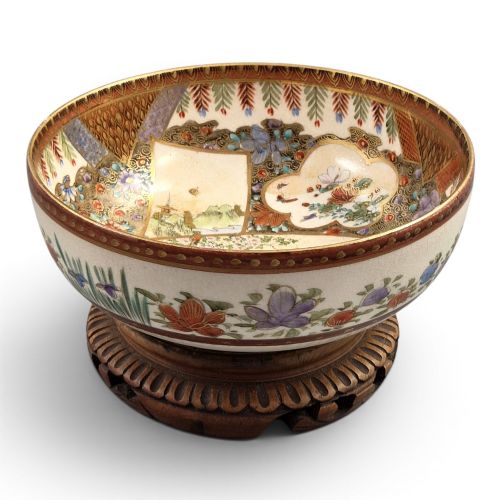
When you search for a gold earthenware vessel, you encounter a distinct category of ceramic objects created during the nineteenth and early twentieth centuries. The selection on this page centres predominantly upon Japanese Satsuma ware from the Meiji and Taisho periods, alongside select European works from the Victorian era and circa nineteen hundred. These pieces encompass vases, incense burners, decorative bowls, tea caddies, and jardinieres.
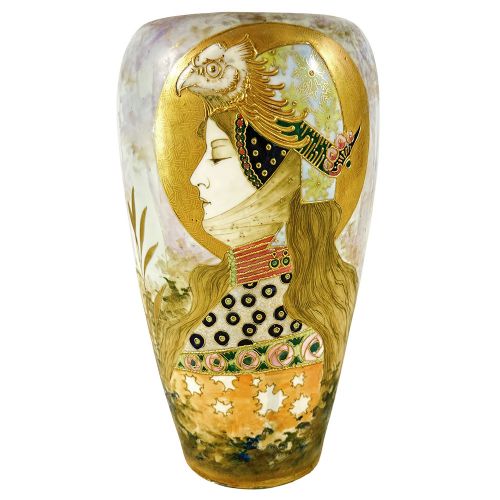
The Japanese examples typically feature earthenware bodies decorated with elaborate enamel and gold leaf or gilt detailing, often depicting figural processions, samurai scenes, or mythological figures. European contributions from makers such as Royal Doulton and Amphora demonstrate concurrent explorations of earthenware form and gilt or enamelled surface decoration. Buyers find both monumental display pieces and delicate miniature vessels within this grouping.
How they were made
Potters formed these pieces using earthenware clay bodies, which provided a porous foundation for subsequent layers of decoration. Artisans then applied intricate hand-painted enamels, building up complex scenes of figures, flora, and fauna across the ceramic surface.
Gilding and gold leaf were meticulously incorporated into the design, highlighting specific motifs such as samurai armour, architectural elements, and ceremonial robes. Some works also utilised moriage techniques, applying slip in raised dots or lines to create a tactile, three-dimensional texture beneath the gilding.
Listings span the Victorian era, the nineteenth century, and the early twentieth century, including the Meiji and Taisho periods.
What varies in quality
Quality in these pieces rests upon the precision of the brushwork and the density of the narrative scenes rendered across the earthenware. Finer examples display meticulous control in the application of gold leaf and enamel, where facial expressions and textile patterns remain sharp and legible even on miniature vessels.
The ambition of the form also distinguishes the range, moving from standard baluster vases to monumental vessels incorporating complex figural groups and signed artist marks. Pieces associated with noted Kyoto studios or specific makers demonstrate a higher degree of artistic execution in both the ceramic potting and the surface gilding.
Nicholas Kannhauser·Reissner, Stellmacher and Kessel·Kozan·Hotoda·Chosei·Kizan·Kotobuki-do·Tokyo Taizan·Kinkozan·Shozan·Paul Dachsel·Royal Doulton
The Gold Earthenware Vessel Glossary
- Satsuma
- A type of Japanese earthenware originating from Satsuma Province, traditionally characterised by a cream-coloured, crackled glaze that accepts intricate enamel and gilt painting.
- Koro
- A traditional Japanese incense burner, frequently fitted with a pierced lid and supported on small feet, often rendered in Satsuma ceramic ware.
- Moriage
- A ceramic technique where clay slip is piped onto the surface in raised dots or lines before firing and painting, creating a distinct tactile relief.
- Baluster
- A vase form with a rounded body that tapers toward the base and swells outward before narrowing into a vertical neck.
- Mon
- A Japanese heraldic badge or crest used to identify families, clans, or governmental institutions, commonly found painted on Satsuma ceramics.
Gold Earthenware Vessel: Frequently Asked Questions
What is Satsuma ware?
Satsuma ware is a distinct type of Japanese pottery featuring a characteristic ivory earthenware body covered in a finely crackled glaze. Artisans decorate these surfaces using rich enamel colours and extensive gilding.
Most pieces date from the Meiji period onward, reflecting both traditional Japanese motifs and aesthetic influences from international trade during the late nineteenth century.
How do I care for gold earthenware?
These vessels require gentle handling to preserve the delicate enamel and gold leaf decorations applied over the earthenware glaze. Dust them softly with a dry cloth and keep them away from direct moisture and harsh cleaning agents.
Because the original glaze can be porous and the surface gilding sensitive, avoid using water or chemical solvents when maintaining the piece.
How do I identify the period?
Dating relies heavily on stylistic markers, signature marks, and the specific characteristics of the earthenware body and glaze. Pieces originating from the Meiji period often display dense, narrative-driven scenes executed with high precision.
Studio signatures and family crests painted on the base also help determine the era of manufacture and the specific kiln or workshop involved.
What were incense burners used for?
Incense burners, known as koro, served both practical and decorative functions in traditional Japanese interiors. They held aromatic materials during gatherings or quiet moments of contemplation.
The pierced lids allowed fragrant smoke to disperse evenly while showcasing the fine craftsmanship of the ceramic body.