


Gold Damask Settee
A gold damask settee brings rich texture and formal seating to a room, drawing the eye with its woven pattern and gleaming frame.
Gold Damask Settee
A gold damask settee combines robust timber frames with patterned fabric upholstery, offering a traditional seating option for formal rooms. These pieces appear across Victorian, Edwardian, and earlier revival periods, bringing distinct historic character to an interior.
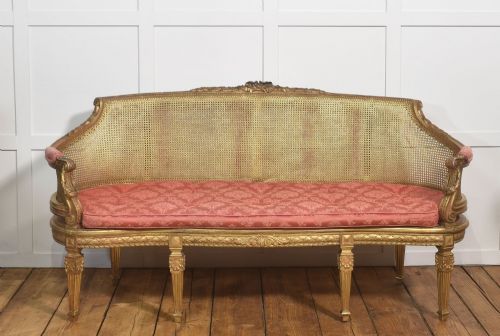
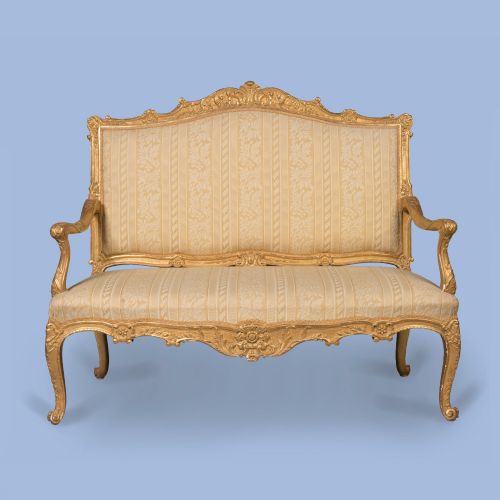
The selection ranges from French Louis XV and Louis XVI style giltwood canapés to English mahogany and walnut frames upholstered in textile. Buyers encounter various forms, including two-seater sofas, camel-backed designs, and complete salon suites.
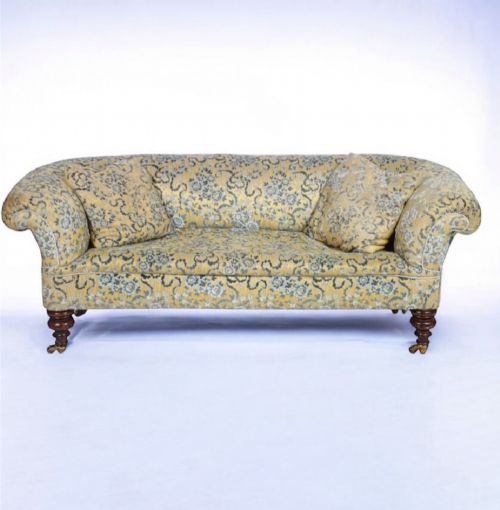
Victorian examples sit alongside French revival pieces, showing a mix of English country house comfort and continental polish. Walnut and mahogany legs support traditional showwood frames alongside giltwood finishes.
Materials and construction methods
Makers shaped structural frames from solid timbers such as mahogany, walnut, and timber beneath painted or gilded surfaces. Giltwood and gold painted finishes define the continental style pieces, while exposed timber grain distinguishes the English walnut and mahogany frames.
Upholstery relies on woven damask fabric and textile coverings, secured to sprung or padded seats. Turned wooden legs and carved details complete the construction, linking sturdy joinery with decorative textiles.
Materials recorded across the selection include giltwood, mahogany, walnut, brass, and damask fabric.
Distinctions in quality
Quality rests in the crispness of timber carving, the depth of the gilding, and the integrity of the frame construction. Pieces with well-proportioned showwood frames and hand-carved details stand apart from simpler iterations.
The execution of the textile upholstery and the weight of the underlying timber define the upper tier of the range. Finer examples maintain rigid joinery and sophisticated decorative carving across the arms and rails.
The Gold Damask Settee Glossary
- Damask
- A reversible figured fabric woven on a loom, featuring patterns created by contrasting warp and weft threads. This textile provides the characteristic sheen and textured pattern on the upholstery.
- Giltwood
- Wood that has been treated with gold leaf or gilt paint to create a metallic surface finish. This treatment appears frequently on French revival frames.
- Canapé
- A decorative French settee or sofa featuring an exposed wooden frame and upholstered seat and back. These pieces often display carved ornament in the Louis XV or Louis XVI style.
- Showwood
- Timber frame construction left exposed around the upholstered elements of a seat. This design highlights the polished mahogany, walnut, or painted wood grain.
- Knole sofa
- A traditional English sofa style featuring high adjustable or hinged arms tied with cords. This form provides a deep seat suited for formal interiors.
Gold Damask Settee: Frequently Asked Questions
What is a gold damask settee?
A gold damask settee is an upholstered seat featuring a patterned textile cover and a timber or giltwood frame. These pieces serve as decorative seating in formal spaces.
They encompass various historic styles, from Victorian English designs to French revival canapés.
How do I identify the period?
Dating relies on examining the timber species, frame carving styles, and leg shapes. Victorian pieces often use walnut or mahogany with turned supports.
French revival examples display Louis XV or Louis XVI characteristics through giltwood finishes and classical carved motifs.
Where should I place a settee?
These settees fit well in formal living rooms, reception hallways, or large bedrooms as statement seating. Their decorative frames and textured fabrics demand space to be seen clearly.
Pairing them with matching armchairs creates a cohesive salon suite arrangement.
Are these settees comfortable?
Comfort depends on the original padding and interior construction of the specific piece. Many feature sprung seats and padded backs designed for upright sitting.
Revival and Victorian examples vary in firmness based on their age and restoration history.
How do I care for giltwood?
Giltwood requires gentle dusting with a dry, soft cloth to protect the delicate gold leaf surface. Moisture and harsh cleaning agents can damage the metallic finish.
Placing the piece away from direct sunlight preserves both the gilding and the damask textile.