
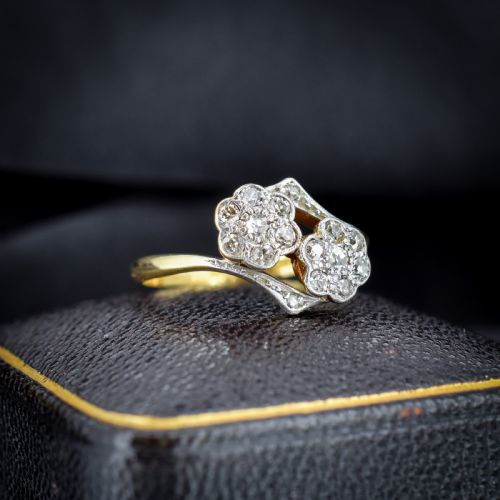
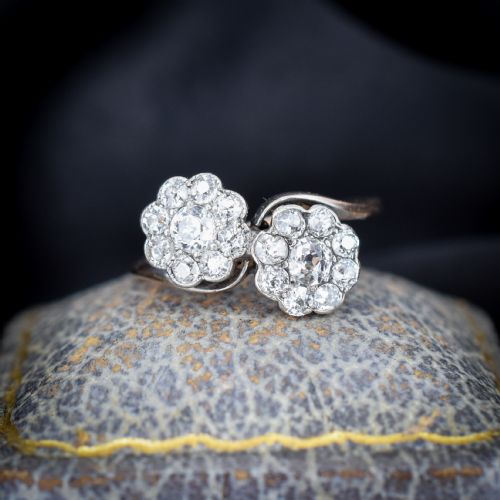


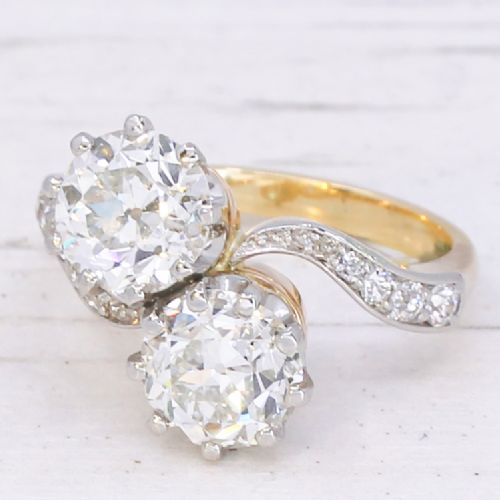


Gold Crossover Ring
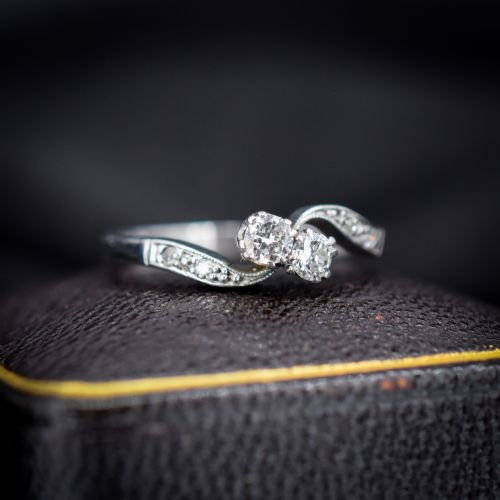
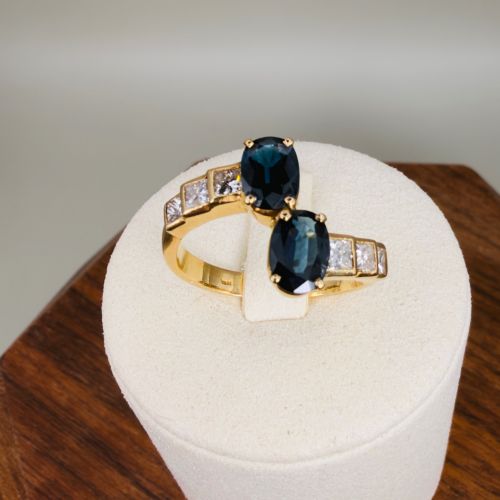
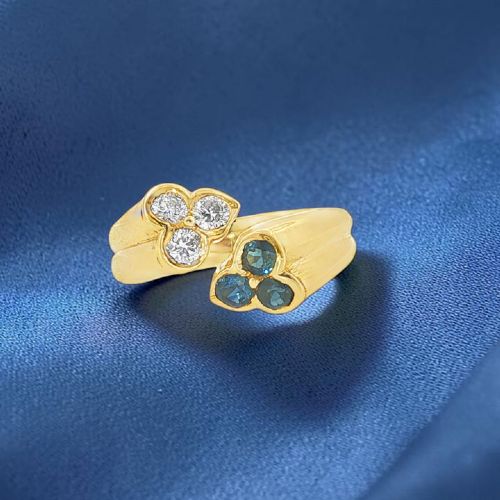
A gold crossover ring wraps the finger in curving bands of precious metal, uniting two or more gems in a continuous sweep.
Gold Crossover Ring
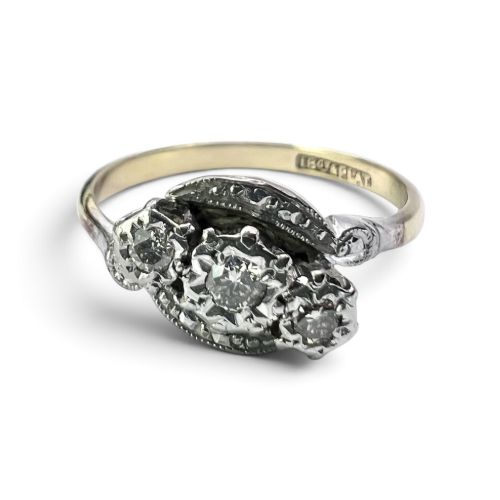
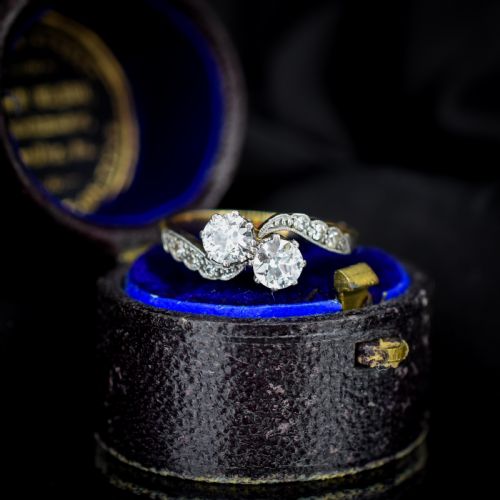
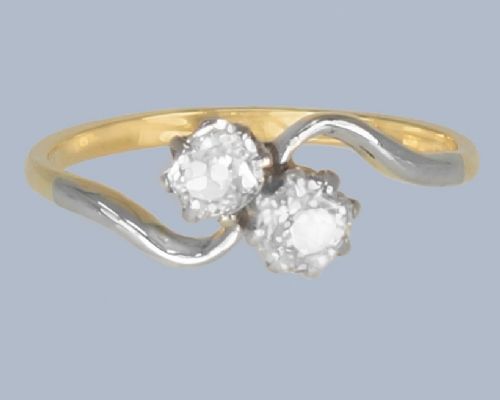
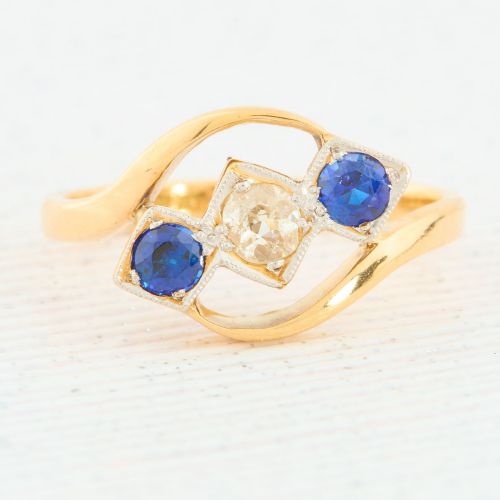
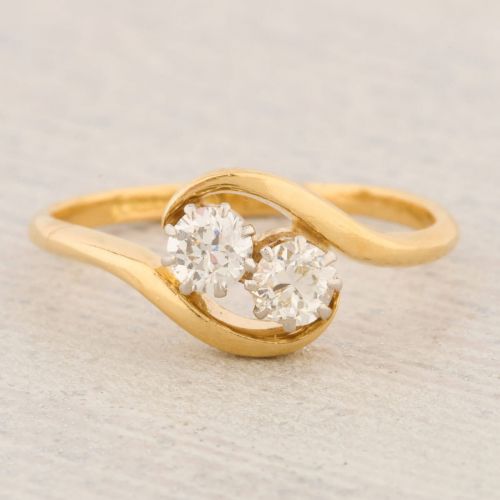
The form encompasses two-stone diamond configurations, sapphire and diamond pairings, and pearl combinations mounted in yellow gold, white gold, and platinum. Edwardian examples often pair old-cut diamonds with platinum-topped gold settings, while Art Deco versions introduce sharper geometry and contrasting gemstones.
Most pieces date from the early to mid-twentieth century, combining durability with distinct stylistic eras ranging from Edwardian delicacy to later vintage statements.
How they were made
Goldsmiths constructed these rings primarily using 18ct yellow or white gold, frequently pairing the gold shank with platinum settings to secure diamonds safely. Platinum allowed for minimal claw work, maximising the brilliance of old European and old mine-cut diamonds.
Gemstones including sapphires, rubies, and pearls were integrated alongside diamonds using grain-setting, bezel-setting, or traditional claw techniques. The curving shanks required precise hand-shaping to ensure the twist or crossover lines maintained symmetry and structural integrity.
Listings feature 18ct yellow gold, white gold, and platinum across Edwardian, Art Deco, and mid-century periods.
What varies in quality
Quality rests in the harmony of the design and the proportion of the stones relative to the weight of the metal. Superior examples display balanced curvature in the twist, ensuring the opposing gems sit naturally against one another without awkward gaps in the metalwork.
The selection of the primary stones dictates the standing of the piece, with well-matched old-cut diamonds or high-clarity sapphires elevating the work. Original settings that retain crisp platinum claw work and unpolished hallmarks indicate careful preservation over the decades.
Kutchinsky·Ciro
The Gold Crossover Ring Glossary
- Toi et Moi
- French for you and me, describing a ring style featuring two main stones resting side by side or intertwining. This configuration symbolises two souls united.
- Old Cut
- A diamond cutting style prevalent before modern brilliant faceting, characterised by a smaller table, higher crown, and open culet. These stones produce a softer, candlelit sparkle.
- Bypass
- A ring design where the shanks pass each other rather than meeting centrally. The style creates a dynamic sense of movement on the hand.
- Platinum
- A dense, white precious metal utilised heavily in Edwardian and Art Deco jewellery for its strength. It permits delicate claw settings that hold gemstones securely.
Gold Crossover Ring: Frequently Asked Questions
How do I wear a crossover ring?
These rings suit daily wear on the ring finger, though care should be taken with softer gems like pearls or opals. Their curved profiles allow them to sit comfortably alongside straight wedding bands.
Matching the metal colour to other jewellery helps create a cohesive look when pairing them with existing bands or stacking rings.
What is a toi et moi ring?
A toi et moi ring places two prominent gemstones in close proximity, symbolising a union between two individuals. Napoleon Bonaparte famously gave one to Josephine in the eighteenth century.
Edwardian and Art Deco makers revived this romantic configuration using diamonds paired with sapphires or rubies.
How do I date an antique crossover ring?
Dating relies on gemstone cuts, metal combinations, and hallmarks stamped inside the shank. Edwardian pieces often feature platinum-topped yellow gold with old-cut diamonds.
Art Deco versions introduce sharper geometric lines, while mid-century examples lean towards bolder yellow gold settings.
Are these rings suitable for engagements?
Many historical examples served as engagement rings, particularly the two-stone diamond and toi et moi configurations. Their symbolic pairing of gems makes them a meaningful choice for modern proposals.
Selecting a durable stone like a diamond or sapphire ensures the ring withstands everyday use.