

Diamond Flower Cluster Ring
A diamond flower cluster ring brings together central stones and surrounding petal motifs in gold and platinum settings from across Edwardian, Art Deco and mid-century periods.
Diamond Flower Cluster Ring
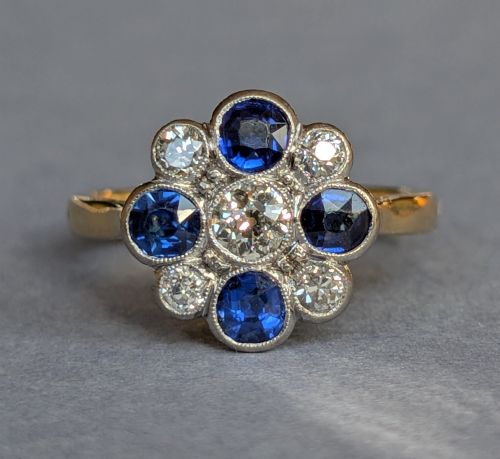
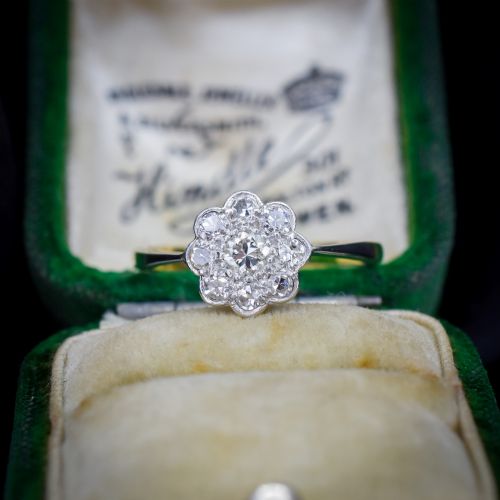
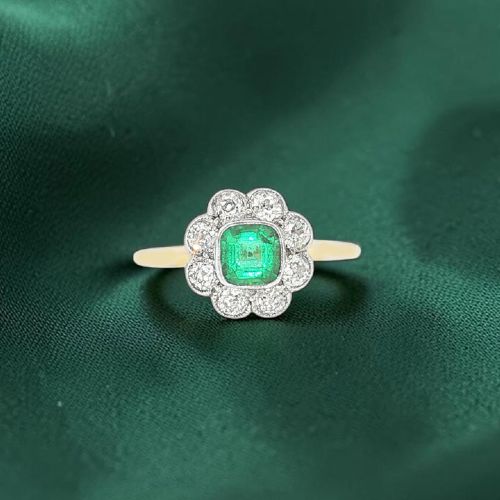
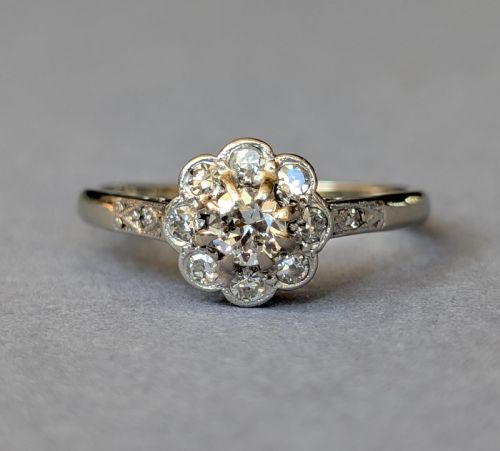
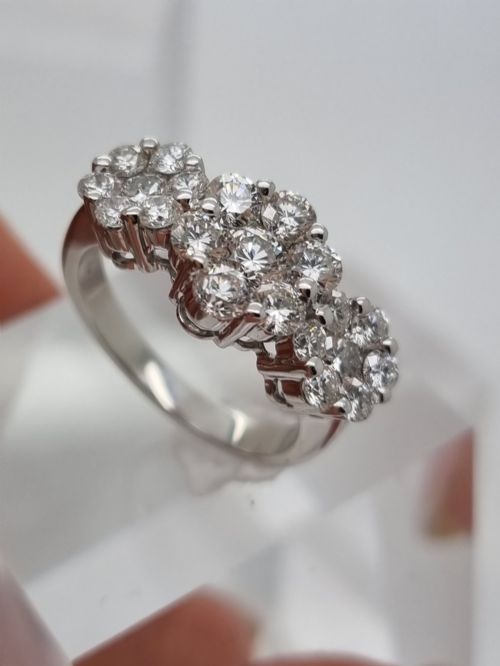
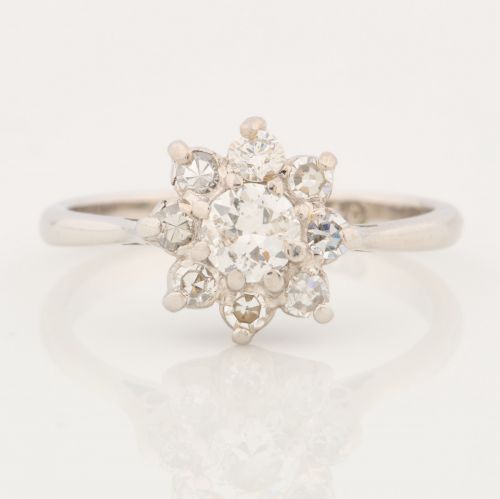
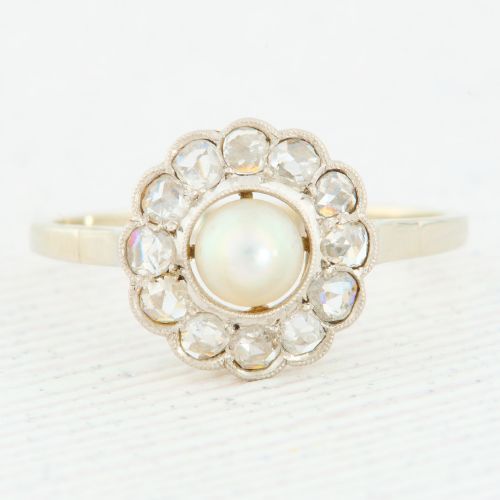
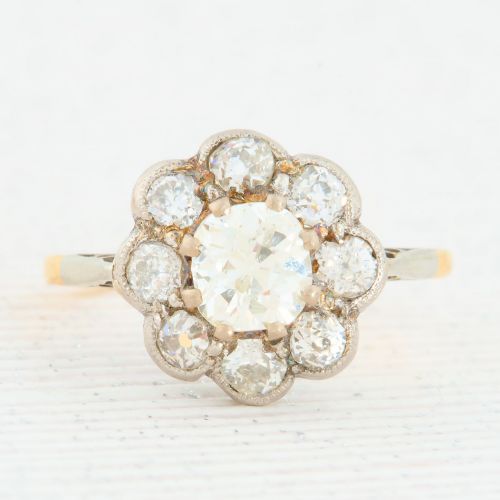
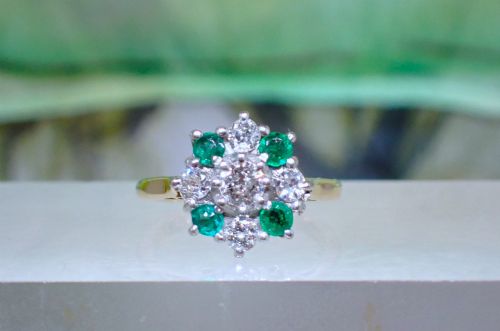
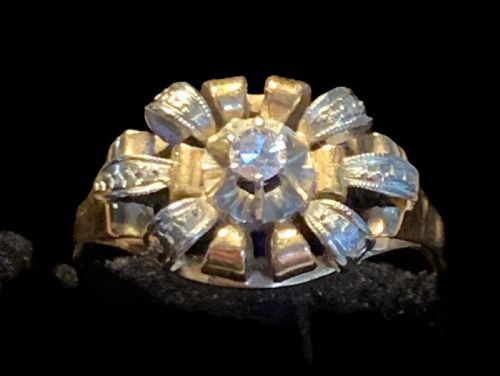
A diamond flower cluster ring centres on a floral or daisy design, frequently framing a central gemstone with a brilliant border of smaller diamonds. These pieces emerge across Edwardian, Art Deco, and mid-century periods, capturing organic motifs in wearable metal forms.
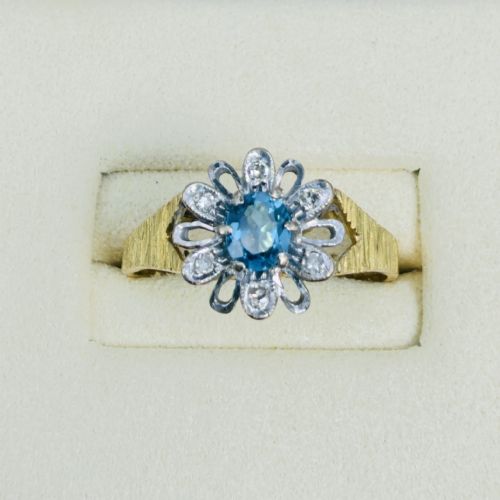
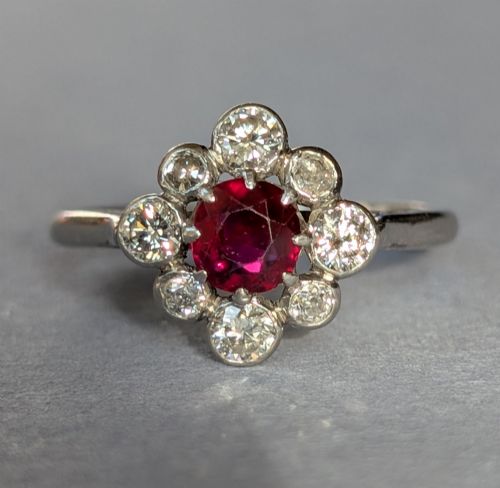
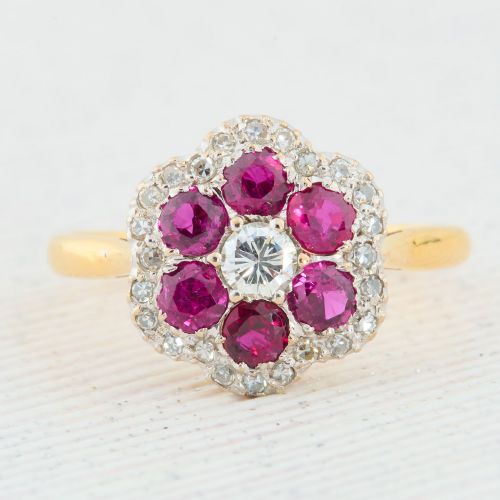
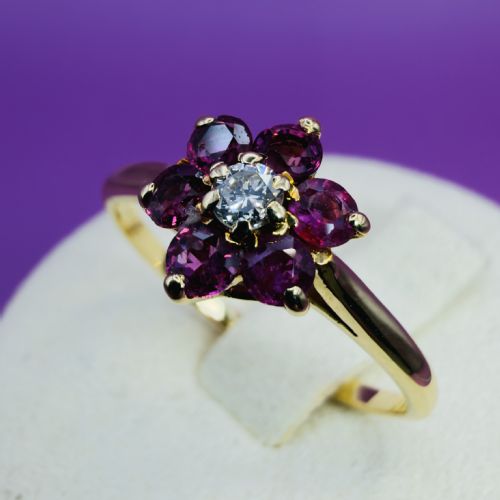
The layout typically takes the form of a central diamond or coloured stone, such as sapphire, ruby, emerald, or aquamarine, encircled by matching stones to form petals. Buyers encounter variations ranging from delicate Edwardian daisy configurations to geometric Art Deco platinum mountings.
Originating largely from British, French, and Italian workshops, these finger pieces utilise gold and platinum to secure stones in tight floral arrangements. Surviving examples demonstrate enduring popularity as historical engagement and dress rings.
Materials and construction methods
Goldsmiths constructed these rings primarily using 18ct yellow gold, 18ct white gold, and platinum, often combining yellow gold shanks with platinum settings to enhance the brilliance of white diamonds. This dual-metal technique is particularly prominent in Edwardian and Art Deco items.
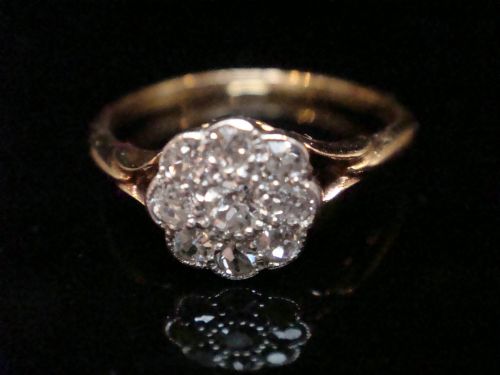
Stones are secured using grain, claw, or bezel settings designed to mimic natural floral petals radiating from a central pistil. Older pieces frequently feature old-cut or rose-cut diamonds set by hand into heavy metal mountings.
Factors influencing quality
Quality rests upon the matching, cut, and colour of the surrounding gemstones, alongside the crispness of the floral silhouette. Evenly proportioned petal stones and well-preserved metalwork distinguish finer workshop output from standard commercial production.
The integrity of the central setting and the weight of the underlying gold or platinum shank dictate durability and long-term wearability. Examples retaining original French or British hallmarks and gemmological reports offer clearer provenance regarding stone weight and metal purity.
Julius Cohen
The Diamond Flower Cluster Ring Glossary
- Daisy cluster
- A ring design featuring a round central stone surrounded by a ring of uniform smaller stones resembling a daisy flower. This configuration dominates Edwardian and vintage selections.
- Old-cut diamond
- A hand-faceted diamond cut before modern brilliant proportions were standardised in the early twentieth century. These stones exhibit smaller tables and broader facets.
- Platinum
- A dense, durable white metal utilised extensively in Edwardian and Art Deco mountings to hold delicate stone settings securely without adding excessive bulk.
- Toi et Moi
- French for you and me, denoting a ring featuring two main gemstones set closely together. This style sometimes incorporates floral cluster elements alongside twin focal stones.
- Boule
- A rounded, domed cluster formation popular in Art Deco jewellery. This three-dimensional shape projects the floral motif outward from the finger.
Diamond Flower Cluster Ring: Frequently Asked Questions
How do I date a diamond flower cluster ring?
Dating relies on stylistic clues, metal combinations, and stone cuts. Edwardian pieces often pair yellow gold with platinum-topped claws, while Art Deco items favour geometric symmetry.
Assay office hallmarks, where present, provide exact verification of the year of manufacture and metal purity.
Are these rings suitable for daily wear?
Most 18ct gold and platinum cluster rings withstand daily wear provided the settings receive routine inspection by a jeweller. Low-profile floral designs catch less on clothing than high-set solitaires.
Softer surrounding stones like turquoise or pearl require more careful handling than diamond or sapphire varieties.
What is the difference between old-cut and modern diamonds?
Old-cut diamonds possess hand-cut facets tailored under candlelight, resulting in softer, warmer scintillation patterns. Modern brilliant cuts follow precise mathematical angles designed for maximum white light return.
Old cuts frequently appear in antique Edwardian and early twentieth-century cluster settings.
Why are some rings mounted in two different metals?
Goldsmiths combined yellow gold shanks with platinum heads to provide structural warmth while ensuring white diamonds appeared colourless against a bright metal backdrop. This practice defined much of Edwardian and Art Deco jewellery production.
The durability of platinum also allowed for finer, less intrusive claws between petal stones.