



18ct Gold Daisy Ring
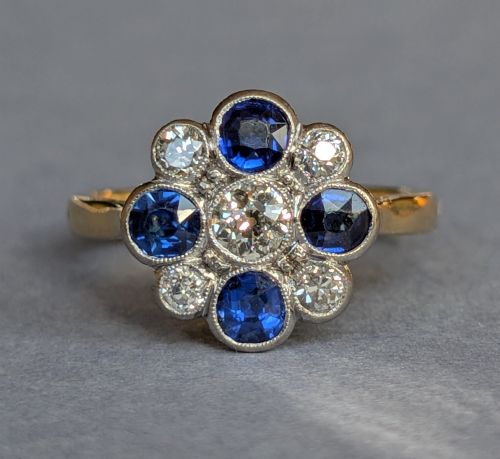
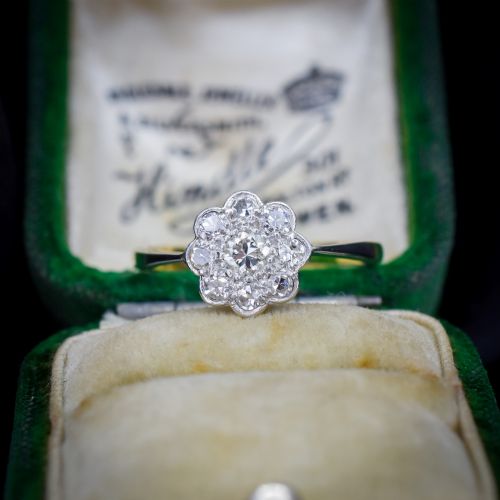
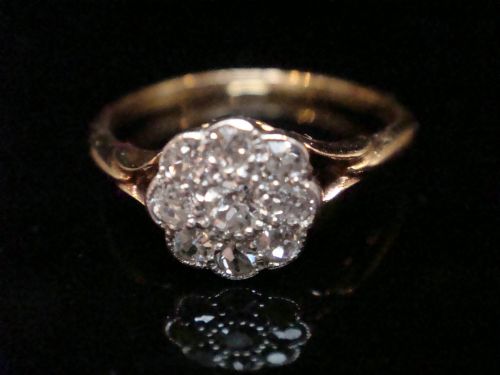
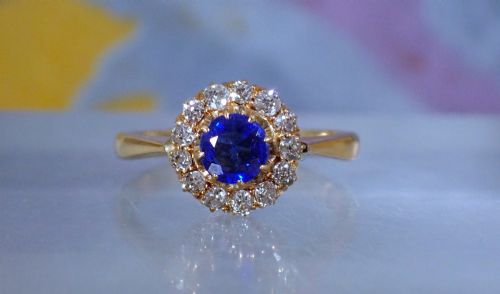
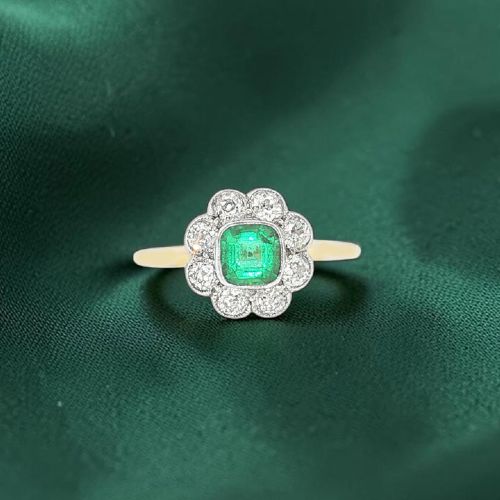
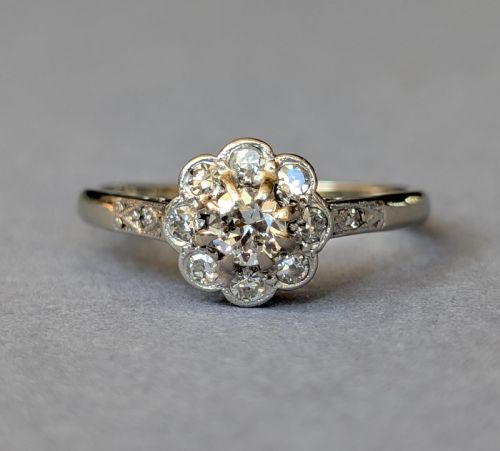
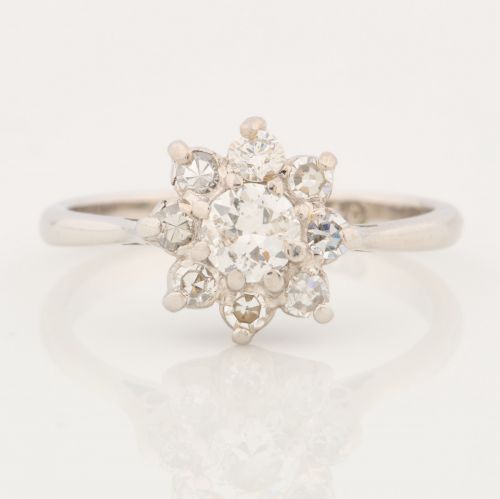
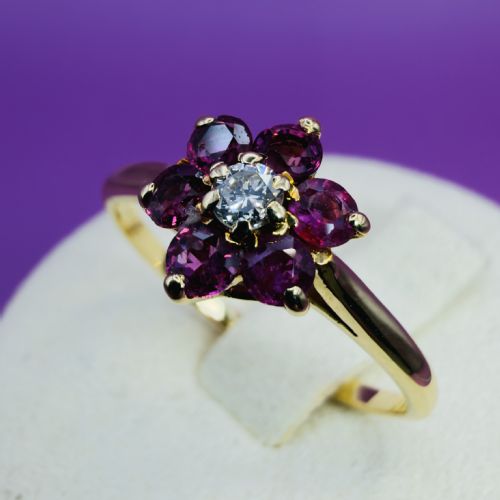
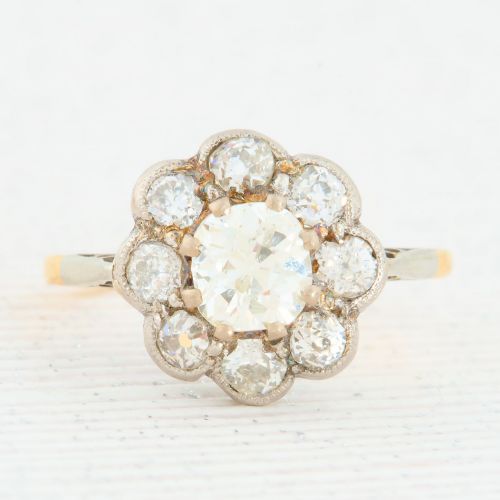
An 18ct gold daisy ring brings together a central stone encircled by petals of diamonds, creating a floral cluster worn across generations.
18ct Gold Daisy Ring
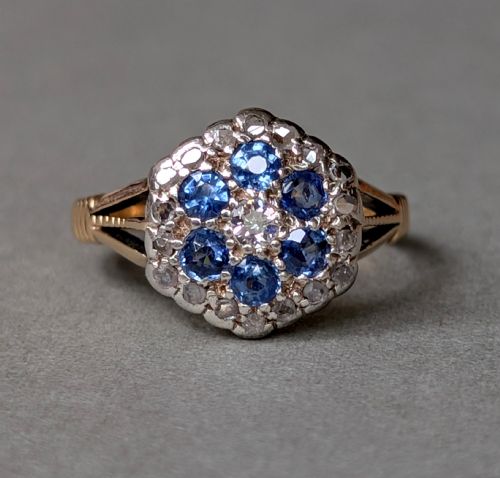
The form relies on a central diamond, sapphire, ruby, emerald, opal, pearl, or coral held within yellow or white gold settings. Platinum settings often appear alongside the gold, particularly in Edwardian and Art Deco iterations.
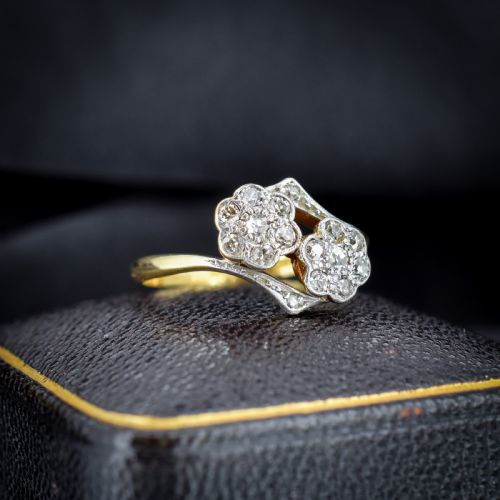
Makers utilised various geometric and organic layouts, ranging from tight circular floral clusters to target rings and double twist bands. Each piece utilises the 18ct gold standard for the shank while often mounting the face in white metal to enhance the brilliance of the stones.
How they were made
Goldsmiths combined 18ct yellow or white gold for the body of the ring with platinum top mounts to secure the clustered gemstones. This technical pairing allowed jewellers to use fine claws and millegrain edges without risking the structural integrity of softer gold alloys.
Diamonds within these clusters were typically cut by hand, showing old European or old mine cuts in Victorian and Edwardian examples, before brilliant cuts became standard in later decades. Sapphires, rubies, and pearls were selected to contrast against the surrounding white stones.
Settings were hand-fabricated or cast before being hand-finished with engraved details, pierced galleries, and pavé arrangements. The stones were individually set by hand, ensuring each petal sat tightly in proportion to the central mount.
18ct Gold Daisy Ring Retail Price Guide 2026
Typical asking prices for 18ct gold daisy ring among the pieces listed under this phrase on Sellingantiques today, from the lower quarter to the upper quarter. They describe what is for sale here now, not the wider market.
Materials recorded on this page include diamond, sapphire, ruby, emerald, pearl, opal, coral, platinum, and 18ct gold.
What varies in quality
The quality of an 18ct gold daisy ring rests upon the symmetry of the cluster and the matching of the peripheral stones to the centre. Better examples display stones selected for uniform colour, depth, and cut, whereas lesser pieces rely on mismatched components.
Workmanship in the setting metal also divides the standard, seen in the crispness of millegrain work and the delicacy of the gallery. Rings possessing substantial weight in the 18ct gold shank hold up better to daily wear than thin, hollowed alternatives.
The 18ct Gold Daisy Ring Glossary
- Cluster ring
- A ring featuring a central stone surrounded by a ring of smaller stones. This design maximises visual presence and light reflection.
- Old cut diamond
- A hand-faceted diamond cut before modern machine precision methods were standardised. These stones exhibit smaller tables and higher crowns.
- Millegrain
- A decorative technique involving a line of tiny beads pressed into the metal edge. It adds a soft texture often seen on Edwardian and Art Deco pieces.
- Platinum top
- A construction method where platinum is layered over gold on the face of the ring. This white metal surface prevents colour transfer to diamonds.
18ct Gold Daisy Ring: Frequently Asked Questions
Are 18ct gold daisy rings suitable for daily wear?
Eighteen-carat gold provides a durable foundation for everyday use, though care is required with softer gems like pearls or opals. Checking the security of the claws periodically ensures the cluster remains secure during regular activities.
Matching the metal hardness to your lifestyle helps preserve the delicate gallery work found on Edwardian and Art Deco examples.
How do I distinguish an Edwardian daisy ring from an Art Deco one?
Edwardian daisy rings often feature intricate, lacy platinum work, millegrain edges, and softer floral curves. They tend to utilise yellow gold shanks paired with white metal top mounts.
Art Deco rings shift towards geometric symmetry, sharp lines, and stylised motifs. White gold and platinum become more dominant in the overall construction during this later period.
What stones are typically found in these clusters?
Diamonds form the most common central or peripheral stone, frequently paired with blue sapphires, rubies, or emeralds. Pearls and opals also appear as primary or accent elements, particularly in Victorian and Edwardian pieces.
Coloured gemstones provide contrast against the surrounding diamond petals, altering the visual weight of the floral motif.
How can I tell the difference between yellow gold and white gold versions?
Yellow gold rings display the warm, rich tone of traditional 18ct gold throughout the shank and often the basket. White gold versions present a silvery hue, sometimes enhanced by rhodium plating in later mid-century pieces.
Many antique rings combine both, featuring a yellow gold band paired with a white gold or platinum face to set off the stones.