
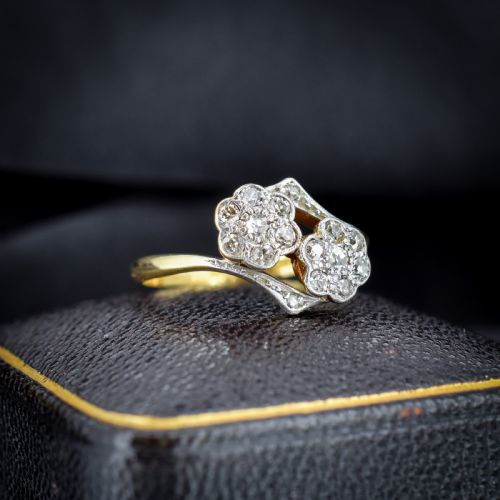
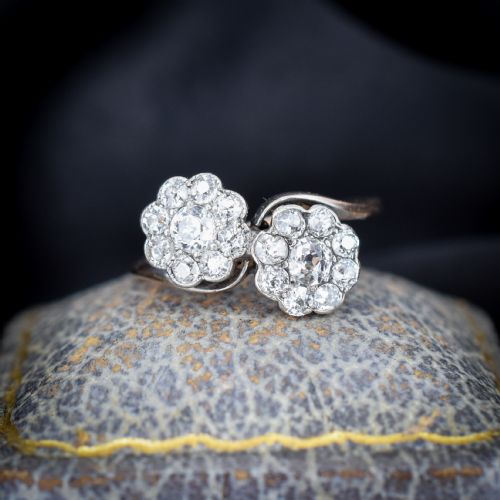


Edwardian Crossover Ring
An edwardian crossover ring brings two gems together in a graceful twist, offering a romantic design that sits low on the finger.
What an edwardian crossover ring is
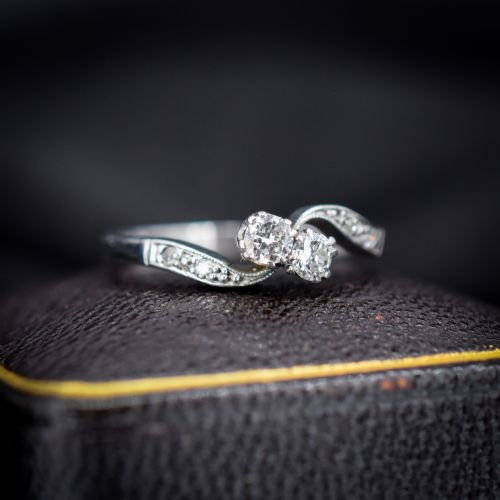
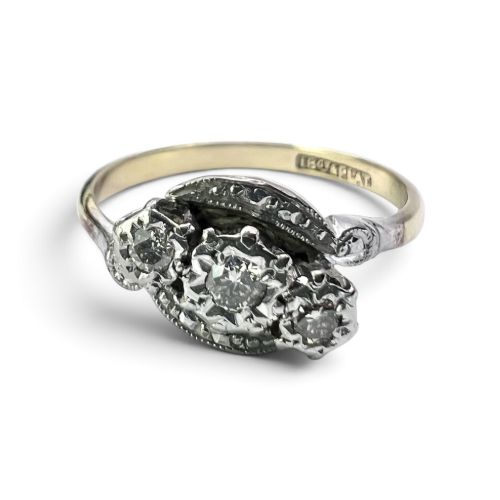
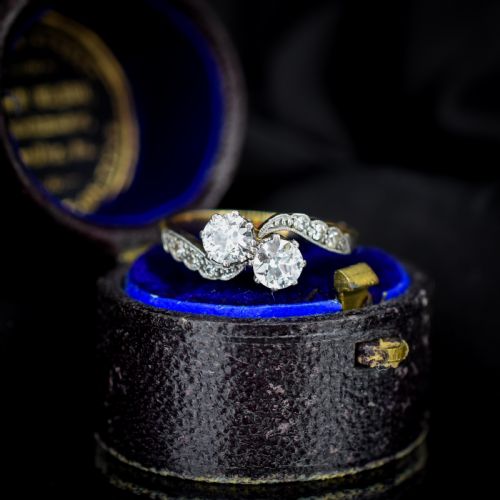
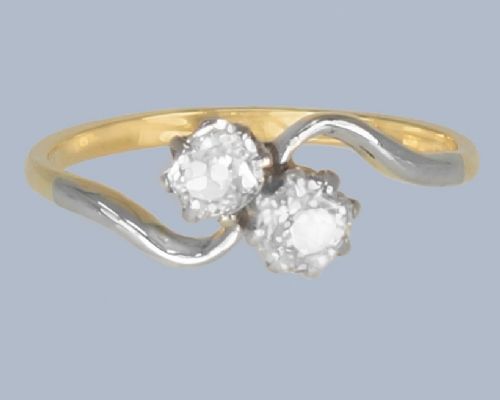
The edwardian crossover ring presents two or more principal stones curving towards one another along the band. These pieces emerge predominantly from the Edwardian era, around nineteen ten, alongside occasional later interpretations.
Forms include classic two stone diamond designs, paired diamonds and natural pearls, or combinations involving sapphires and rubies. The shank frequently combines yellow gold with platinum settings at the head to showcase the stones.
How they were made
Craftsmen utilised eighteen carat yellow gold or eighteen carat white gold for the shank, pairing these with platinum to mount the stones securely. Platinum allowed for delicate, minimal claw and bezel work that maximised light entry into each gem.
Stones are typically old cut diamonds, old mine cut diamonds, or natural pearls. These gems were shaped by hand, resulting in softer facets and warmer scintillation than modern brilliant cuts.
Retail Price Guide 2026
Typical UK retail prices for edwardian crossover ring, calculated from the Sellingantiques database of over a million retail prices indexed since 2003. This retail price guide relies exclusively on Sellingantiques data; no external sources or auction records are used, so the figures do not describe the wider market.
What varies in quality
Quality rests on the weight and matching of the central stones, particularly in paired diamond and pearl configurations. Larger carat weights, such as stones reaching one or two carats, alter the proportion and presence on the hand considerably.
The finesse of the platinum work and the preservation of the original gold shank dictate the integrity of the piece. Subtle details in the twist and the retention of crisp old cut facets distinguish superior examples.
The Edwardian Crossover Ring Glossary
- Crossover ring
- A ring design where the shank splits or curves so that two stones meet or cross over each other at the centre. This style is also known as a toi et moi ring.
- Old cut diamond
- A hand-faceted diamond cut popular before modern brilliant techniques were standardised. These stones typically feature smaller tables, higher crowns, and open culets.
- Toi et moi
- French for you and me, denoting a ring featuring two principal gems set side by side or crossing over. This form symbolises two lives becoming entwined.
- Platinum
- A dense, durable white metal utilised extensively in Edwardian jewellery for setting diamonds securely with minimal visible metal. It enabled intricate pierced work without sacrificing strength.
- Natural pearl
- A pearl formed organically within an oyster without human intervention. These differ from cultured pearls and frequently appear paired with diamonds in period crossover designs.
Frequently Asked Questions
Can I wear an edwardian crossover ring daily?
These rings survived a century because they were worn with care, though daily wear requires mindfulness.
Platinum and eighteen carat gold provide durability, but older settings and natural pearls benefit from gentle treatment and occasional professional checks.
What is a toi et moi ring?
A toi et moi ring is the French term for a crossover ring featuring two main stones.
The design places two distinct gems, such as a diamond and a pearl or a diamond and a sapphire, in a continuous embrace.
How do I identify an Edwardian ring?
Edwardian pieces often combine yellow gold shanks with platinum heads to hold old cut diamonds.
The period spans the early nineteen hundreds, characterised by delicate floral motifs, hand-cut stones, and fine platinum claw work.
Are the pearls natural?
Period pieces from this era frequently incorporate natural pearls alongside old cut diamonds.
These organic gems formed naturally in saltwater molluscs before the widespread adoption of cultured pearl farming.