

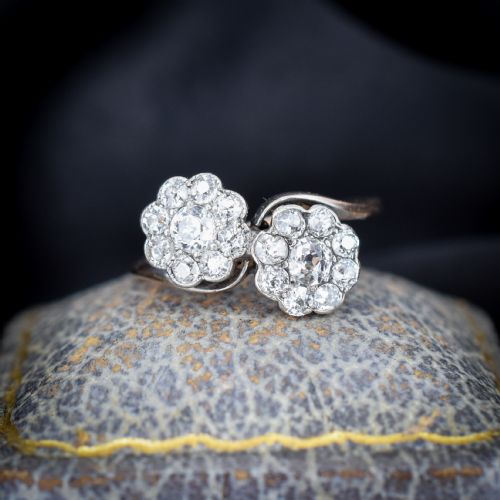


Diamond Twist Ring
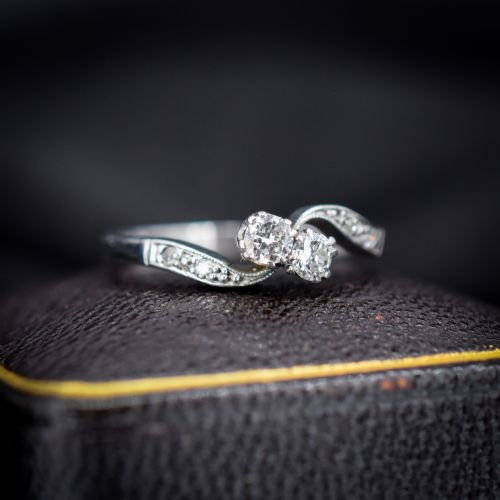
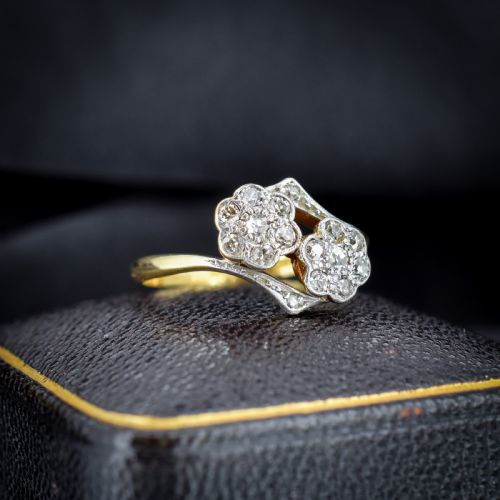
A diamond twist ring wraps two or more stones across the finger in an organic sweep of gold and platinum.
What They Are
A diamond twist ring presents an asymmetric or interlaced band design where stones follow a curved path along the finger. The evidence shows these pieces appearing across the nineteenth century, the Edwardian period, and the Art Deco era, continuing through mid-century styles.
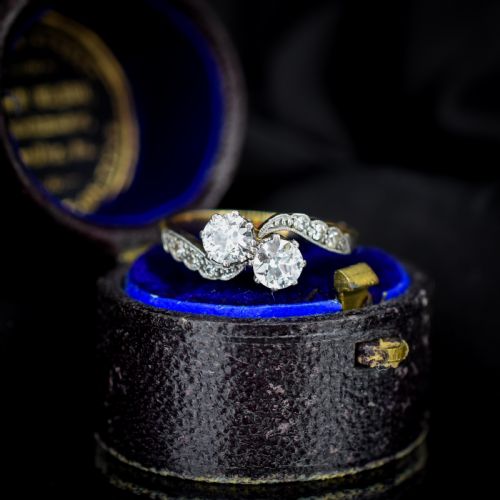
Most examples encountered here combine diamonds with complementary gems such as rubies, emeralds, sapphires, opals, or pearls in two-stone, three-stone, or toi et moi configurations. The form often functions as an engagement ring or a distinctive dress ring originating from British, French, and general antique workshops.
How They Were Made
Metalsmiths constructed these rings primarily using eighteen-carat yellow or white gold paired with platinum settings to secure the stones safely. Platinum claw or illusion settings maximised the white light of old cut diamonds while keeping the structural framework resilient.
Gems were individually hand-set into crossover shoulders that required precise forging to maintain the flowing spiral line without losing metal integrity. Hallmarks, maker marks, and metal stamps such as eighteen-carat and plat frequently appear inside the band.
Listings demonstrate materials including platinum, eighteen-carat gold, opals, and diamonds spanning the nineteenth century up to nineteen-sixty.
What Varies in Quality
Quality rests in the fluidity of the twist and the harmony between the shank and the stone arrangement. A superior piece displays seamless integration where the shoulders curve naturally around the finger without appearing rigid or overly bulky.
The choice and cutting of the stones dictate the upper tier of the range, particularly old cut diamonds exhibiting distinct hand-faceted proportions alongside well-matched coloured gems. Heavier gauge metalwork that resists thinning at the crossover point marks the distinction between standard production and finer execution.
The Diamond Twist Ring Glossary
- Old cut
- A diamond facet style hand-polished before modern brilliant cutting standards were established, featuring a smaller table and a higher crown that catches candlelight warmly.
- Toi et Moi
- A French term meaning you and me, describing a ring featuring two principal stones placed side by side in a curving dialogue.
- Crossover
- A ring design where the shank splits or sweeps over itself to bring two elements into direct contact or close proximity.
- Illusion set
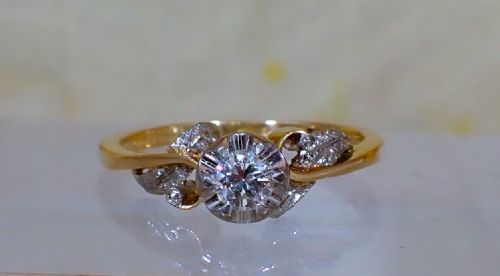
- A mounting technique using a faceted metal plate around a smaller diamond to give the visual impression of a much larger stone.
- Navette
- A boat-shaped gemstone or mounting style elongated along the axis of the finger.
Frequently Asked Questions
What is a diamond twist ring?
A diamond twist ring is a piece of finger jewellery featuring a band that curves or crosses over itself in a spiral or ribbon motif. It typically showcases one or more diamonds paired with precious metals like eighteen-carat gold and platinum.
These designs often incorporate additional gemstones such as emeralds, rubies, sapphires, or pearls to create distinctive visual pairings.
How do I date a twist ring?
Dating relies on examining the mounting style, metal combinations, and any stamped hallmarks or maker marks inside the band. Edwardian examples often pair yellow gold with platinum settings, whereas Art Deco pieces frequently utilise white gold or all-platinum structures.
Old cut diamonds and specific gemstone choices like Colombian emeralds or grey pearls also point toward distinct periods between the late nineteenth century and the mid-twentieth century.
Were twist rings used for engagements?
Many antique and vintage twist rings served as engagement rings, particularly two-stone toi et moi designs and three-stone trilogy variations. The intertwining bands symbolised the union of two people.
They were equally popular as fashionable dress rings or anniversary pieces across the Edwardian and Art Deco periods.
How do I care for a vintage twist ring?
Care involves gentle cleaning with warm soapy water and a soft brush, avoiding harsh ultrasonic cleaners that might loosen older stones or delicate pearls and opals. Regular checks by a jeweller ensure the claws holding the old cut diamonds remain secure.
Storing the ring separately prevents softer gems or the eighteen-carat gold and platinum from scratching against other pieces.