
Trilogy Engagement Ring
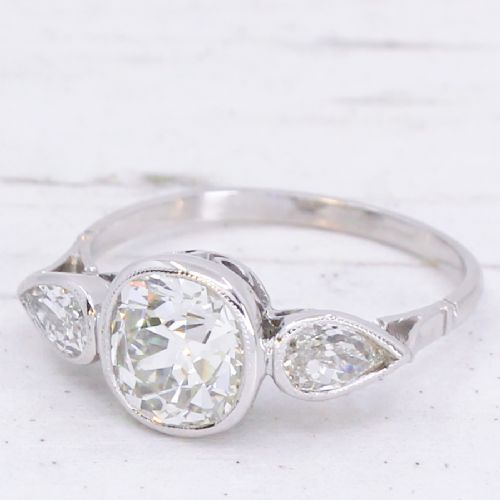
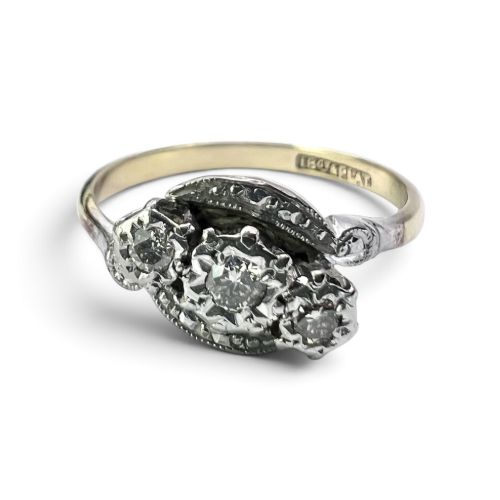
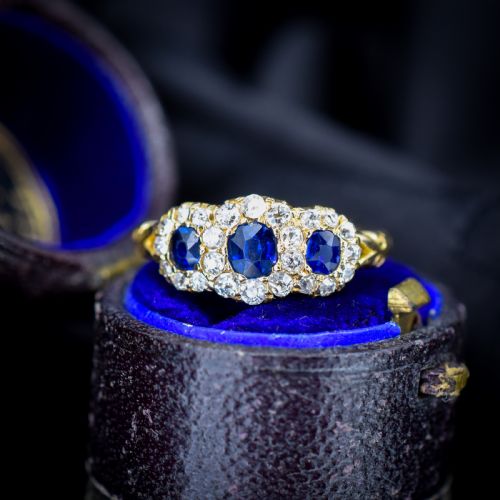
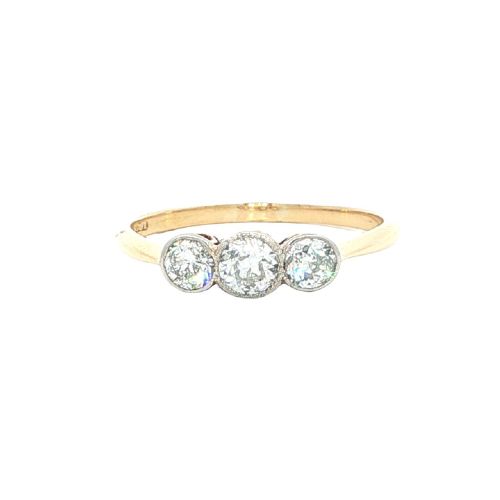
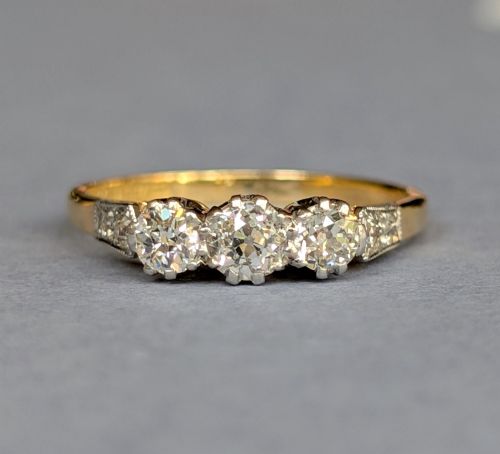
A trilogy engagement ring carries three stones symbolising past, present and future, bringing together the enduring appeal of multi-stone antique jewellery.
Trilogy Engagement Ring
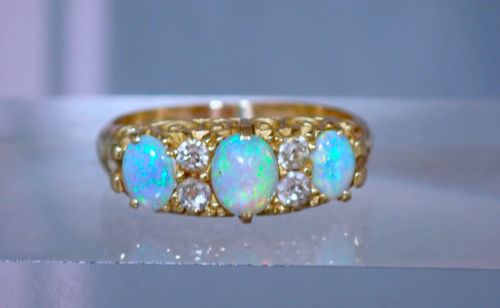
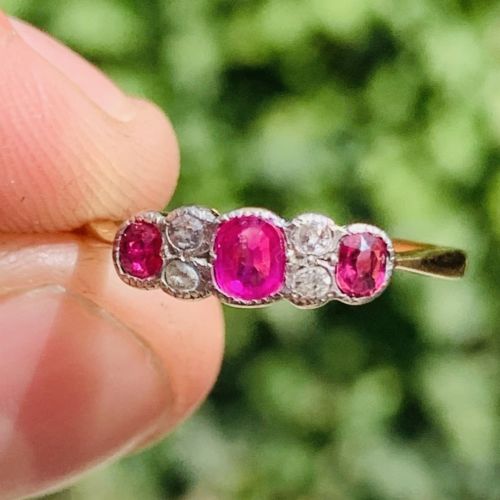
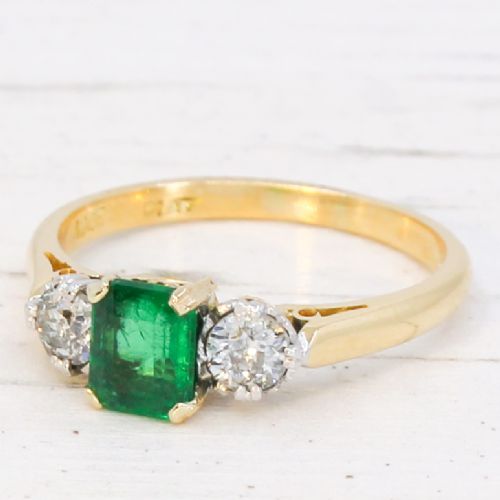
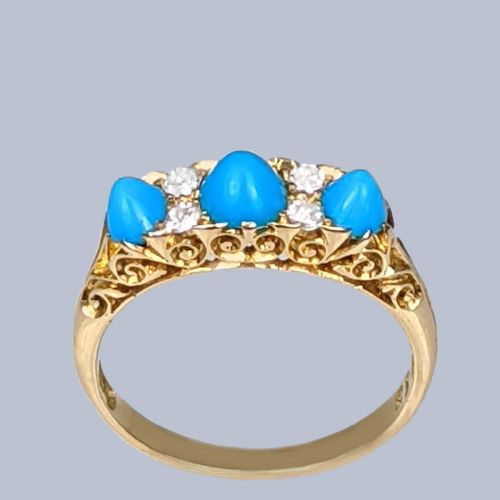
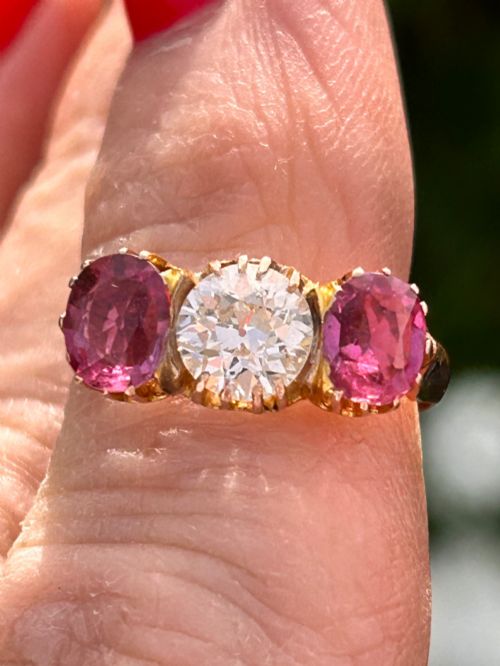
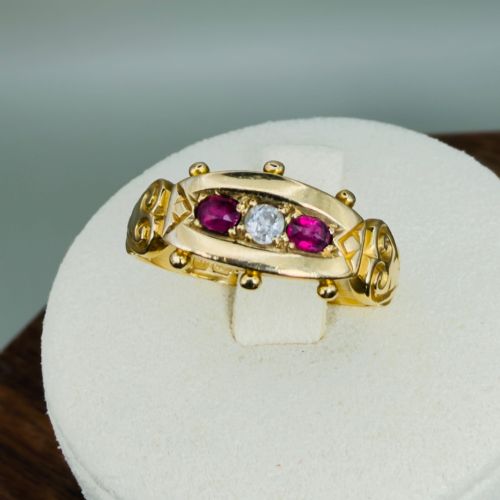
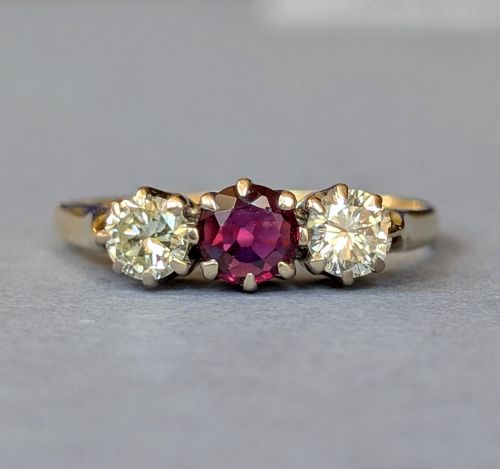
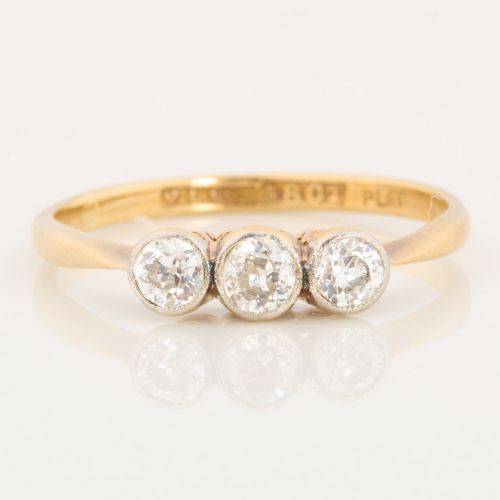
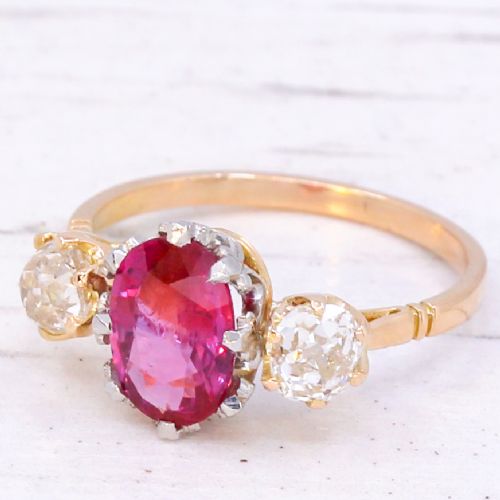
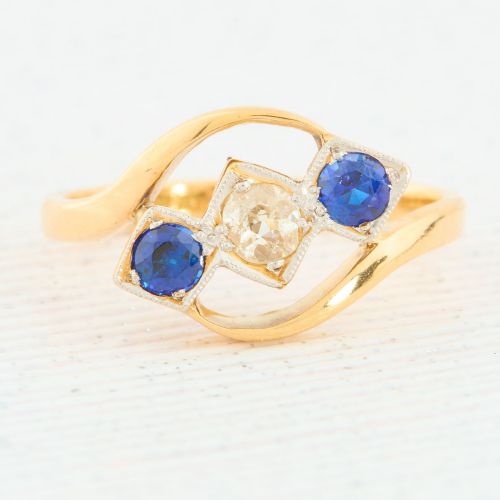
The version most commonly met on this page pairs diamonds with coloured gemstones such as sapphires, rubies, emeralds or opals. Plain three-stone diamond arrangements also appear frequently from the early twentieth century onwards.
Victorian and Edwardian examples often utilise yellow gold bands with platinum settings for the stones, whilst later Art Deco and mid-century pieces favour white metals throughout.
Materials and construction
Goldsmiths constructed these rings using eighteen-carat yellow gold, platinum or combinations of both, pairing durable precious metals with securely claw-set or bezel-set stones.
Older pieces employ hand-cut gems including old mine cuts, old cushion cuts and transitional cuts, which display distinctive facet patterns shaped by hand before modern machinery predominated.
Trilogy Engagement Ring Retail Price Guide 2026
Typical asking prices for trilogy engagement ring among the pieces listed under this phrase on Sellingantiques today, from the lower quarter to the upper quarter. They describe what is for sale here now, not the wider market.
Some Victorian gypsies traded simple bands for these triple clusters, proving that three stones are invariably better than one when sealing a promise.
Distinctions in quality
The standard of a trilogy engagement ring rests upon the matching and proportion of the stones, where uniform colouration and complementary carat weights create visual harmony across the finger.
The precision of the metalwork defines the construction, with delicate claw settings or secure rub-over mounts holding the gems firmly while minimising visible solder and heavy metal bulk.
BIRKS
The Trilogy Engagement Ring Glossary
- Trilogy ring
- A ring set with three principal stones, traditionally representing the past, present and future of a relationship.
- Old cut diamond
- A diamond cut by hand before the mid-twentieth century, typically featuring a smaller table, higher crown and open culet.
- Transitional cut
- A diamond cut used during the period when older hand-cut methods evolved into the modern brilliant cut.
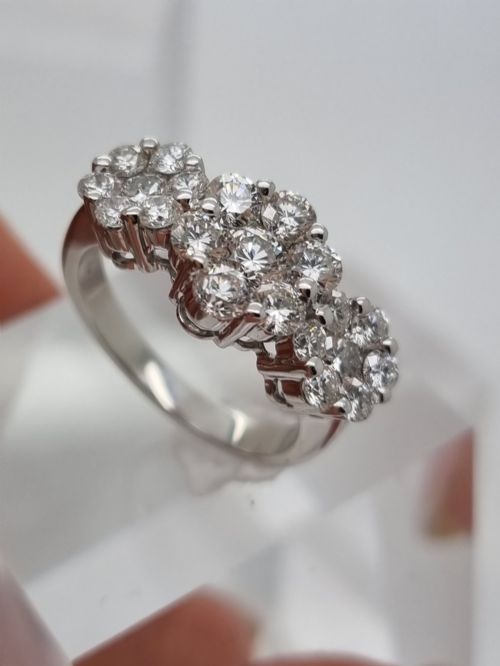
- Triple cluster
- A ring design where each of the three main stone positions consists of a cluster of smaller gems rather than a single stone.
Trilogy Engagement Ring: Frequently Asked Questions
What do the three stones mean?
The three stones traditionally represent the past, the present and the future of a shared life. This symbolism made the design popular for betrothals throughout the Victorian and Edwardian eras.
Over subsequent decades the design retained this sentiment whilst accommodating different gemstone combinations and modern platinum or gold settings.
How do I identify a Victorian trilogy ring?
Victorian examples frequently combine eighteen-carat yellow gold bands with old cut diamonds, sapphires, rubies or opals. Claw settings are often substantial and hand-finished.
Many of these pieces bear hallmarks specific to British assay offices of the nineteenth century, helping to confirm their period of origin.
Are platinum and gold used together?
Many Edwardian and Art Deco rings pair an eighteen-carat yellow gold shank with platinum claw settings on top. Platinum held diamonds securely with minimal metal.
This combination allowed jewellers to utilise the warmth of gold for the band whilst providing a bright, white background for the stones.
Can I wear a trilogy ring daily?
These rings were built for everyday wear using durable precious metals like eighteen-carat gold and platinum. Regular checks by a jeweller keep the claws secure.
Care should be taken with softer stones like opals or emeralds, which benefit from gentle cleaning and removal during heavy physical tasks.