

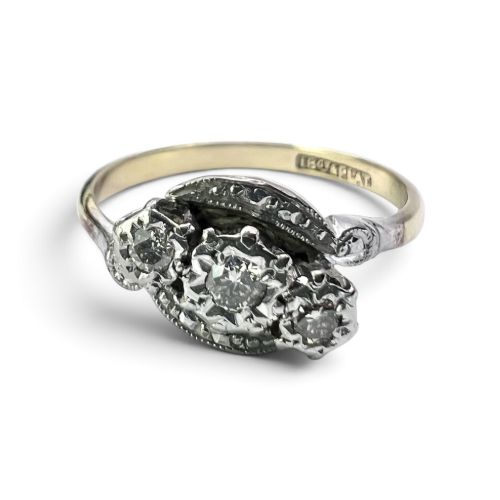
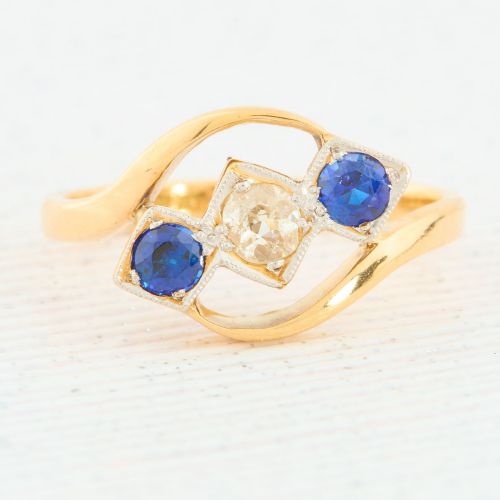


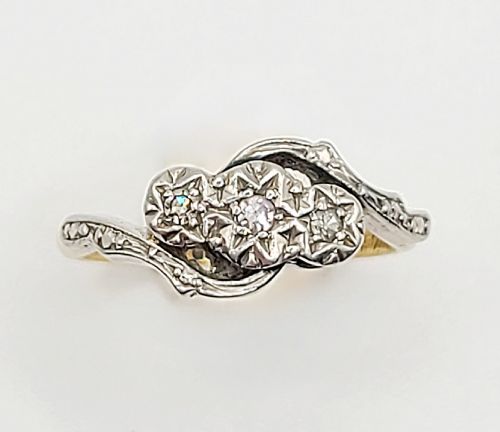


Three Stone Crossover Ring
A three stone crossover ring is a characteristic piece of fine jewellery that twists across the finger, offering enduring elegance.
Three Stone Crossover Ring
A three stone crossover ring brings together three prominent gems upon a band that curves or twists as it meets the finger. These jewels appear across several early twentieth century periods, most notably the Edwardian era, the Art Deco years, and the 1940s Retro period. Many examples combine precious stones with structured geometric or flowing mounts.
The versions most commonly met on this page date from the 1910s through to the 1940s. They frequently pair diamonds with sapphires, or present a trio of diamonds arranged in a trilogy, twist, swirl, or wishbone configuration. Their forms reflect the changing tastes of their decades, shifting from delicate Edwardian work to bolder Art Deco symmetry.
Makers of these rings utilised precious metals to support the stones securely while maintaining slender profiles. Combinations of 18ct gold and platinum appear regularly, providing both warmth from the gold and strength for the platinum settings. Buyers seeking a ring from this selection will find distinct variations in band shapes and gemstone arrangements.
Materials and construction
These rings rely on durable precious metals to anchor their stones in place. Jewellers combined 18ct gold with platinum, using the platinum primarily for the settings to hold the gems securely while keeping the metalwork fine and crisp. The body of the ring often uses 18ct gold for structural warmth and comfort against the hand.
The stones themselves, predominantly diamonds and sapphires, are shaped into traditional cuts suited to the period. Craftsmen set these gems into twist, swirl, and crossover designs that required precise metal bending and hand-finishing. This construction method allowed the three stones to sit closely together and follow the natural curve of the finger.
Three Stone Crossover Ring Retail Price Guide 2026
Typical asking prices for three stone crossover ring among the pieces listed under this phrase on Sellingantiques today, from the lower quarter to the upper quarter. They describe what is for sale here now, not the wider market.
Some rings include a wishbone curve so pronounced it looks ready to leap right off the finger and make a wish.
Factors that separate examples
Quality in these rings rests upon the precision of the metalwork and the harmony of the design. A finer piece displays clean lines in its twist or crossover motif, with settings that hold the stones securely without excess metal obscuring the gems. The balance between the 18ct gold shank and the platinum setting shows the skill of the original maker.
The selection of the stones also defines the standard of the ring. Clear matching among the three gems, whether diamonds alone or paired with sapphires, elevates the piece. Superior examples maintain crisp geometric or flowing details that have resisted wear over the decades since their creation.
The Three Stone Crossover Ring Glossary
- Crossover ring
- A ring design where the shank curves or sweeps across the finger, often overlapping at the centre to hold the stones. This style creates a dynamic silhouette compared to straight band rings.
- Trilogy ring
- A ring featuring three distinct stones set side by side in a row. These pieces traditionally represent the past, present, and future.
- Wishbone ring
- A ring shaped in a subtle V or curved arch resembling a wishbone. This contour allows the piece to sit flush against other bands.
- Old cut
- A diamond cutting style prevalent in earlier periods featuring a small table, high crown, and open culet. These stones catch candle or gas light with broad, distinctive flashes.
- Platinum
- A dense, durable white precious metal used extensively in antique jewellery for secure settings. Its strength permits delicate claw and bezel work without risking stone loss.
Three Stone Crossover Ring: Frequently Asked Questions
How do I clean a three stone crossover ring?
Clean these rings gently using warm water, mild washing up liquid, and a very soft brush to remove dirt from beneath the settings. Avoid harsh chemicals or ultrasonic cleaners which can damage older mounts and stones.
Dry the piece thoroughly with a soft lint-free cloth before storing it in a fabric-lined box. Regular gentle cleaning preserves the lustre of both the platinum and the gold components.
Can a crossover ring be resized?
Many of these rings can be adjusted by a skilled jeweller who understands antique metalwork. The ability to alter the size depends upon the construction of the shoulders and the presence of stones set along the band.
Consult a specialist who works with 18ct gold and platinum to ensure the twist or crossover proportions remain balanced. Alterations should be planned carefully to protect the original setting integrity.
How do I identify an Edwardian ring?
Edwardian jewellery typically showcases light, delicate platinum work paired with yellow gold, often featuring intricate piercing or millegrain edges. The aesthetic leans toward grace and refined detail rather than the heavy geometry that followed.
Examine the mounting under magnification to spot hand-worked details characteristic of the early 1910s. Comparing the weight and stone arrangements to known period pieces helps confirm the era.
Are these rings suitable for daily wear?
These pieces can be worn regularly provided they receive appropriate care and routine checks by a jeweller. Platinum and 18ct gold offer good durability, but the fine settings on older rings require occasional inspection for loose claws.
Remove the ring during heavy manual tasks or sports to protect the stones and the crossover structure. Mindful wear ensures the piece remains secure for everyday enjoyment.