

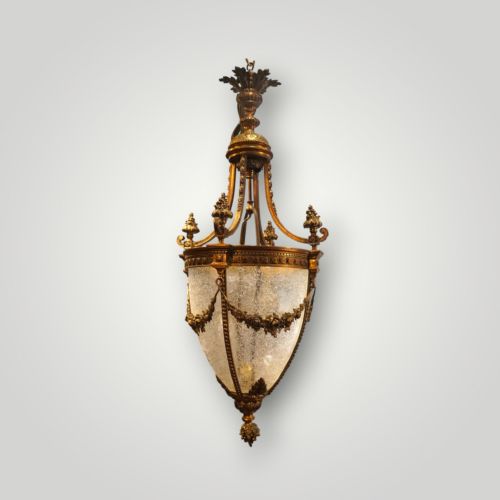
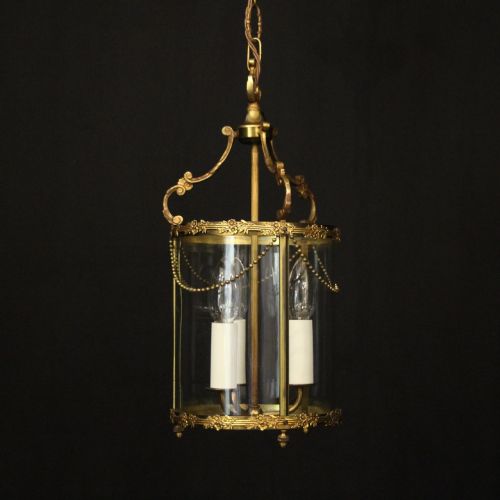
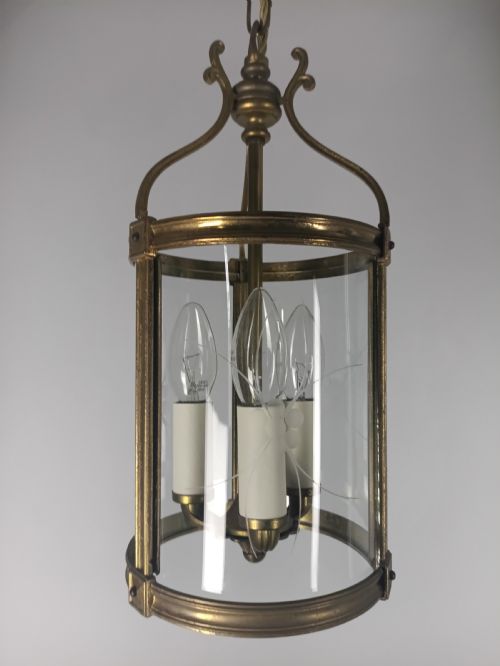
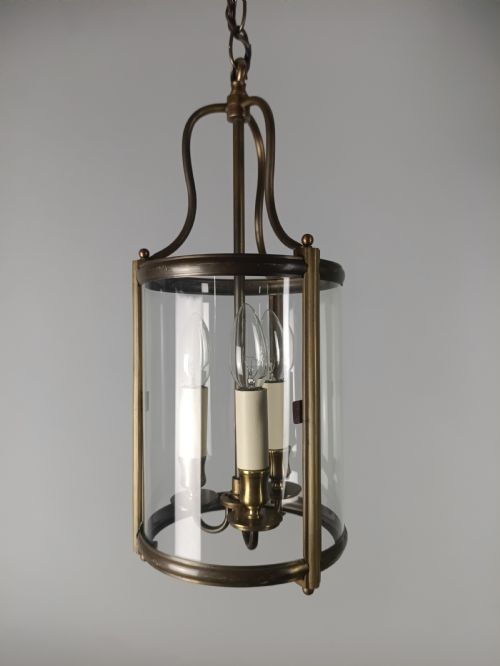

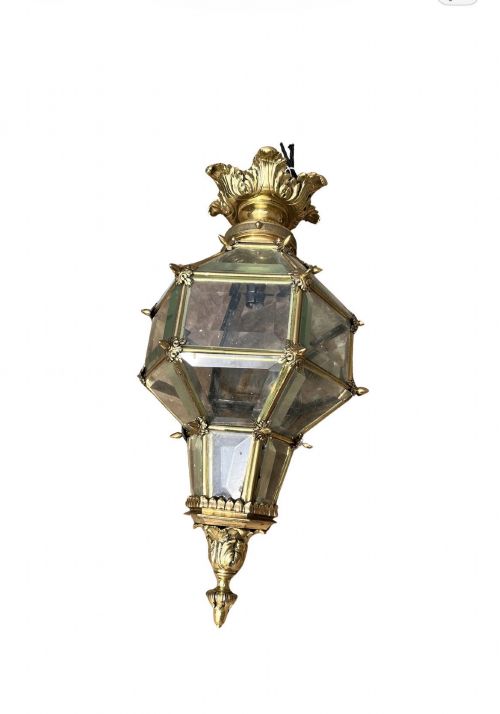
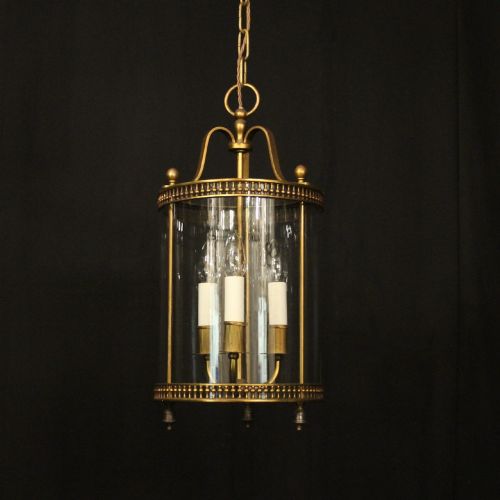
Gold Ceiling Lantern
A gold ceiling lantern brings a warm, metallic glow to an entryway, and these pieces span French and English workshops from the nineteenth and twentieth centuries.
Gold Ceiling Lantern
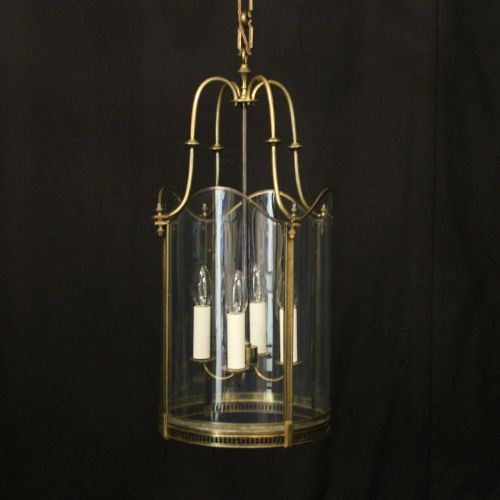
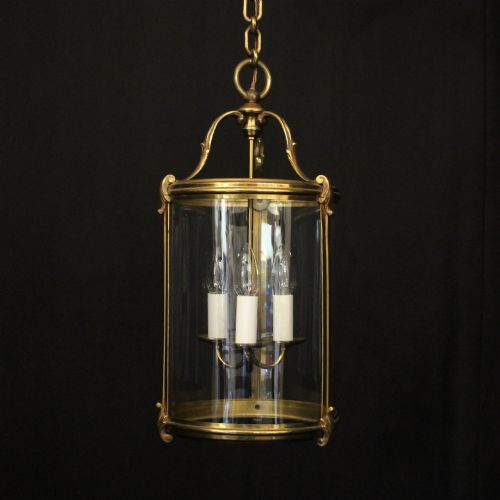
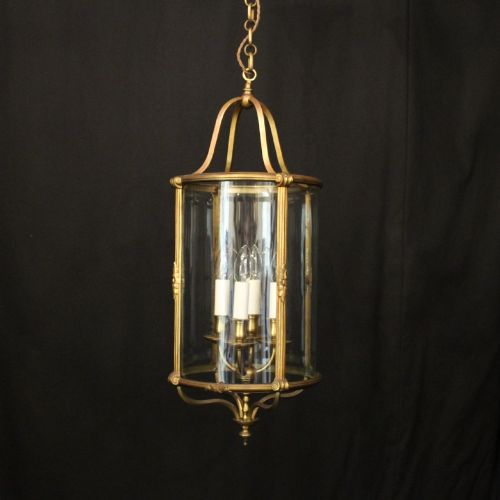
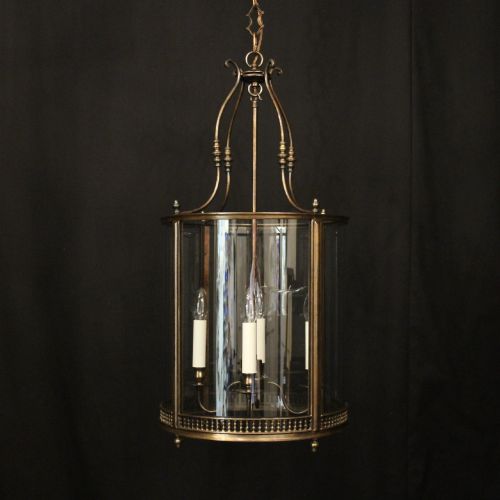
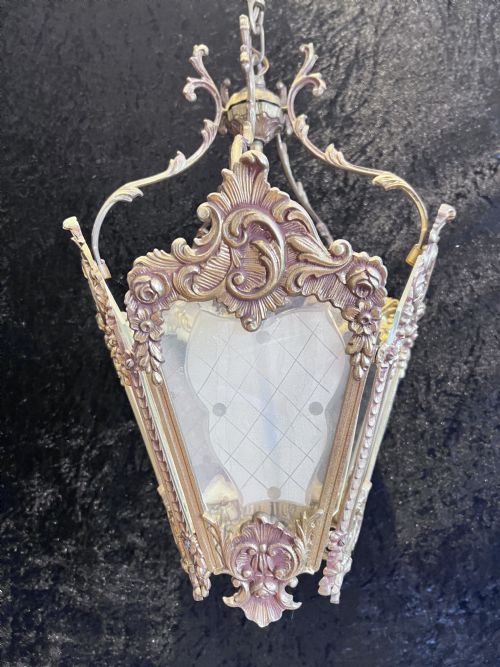
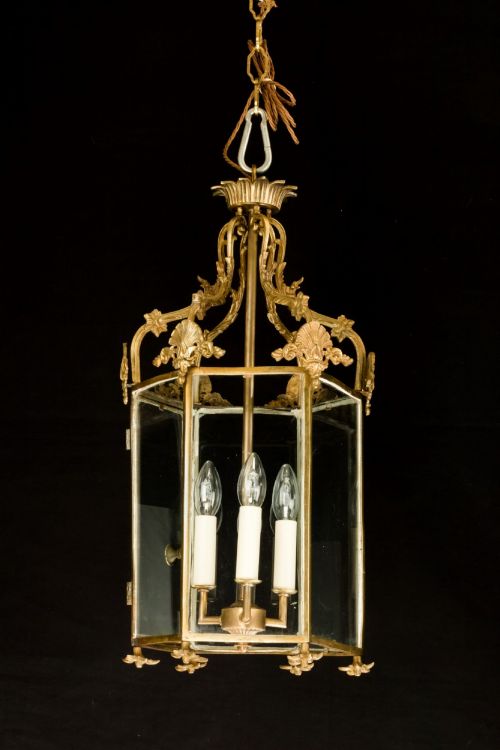
A gold ceiling lantern provides ambient downward illumination for hallways, vestibules and high-ceilinged corridors. When searching for a gold ceiling lantern, buyers encounter forms ranging from simple hexagonal boxes to elaborate multi-light fixtures influenced by French chateau and Louis XVI styles.
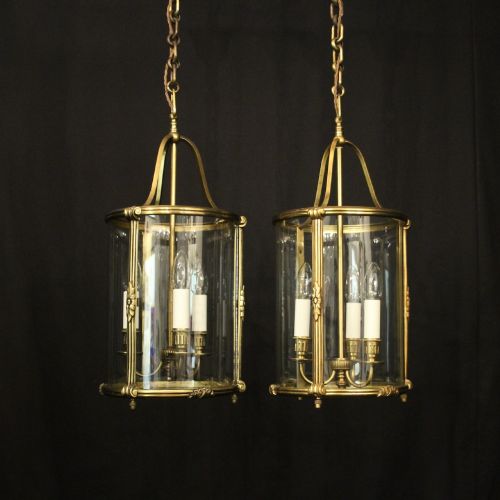
The selection on this page draws heavily from early twentieth-century French production, alongside Victorian and Edwardian English examples. Hall lanterns and pendant lights dominate the offerings, often designed with convex glass panels or multiple internal lights to maximise the spread of illumination.
Pieces span decades from the Victorian era through the nineteen-thirties, incorporating North African designs and Venetian carved giltwood alongside standard European neoclassical shapes. Buyers will find single-light hall fixtures as well as grander multi-bulb chandeliers intended for larger spaces.
Materials and construction methods
Metalwork forms the structural backbone of these fixtures, utilising brass, polished brass, and cast bronze finished with gilt, gold leaf, or ormolu. Workshops employed gilding techniques to apply gold leaf or bronze finishes over base metals, creating a reflective surface that catches natural and artificial light.
Glazing is integral to the construction, utilising clear, bevelled, etched, or opaline glass panels held securely within metal frames. Many lanterns incorporate hinged doors for easy access to the interior bulbs, while others feature pierced brass galleries or ornate cast bronze mounts.
Periods represented stretch from the Victorian era and Edwardian years through the nineteen-twenties and nineteen-thirties.
Markers of quality and craftsmanship
The refinement of the casting and chasing on the bronze or brass framework distinguishes superior pieces from standard production. Crisp detailing in floral garlands, neoclassical swags, or rococo scrolls indicates skilled hand-finishing rather than mass-produced uniformity.
Glass selection significantly impacts the character of the piece, with bevelled edges and hand-etched patterns reflecting light with greater depth than plain flat panes. Robust frame construction, secure glass retention, and substantial metal thickness mark out lanterns designed to endure decades of hanging.
Perry & Co
The Gold Ceiling Lantern Glossary
- Gilt bronze
- Metal alloy cast into decorative shapes and coated with a thin layer of gold leaf or gold amalgam. This technique provides a durable metallic sheen that resists tarnishing.
- Convex glass
- Curved glass panels used in lantern sides to refract light outward in a wider arc. This form is frequently seen in French hall lanterns from the early twentieth century.
- Ormolu
- Finely chased and gilded brass applied to furniture and lighting fixtures. The term originates from the French for milled gold.
- Bevelled glass
- Glass panes featuring an angled, polished edge that catches and splits light into prismatic colours. It adds considerable visual weight and elegance to a lantern frame.
- Hexagonal form
- A six-sided geometric shape common in hall lanterns. This configuration allows multiple glass panels to distribute light evenly across a space.
Gold Ceiling Lantern: Frequently Asked Questions
Where should I hang a gold ceiling lantern?
These fixtures suit entryways, hallways, and stairwells where their downward illumination and decorative metalwork can be appreciated from multiple angles. They also serve well in high-ceilinged landings or above dining tables.
Ensure the drop of the pendant matches your ceiling height so the lower edge clears head height by a comfortable margin.
How do I clean a gilt bronze lantern?
Dust the metal and glass gently with a soft, dry microfibre cloth to remove surface particles. Avoid chemical polishes, abrasive cloths, or immersion, as harsh liquids can strip the delicate gilt or gold leaf layer.
Use a mild glass cleaner applied directly to a cloth rather than the lantern itself when wiping down the glass panels to protect the surrounding metal frame.
Are these lanterns wired for modern electricity?
Most pieces listed are electrified, ranging from period conversions to mid-century wiring updates. Buyers should have a qualified electrician inspect older internal components to ensure safety standards are met.
Rewiring can usually be accommodated without altering the external antique housing, preserving the original metalwork and glass.
How do I distinguish Edwardian lanterns from Victorian ones?
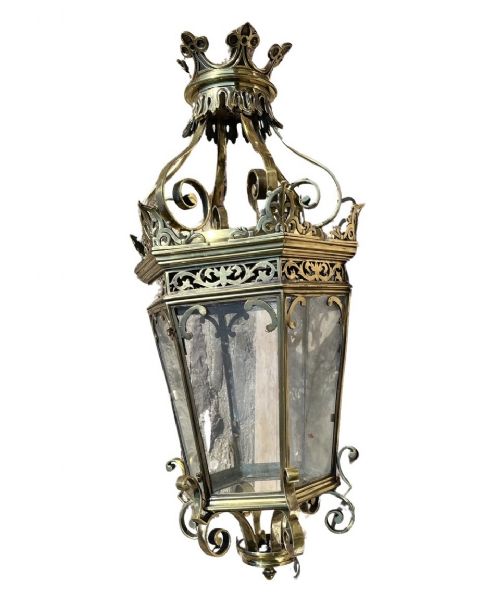
Victorian examples often lean towards heavier proportions, such as monumental hexagonal brass designs or ornate gilt bronze with dark patination. Edwardian pieces frequently exhibit lighter neoclassical proportions and refined, airier frames.
Comparing the casting crispness and the style of decorative motifs helps place a piece within its correct historical decade.