



Gold Carved Ceiling Light
A gold carved ceiling light brings dramatic height and warm illumination to a room, drawing the eye upward with historic craftsmanship.
Gold Carved Ceiling Light
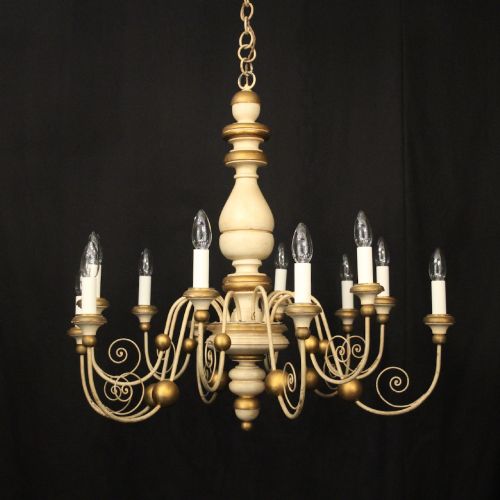
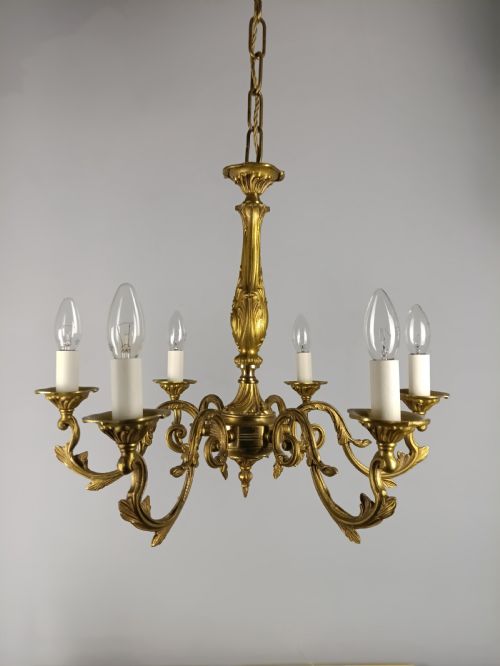
When you search for a gold carved ceiling light, you are looking at overhead fixtures designed to illuminate a space through multiple arms or hanging lantern forms. These pieces primarily take the form of chandeliers and hanging lanterns originating from various European traditions.
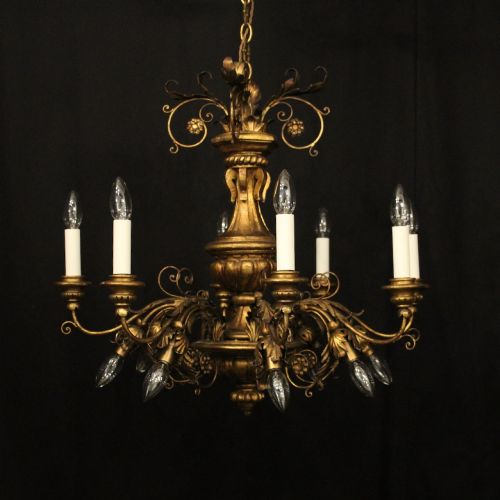
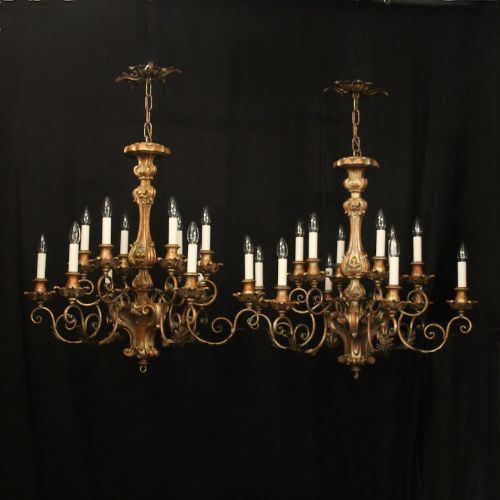
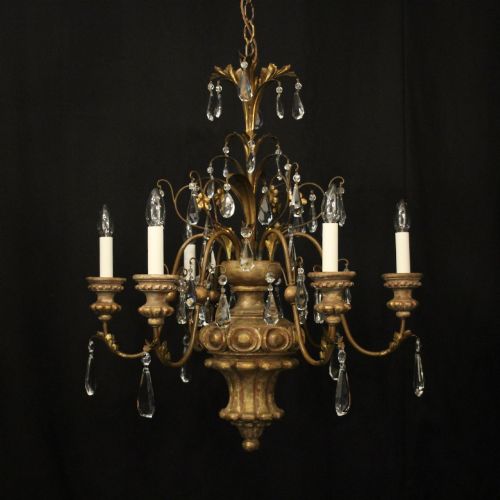
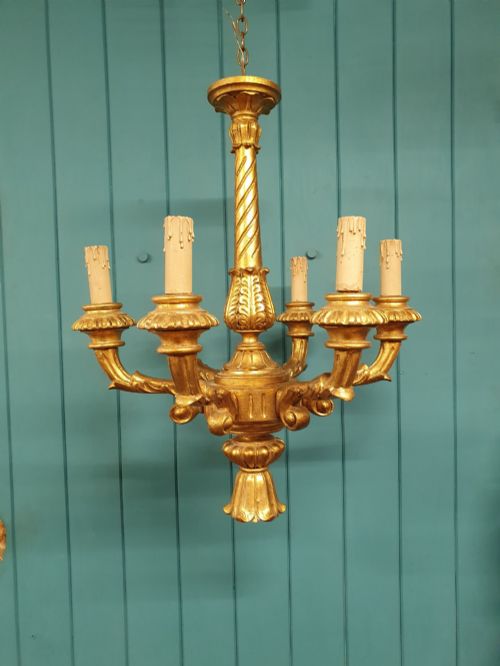
The version you are most likely to meet on this page is the Florentine giltwood chandelier, often featuring multiple lights configured across carved wooden arms. These items span periods from the eighteenth century through to the interwar years of the twentieth century.
How they were made
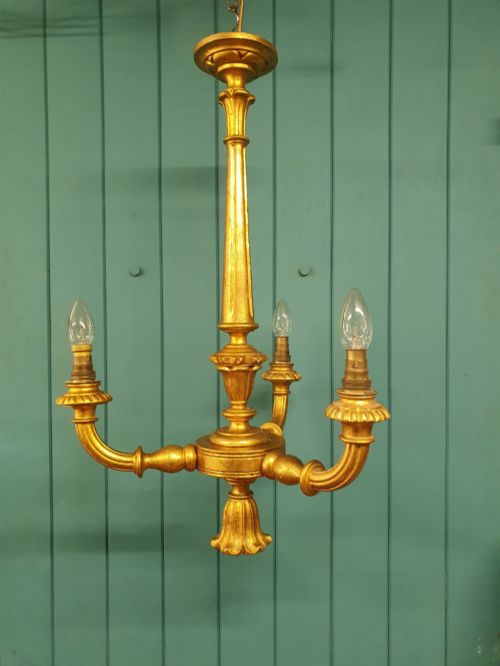
Carved wooden elements form the core of many pieces, utilising giltwood and gesso to build up intricate ornamentation before the application of gold leaf or paint. Artisans shaped timber into scrolling arms, floral motifs, and structural frames that could support multiple candle or bulb points.
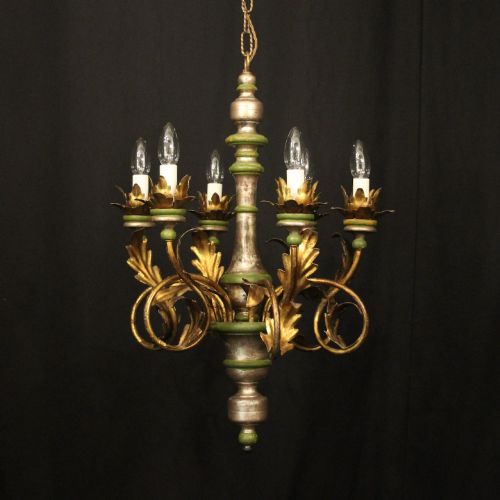
Metal components appear frequently, incorporating wrought iron, gilt brass, and pierced brass to create lanterns and structural supports. Toleware elements also supplement the metalwork on specific lanterns to introduce contrasting painted colour.
Surface decoration relies heavily on gilding techniques, where thin sheets of gold leaf or liquid gold paint are applied over prepared gesso or directly onto the wood and metal substrates. Polychrome highlights are sometimes added to accentuate the carved details.
Gold Carved Ceiling Light Retail Price Guide 2026
Typical asking prices for gold carved ceiling light among the pieces listed under this phrase on Sellingantiques today, from the lower quarter to the upper quarter. They describe what is for sale here now, not the wider market.
Listings feature items spanning the eighteenth century to nineteen thirty, predominantly utilising giltwood, brass, and gesso.
What varies in quality
The depth and crispness of the carving distinguish finer examples from simpler production, as master carvers achieved greater definition in acanthus leaves and scrolls. Smooth, uniform application of gold leaf across complex surfaces also marks out superior execution.
Scale and structural complexity dictate the visual weight of the fixture, with larger multi-light configurations requiring robust internal framing to support the arms safely. The integration of materials, such as combining ebonised wood with gilt highlights, shows deliberate aesthetic choices.
The Gold Carved Ceiling Light Glossary
- Giltwood
- Timber that has been coated with gold leaf or gold paint over a prepared ground. It provides a reflective surface that catches candle or electric light.
- Gesso
- A plaster mixture applied to wood surfaces as a smooth base before gilding or painting. It allows carvers to achieve sharp details that bare wood cannot hold.
- Pricket
- A sharp metal spike on a candleholder designed to secure the base of a candle. Older chandeliers often utilise this method rather than sockets.
- Toleware
- Enamelled or lacquered metalware, typically painted with floral or scenic designs. It appears on lanterns to add colour alongside gilded surfaces.
- Acanthus
- A carved leaf ornament derived from classical architecture and frequently used on wooden chandelier arms. It represents a staple motif of Baroque and Rococo styles.
Gold Carved Ceiling Light: Frequently Asked Questions
What is a giltwood chandelier?
A giltwood chandelier is a hanging lighting fixture constructed from wood and covered with a thin layer of gold leaf. These pieces rely on carved wooden forms rather than cast metal for their structural and decorative arms.
They reflect light from candles or bulbs across their metallic surfaces, creating a warm glow in large rooms. Most examples date from the nineteenth and early twentieth centuries.
What distinguishes Florentine chandeliers?
Florentine chandeliers are characterised by their ornate carved giltwood construction and frequently feature multiple lights arranged in sweeping tiers. Their design often draws upon Italian Baroque and Rococo traditions with rich floral and scroll carvings.
These fixtures frequently incorporate polychrome painted details alongside the gold leaf to create depth. They originate primarily from workshops in Florence spanning the nineteenth and early twentieth centuries.
How do I clean a carved gold light?
Cleaning a carved gold light requires gentle dusting with a soft, dry brush to remove debris from delicate crevices without disturbing the gold leaf. Avoid using commercial liquid cleaners or abrasive cloths that can strip the historic gilding.
Moisture can damage both gesso and wood beneath the gold surface, so damp cleaning should be avoided entirely. Regular, careful maintenance preserves the fragile finish of the antique materials.