

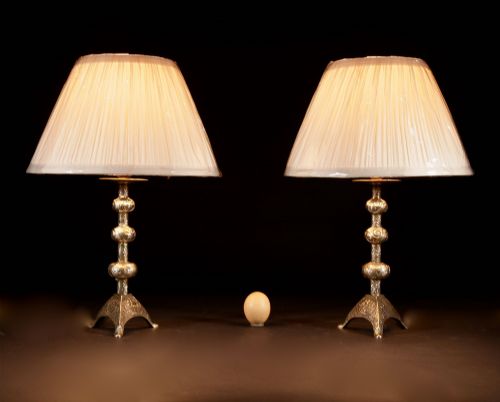
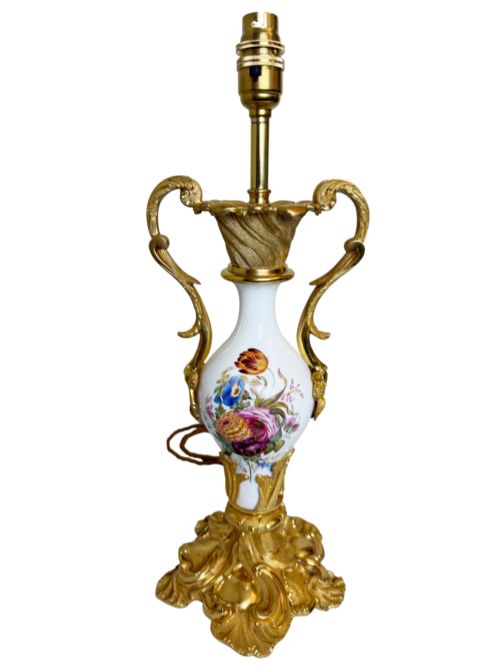
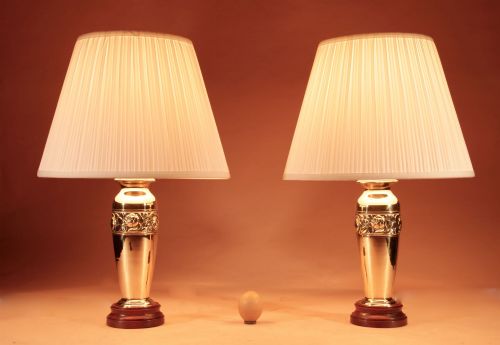
Gold Brass Table Light
A gold brass table light brings warm metal reflection and functional illumination to a room, drawing on centuries of metalworking traditions.
Gold Brass Table Light
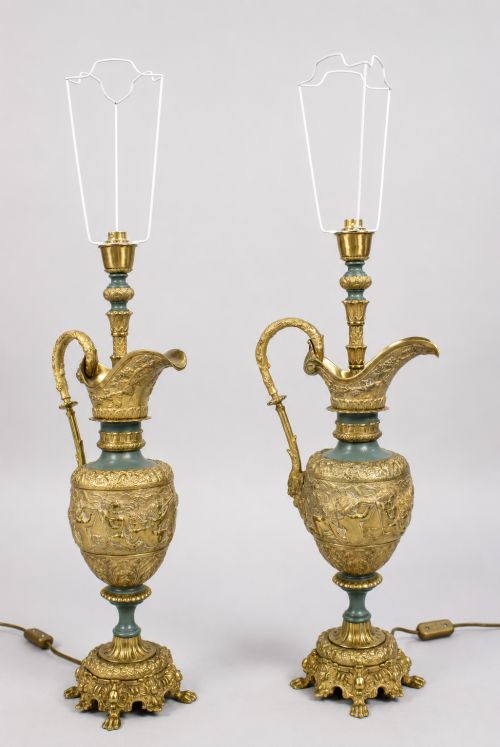
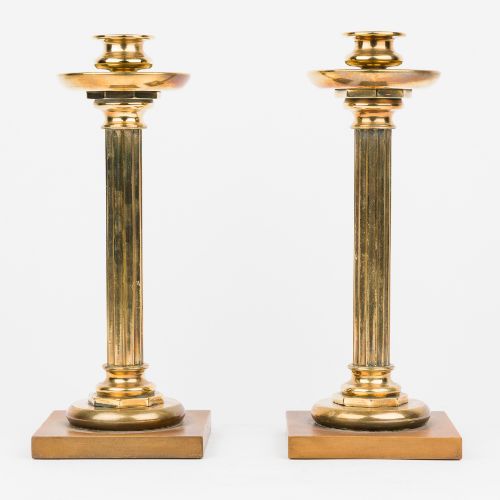
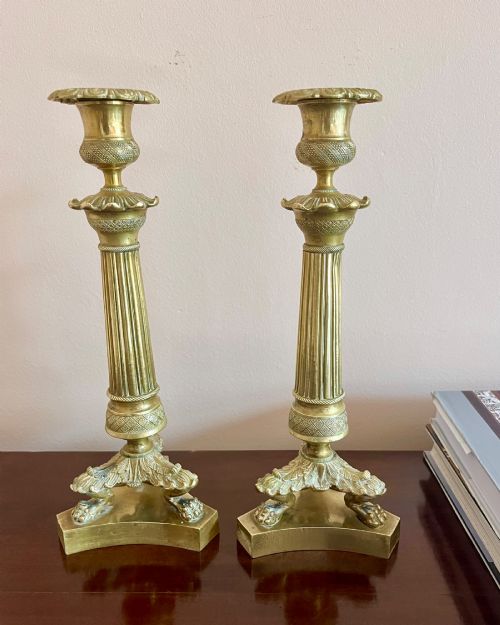
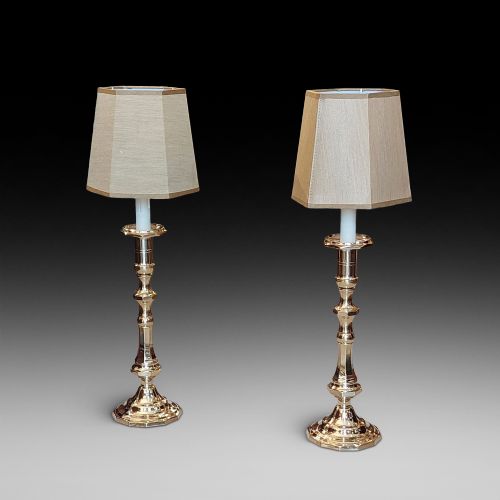
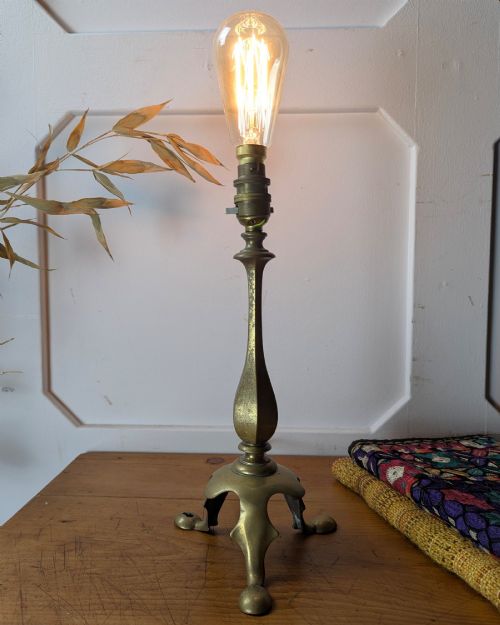
A gold brass table light encompasses a variety of domestic illumination forms, ranging from electrified column lamps and converted candelabra to traditional candlesticks adapted for modern use. Pieces bearing this description draw on centuries of design vocabulary, including Georgian, Victorian, Edwardian, and Art Deco aesthetics.
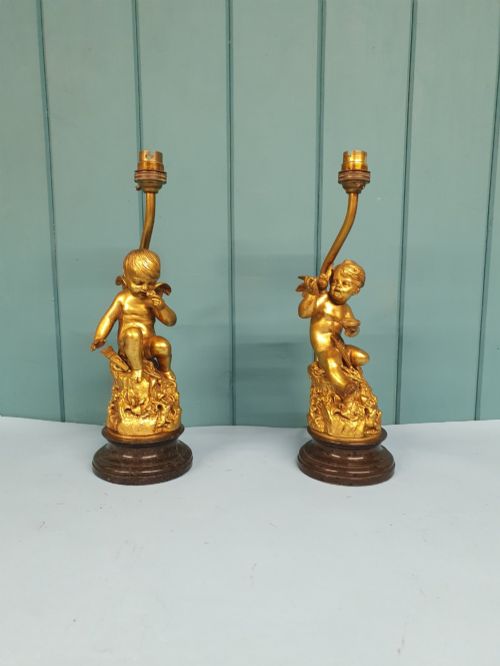
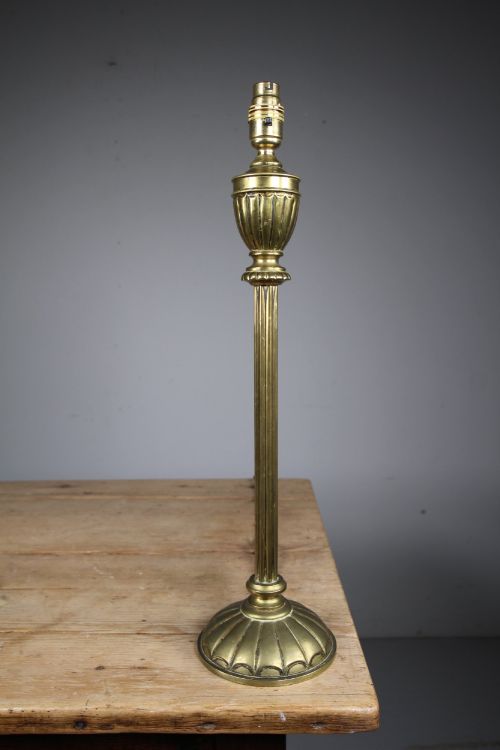
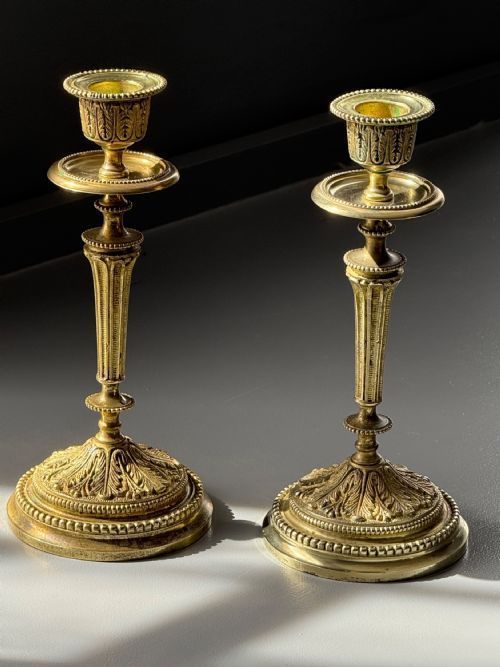
The domestic lighting found here often originates from English and French workshops, utilising cast brass, gilt bronze, and ormolu to achieve a polished metallic finish. Many examples adapt earlier lighting devices, such as reeded columns and classical revival orders, into functional table lamps.
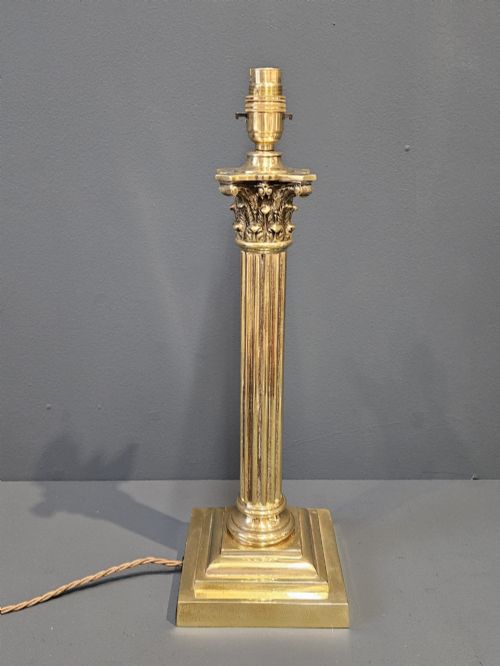
Buyers frequently encounter period variations like Corinthian columns, hexagonal baluster forms, and elaborate candelabra fitted with fabric shades or left as exposed metal standards. These objects span from the eighteenth century through the early twentieth century, reflecting shifting domestic habits.
Materials and Technique
Construction relies heavily on casting brass, bronze, and gilt metal, often utilising lost-wax or sand-casting methods to achieve crisp detail in architectural capitals and floral mounts. Ormolu surfaces receive fine mercury gilding or modern electroplating to create the characteristic golden sheen associated with these light fittings.
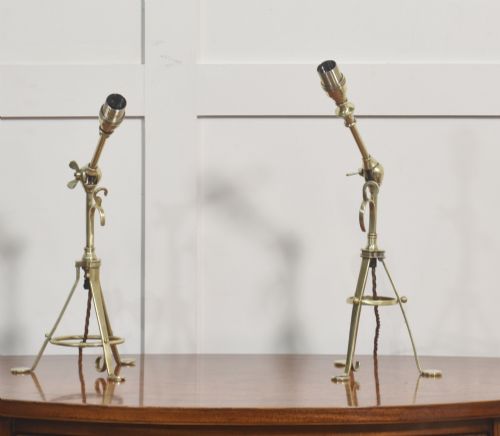
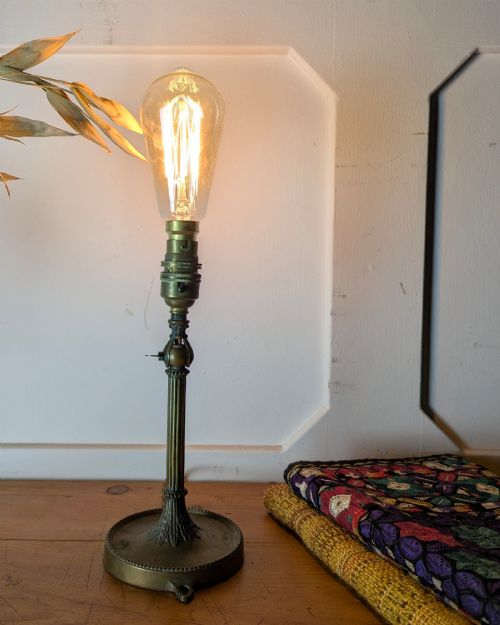
Makers integrated glass, marble, and crystal components into metal frames, combining heavy stone bases with turned brass shafts for stability and visual contrast. Secondary elements such as fabric shades and adjustable joints allow mechanical flexibility in specialised desk and wall lamps.
Listings feature brass, gilt bronze, and ormolu materials across Georgian, Victorian, and Art Deco styles.
Craftsmanship and Proportion
Quality reveals itself in the crispness of the cast ornamentation, where sharp acanthus leaves, clear reeding, and deeply chased details distinguish superior work from softer, mass-produced castings. The weight of the metal and the integrity of the joins determine the structural stability of tall column lamps and multi-armed candelabra.
The richness of the gilding or patination governs the visual depth of the surface, with genuine ormolu and mercury-gilt finishes retaining a warm luminosity that lesser lacquered brasses cannot replicate. Proportion and balance between the base, column, and any added fittings dictate whether an adapted antique maintains its original design harmony.
W.A.S. Benson·L & F Moreau·J.T. & Co
The Gold Brass Table Light Glossary
- Ormolu
- Gilded bronze, typically produced by applying a mixture of gold and mercury to a bronze object and heating it. This technique was widely used in French decorative arts.
- Corinthian Column
- An architectural order featuring an ornate capital decorated with acanthus leaves. It frequently forms the central shaft of nineteenth-century table lamps.
- Candelabra
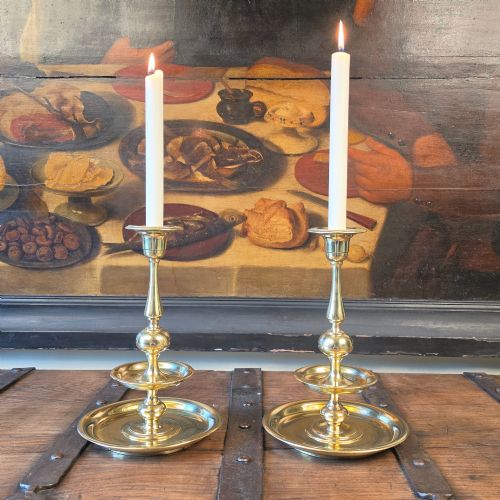
- A branched candlestick holder designed to support multiple candles. Many period examples are later converted to hold electrical fittings.
- Reeded
- Surface decoration consisting of parallel, convex mouldings. This detail appears frequently on the vertical columns of Victorian and Edwardian lamps.
Gold Brass Table Light: Frequently Asked Questions
How do I date a brass lamp?
Dating relies on stylistic markers such as column orders, cast ornamentation, and the construction methods used in the metal base.
Examining wiring holes and switches also helps determine whether the piece was electrified during manufacture or converted from an earlier oil lamp or candlestick.
What is the difference between brass and ormolu?
Brass is an alloy of copper and zinc, whereas ormolu specifically denotes gilded bronze created through historical mercury-gilding processes.
Ormolu exhibits a deeper, more golden lustre and sharper cast detail than standard brass fittings.
Can converted candelabra be safely used?
Most converted candelabra accommodate modern wiring routed through the central axis without damaging the historic metal structure.
A qualified electrician should inspect older internal components to ensure safe domestic operation.
How should I clean a gilt bronze surface?
Cleaning requires only a soft, dry cloth to remove dust, avoiding abrasive polishes that can strip thin gilt layers.
Preserving the original surface patination maintains the historical character of the metal.