

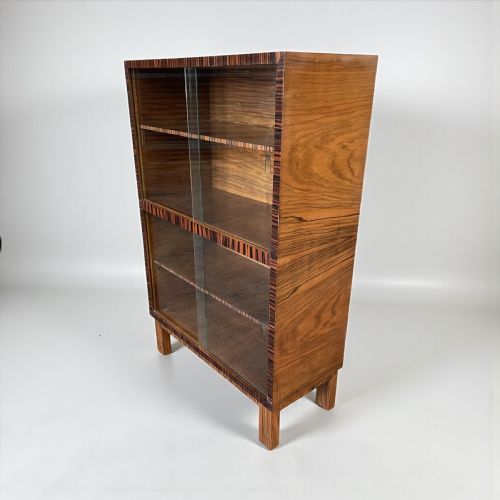
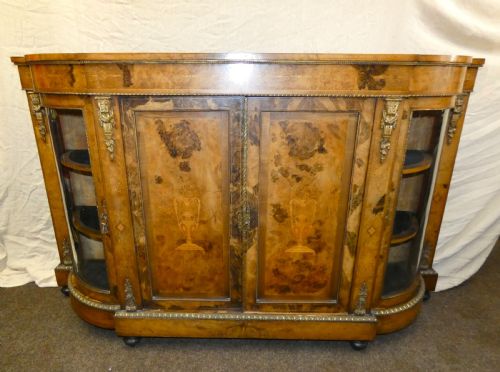
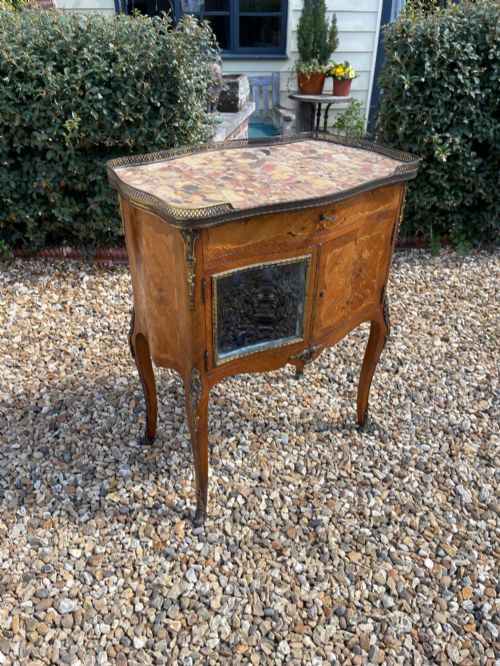


Glazed Walnut Storage Cabinet
A glazed walnut storage cabinet brings rich timber grain and visible display into a room, joining utility with an appealing period presence.
Glazed Walnut Storage Cabinet
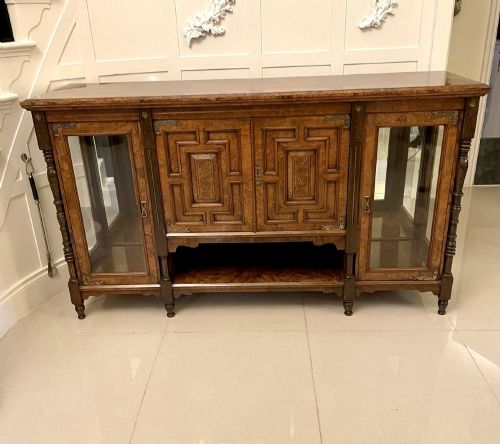
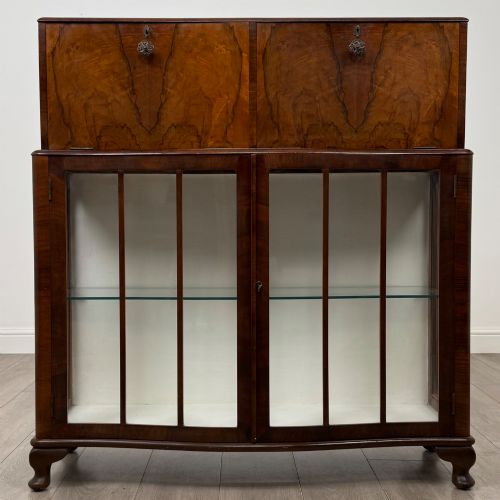
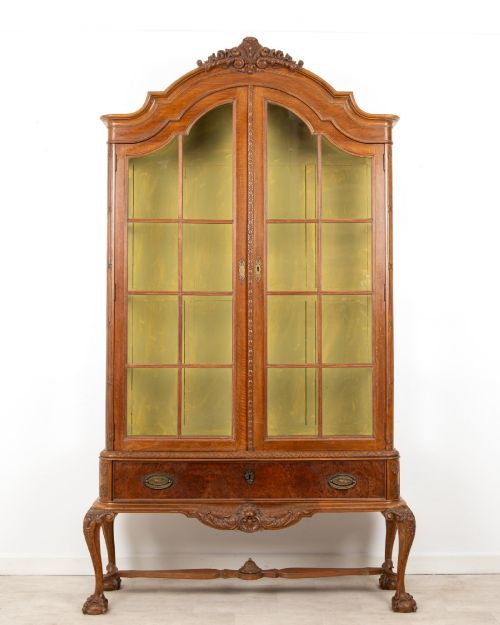
A glazed walnut storage cabinet typically presents as a credenza, display cabinet, bookcase, or music cabinet originating from the Victorian, Edwardian, and later periods. The selection here leans heavily towards Victorian and Edwardian examples, alongside revival styles and Art Deco pieces.
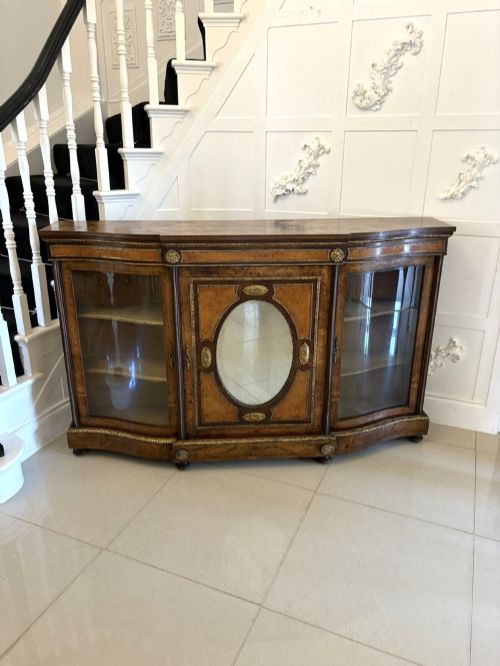
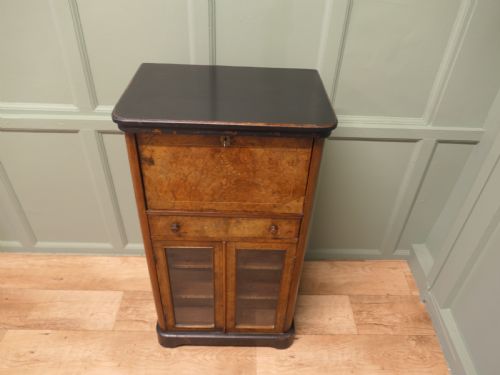
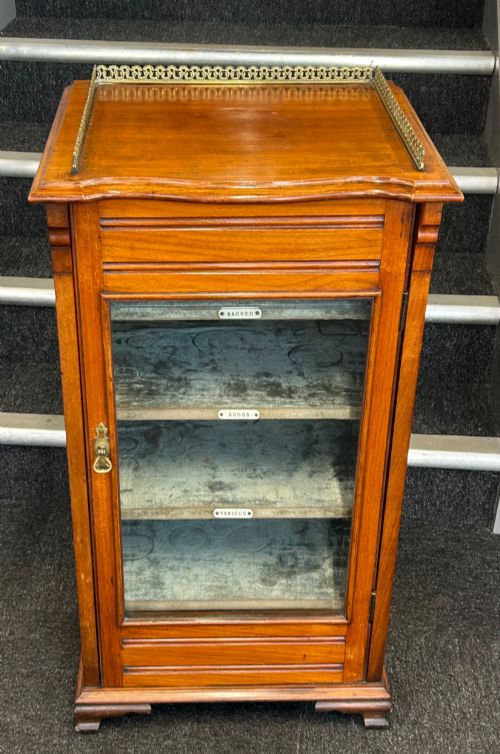
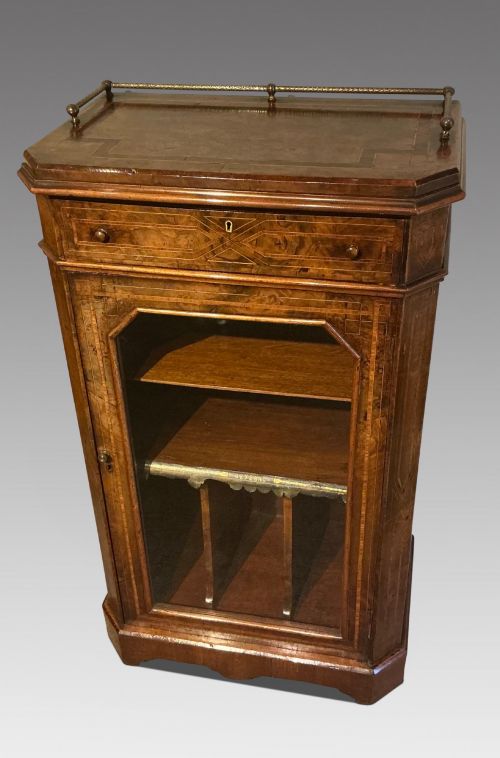
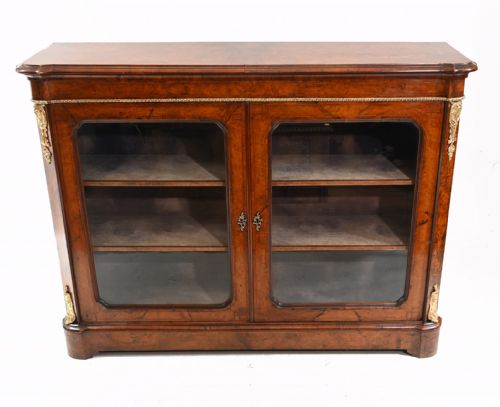
Buyers encounter music cabinets with internal filing sections, glazed credenzas fitted with mirrors and ormolu mounts, and tall bookcases with adjustable shelving. These items serve to organise sheet music, display collections, or store books behind glass doors.
Origins stretch from English workshops to French and Italian makers, encompassing styles from Queen Anne Revival to French Rococo Revival. Walnut, burr walnut, and black walnut dominate the forms, frequently enriched with marquetry and crossbanding.
Materials and construction
Cabinet makers utilised solid walnut and decorative burr walnut veneers over secondary timbers, often applying intricate marquetry inlay and crossbanding to flat surfaces. Glass panes are fitted into door frames to protect the contents while keeping them visible.
Brass hardware, mirrored backs, and ormolu mounts appear across Victorian and Edwardian items to accent the dark timber. Interiors frequently feature adjustable wooden shelves or fitted partitions designed for specific storage tasks like sheet music or microscope slides.
Listings feature walnut, burr walnut, and black walnut across Victorian, Edwardian, and Art Deco periods, incorporating glass, brass, and ormolu.
Distinctions in craftsmanship
The standard of a glazed walnut storage cabinet rests on the choice of timber figure, such as highly patterned burr walnut, and the precision of the marquetry inlay. Finer examples display harmonious grain matching across doors and panels rather than random timber cuts.
Hardware quality also separates pieces, with substantial brass handles, fitted locks, and crisp ormolu mounts indicating superior production. The integration of glass panels, internal linings, and structural joinery dictates how well a cabinet survives decades of use.
Maurice Adams
The Glazed Walnut Storage Cabinet Glossary
- Burr walnut
- A veneer taken from the growth growths or burls of the walnut tree, prized for its swirling, highly figured grain patterns. It adds distinct visual texture to cabinet doors and panels.
- Credenza
- A low dining-room sideboard or cabinet, frequently fitted with glass doors and central cupboards in Victorian iterations. These pieces often incorporate mirrored backs and gilt bronze mounts.
- Crossbanding
- A narrow strip of veneer laid perpendicular to the surrounding grain along the borders of a panel or top. This technique frames the primary timber surface with a neat decorative edge.
- Ormolu
- Gilded bronze or brass mounts applied to furniture for decorative effect, common on high-status Victorian pieces. The metalwork catches the light and complements the dark walnut body.
- Marquetry
- Inlaid patterns formed by fitting various decorative woods and veneers into a prepared background. It creates pictorial or geometric designs on cabinet fronts and tabletops.
Glazed Walnut Storage Cabinet: Frequently Asked Questions
What were glazed walnut storage cabinets used for originally?
These cabinets served multiple domestic purposes, from housing bound volumes in a library to displaying porcelain behind glass doors in a drawing room. Specific variants held sheet music near a piano or stored delicate collections.
Over time, households adapted them to suit changing storage needs while keeping prized possessions visible yet protected from dust.
How do I distinguish a Victorian piece from an Edwardian one?
Victorian examples often feature heavier proportions, rich burr walnut veneers, and decorative additions like ormolu mounts, marquetry, or mirrored backings. They tend towards darker finishes and elaborate revival styles.
Edwardian cabinets generally present lighter framing, cleaner lines, and more restrained inlay work, reflecting a shift towards airier interior aesthetics at the turn of the century.
Are the shelves inside adjustable?
Many bookcases and display cabinets from the Victorian and Edwardian eras include adjustable shelving systems supported by wooden ratchets or metal pins. This allowed owners to alter shelf heights for different book sizes or display items.
Music cabinets and specialised storage units usually feature fixed partitions or sliding trays tailored for specific items like sheet music files.
How should I care for walnut veneer furniture?
Walnut benefits from stable room temperatures away from direct sunlight, which can fade the natural timber tones and dry out old veneers. Occasional dusting with a soft, dry cloth preserves the polished surface.
Avoiding excessive moisture and harsh cleaning products ensures the historic polish and delicate crossbanding remain protected over decades of daily use.