

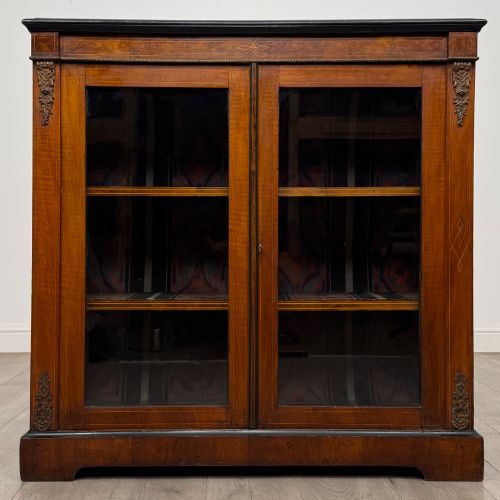
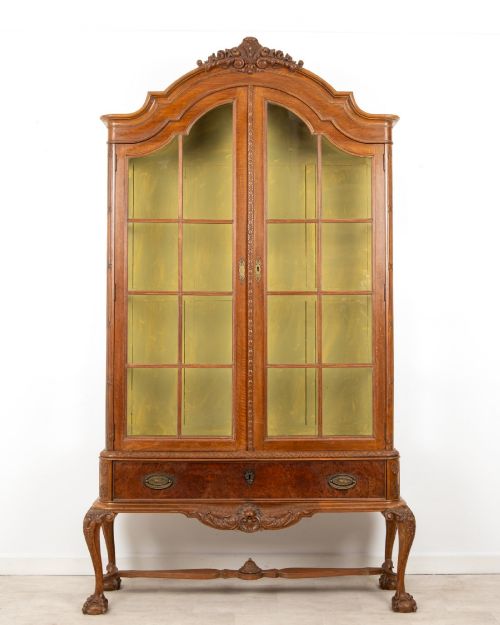
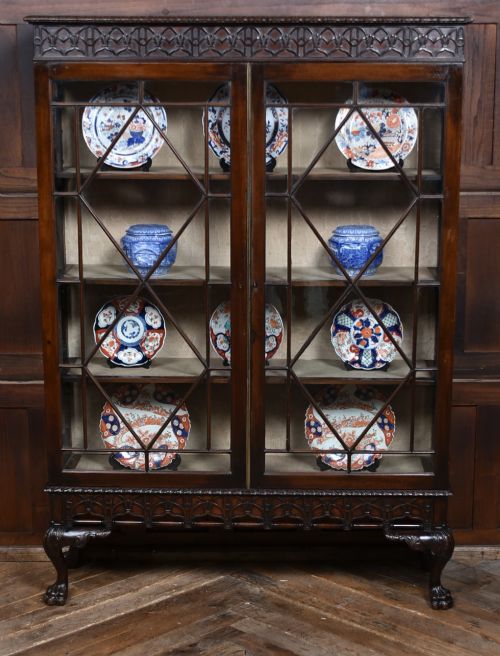


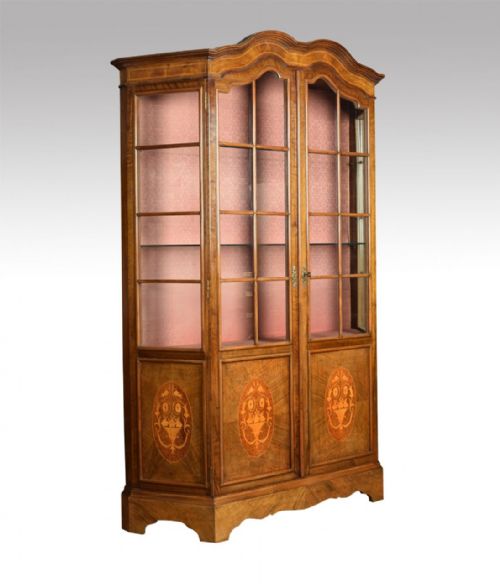

Double Door China Display
Double door china display pieces organise your most treasured ceramics behind glass panels, bringing orderly British heritage straight into the room.
Double Door China Display
A double door china display serves as a prominent storage and viewing cabinet for fine porcelain and glassware within the home. These pieces provide substantial interior space enclosed by glazed doors, keeping delicate items free from dust while offering a clear view from across the room.
How they were made
Cabinet makers constructed the primary framework using sturdy timbers such as mahogany, walnut, burr walnut, and oak, often enriching surfaces with intricate inlay work. Glazing bars formed geometric patterns across the doors, while brass fittings and occasional ormolu mounts secured the openings and decorated the exterior.
Interiors frequently incorporated fabric linings behind the shelving to create a soft backdrop for displayed china. Joinery methods relied on traditional woodcraft to support the heavy weight of glass doors and numerous interior shelves without sagging.
Double Door China Display Retail Price Guide 2026
Typical asking prices for double door china display among the pieces listed under this phrase on Sellingantiques today, from the lower quarter to the upper quarter. They describe what is for sale here now, not the wider market.
The current selection spans multiple decades, featuring Victorian, Edwardian, and 1920s pieces alongside various revival styles.
What varies in quality
The choice of primary timber and veneer heavily influences the visual weight and standing of a cabinet, with burr walnut and figured mahogany representing finer selections. Superior examples exhibit precise joinery, balanced proportions, and careful timber selection that maintains grain continuity across the double doors.
Decorative embellishments also distinguish better pieces, ranging from restrained astral glazing bars to elaborate Chippendale and Queen Anne revival motifs. The integration of brass hardware and the crispness of inlaid details reveal the maker's dedication to refined execution.
The Double Door China Display Glossary
- Astral glazing
- Wooden framework dividing glass panes into smaller geometric sections within a door. This technique dates back centuries and adds structural rigidity alongside decorative appeal.
- Pier cabinet
- A low or medium cabinet designed specifically to stand in the narrow wall space between windows. These pieces often feature glass doors to display ornaments in rooms with limited floor space.
- Burr walnut
- A highly figured wood veneer harvested from tree growths containing distorted grain patterns. Cabinet makers utilised this material on statement furniture for its rich, swirling visual texture.
- Ormolu
- Gilded bronze ornamentation applied to furniture surfaces for decorative effect. This technique was frequently revived during the nineteenth century to emulate French luxury styles.
- Chippendale revival
- A stylistic movement looking back to eighteenth-century cabinet making designs. Pieces from this revival often incorporate characteristic carved details and substantial proportions.
Double Door China Display: Frequently Asked Questions
What rooms suit a double door china display?
These cabinets suit dining rooms, drawing rooms, and studies where fine porcelain or book collections benefit from dust-free visibility. Their substantial presence anchors large wall spaces effectively.
Placing them away from direct sunlight protects both the timber finish and any fabric linings used inside the display compartments.
How do I distinguish Edwardian pieces from Victorian ones?
Victorian cabinets often display heavier timber forms and darker finishes, reflecting the manufacturing preferences of the nineteenth century. Edwardian examples tend to feel lighter and more restrained in their ornamentation.
Revival styles from both periods frequently borrow motifs from earlier centuries, requiring attention to construction techniques and hardware for accurate dating.
Are the shelves inside adjustable?
Many period cabinets feature fixed wooden shelving integral to the internal structure of the piece. Some later Edwardian and 1920s examples introduce rudimentary height adjustments.
Buyers should inspect the interior layout carefully to ensure the shelf spacing accommodates their specific collection of china or books.
How should I clean the glass and timber?
Use a soft, dry cloth for regular dusting of the wood surfaces to preserve the natural polish of mahogany and walnut. Avoid modern silicone sprays that can damage antique finishes over time.
Clean the glazed doors with standard glass cleaner applied to a cloth rather than sprayed directly, preventing moisture from seeping into old wooden frames.