


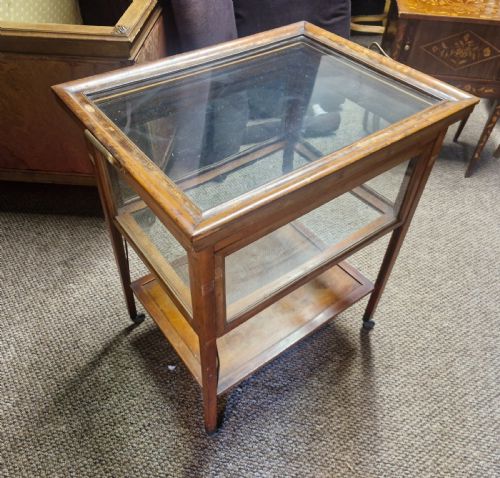
Glazed Vitrine Table
A glazed vitrine table offers a glass-topped surface to exhibit small treasures while keeping them securely enclosed.
Glazed Vitrine Table
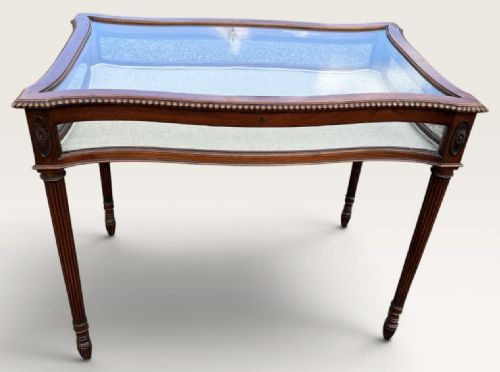
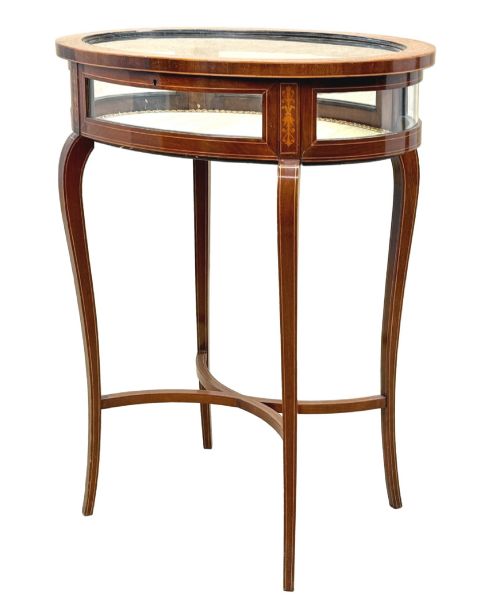
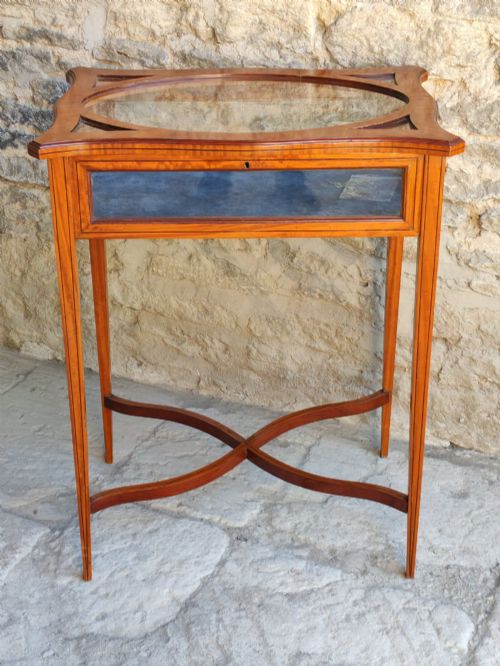
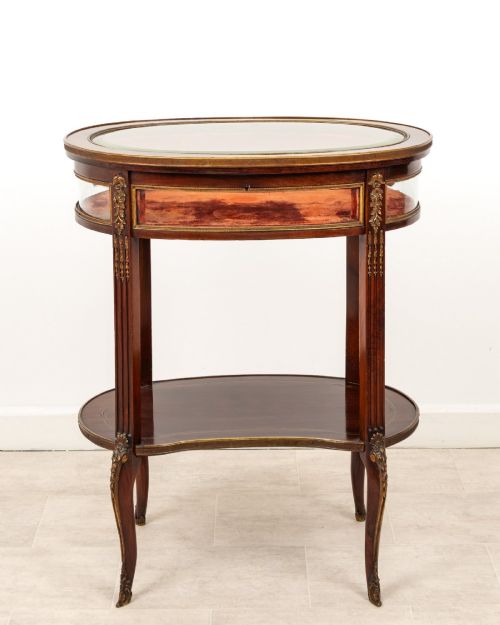
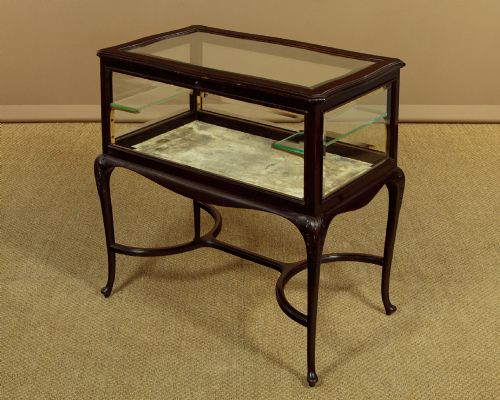
A glazed vitrine table brings together a display surface and a cabinet, functioning as a table with a glazed compartment beneath the top. Buyers seeking a glazed vitrine table encounter pieces primarily from the Victorian and Edwardian periods, alongside earlier examples from the nineteenth century.
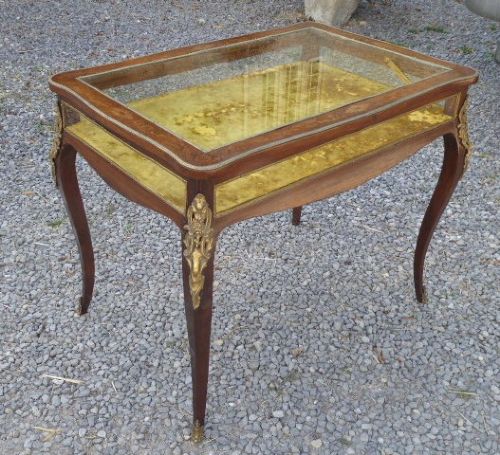
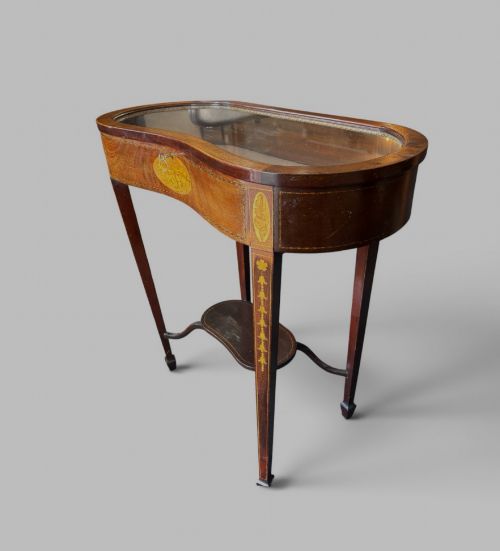
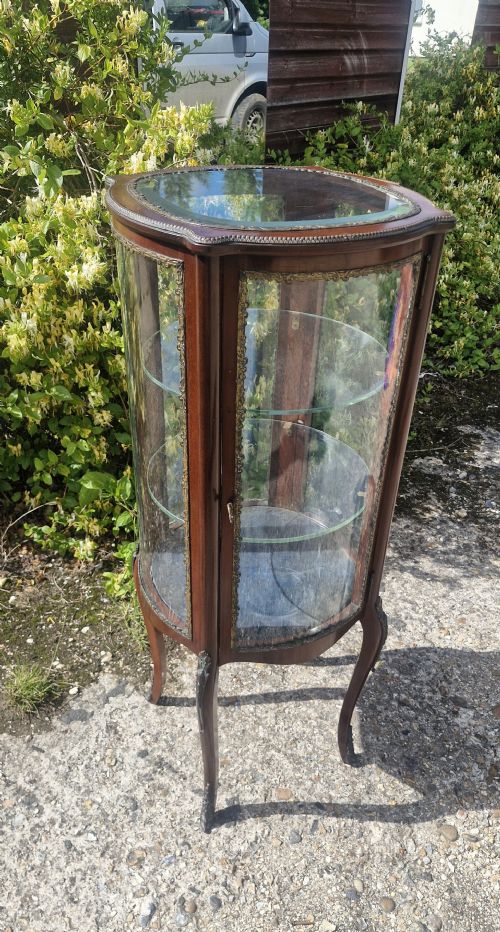
The objects take various shapes, including serpentine, oval, kidney, octagonal, and rectangular forms framed in mahogany, satinwood, kingwood, or rosewood. Many pieces originate from French or English workshops, often reflecting Louis XV and Louis XVI revival styles or classical Edwardian design.
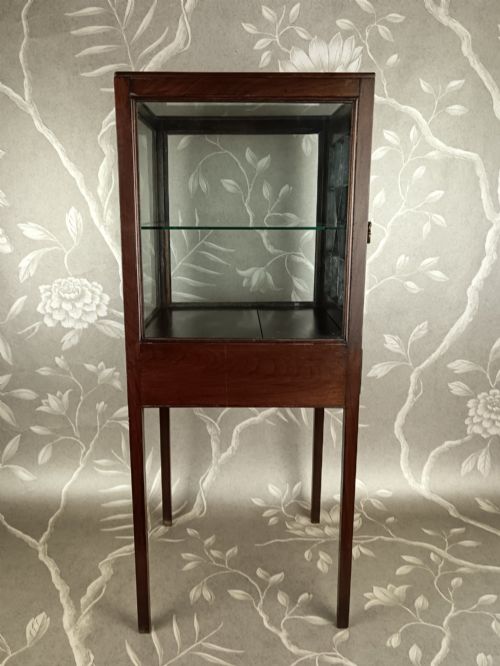
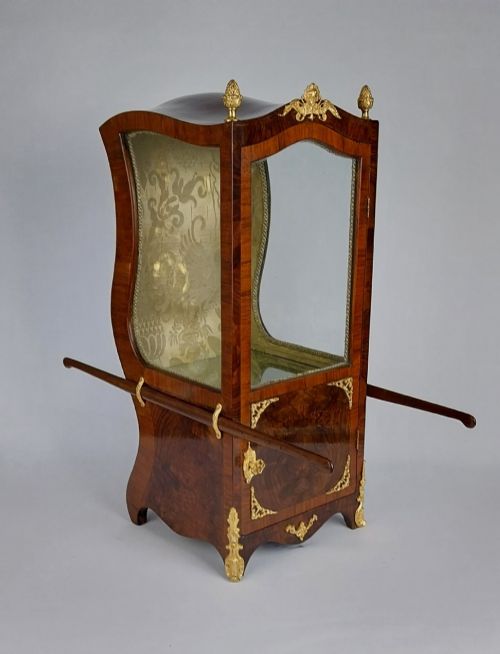
The inventory on this page spans distinct object types such as bijouterie tables, display cabinets, and tea trolleys fitted with glass panels. These tables serve to house jewellery, medals, and decorative objects where dust protection and visibility matter equally.
Materials and Construction
Cabinet makers constructed the frames of these tables using dense timbers like mahogany, satinwood, kingwood, and rosewood, frequently incorporating marquetry or delicate inlay. Glass forms the primary viewing panels for the display well, secured within hinged or fixed timber frames.
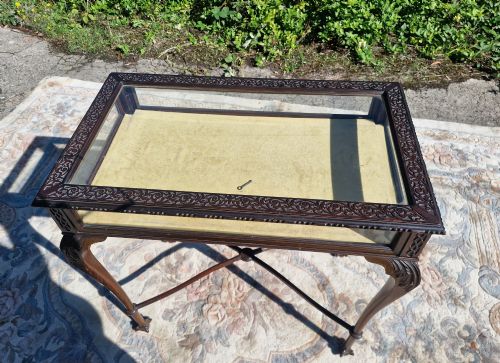
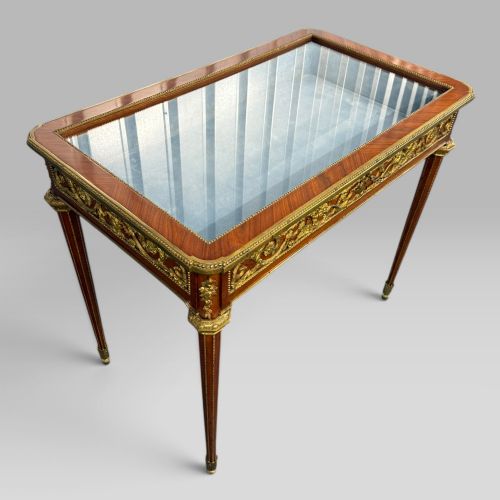
Mounts and decorative details rely on cast brass, ormolu, and gilt metal, providing structural edging and ornamental accents around the glazed compartments. Interiors are frequently lined with velvet or fabric to cushion the displayed items and enhance the visual contrast against the timber.
Craftsmanship and Proportion
Quality in a glazed vitrine table rests upon the crispness of the timber inlay, the precision of the joinery, and the weight of the metal mounts. Finer examples display meticulous French polishing, subtle wood selection, and substantial cast ormolu rather than lightweight pressed brass.
The elegance of the leg form, such as slender cabriole supports or tapered spade feet, dictates the visual success of the piece. Superior construction ensures that glazed lids open smoothly on their hinges and fit flush within the surrounding woodwork.
François Linke
The Glazed Vitrine Table Glossary
- Vitrine
- A glass display cabinet or table designed for showing ornaments and small valuables. These pieces use glass on multiple sides or top surfaces to maximise visibility.
- Bijouterie table
- A specialised display table featuring a shallow glazed compartment under the tabletop. They were traditionally used for laying out personal trinkets, rings, and medals.
- Ormolu
- Gilded bronze used for decorative mounts and accents on furniture. High-grade pieces feature chased detailing carved into the metal after casting.
- Marquetry
- Inlaid patterns of different woods applied to the surface of a carcase. The technique creates pictorial or geometric designs across tabletops and cabinet sides.
Glazed Vitrine Table: Frequently Asked Questions
What fits inside a glazed vitrine table?
These tables suit small collections such as pocket watches, vintage jewellery, medals, coins, and delicate ceramics. The shallow glass well keeps objects visible while protecting them from handling and dust.
Heavier items or large porcelain pieces belong in standing cabinets rather than glazed display tables, which prioritise intimate tabletop viewing.
Where should I place a vitrine table?
A glazed vitrine table sits well in a drawing room, study, or hallway where natural light illuminates the glass top and contents. Positioning the table away from direct sunlight protects fabric interiors and sensitive items from fading.
Sufficient clearance around the piece ensures that hinged glass lids can open fully without obstruction from nearby seating.
How do I care for the interior fabric?
The velvet or fabric lining inside the display well benefits from gentle surface cleaning using a soft brush attachment on a vacuum. Avoiding moisture prevents water spotting on aged textiles and underlying timber.
If the fabric requires replacement, matching the original colour and texture preserves the period character of the interior.
How do I distinguish Edwardian from Victorian examples?
Victorian glazed vitrine tables often feature heavier timber frames, darker mahogany, and robust ormolu mounts influenced by French revival styles. Edwardian pieces generally display lighter satinwood, finer inlay work, and more restrained neoclassical proportions.
Examining the construction of the interior carcass and the style of the leg tapering helps confirm the manufacturing era.