




Brass Gallery End Table
A brass gallery end table brings practical surface space and fine metalwork detail together, offering a refined resting place for lamps or books.
Brass Gallery End Table
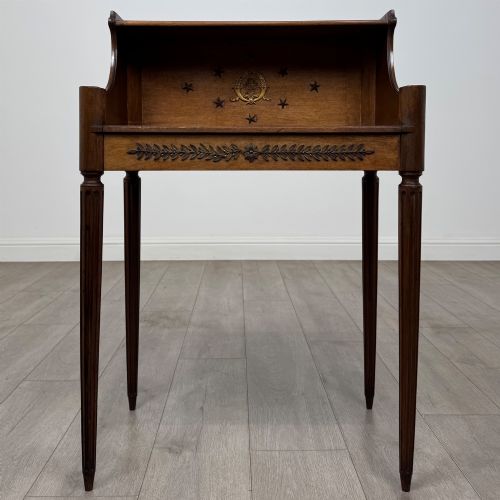
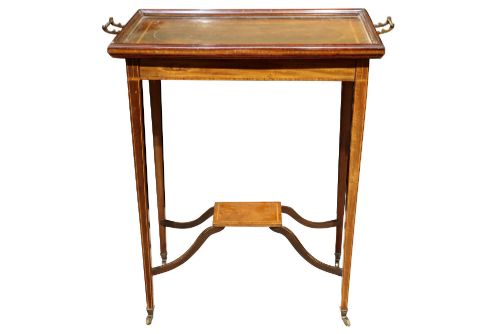
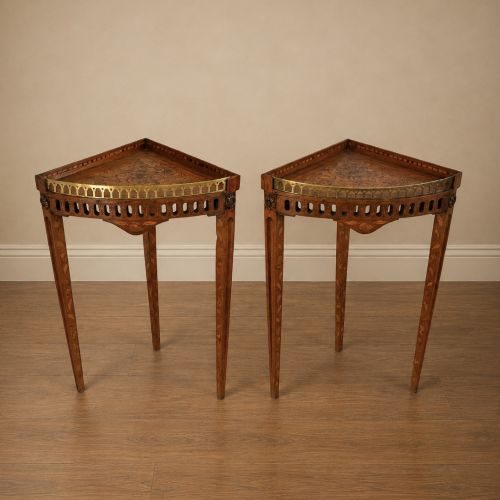
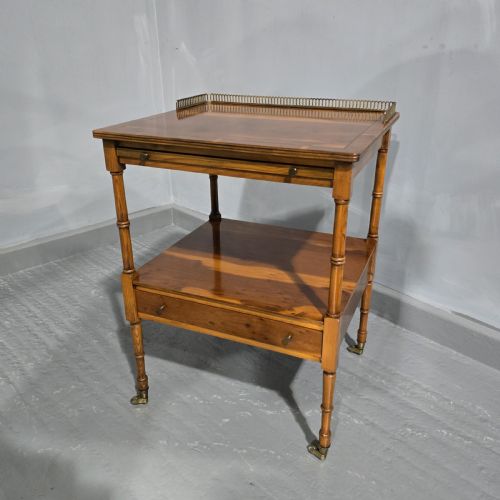
A brass gallery end table functions as a versatile piece for living spaces, appearing in forms such as side tables, occasional tables, corner tables, and bedside tables. These items provide compact surfaces suited for lamps, writing materials, or decorative objects while adding distinct perimeter metalwork.
The selections available span periods from the eighteenth century through the Edwardian era and the early twentieth century. Examples draw on diverse historical aesthetics including Regency, French Louis XV and Louis XVI revivals, and Neoclassical styles.
Makers and cabinetmakers constructed these supports in varied configurations, from rectangular lamp tables to kidney-shaped nightstands and oval occasional surfaces. Mahogany, satinwood, kingwood, rosewood, and yew wood frequently form the primary structure, often complemented by white marble tops.
How they were made
Cabinetmakers utilised dense timbers such as mahogany, satinwood, and kingwood as the core structural and decorative elements. Marquetry inlay work and decorative veneers often embellished the tops and surfaces of these tables.
Foundries cast brass, gilt bronze, and ormolu to create the distinctive raised galleries that secure the tabletop edges. Skilled artisans mounted these metal balusters and pierced galleries alongside fine brass trims to complete the upper rims.
Brass Gallery End Table Retail Price Guide 2026
Typical asking prices for brass gallery end table among the pieces listed under this phrase on Sellingantiques today, from the lower quarter to the upper quarter. They describe what is for sale here now, not the wider market.
Listings feature mahogany, satinwood, kingwood, and rosewood alongside marble tops and cast brass galleries.
What varies in quality
The standard of timber selection and the precision of veneer matching set individual examples apart. Finer pieces demonstrate intricate marquetry and thoughtful grain alignment across the tabletop and legs.
The crispness of the cast brass gallery and ormolu mounts indicates the original workshop's investment in detail. Clean casting, secure fastening of the baluster rails, and refined proportions elevate the overall execution of the design.
Charles Topino
The Brass Gallery End Table Glossary
- Brass gallery
- A low pierced metal railing fitted around the edge of a tabletop to prevent items from sliding off. This decorative feature defines the category.
- Ormolu
- Gilded bronze applied as decorative mounts and trims on French and English furniture. It provides a warm metallic contrast to polished wood.
- Marquetry
- Inlaid wood veneers arranged in pictorial or geometric patterns across furniture surfaces. Craftsmen used contrasting timbers to achieve tonal variation.
- Gueridon
- A small occasional table, often round and supported by a central pillar or slender legs. Originating in seventeenth-century France, the form persisted into the twentieth century.
- Kidney bean
- A curved, kidney-shaped tabletop profile popular in eighteenth-century French design and later revival pieces. This shape suited bedside and occasional table formats.
Brass Gallery End Table: Frequently Asked Questions
Where should I place an end table?
These tables fit easily beside seating arrangements, armchairs, or bedsides where a compact surface is required. Their finished sides allow them to sit openly within a room.
The raised brass rim makes them practical for holding reading lamps, drinks, or small decorative items without risk of rolling off.
How do I identify French revival styles?
French revival pieces often display curved cabriole legs, kidney-shaped tops, and elaborate ormolu mounts. They draw direct inspiration from earlier Louis XV and Louis XVI court furniture.
Maker references or specific marquetry patterns can also point towards nineteenth-century interpretations of these classic eighteenth-century designs.
What woods were commonly used?
Cabinetmakers relied on durable timbers such as mahogany, satinwood, kingwood, and rosewood for their rich grain and stable qualities. Yew wood also appears in specific lamp table formats.
Many of these surfaces feature contrasting veneer inlays and decorative marquetry work set within the primary timber frame.