



Glazed Trunk Clock
These glazed trunk clock pieces bring heavy glass doors and viewing windows to longcase and wall timepieces.
Glazed Trunk Clock
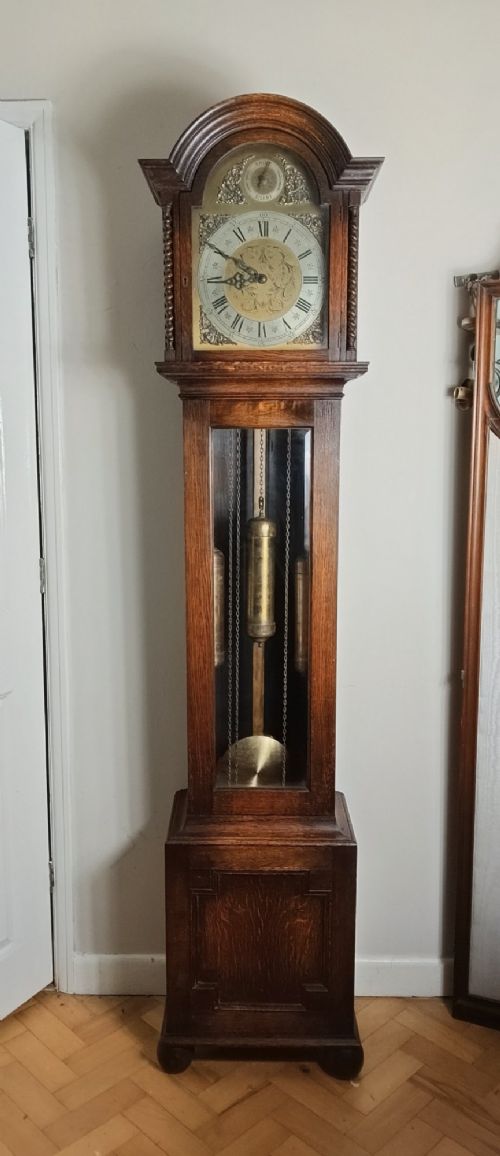
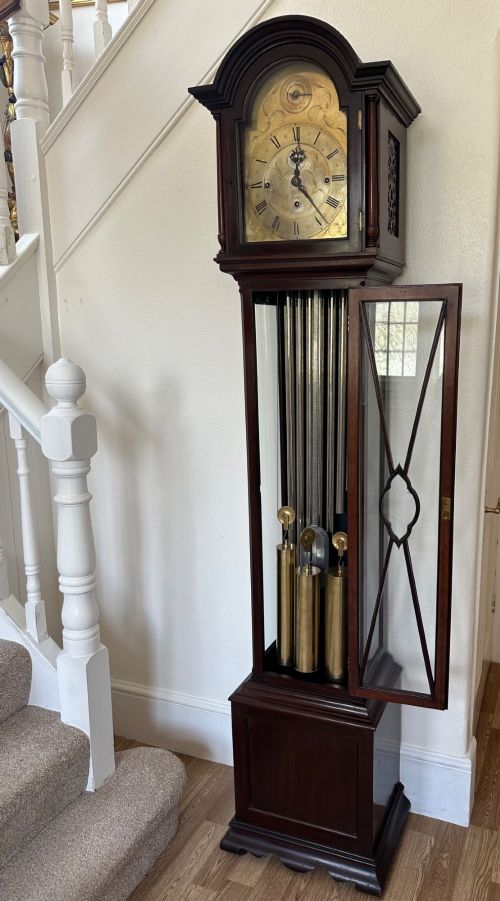
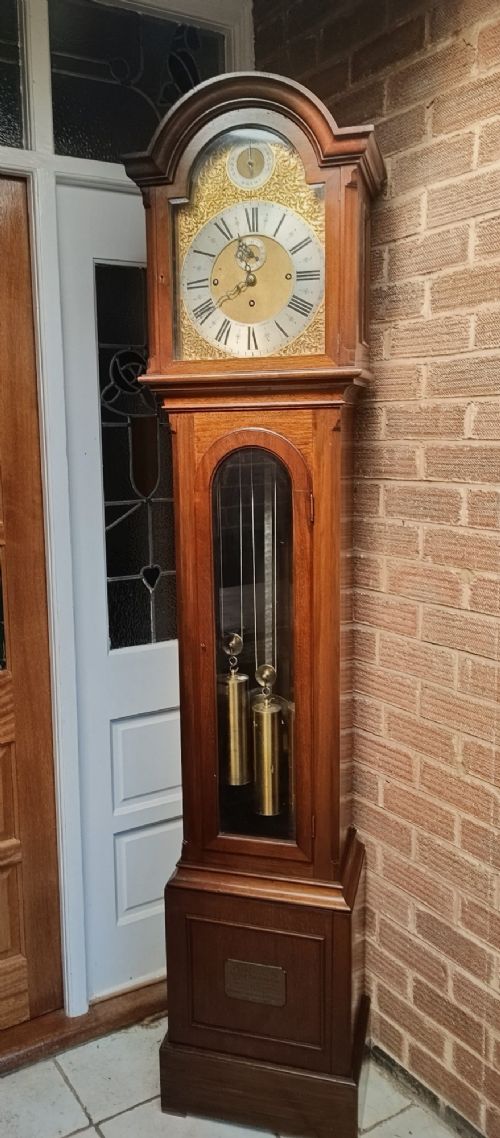
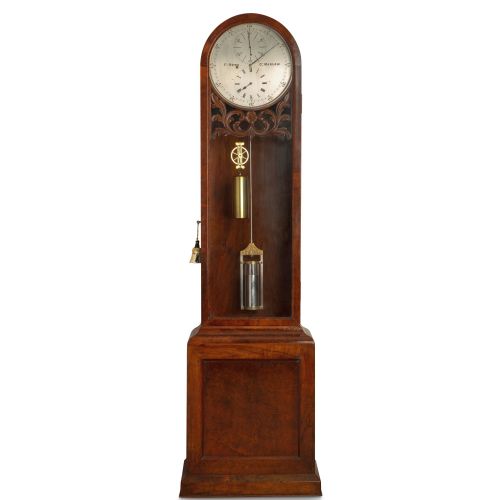
A glazed trunk clock is an instrument designed to show its interior movement through a glass panel set into the case or trunk door. The examples found here span the nineteenth century through the interwar decades, taking the form of wall regulators and tall floor-standing longcase clocks.
Grandmother and grandfather clocks feature prominently alongside Vienna wall clocks and musical regulators. These pieces range from substantial Victorian walnut cases to Edwardian and later oak housings.
Origins stretch from English workshops to Scottish makers and German production. Buyers meet everything from small domestic regulators to quarter chiming longcases fitted with tubular bells.
How they were made
Cabinetmakers built these housings using dense timbers such as mahogany, oak, and walnut, often applying revival styles like Jacobean details alongside Art Nouveau influences.
Glinting brass movements, silvered metal dials, and crisp enamel faces sit behind protective glass panels, whilst steel components govern the ticking mechanics and chime trains.
Listings feature oak, walnut, and mahogany timbers paired with brass, enamel, and silvered metal dials across Victorian, Edwardian, and Regency styles.
What varies in quality
The sophistication of the internal movement dictates much of the standing of an individual clock, separating basic timekeepers from exhibition quality pieces with musical or quarter chiming capabilities. Multi-bell setups and complex regulator mechanisms demand superior engineering.
Cabinetwork quality reveals itself in the selection and figuring of the walnut or oak timbers, the crispness of any revival carving, and the precise fitting of the glass panels within their doors.
Elliott·Enfield·Aitchison of Glasgow·Frederick Rowe of Great Marlow
The Glazed Trunk Clock Glossary
- Regulator
- A precision pendulum clock designed for high accuracy and minimal friction. These movements often feature separate dials for hours, minutes, and seconds.
- Fusee
- A conical pulley connected to the mainspring by a cord or chain, ensuring even power delivery as the spring unwinds. This mechanism improves timekeeping consistency.
- Double weight
- A weight-driven movement utilising two descending weights to power separate trains for going and striking. They are frequently found in larger Victorian wall and longcase clocks.
- Grandmother clock
- A smaller, more slender version of the traditional grandfather longcase clock. They gained popularity during the early twentieth century for domestic spaces with lower ceilings.
Glazed Trunk Clock: Frequently Asked Questions
What is a glazed trunk clock?
A glazed trunk clock is a timepiece featuring a viewing window or full glass door built into its main trunk or case. This design allows observers to watch the pendulum swing and the weights descend.
Such pieces include wall regulators, Vienna wall clocks, and tall floor-standing grandfather clocks from various nineteenth and twentieth century periods.
How do I wind a longcase clock?
Winding involves using a specialised crank key inserted into winding holes on the dial face to raise the internal weights or tension the springs. Care must be taken not to overwind the movement.
Many of these pieces feature musical trains or quarter chiming mechanisms that require specific sequencing during winding and setting.
Where should I place a longcase clock?
Longcase clocks require a stable, level floor against a sturdy interior wall to ensure the pendulum swings with an even beat. Placing them away from direct sunlight and dampness protects the timber case.
Wall regulators need secure masonry or stud fixings to bear the combined weight of the timber case, glass door, and heavy mechanical movement safely.
How do I date an antique clock?
Dating relies on examining the timber species, case style, dial materials, and maker signatures recorded on the movement or face. Stylistic markers range from Victorian walnut to Edwardian oak and Art Nouveau details.
Inscriptional evidence naming regional makers or specific exhibition pieces also helps anchor the piece to a particular decade or manufacturing era.