




Glazed Top Table
A glazed top table gives you a clear surface to protect and show off small treasures right in the room.
Glazed Top Table
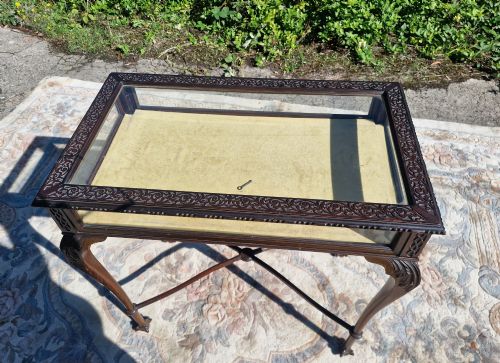
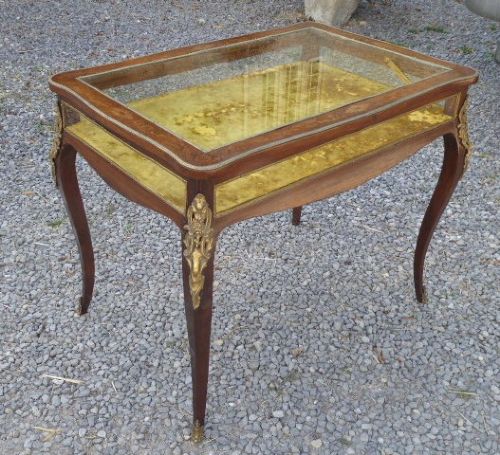
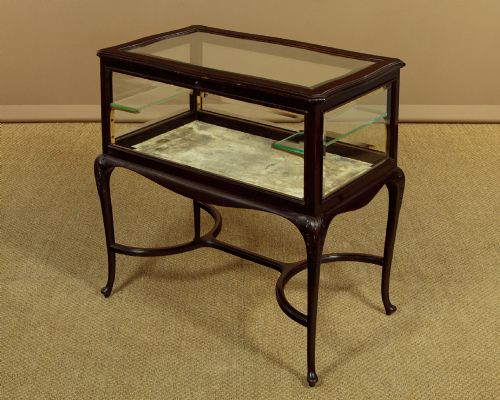
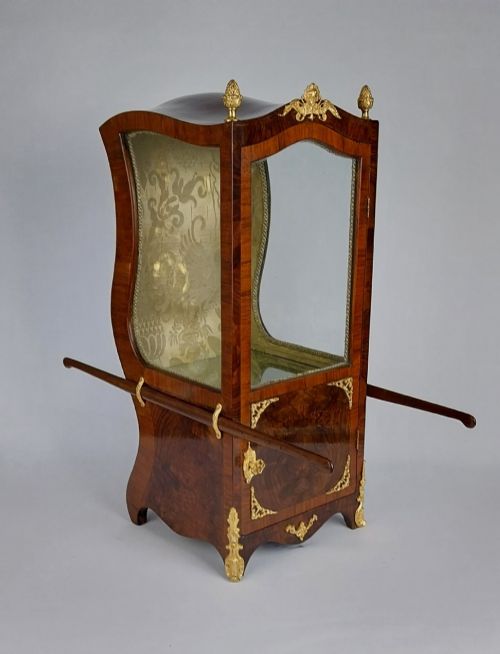
When you search for a glazed top table, you are looking at items designed to protect and display precious items under glass. These pieces appear as bijouterie tables, display cabinets, and table top cases.
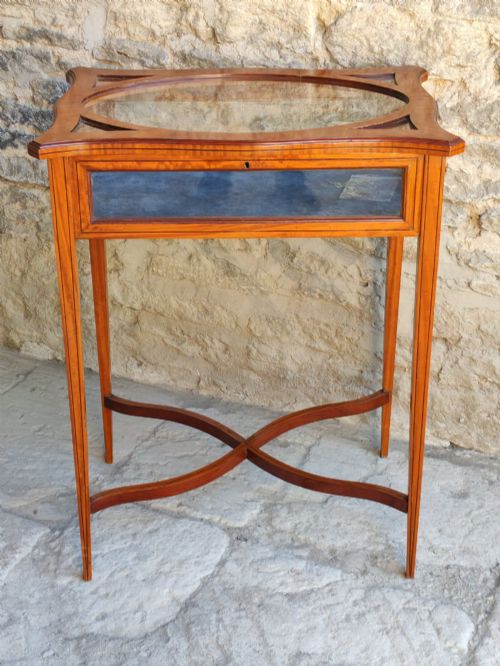
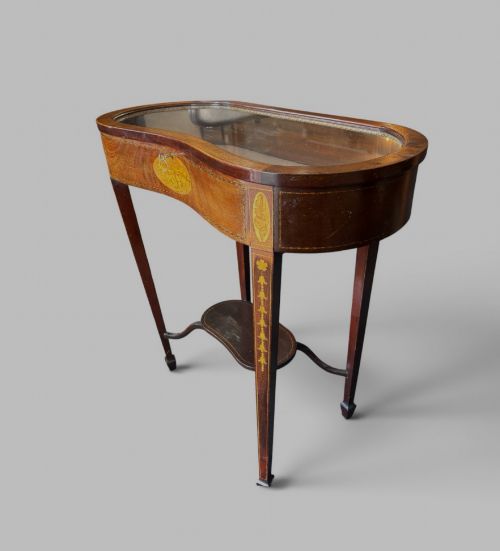
You are most likely to meet Edwardian and Victorian examples in mahogany, satinwood, and walnut. Many take forms like kidney shapes, octagonal frames, or simple rectangular table top boxes.
The evidence shows these forms served as jewellery display surfaces, writing desks, and specialised vitrines. They bridge the gap between functional furniture and personal display cabinets.
How they were made
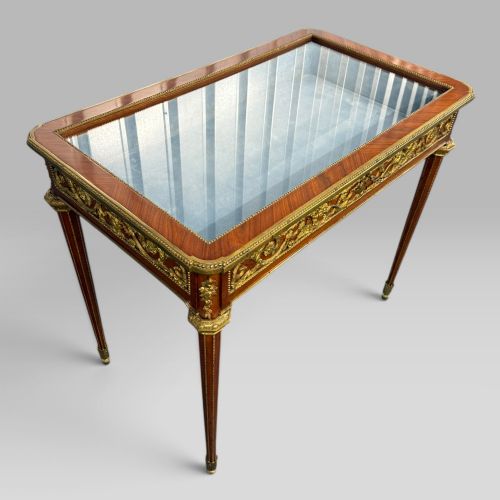
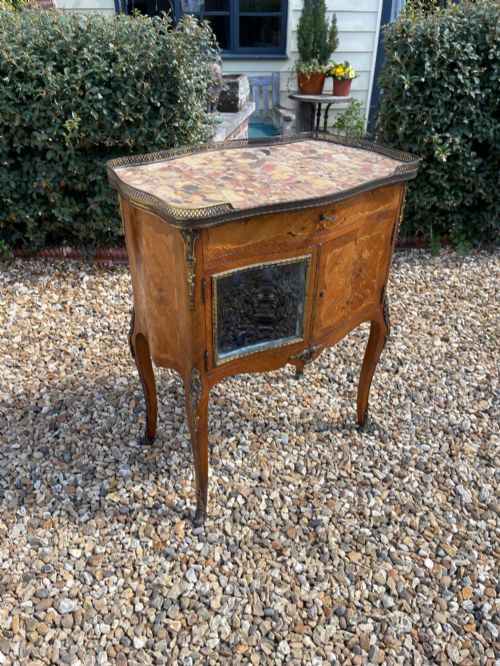
Timbers like mahogany, kingwood, and satinwood form the primary structural carcasses of these pieces. Cabinet makers often enhanced these woods with delicate marquetry, inlay, and brass glazing bars.
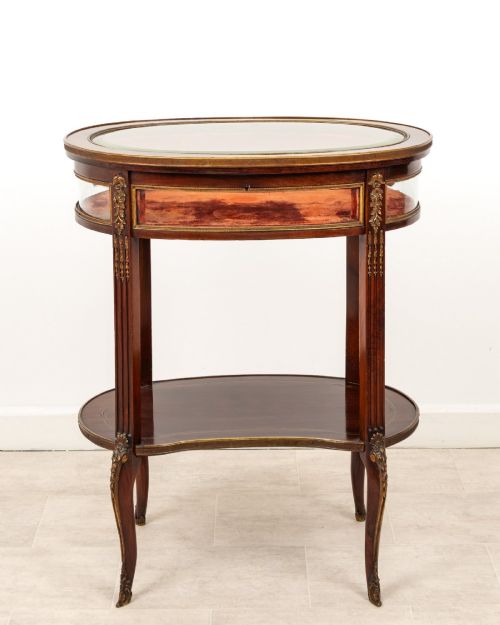
Glazing provides the transparent top surface, paired frequently with cast or chased ormolu mounts and velvet or fabric linings inside. Table top variations utilise fitted glass panels housed in wooden or brass frames to secure the items within.
Several display tables feature later sign written details for Breitling watches, hinting at a past life in a jeweller window.
What varies in quality
The refinement of the timber choice and the precision of the marquetry set the upper tier apart from simpler workshop output. Rich veneers like kingwood and burr walnut demand exceptional cabinet making skill to curve and fit cleanly around display wells.
Hardware details such as cast ormolu mounts, tight hinge tolerances, and well-fitted glass frames indicate higher workshop standards. Lesser pieces rely on plain timber framing and simpler joinery without decorative metalwork or specialised interior fabric linings.
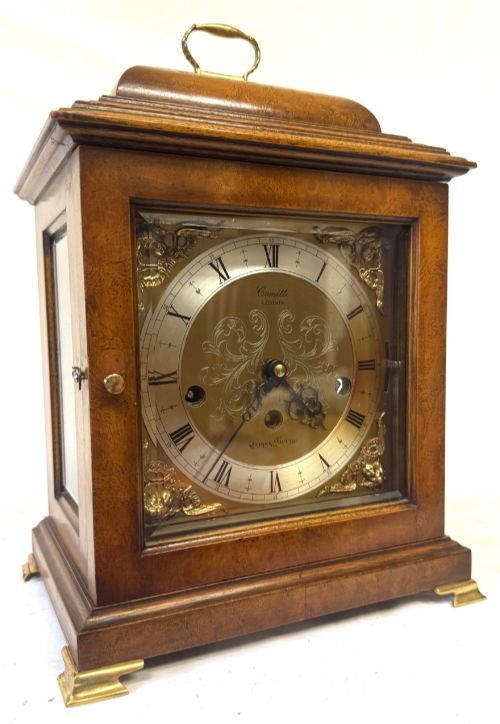
Comitti Of London·François Linke·Heals·LIBERTY of LONDON
The Glazed Top Table Glossary
- Bijouterie table
- A small display table with a glass top and sides intended for showing jewellery and small valuables. These pieces often feature velvet or fabric lined interiors.
- Ormolu
- Gilded bronze mounts applied to furniture for decoration. This technique was widely utilised in French revival furniture styles.
- Marquetry
- Decorative patterns formed by inserting pieces of wood into a veneer. It creates intricate floral or geometric designs on table tops and cabinet fronts.
- Vitrine
- A glass-sided cabinet or display case designed for viewing objects. They range from large floor standing units down to table top versions.
- Satinwood
- A durable, lustrous yellow timber used extensively for fine cabinet making and inlay work. It brings a bright contrast to darker woods like mahogany.
Glazed Top Table: Frequently Asked Questions
What is a glazed top table used for?
These tables provide a secure, dust-free surface to exhibit small collectibles, coins, and jewellery while keeping them in plain view.
The glass top turns an ordinary table into a display case that sits comfortably in a drawing room or study.
How do I date a glazed top table?
Look closely at the secondary timbers, the style of the brass hardware, and the framing techniques used around the glass.
Edwardian and Victorian pieces often show specific inlay patterns and leg shapes that help narrow down their decade of manufacture.
Are these tables suitable for everyday use?
Most antique display tables function well for general placement, though the glass top requires gentle cleaning to avoid scratching.
The internal fabric linings and delicate wooden frames mean they suit light use better than heavy dining or work surfaces.
What woods were used for glazed top tables?
Cabinet makers relied primarily on mahogany, satinwood, walnut, and exotic veneers like kingwood for the structural frames.
These timbers were frequently chosen for their grain patterns and ability to accept fine inlay work and brass mounts.