
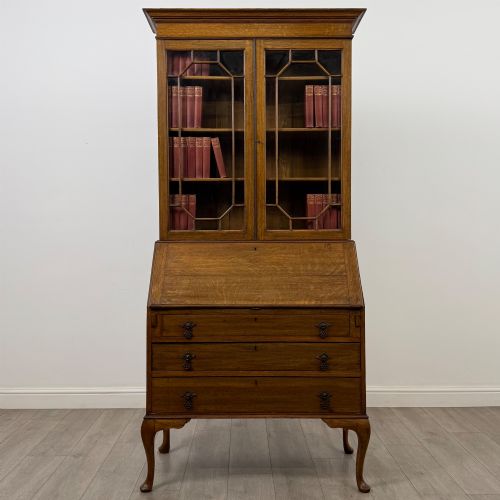

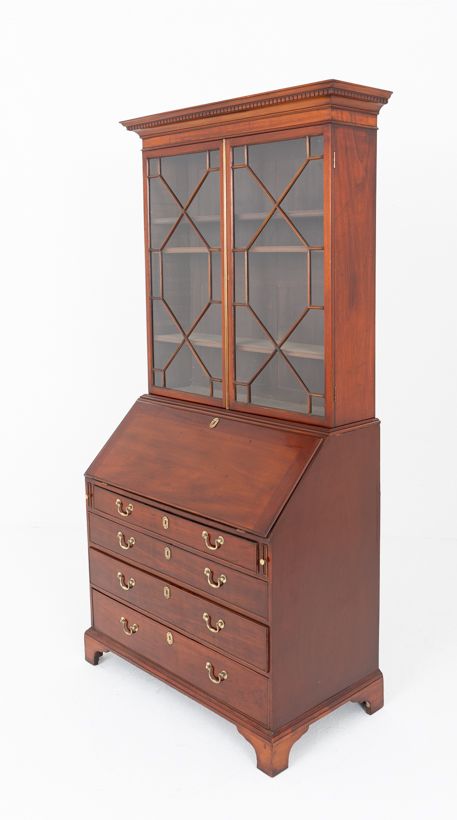
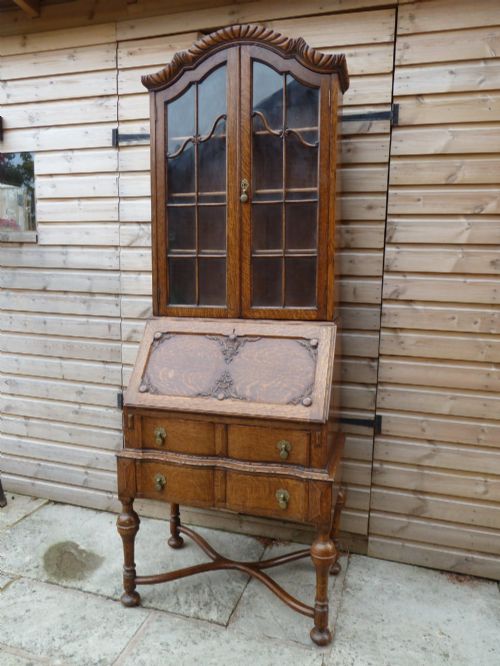
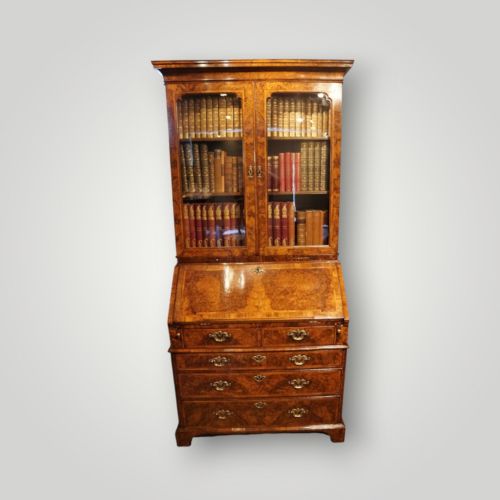

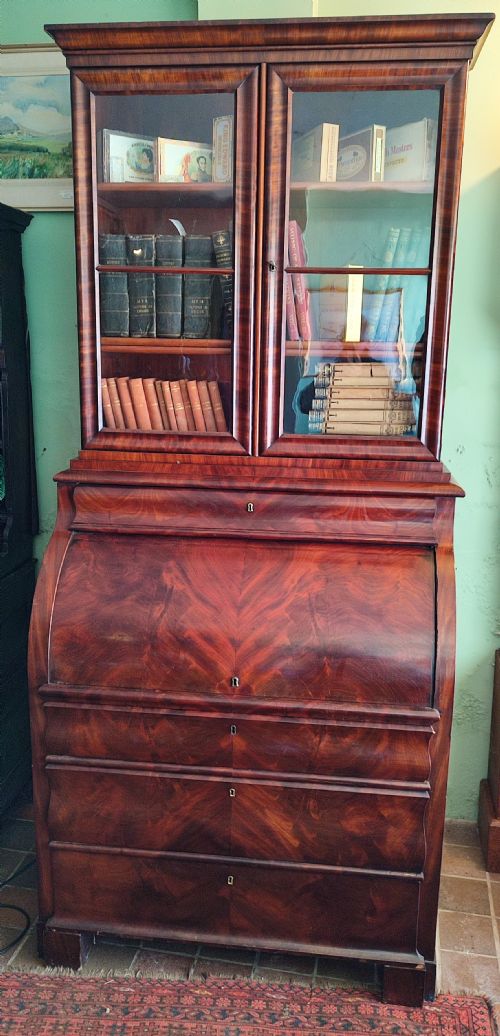


Glazed Top Bureau
A glazed top bureau combines a fitted writing desk below with a glass-fronted bookcase above, offering practical storage for books and papers.
Glazed Top Bureau
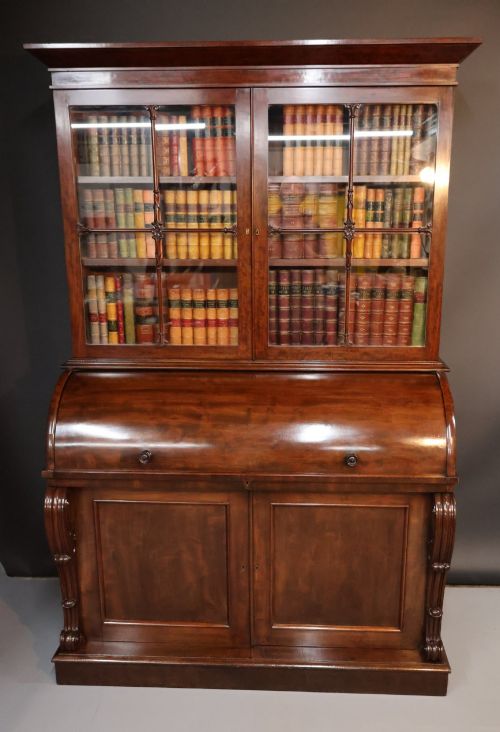
A glazed top bureau brings together a writing desk and a display cabinet in a single upright piece of furniture. When you search for a glazed top bureau, you encounter forms that span the eighteenth, nineteenth, and early twentieth centuries, including Georgian, Regency, and Edwardian examples.
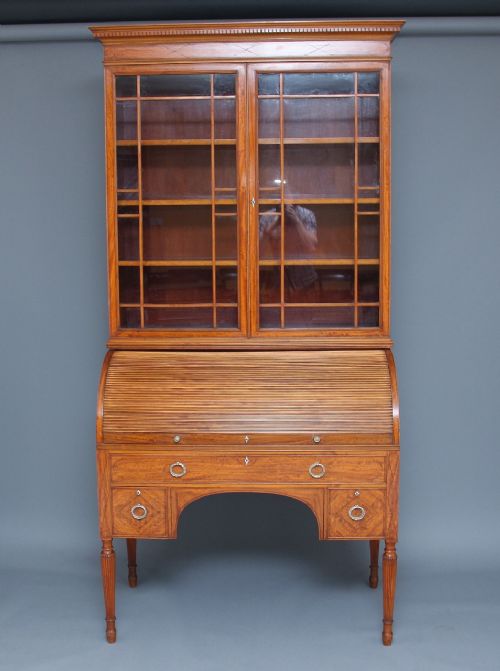
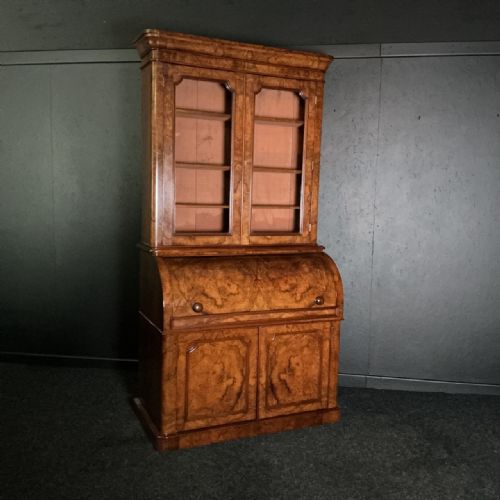
Mahogany and satinwood predominate among the woods, alongside walnut, oak, and rosewood. These combination pieces served both domestic and professional study needs across multiple periods of British and continental design.
How they were made
Cabinet makers constructed the carcasses of these pieces from dense timbers such as mahogany, walnut, and oak, often applying figured veneers of satinwood or rosewood to the exterior surfaces. Crossbanding and inlay work frequently define the drawer fronts and cabinet doors.
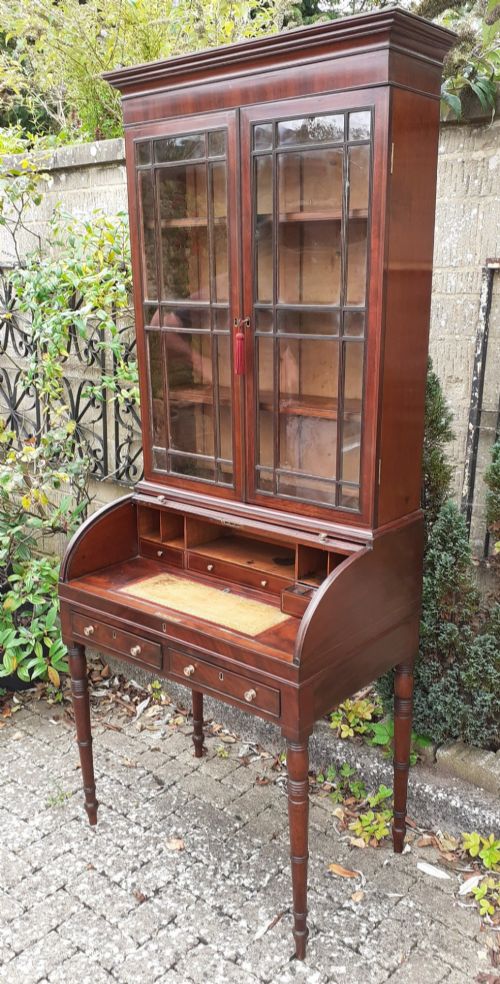
Glass panes are set within timber mullions or tracery bars to form the upper cabinet doors, while internal fittings incorporate small drawers, pigeonholes, and occasionally candle slides. Brass hardware, including drop handles, escutcheons, and inlaid stringing, secures and accents the construction.
Many bureau bookcases conceal hidden internal compartments designed for keeping private letters away from prying eyes.
What varies in quality
Quality rests in the selection of timber veneers and the precision of the cabinet work, particularly around the complex joints of the writing interior and the sliding cylinder mechanisms. Fine examples display continuous grain matching across drawer fronts and delicate, well-proportioned glazing bars.
The integration of brass inlays, secondary woods, and the original fitted interior compartments distinguish high workshop production from more utilitarian regional manufacture. Condition of the timber patination and the clarity of the original glass panes further separate standard pieces from the finest survivors.
Tudor and Burrey·Edwards and Roberts
The Glazed Top Bureau Glossary
- Bureau bookcase
- A tall furniture form combining a sloping fall-front desk base with an upper glazed bookcase section. This dual-purpose piece served libraries and private studies.
- Cylinder top
- A curved wooden shutter that rolls backward into the body of the desk to reveal the writing surface and interior fittings. It operates on tracks concealed within the cabinet sides.
- Secretaire
- A dedicated writing drawer or compartment built into the upper portion of a larger cabinet or bookcase. When pulled out, the front drops down to provide a stable writing surface.
- Candle slide
- A pull-out wooden shelf positioned beneath the upper cabinet to hold candlesticks for task lighting. These were essential before the advent of gas and electric lighting.
- Fall-front
- A hinged writing flap that opens outward from a vertical position to rest horizontally on support laths. It forms the primary desktop on standard bureau forms.
Glazed Top Bureau: Frequently Asked Questions
What is a glazed top bureau?
A glazed top bureau is a dual-purpose furniture form that pairs an enclosed desk base with a glass-fronted bookcase cabinet on top.
The lower section provides a surface for writing and storage for papers, while the upper section protects and displays books behind glass doors.
How do cylinder desks work?
A cylinder desk uses a quarter-circle wooden shutter that curves over the writing area and rolls back into the desk body.
Opening the cylinder often extends the writing slide automatically to reveal small drawers and pigeonholes inside.
Where were these pieces used?
These pieces served as primary workstations and libraries in the private studies, parlours, and drawing rooms of large houses.
They allowed owners to manage correspondence and house bound volumes in a single upright footprint.
How do I identify Georgian pieces?
Georgian pieces typically employ dense Cuban mahogany or figured walnut with restrained classical proportions and fine dovetail joinery.
They often feature astragal-moulded glass panes in the upper doors and fitted interiors with secret compartments.