
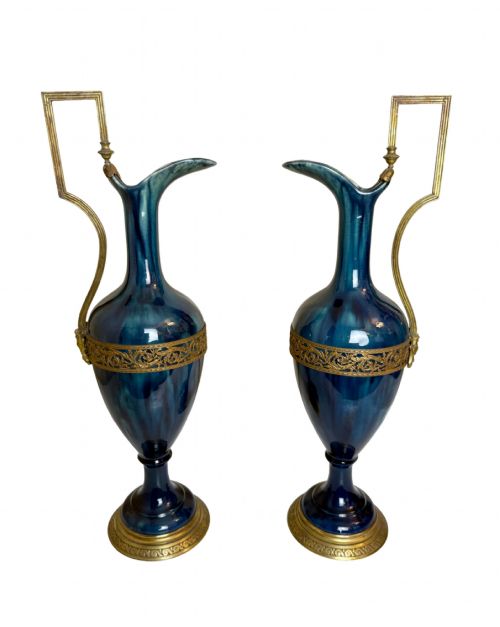
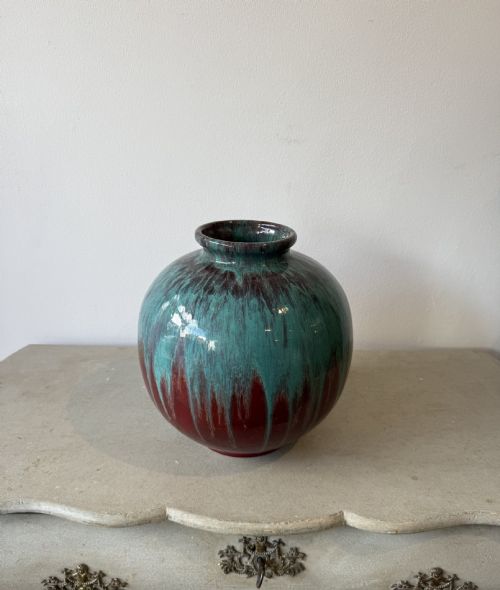
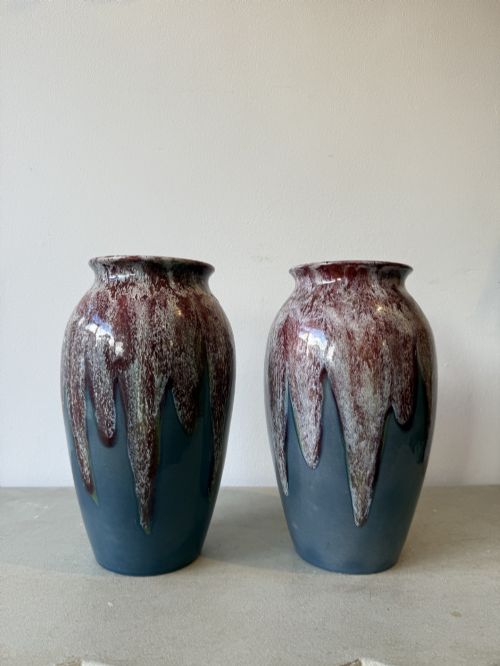
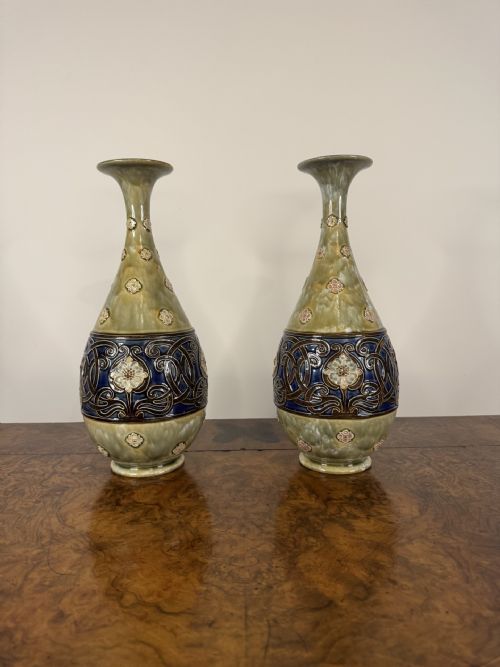
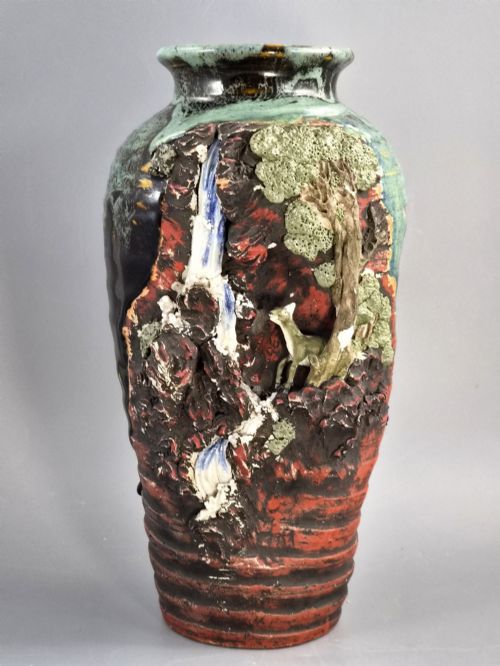


Glazed Stoneware Urn
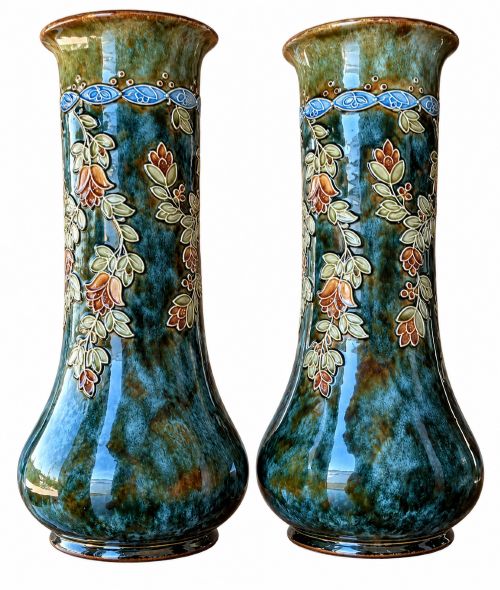
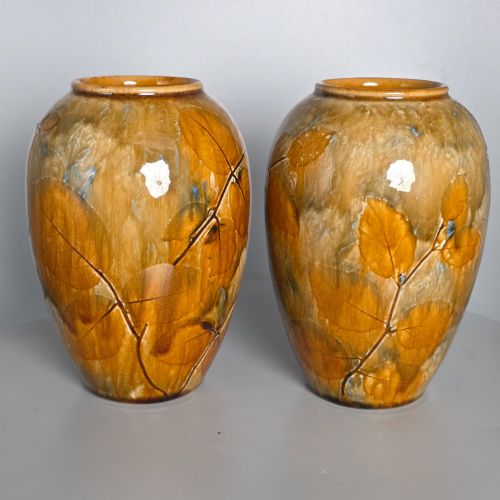
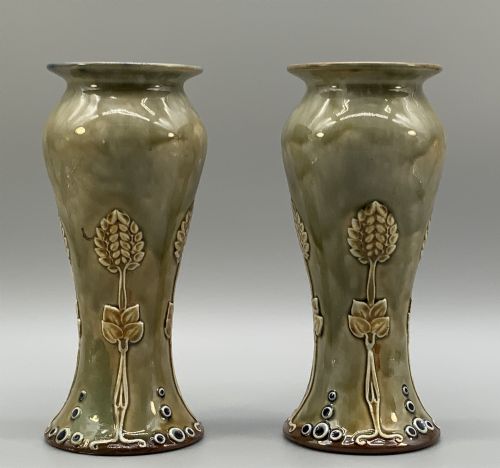
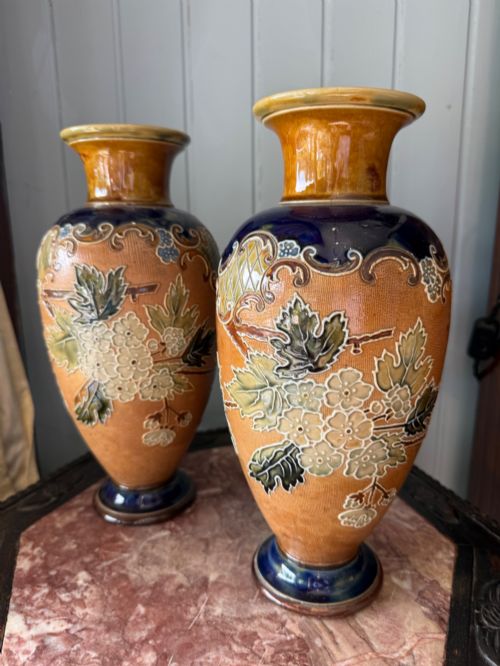
These glazed stoneware urn pieces bring weight and distinctive ceramic texture to an interior, drawing collectors who value historical pottery.
Glazed Stoneware Urn
A glazed stoneware urn brings together robust ceramic bodies and vitreous surfaces, appearing across nineteenth-century and early twentieth-century periods. These items range from water filter vessels and garden planters to art pottery baluster shapes.
The selection on this page leans heavily toward British workshops, particularly Victorian and Edwardian productions, alongside continental European ceramics and Japanese examples. Forms vary from simple utilitarian jars to ornate vases decorated with foliage and relief work.
Buyers encounter both symmetrical pairs and singular statement objects, reflecting the broad utility of heavy ceramic vessels in historical homes.
How they were made
Potters shaped dense stoneware clays on the wheel or in moulds, firing them at high temperatures to ensure durability and resistance to liquid. Artisans then applied salt glazes, enamel, or coloured slips before a final vitrifying heat.
Many items incorporate hand-tooled decoration, slip-raised patterns, or applied motifs such as leaves and animals, uniting industrial ceramic techniques with studio artistry.
Listings span multiple eras, stretching from the Song Dynasty through the Victorian period up to the nineteen-twenties.
What varies in quality
The standard of a piece depends on the crispness of the modelled relief, the depth and consistency of the glaze, and the artistic ambition of the decoration. Pieces bearing named studio artists or major pottery marks typically display superior control over the clay medium.
Balance in proportion and the complexity of surface ornamentation distinguish standard utility vessels from high-end exhibition ceramics.
Royal Doulton·Doulton Lambeth·Dee Filter Company·Royal Lancastrian
The Glazed Stoneware Urn Glossary
- Stoneware
- A type of pottery fired at high temperatures until semi-vitrified and waterproof. It remains durable and dense without requiring a glaze for utility use.
- Salt glaze
- A glossy, slightly textured finish achieved by throwing common salt into the kiln during high-temperature firing. This process creates a distinctive orange-peel surface texture on the clay body.
- Jardiniere
- An ornamental pot or stand designed to hold growing plants or flowers. These large vessels often feature prominent relief decoration suitable for display.
- Baluster
- An architectural shape characterised by a rounded lower body tapering into a narrow neck. This profile frequently appears on decorative vases and urns.
- Slaterware
- A specific type of ceramic decoration involving textured clay applied to a dark stoneware body. It mimics natural surfaces and was popular in late nineteenth-century British potteries.
Glazed Stoneware Urn: Frequently Asked Questions
What are glazed stoneware urn pieces used for?
Historically, heavy stoneware vessels served practical functions such as filtering water, storing liquids, or housing large plants indoors and outdoors. Over time, many of these robust items transitioned into purely decorative objects valued for their sculptural forms.
Today, collectors place them in hallways, gardens, or principal rooms as standalone focal points or containers for floral displays.
How do I care for antique stoneware?
Stoneware is naturally durable, but historical pieces require gentle handling to protect their surface glazes and applied decoration. Clean them with a soft, dry cloth and avoid harsh chemical detergents that might harm the ceramic body.
Keep pieces away from rapid temperature fluctuations and ensure garden urns are protected from freezing water during winter months.
How can I tell the period of a ceramic urn?
Dating relies heavily on maker's marks, impressed studio stamps, and stylistic cues such as Art Nouveau or Victorian design motifs. Examining the base of the vessel often reveals factory ciphers or artist monograms that narrow down the production decade.
Glaze types and manufacturing techniques also provide strong clues, as salt glazing and specific slip decorations correspond to distinct eras in pottery history.
Are these items waterproof?
Most stoneware and glazed ceramic vessels are inherently non-porous due to the high firing temperatures used in their creation. However, older vessels with hairline fissures or unglazed interiors benefit from a protective liner if used with fresh water.
Checking the interior condition helps determine whether a piece can safely hold liquids or plants directly.