
Glazed Secretary Cabinet
A glazed secretary cabinet combines a practical writing surface with upper display shelving, offering serious storage capacity for books and papers.
Glazed Secretary Cabinet
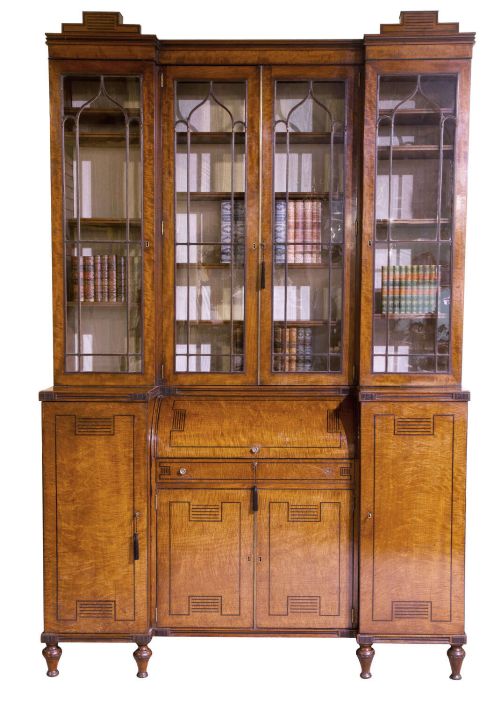
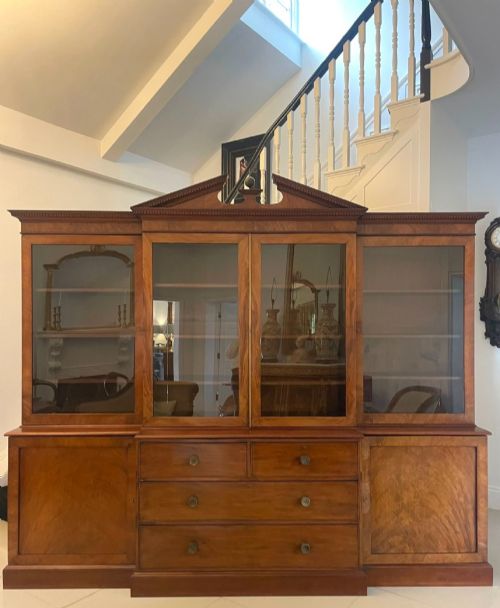
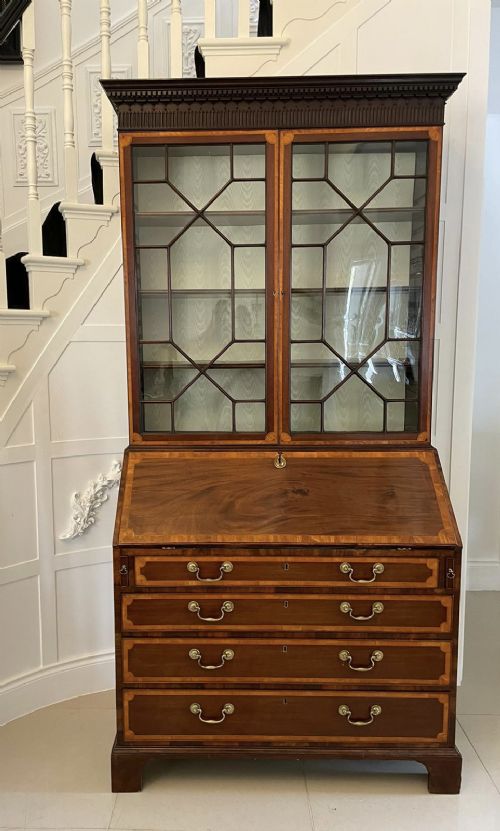
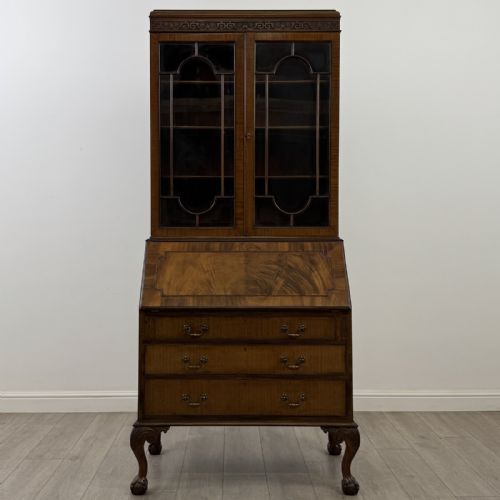
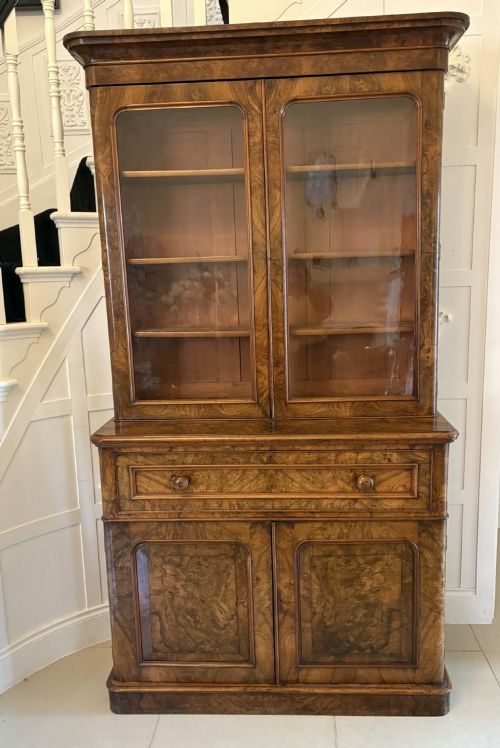
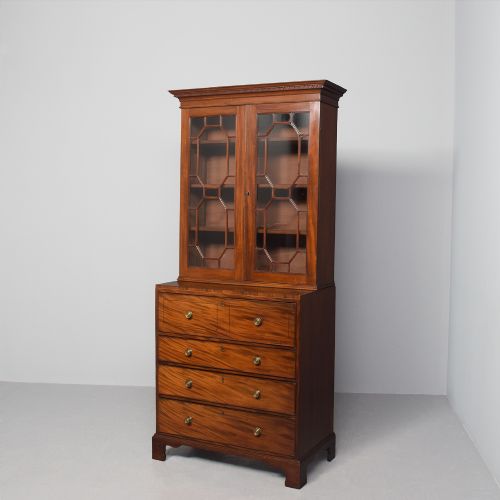
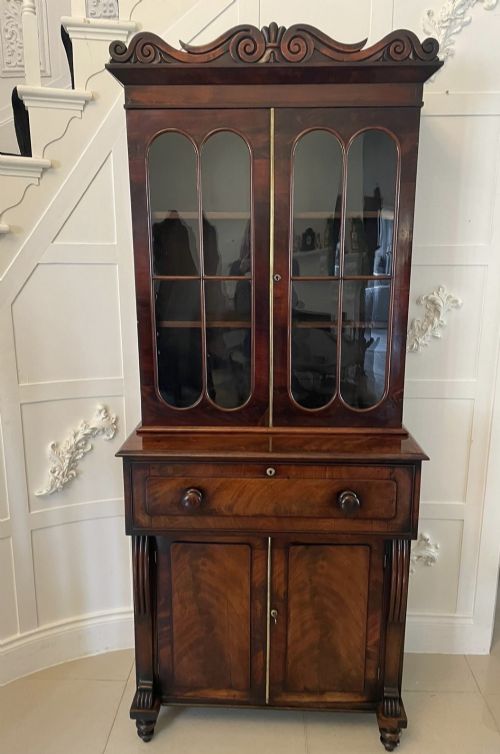
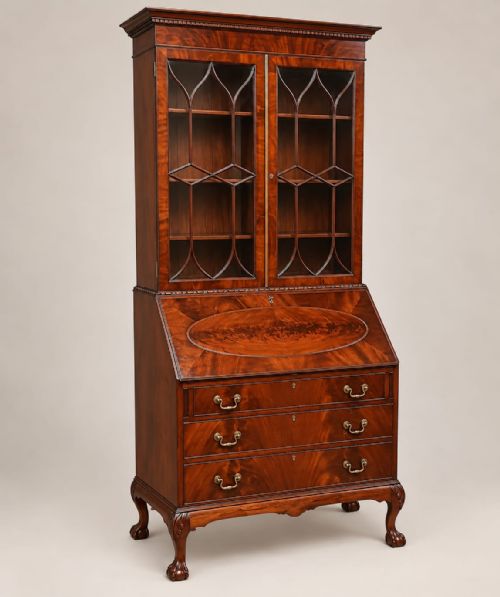
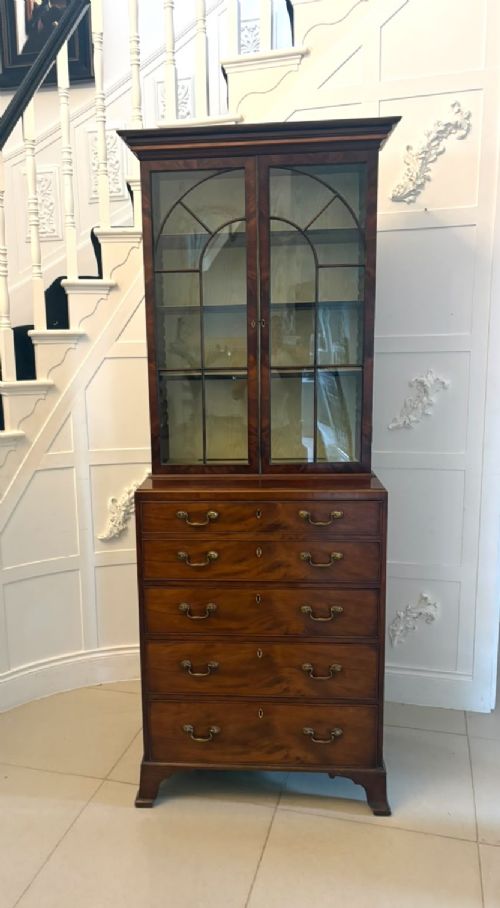
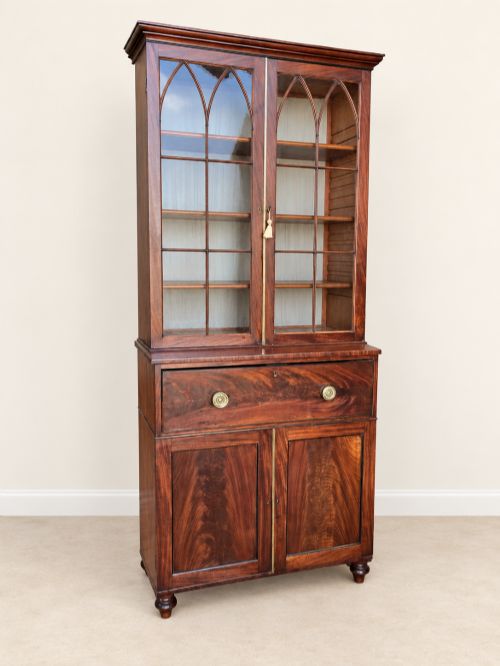
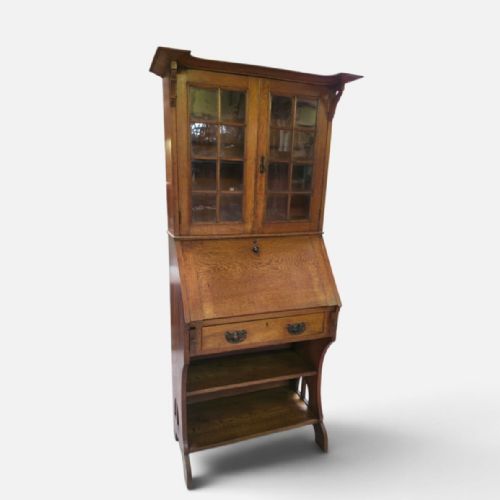
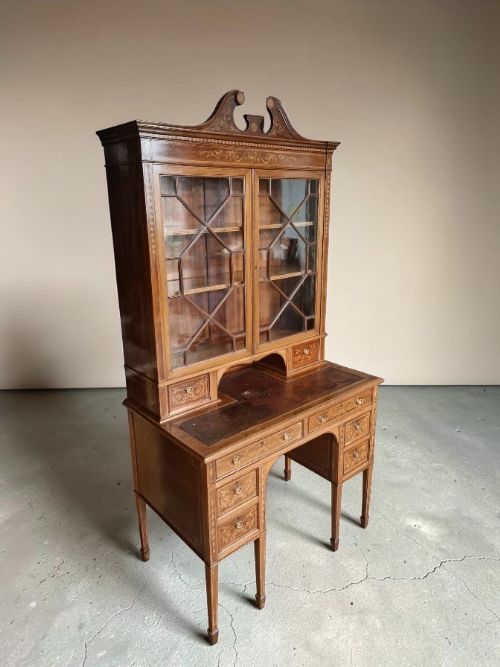
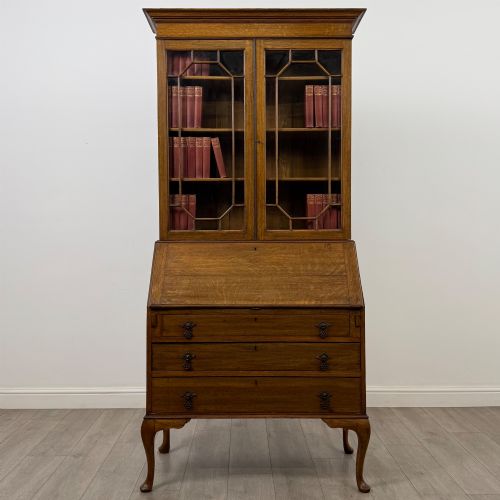
A glazed secretary cabinet, known across the inventory as a bureau bookcase, secretaire bookcase, or bureau cabinet, pairs a lower writing drawer with an upper glazed display section. These pieces span the 18th century, Georgian, Regency, William IV, Victorian, and Edwardian eras, displaying substantial variation in height and proportion.
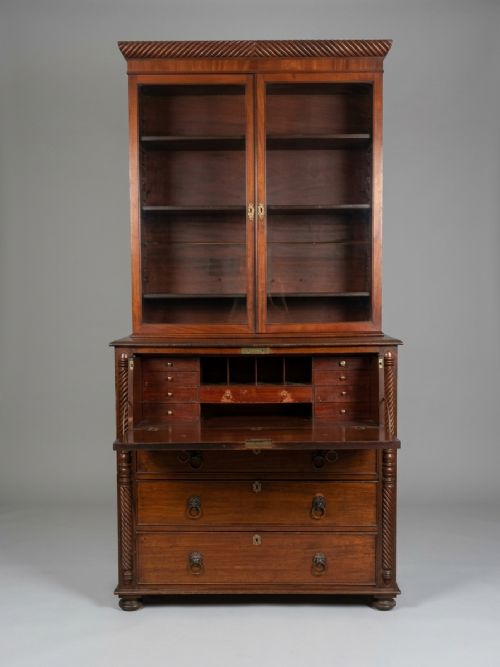
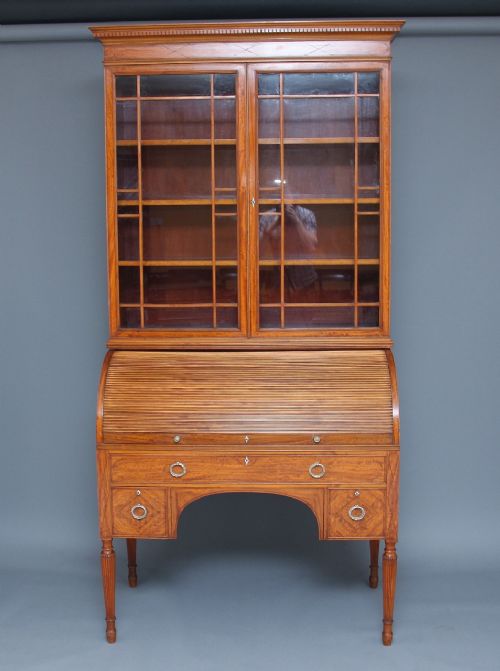
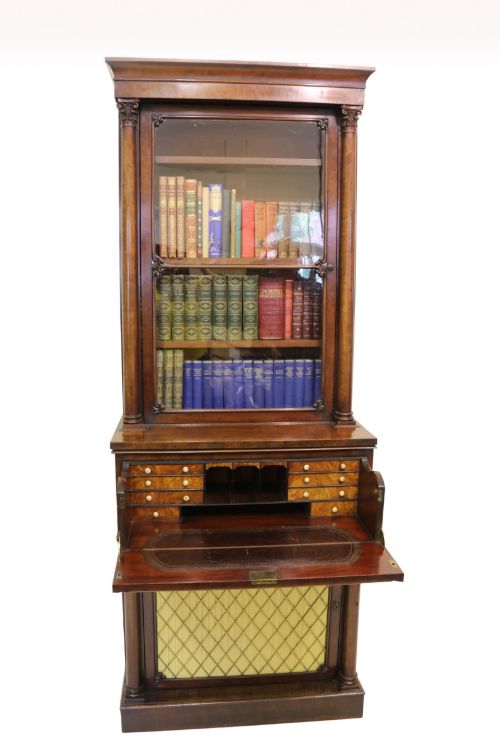
The lower section typically operates as a drop-front desk featuring a fitted interior of small drawers and pigeonholes, or occasionally as a cylinder desk. The upper section contains adjustable shelving enclosed by glass doors, frequently framed with timber astragals.
Examples range from tall, architectural 18th-century walnut and mahogany formats to compact Edwardian variations in oak, yew wood, and satinwood. Specific stylistic revivals such as Jacobean and Queen Anne appear alongside standard period designs.
Materials and construction
Timbers dictate the primary construction, with solid and figured mahogany, oak, and walnut dominating the inventory alongside secondary woods like satinwood, tulipwood, and yew. Cabinetmakers employed flame mahogany, burr walnut, and marquetry veneers to create decorative surface patterns on drawer fronts and fall-front desks.
Glazing relies on hand-blown or early sheet glass secured within wooden frames, whilst brass hardware such as drop handles, escutcheons, and hinges provides operational and decorative detail. Internal fittings often incorporate intricate pigeonholes, small drawers, and occasionally candle slides positioned beneath the upper doors.
Some early walnut examples retain candle slides built into the waist to illuminate the desk before electricity existed.
Distinctions in craftsmanship
Quality separates through the selection and matching of timber veneers, such as symmetrical flame mahogany or figured walnut across large panel surfaces. The complexity of the internal fitments - including secret compartments, shaped pigeonholes, and fine cockbeading around drawers - signals superior workshop output.
Structural execution in the glazing bars and drawer linings also dictates tier, with slender, meticulously joined astragal glass frames and solid oak or mahogany drawer bases representing higher manufacturing standards than utilitarian alternatives.
George Oakley·Tudor and Burrey·Edwards and Roberts·Gillows of Lancaster·Gillows
The Glazed Secretary Cabinet Glossary
- Astragal
- Glazing bars that divide panes of glass in a cabinet door. They are shaped into narrow wooden mouldings that hold the glass securely.
- Marquetry
- Decorative patterns formed by fitting contrasting veneers into a prepared wooden background. Craftsmen use floral or geometric motifs to ornament cabinet doors and drawer fronts.
- Fitted interior
- The arrangement of small drawers, pigeonholes, and central compartments revealed when the desk flap or secretaire drawer opens. It provides dedicated storage for correspondence and stationery.
Glazed Secretary Cabinet: Frequently Asked Questions
What is a glazed secretary cabinet?
A glazed secretary cabinet is a dual-purpose piece of furniture combining a lower writing desk with an upper glass-fronted bookcase. The upper section houses books or display items behind glazed doors, while the lower section provides a fold-down writing surface or pull-out drawer with internal compartments.
These pieces developed to serve studies and libraries, keeping reference volumes visible and accessible above while concealing writing materials and correspondence below.
How do I use one in a modern home?
These cabinets function effectively in studies, living rooms, or hallways as both storage units and practical desks. The drop-front writing surface provides a dedicated spot for laptop work or letter writing that closes away to hide clutter when not in use.
The upper glass shelves allow for the display of books, ceramics, or collections while protecting them from dust, making the furniture both decorative and functional.
How can I tell the period?
Dating relies on observing timber choices, construction techniques, and stylistic details across the piece. 18th-century examples frequently feature rich mahogany or walnut with candle slides and complex astragal glazing, while Edwardian versions often utilise lighter woods like satinwood or yew alongside simpler hardware.
Hardware fixings, dovetailing methods on the interior drawers, and the specific proportions of the cornice provide further physical evidence for assigning a piece to the Georgian, Regency, or Victorian eras.