
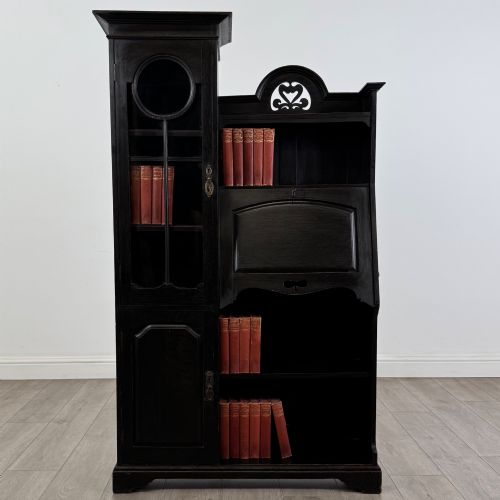
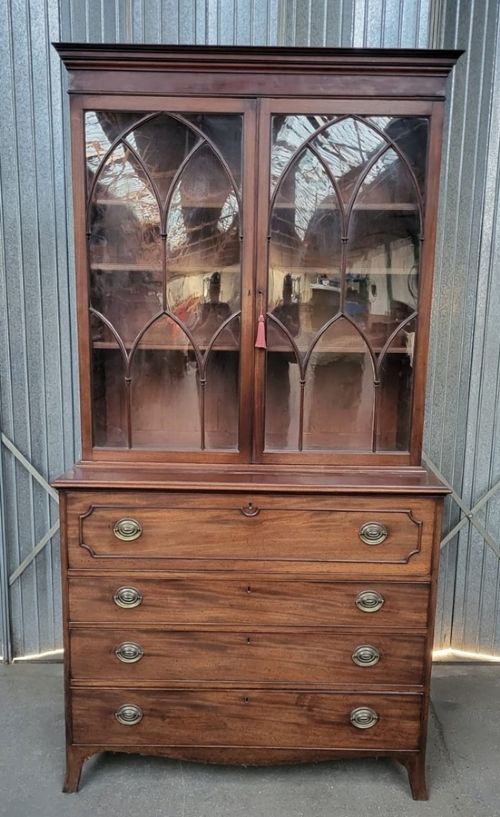
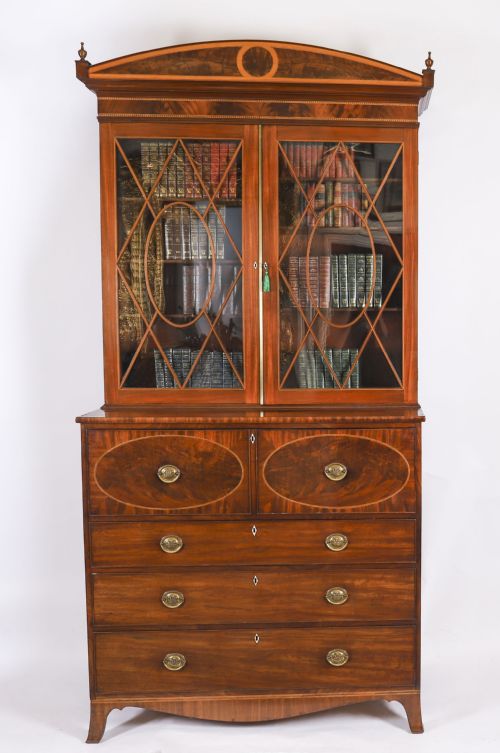
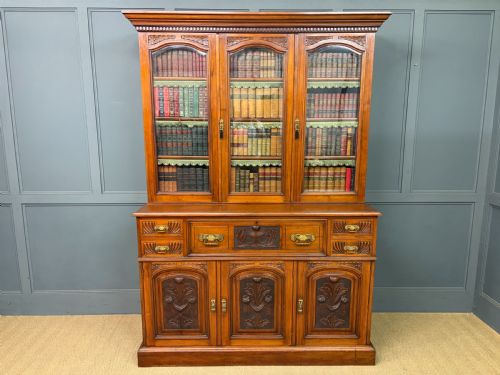
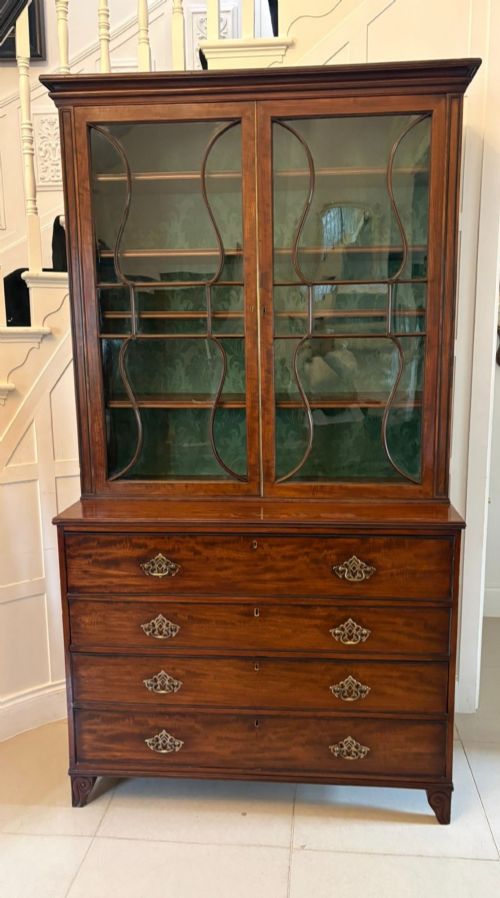
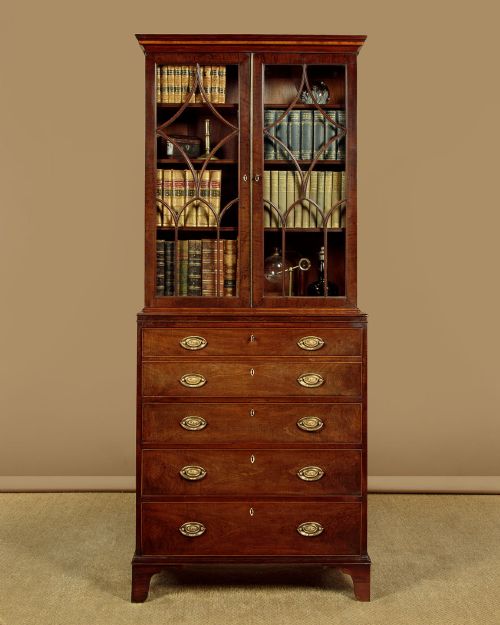
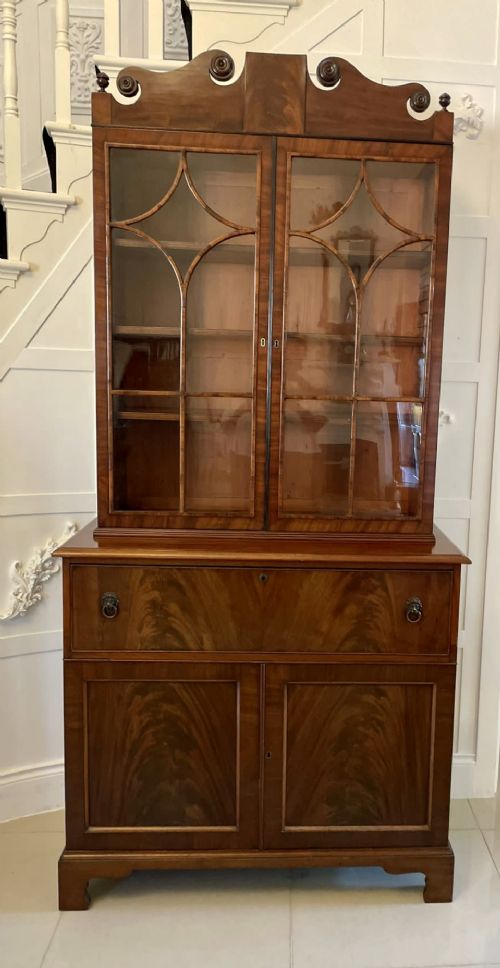
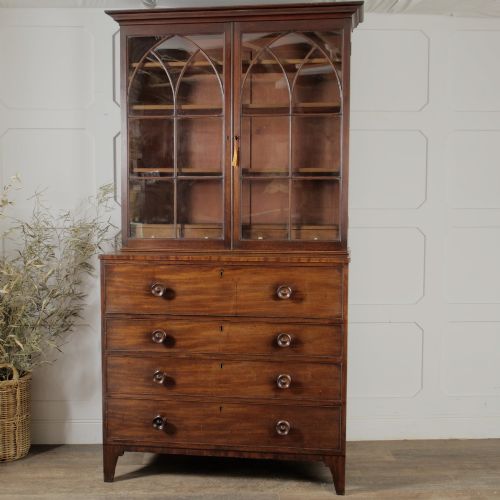
Glazed Secretaire Desk
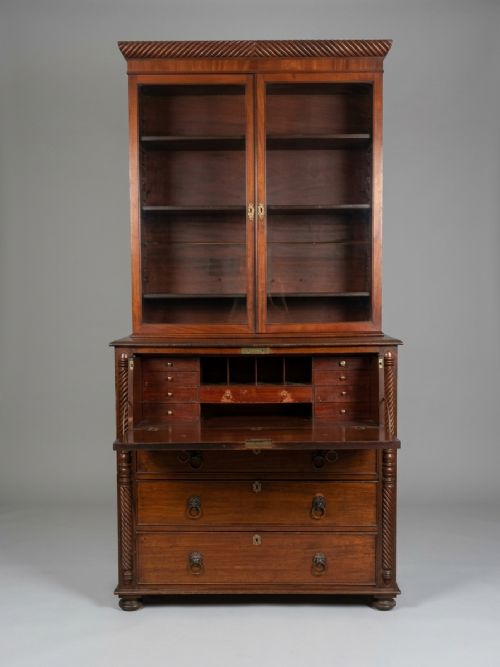
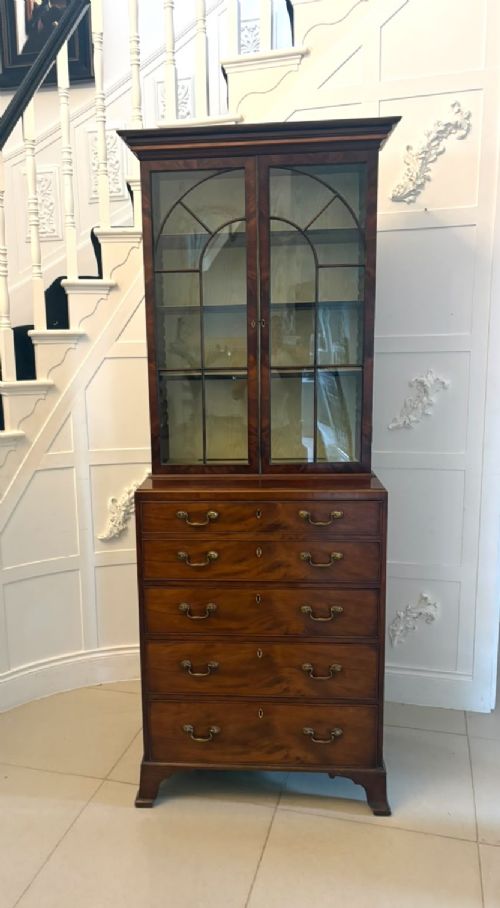
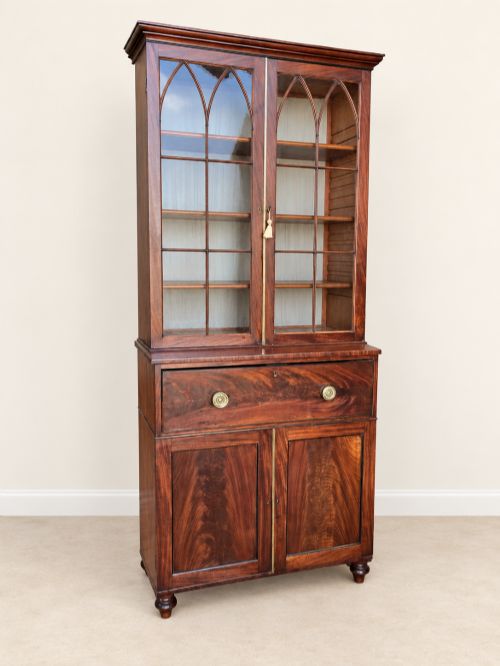
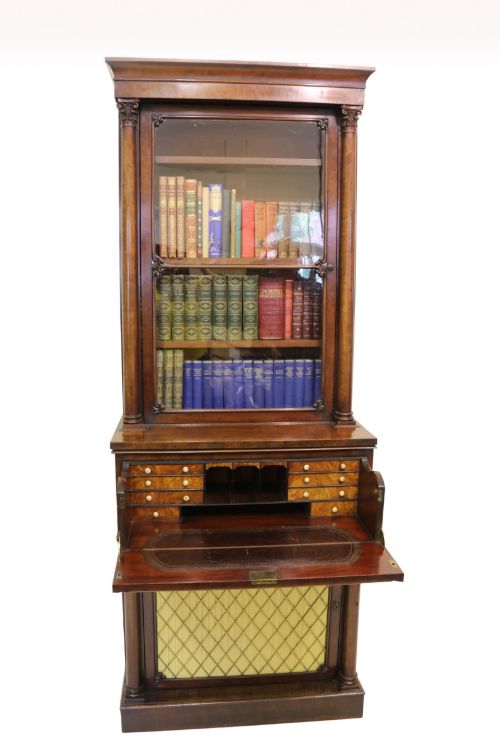
These glazed secretaire desks combine a shelved upper cabinet with a fitted writing drawer, offering a practical workspace alongside visible display.
Glazed Secretaire Desk
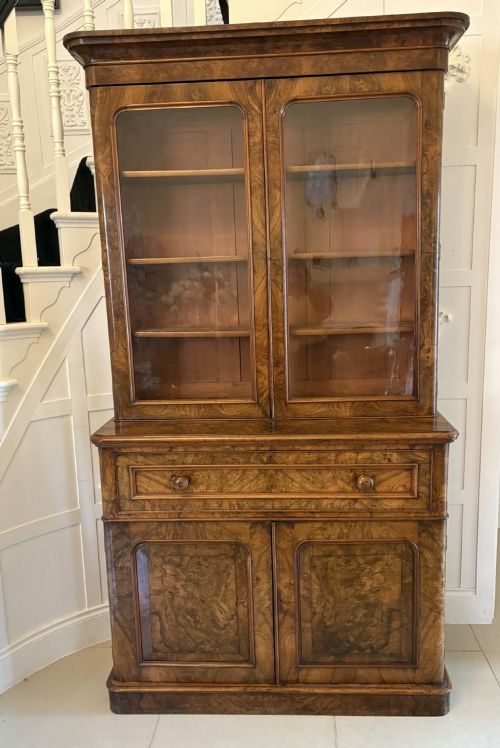
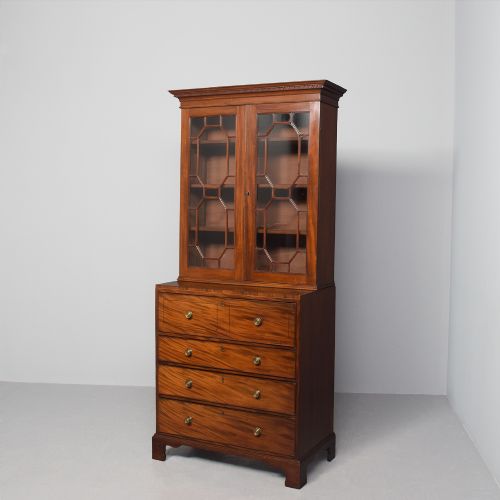
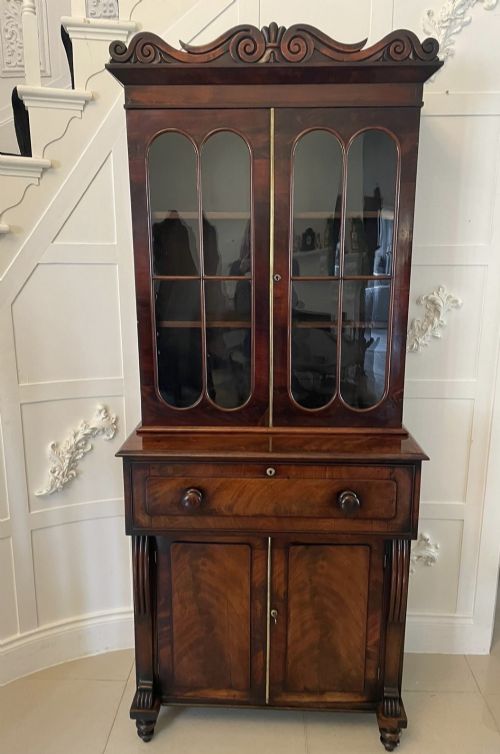
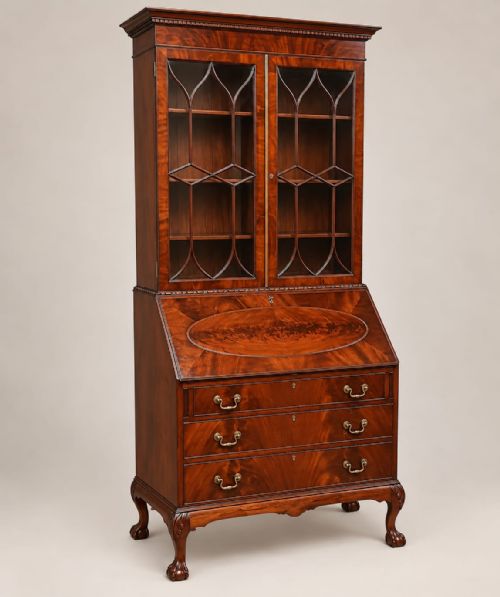
A glazed secretaire desk combines a bookcase or display cabinet with a pull-out writing drawer containing internal pigeonholes and small drawers. Most examples found here date from the Georgian and Regency periods through to the Victorian era, spanning the eighteenth and nineteenth centuries.
The primary forms take the shape of tall secretaire bookcases, bureau bookcases, and smaller writing cabinets. Pieces are frequently constructed in mahogany, flame mahogany, satinwood, and walnut, often featuring glazed upper doors that reveal shelving within.
Materials and construction
Cabinetmakers utilised solid timbers and selected veneers such as mahogany, satinwood, and walnut, frequently highlighting grain patterns like flame mahogany and burr walnut. Brass hardware, including handles and panel details, appears alongside leather writing inserts within the drop-down compartments.
Glass is set into timber frames for the upper cabinet doors, ranging from simple panes to intricate astragal glazing bars. Internal fittings involve complex carpentry to create miniature drawers, pigeonholes, and central doors within the secretaire drawer.
Some secretaire drawers conceal secret compartments behind miniature pigeonholes, intended for securing confidential correspondence.
Distinctions in craftsmanship
The standard of timber selection and veneer matching defines the visual impact of the piece, particularly where figured mahogany or satinwood is deployed across large surfaces. Finer cabinets show meticulous attention to the internal arrangement of the writing drawer, with neatly dovetailed secondary woods and well-turned small knobs.
Structural integrity relies on the precision of the joinery in the secretaire drawer's folding or sliding mechanisms and the weight distribution of the glazed upper doors. Pieces associated with notable workshops demonstrate superior execution in carving, inlay, and overall proportion.
Gillows of Lancaster·George Oakley·Maple and Co
The Glazed Secretaire Desk Glossary
- Secretaire
- A desk drawer that pulls out and drops down to reveal a writing surface and fitted interior compartments. It conceals the working area when closed.
- Astragal glazing
- Glass doors divided into smaller panes by narrow wooden strips known as glazing bars. This technique creates a lighter visual appearance for the upper bookcase section.
- Flame mahogany
- A timber veneer sliced from logs where the growth pattern creates a distinctive flickering, flame-like figure. It was highly favored for cabinet fronts during the Georgian and Regency eras.
- Fitted interior
- The arrangement of small drawers, pigeonholes, and central compartments located inside the secretaire drawer. It provides organised storage for correspondence and writing materials.
- Sabicu
- A dense tropical hardwood resembling mahogany, utilised in high-status eighteenth-century cabinet making. It yields a rich dark tone and a smooth finish.
Glazed Secretaire Desk: Frequently Asked Questions
How do I use the secretaire drawer?
The front of the top drawer pulls forward and drops down on hinges to form a flat writing surface. Internal small drawers and pigeonholes remain accessible while the desk is in use.
Lifting the fall-front back into place and securing the lock conceals the working area, returning the piece to the appearance of a standard bookcase.
What fits inside the upper cabinet?
The upper section contains wooden shelves designed for the storage and display of books or porcelain collections. Glass doors protect the contents from dust while keeping them visible.
Shelf heights in older cabinets are occasionally fixed, though many incorporate adjustable supports for varying book sizes.
How do I distinguish Georgian from Victorian pieces?
Georgian and Regency examples tend to feature restrained classical proportions, premium mahogany or satinwood veneers, and fine astragal glazing bars. Their construction relies on hand-cut dovetails and traditional timber framing.
Victorian pieces often display heavier proportions, darker walnut or burr walnut timbers, and more elaborate carving or Gothic Revival detailing.
Where should I place a secretaire desk?
These cabinets require adequate floor space and clearance in front of the unit for the secretaire drawer to drop down fully. Placing them away from direct sunlight protects vulnerable wood veneers and leather writing surfaces.
Ensure the wall surface is stable, as tall bookcases benefit from being secured safely to prevent tipping.