

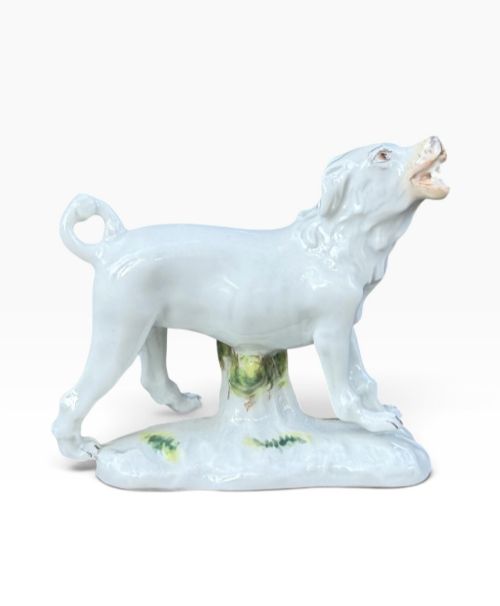
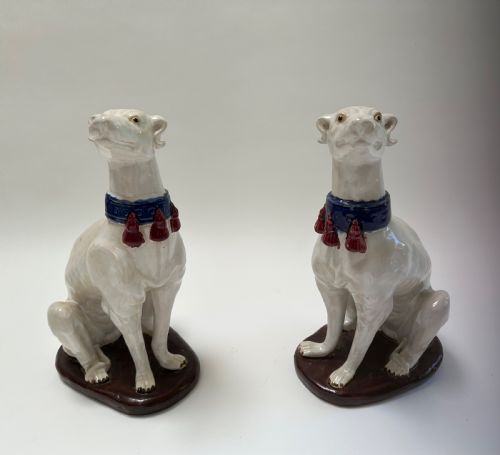


Glazed Porcelain Dog
These glazed porcelain dog figures bring character to any room, offering the charm of antique ceramics through European and Asian traditions.
Glazed Porcelain Dog
A glazed porcelain dog encompasses decorative figures, table lamps, and desk accessories spanning multiple centuries and global traditions. Buyers seeking these items encounter European porcelain and earthenware alongside Asian ceramics, reflecting diverse historical periods.
The selections on this page lean heavily towards Victorian Staffordshire spaniels and greyhounds, alongside Chinese Foo dogs and Japanese Shishi figures. These pieces range from functional quill holders and lamps to purely decorative mantel ornaments.
Origins stretch from nineteenth-century Staffordshire potteries to Qing Dynasty China and Meiji period Japan. Each region imparts distinct stylistic traits, connecting buyers directly to historic ceramic workshops.
Materials and manufacture
Potters shaped these figures using ceramic, porcelain, and earthenware bodies, often applying a glossy glaze to seal the surface. Skilled artisans then hand-painted details using enamel colours, sometimes incorporating gold leaf highlights or brass fittings for lamps.
Firing techniques varied between European kilns and Asian traditions, producing either crisp white biscuit porcelain, vibrant blue and white underglazes, or rich copper lustre finishes. Each method required precise temperature control to achieve the characteristic glossy sheen.
Glazed Porcelain Dog Retail Price Guide 2026
Typical asking prices for glazed porcelain dog among the pieces listed under this phrase on Sellingantiques today, from the lower quarter to the upper quarter. They describe what is for sale here now, not the wider market.
Objects span decorative figurines, table lamps, quill holders, and desk accessories across several centuries.
Assessing quality and craftsmanship
Quality rests in the crispness of the modelling and the finesse of the hand-painting, particularly around facial expressions and fur texture. Superior examples display carefully controlled enamel work and even glazing without excessive pooling or kiln blemishes.
The distinction between standard production items and finer studio pieces lies in the precision of the form and the depth of the palette. Maker attribution and well-preserved surface decoration elevate certain figures above standard decorative wares.
Thomas Parr·Wedgwood and Co Ltd·Royal Capodimonte Factory·Rosenthal·Meissen
The Glazed Porcelain Dog Glossary
- Foo Dog
- A traditional Chinese guardian lion, often depicted in pairs protecting sacred spaces. These figures appear frequently in porcelain and pottery.
- Staffordshire
- A regional style originating from potteries in England, renowned for mantel spaniels and greyhound figures. These pieces date predominantly from the nineteenth century.
- Shishi
- A Japanese term for a Buddhist lion or guardian dog, similar in concept to the Chinese Foo dog. They are often rendered in Kutani porcelain or Hirado ceramic.
- Glaze
- A glassy coating fused to ceramic ware through firing to render it impermeable and glossy. This finish defines the tactile surface of these figures.
Glazed Porcelain Dog: Frequently Asked Questions
What is the difference between a Foo dog and a spaniel?
Foo dogs are traditional Asian guardian lions symbolising protection, typically shown with a paw resting on a brocade ball. Spaniels and greyhounds are European hunting dog representations styled as domestic pets.
While Foo dogs hail from Chinese and Japanese ceramic traditions, spaniels reflect nineteenth-century British interior decor tastes. Their iconography and regional origins place them in entirely different stylistic categories.
Are these dog figures functional or decorative?
Most pieces serve a purely ornamental purpose, intended for display on mantelpieces, desks, or shelves. However, some examples incorporate functional elements like inkwells or quill holders.
Later adaptations also repurposed figures into table lamps, integrating electrical fittings while retaining the original ceramic base. Buyers should check the base and fittings to determine if functionality was added later.
How should I care for antique porcelain dogs?
Display these ceramics away from direct sunlight to prevent fading on hand-painted enamel surfaces. Dust them gently with a soft, dry brush to avoid scratching the glaze.
Avoid using water or chemical cleaners, particularly on pieces with exposed earthenware or metallic leaf. Handle them firmly by the body rather than protruding ears or tails.